Author Archives: gwendolynkiste

Madness Intervention: Interview with Casey Chaplin

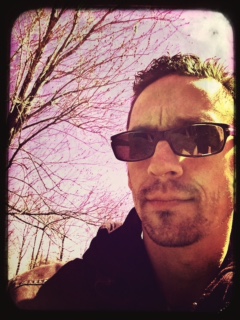
Welcome back to the last post of August! That means farewell, summer, and hello, autumn! But before we get to the Halloween celebrations, let’s delve into this week’s author interview. Today, I am pleased to introduce Casey Chaplin. He’s the author of Lizzy, a terrifying story of one unusual girl’s descent into madness. But don’t let the serious material fool you. Casey isn’t above cracking a joke, especially mid-interview. Here, we discuss writing and all the psychological trappings that go with creating true horror.

A few icebreakers to start: when did you first decide to become a writer, and who are some of your favorite authors?
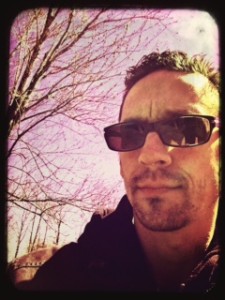
Well, I think I’ve always had an interest in writing. I remember the first story I wrote back in the 3rd or 4th grade – Mumbles the Monkey. I’m still shocked that it hasn’t been adapted for screen, directed by Ben Affleck, and won an Oscar. So sad. Sorry, got a bit off topic. Anyway, I think I’ve always wanted to write, and be a writer. Favorite authors though? Oof, that’s a good one. I’m a fan of Douglas Adams, Christopher Moore, Clive Barker, Dean Koontz. I know, a weird mixture of comedy and horror… You could say it’s a comedy of horrors…no? No, that played out a lot better in my head.

Your novel, Lizzy, deals with the mental instability of the titular protagonist. How did you prepare to write such an in-depth psychological exploration?

Generally I’m a pretty laid back guy and will be the first to crack a joke, or be the least serious guy in the room, but when it came to Lizzy, I did have to make some mental preparation, and if truth be told, I really had to change my demeanor. I went to a dark, dark place, which, honestly, affected my job and life at the time. I watched and read a lot of dark literature and film – American Psycho to name one. I also used a bit of method acting, getting into character, so-to-speak, hence why it hit some parts of my life. I thought about how Lizzy would act, or react to a certain situation, and would play it out that way in real life… Minus the whole killing thing.

Lizzy a NovelSome people believe that when it comes to horror, “everything has been done.” How would you respond to such criticism?

Sadly, I would agree to a degree with those naysayers. There’s still some innovation in the field, but it’s hard to be original when the masses don’t necessarily want original, or the big productions of movies, or even A-list books need to make millions in order to succeed. Taking a risk is almost too much for a lot of people who want to be successful. I think a lot of the best and new ideas come from the little guy, the ones that publisher and firms are too afraid to pick up. The indie genre, or field, or whatever the kids call it now-a-days is the best place to see new and fresh thoughts. I’m sure I’m not the first to tell you that either.

If forced to choose, which part of the writing process is your favorite: developing point of view/voice, crafting dialogue, or establishing mood?

Tough question, truly. I kind of like to do all of the above. I find that developing that voice, the character’s personality is fun as Hell. You can really get inside somebody else and create what feels like a new being. But generating the interaction with other characters and having the outcomes be a surprise to even me is exhilarating. On the other…other hand, the mood and atmosphere is so important to storytelling. I find this to be the most subtle part of the process, which requires a certain craft to nail down. I honestly don’t think that I could pick a favorite, as you need all of those aspects to create something awesome. That, and if you think about it, they all tie into one another – they’re all equally important.

In what directions would you like to take your writing career? Another novel? Shorter fiction? Perhaps a combination of the two?

I’ve got a few other stories on the go. I tend to write in spurts, so some have been sitting on my hard drive for years, others a few months. But as of right now, they’re all novel length, or will be. I’d like to write shorts, maybe an anthology one day. As well, I also really enjoy script writing and poetry. It’s hard to say where I want to go with it all. However, I know I’d like to try my hand at something different than horror coming up. Maybe comedy. Who knows.

Thanks to Casey Chaplin for being part of this week’s author spotlight. Be sure to check out Lizzy’s website at lizzyanovel.com!

Happy reading!


Sparrow Incarnate: Interview with Julia Benally

Another week, another interview with a fantastic up-and-coming writer! Julia Benally is an author of cool and unusual speculative fiction. Her work has been featured in Sanitarium Magazine and Snapping Twig Magazine. And since I’m the editor, I can also reveal she has a story in the forthcoming fall anthology, A Shadow of Autumn. Below, Julia shares her refreshing perspective on the topic of writing.

A few icebreakers to start: when did you first decide to become a writer, and who are some of your favorite authors?

Julia BenallyI decided to become a writer when I was eight years old. My teacher said that we were going to make books in class and suddenly I saw a gold leaf, leather bound volume of exquisite work. Of course, that day I got sick, so I couldn’t go and I missed it. My mom said we would make a book of our own so I wasn’t so sad. I really wanted to see the books my classmates made, but then they were just wads of paper folded into gray blue construction paper and I was so turned off. Ever since I’ve dreamed of that leather bound book and my fingers itched to write. Some of my favorite authors are C.S. Lewis, Jane Austen, Bram Stoker, Michael Crichton, Timothy Zahn and Harold Bell Wright.

You often write in the horror genre. What inspires you to create darker fiction, and what advice do you have for other aspiring horror writers out there?

What inspires me is the reservation. It’s a place full of superstitions and ghosts. Many times what I write doesn’t come from ghosts, but people. They can be monsters too. For the aspiring horror writer, I’d suggest to leave out the raunchy sex scenes and the blood and guts. That isn’t horror, it’s just gross and depraved. Personally I think the perfect horror is Bram Stoker’s novel Dracula. It’s just creepy, especially when  it comes to the Captain’s log, a scene foolishly taken out in all the movies.

If forced to choose, which is your favorite part of the writing process: brainstorming story ideas, writing the first draft, or polishing a piece before submitting it to an editor?

That’s a hard question for me. I can say though that my least favorite is the first draft. It’s shabby, it’s all over the place, it’s downright ugly. So I suppose polishing it would be my favorite part. That’s when I can make it beautiful and play with the words, I can add and drop things, I can find holes, I can tighten it up. For me, it’s in the polishing that the characters come to life.

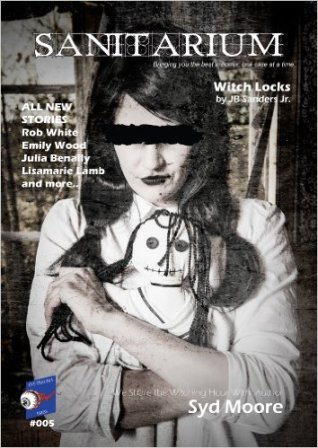
Sanitarium Magazine Issue 5Out of your published pieces, do you have a personal favorite?

My favorite would probably be my very first one because the first is always special. It’s call “The Bridges” and came out in the Sanitarium Magazine issue 5.

In what directions would you like to take your writing career? Are there more short stories in your future or possibly a novel?

Oh, I want to write for life. I can’t do without it. I have several short stories I’m going over, I have several more out finding a home and I’ve recently had one accepted. Not all of them are in the horror genre–for one thing I can’t stay scared all the time, that’s not healthy. I’ve just finished my first novel, a dark fantasy called Pariahs. That one is searching for a home now and it’s part of a series I’ve had in my head since I was 12.

Big thanks to Julia Benally for being part of this week’s author series. Be sure to check out her site, The Sparrow’s Nest. You can also find her on Facebook and Google-Plus.

Happy reading!

Promising Newcomer: Interview with Author Rayne Kaa Hedberg

For this week’s author interview, I’m pleased to introduce Swedish speculative fiction author Rayne Kaa Hedberg. Though just beginning, Rayne’s career is off to an auspicious start with a horror story in Sanitarium Magazine, one of my personal favorite publications out there. Below, Rayne and I talk secrets of the writing process and what’s in store for this up-and-comer.

A few icebreakers to start: when did you first decide to become a writer, and who are some of your favorite authors?

Rayne Kaa Hedberg That’s a tough one. I’m not sure exactly when I decided upon having it as a goal, but I know I have always wanted to write in some shape or form. Already as a small child I composed stories, though up until seventh grade I primarily used it for creating stories I would use in my manga. Somewhere around that time there was a break and I became more inclined to writing only. I left the drawings and began to paint with words to compensate for the lack of visual images. Some of my favourite authors naturally include Stephen King, but also Joe Hill, Clive Barker and Neil Gaiman. They all have a way of showing instead of telling, and I enjoy reading their work.

Your short story, “Donor,” appeared last year in Sanitarium Magazine. Can you share a little bit about your process when writing that piece?

Right, so initially I wanted to submit another piece I had written, but as I didn’t become satisfied with it, I had to start over with a completely different idea. I wanted to have a story about a medical error where you left a great deal unsaid. I did my research, as it’s always a big part of the process, and found out some horrifying things about rules regarding organ donors. “Donor” was originally meant to be my finishing project for writing class. I decided it was worth a try to send it in to Sanitarium Magazine as I had been following their process since the very first issue. I thought I could try my luck since the story was the right genre. Later on I could tell my teacher my story got published, which was a pleasant surprise.

Is horror your favorite genre to write, or are you looking to expand into other genres as well?

I don’t think I have a favourite genre to write in. When I write it doesn’t start in that end. I don’t think about writing a horror story and move on from there. A spark of an idea lights up and as I begin to explore it then I see what type of genre it fits into. I do often write about some type of supernatural element present, however. Often I see how I do end up in horror, but I enjoy working in the various genres as long as it’s an interesting idea. I don’t want to get niched on the one genre. I simply wish to tell the stories.

What monsters or general tropes do you feel are most overused in horror?

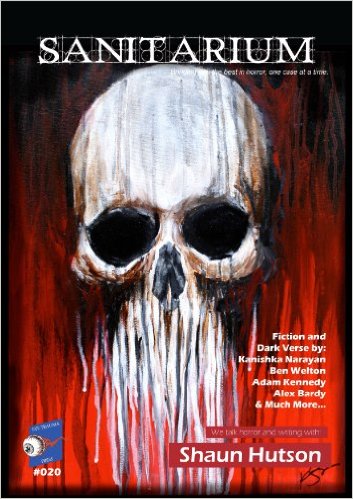
Sanitarium Magazine Issue 20I would say the hype on zombies is rather big at this time. I don’t necessarily mind that since many of the writers manage to pull it off well, but at times I lose interest when there’s no element of surprise left. With that said, I am an avid fan of “The Walking Dead”, for example, but when it’s the same old thing with the virus, the survival, the struggle without a twist to it, the stories tend to get predicable. One of my pet peeves in horror has to be the vampire struggling with not wanting to be a vampire and refusing to drink human blood. Vampires now aren’t what they used to be. Although I’m glad they don’t all look like Count Dracula, I wish it wouldn’t be romanticised the way it often is now, in different aspects of the word. Their horrifying factor has been diminished over the years.

What projects are you currently working on?

I am working on a surrealistic novella written in Swedish, for once. After that is finished, I have to go through the pile of unfinished novels and try to see some of them through, but I try to stay focused by taking it one at a time.

Big thanks to Rayne Kaa Hedberg for being part of this week’s author spotlight. Be on the lookout for new fiction from this budding author!

Happy reading!

The Backyard Transplant: Gaining Inspiration from Goreyesque Places

Earlier this month, my story, “The Backyard Transplant,” made its debut in the summer issue of Goreyesque, an Edward Gorey-inspired literary journal. Featuring the exploits of a little girl named Francesca, a makeshift surgeon who’s armed with safety scissors and a mallet, this is one of my lighter tales, a combination of the humorous and the macabre, not so unlike the oeuvre of Edward Gorey himself.

The Backyard Transplant

Ever since I first discovered Goreyesque last year, it became one of my major writing goals to place a story with the journal. After all, I’ve been a devotee of Edward Gorey from the time I was in kindergarten, his morbid illustrations always a delight to my book-loving self. As an adult, my Ogdred Weary obsession only grew and eventually took me all the way to New England where I toured his famous Elephant House in Yarmouth Port, Massachusetts. Seriously, that’s how Gorey crazy I am.

Edward Gorey House Doubtful Guest

All this fandom started thanks to my father, which is quite appropriate since I wrote “The Backyard Transplant” for him. Last winter, he himself was a transplant recipient. While the rest of my family sat in a Cleveland Clinic waiting room, I decided to try my best not to think about my father being cut open on a table for the twelve-hour procedure, so I instead opted to invent a gruesome yarn that I could read to him once he woke up. Consequently, as a highly trained lifesaving surgeon scooped out my father’s old lungs and put in two new ones, I penned “The Backyard Transplant.” Perhaps my task was not quite so monumental, but hey, we do what we can.

Ultimately, “The Backyard Transplant” became the first story I read to my dear ol’ dad after he woke up in the hospital room. My most vivid memory of that afternoon three-days post surgery was seeing him laugh for the first time. Indeed, I saw, not heard him laugh because he still had the obligatory post-transplant feeding tube, so he couldn’t actually speak or make any sound at all. But that didn’t stop him from laughing, knee slapping and all.

So for the remainder of my writing career, “The Backyard Transplant” will hold a special place in my heart. And having it appear in an Edward Gorey-inspired journal? Well, that’s just icing on a very morbid cake.

Happy reading!

Versatile Virtuoso: Interview with Bill Soldan

For this week’s author spotlight, I’m pleased to present jack-of-all-trades author Bill Soldan. Like several of my previous interviewees, I met Bill through Sanitarium Magazine where we both toil away as slush pile readers. During the course of our interview, Bill shared his thoughts on everything from balancing work and family to what it’s like to hang out at Emily Dickinson’s house. Good stuff all around for both aspiring and working writers!

A few icebreakers to start: when did you first decide to become a writer, and who are some of your favorite authors?

Bill SoldanWell, I’d like to say I sprang from the womb with writerly ambitions, but I first fell in love with the idea around age 12. I stress the word “idea” because, although I was a ravenous reader my whole life, I never really tried to write anything of my own. When I was about 12, I was reading Stephen King’s The Shining and discovered my mom’s electric typewriter at about the same time. The result was about a paragraph of something called “The Deadman’s Shortcut” or something equally ridiculous. I had no idea what I was doing, but King’s novel was the first book to make me cling to the idea of writing stories.

But I was more into visual art as a teenager and didn’t really write fiction after that sad first attempt. There was a period, however, during which I thought I was Jim Morrison reincarnated. I had the role down, too: the attitude, the hair, the reckless abandon, the concho belt—pretty much everything but the leather pants and the talent. But then, I was only like 14 and a total idiot. Nevertheless, that was the beginning of writing poetry and songs for me. I did that for many years, still not knowing what the hell I was doing, and eventually I took a fiction class, because deep down that was still something I had an inkling to do. For the last, say, four years, fiction has been my primary focus. I’m still figuring things out, though.

As for favorite writers, I can never answer this question without listing the following authors: Donald Ray Pollock, Richard Lange, Daniel Woodrell, Benjamin Percy, Bonnie Jo Campbell, Flannery O’Connor, Jim Carroll, Sherman Alexie, Stephen King, Clive Barker, and many other seemingly dissimilar writers. Quite recently, I’ve just discovered the work of people like Craig Clevenger, Brian Evenson, Mitchell S. Jackson, and Denis Johnson (people seem to be shocked and appalled that I haven’t read his work before—and after reading some, so am I). Those are some of the big ones for me right now.

You’re currently working on your MFA while simultaneously teaching undergraduates. How has teaching affected your own approach to writing?

I can’t say that it has. Not yet anyway. I have recognized that I need to practice what I preach a bit more when it comes to certain things: trusting the revision process, reading my work aloud to find the hiccups in syntax, etc.—but this really applies more to my own academic writing. When writing multiple critical papers at any given time, sometimes it’s all you can do to get them written, never mind toiling over multiple drafts. When it comes to my writing, however, especially my fiction, I don’t have this problem so much. I’ll toil as long as it takes, and then some.

In terms of how teaching and being a student (and a husband and a father, among other things) has affected my writing routine, well, it can be draining, downright exhausting wearing so many hats. With my writing, it’s become a matter of fit it in when I can. But then, I never had a solid routine to begin with. I’ve tried, but I haven’t found what works best for me in terms of a schedule. I invariably do something writing related every day. Often it amounts to little more than brainstorming or jotting down potential first lines, but some days that’s enough to make me feel accomplished. Some days…

You recently returned from the Juniper Summer Writing Institute in Amherst, Massachusetts. What was the most unexpected or surprising thing you learned during the writing intensive?

I learned a lot while at Juniper and met some terrific people. The workshop I was in was revision based, so I didn’t generate much new material while I was there, but I came away with the beginnings of a few new things, several more pages of a work-in-progress, and some excellent feedback on some of my stories. I was so inspired by the atmosphere and sense of community that I had trouble readjusting to life for a couple days after I got home. The passion and talent there was nothing short of invigorating.

Without outlining specifics, I can say that what I got most from the instructional programming were the tips and insights I received from Brian Evenson and Mitchell S. Jackson.

I had the privilege to work with Brian all week, and frankly everything that came out of that man’s mouth was brilliant. He helped me see some areas in my own writing that worked well and some areas that could be better. He also held a craft session that focused on the distinction between people and characters—it was great.

Mitchell likewise helped me identify some things in my own writing. I had a manuscript consultation with him, during which he went through two of my stories with me line by line, showing me areas where the narrative was strong and areas where I should capitalize more on my strengths, which he said are “the acoustics of the sentence,” “dialogue,” and “description of setting, especially natural setting.” These comments were very motivating and encouraging, as these are three elements of prose that are particularly important to me. He also held a craft session that focused on “the poetry of prose,” which was an absolute goldmine.

What was most surprising, though, was the community of writers. I probably got more from spending time with all these awesome people, from our trips into town, our nightly readings, than from anything else. It was a time I’ll never forget, and I can’t wait to cross paths with some of them in the future.

While in Massachusetts, you posted pictures from Emily Dickinson’s house. In my past travels, I’ve always searched for any opportunities to visit the workrooms of famous authors. What kind, if any, inspiration do you find from visiting the home of famous writers, and how does it inform your work?

Visiting Emily Dickinson’s home was the first time I’d ever done anything like that. The most inspiring part of the tour was seeing her bedroom, which they’re in the process of restoring to its original state. Seeing her tiny writing desk and looking out the same windows she gazed through while penning many of her poems was surreal. (I still want to visit Robinson Jeffers’ home in Carmel, CA. That’s supposed to be one hell of a sight.)

Being there only informed my work insofar as it reinforced something I’ve always believed: that great art can spring from anywhere— if only we pay attention.

In what directions would you like to take your writing (e.g. more short stories, novels, nonfiction)?

I want to do it all. Poetry, nonfiction, novels, story collections—you name it. Right now I’m focused on getting some more of these short stories out of my head and working on my thesis, a (tentative) collection of linked pieces. I do want to tackle a novel at some point, but I haven’t taken that plunge just yet. I’ve got an idea brewing, but I’m keeping myself busy with several other shorter projects for the time being.

I have the urge to write creative nonfiction, but whenever I think of an experience I want to write about, I end up turning it into fiction instead. I’ve come to realize people will believe a lot more of your insane life history when you present it as fiction. Much of my fiction has autobiographical moments, sometimes entire scenes wrenched more or less from memory (a lot more than many people would be willing to swallow if I presented it to them in an essay or memoir) but I’ll leave it to readers to decide which of those are fabricated and which are not.

 Out of your published pieces so far, do you have a personal favorite?
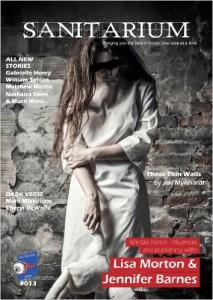
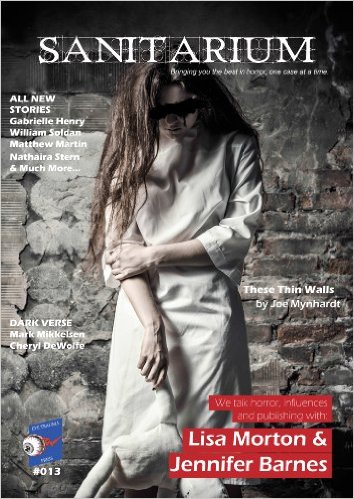
Sanitarium MagazineThough it’s far from my best work, I’m still in love with my story “Patchwork,” which appeared in Sanitarium magazine issue 13. It was the first story I ever completed in my first fiction class as an undergraduate, so there’s some significance there. The story has a lot of flaws, the least of which not being that it’s virtually all surface, meaning there’s little to no emotional undercurrent. I have a tendency to write fairly “detached” first-person narrators, but since doing this for a few more years, I’m learning the importance of emotional weight and resonance, even in characters that at first seem cold and indifferent. It’s something I think I’m getting better at, slowly but surely.

The story I consider to be my best, in terms of published pieces, is one called “Something Special,” which appeared in the Winter 2015 issue of Floyd County Moonshine. Not only do I feel this piece contains an emotional undercurrent while maintaining a relatively hard-edged surface, but it’s much more representative of the type of work I’ve been producing for the last couple years. Most of what I’ve published, with the exception of maybe two pieces, is quite different from (and in many ways not nearly as good as) what I’m writing now. Which is why I’m often reluctant to link people to my earlier work—I’m just not as happy with it as I once was. Nevertheless…

Any links you’d like to share?

If you’d like to read something for free, here’s a link to the only creative nonfiction piece I ever published. It’s a decent blend of the kind of prose I’m writing now and the more “speculative” stuff I haven’t written for a while. A bit of a mashup of fiction and nonfiction. There’s a lot about it that I like and some minor things I don’t. For one, there are some typos, which horrifies me, but I’m human, and so are copyeditors, thus it happens. Anyway, you can read it here: http://www.jennymag.org/fall-13-issue/sad-beauty

There are some others out there. Somewhere in the ether.

Big thanks to Bill Soldan for being part of our author series this week! Find him on Facebook, Twitter, and Instagram.

Happy reading! 
Poe Protégé: Interview with Tawny Kipphorn

This week’s author is a major devotee to none other than Edgar Allan Poe, which practically makes us blood sisters to the cause. Tawny Kipphorn is an up-and-coming horror writer who pens both fiction and poetry. With a knack for the beautifully macabre, her work has appeared in Sanitarium Magazine and The Tales from the Shadow Realm among other publications. Recently, I talked with her about her many current and upcoming projects.

A few icebreakers to start: when did you first decide to become a writer, and who are some of your favorite authors?

Tawny KipphornI made the discovery of my passion at fifteen, during english class in my freshman year of high school when we were learning about Edgar Allan Poe. We were reading “Annabel Lee” and something just ignited within me and told me that it was imperative that I do my part to help bring back that literary style, and I’ve since desired to create things with that same sense of beauty. However, I didn’t make the conscious decision to become a writer until my first publication in 2014, which was The Hellequin of Volterrum (Story Version) in the Tales From the Shadow Realm digital magazine. I always had a draw to language and literature since I was in grade school, and even in my teenage years when I was constantly writing and living in my head, I never saw myself becoming an author because I thought my passion would run dry if I were doing it for a living, plus it’s the only area in which I’ve been able to excel. It took me a very long time but I finally accepted that this is what I’m meant to do.  Aside from Edgar Allan Poe, I also enjoy Lord Byron, D.H. Lawrence, Patricia Cornwell, and James Patterson.

You write both prose and poetry. How is your approach the same (or different) for each?

My approach for both is the same in the sense that I really try to do as much research as I can before I begin any project. For poetry, most of the time I try to make them rhyme and go along the same cadence as Poe’s “Annabel Lee”. I describe my poetic style as being Poe meets Seuss. They say you’ll spend the rest of your life trying to recreate the first poem you ever loved, and that holds true for me. I’m a poet at heart and so it comes much more naturally to me than writing fiction, which I find to be much more difficult. When writing poetry, I also like to move words around to give the sentences a more archaic fluidity. Fiction is something I’m working on slowly but surely, it’s a fairly new thing for me. It’s different also because usually with fiction, I have a vision and know where it’s going, but poetry just flows more freely and I won’t know where it goes until the end.

What initially drew you to the horror genre, and is it your favorite genre to write?

SanitariumI grew up reading and collecting The Goosebumps Books by R.L. Stine, and also watching a lot of horror movies. I’ve always been interested in the darker more macabre, supernatural things. I spent most of my time in middle school engrossed in vampire themed books and went through a goth stage as well, so I really embraced the whole image. It is definitely my favorite genre though it can be quite challenging to write. When I have a story in my head, it usually plays along the lines of Quentin Tarantino meets Stephen King. When I envision the possibility of bringing these stories to life it gives me a pleasure that I couldn’t get from writing any other genre, especially as a woman in what most would consider a male dominated genre.

Out of your published pieces, do you have a personal favorite? 

This is a tough one because it’s a toss up, but I would have to say my favorite published piece is “Rosalee”. I wrote it with the intention of creating something as beautiful as (yep, you guessed it) “Annabel Lee”. Much to my surprise after I wrote it  I actually discovered Poe had a sister named “Rosalie” which I thought was amazing. I changed the spelling from “Rosalie” to “Rosalee” as a dedication to my mother.

Any projects you’re currently working on?

Several! My document folder is horrendous. I have a poem in progress entitled “The Legend of Countess Creep” which is about Elizabeth Bathory. I also have a science fiction short story titled “Project Blue Blood” in progress, and my biggest project in the works is “Steven”, which is the life story of a serial killer with an unusual MO.

Thanks to Tawny for being part of this week’s author spotlight! Check out more about her writing at her website! 

Happy reading!

Eclectic Artistry: Interview with Miracle Austin

Welcome back to this week’s author spotlight series! Today I’m thrilled to present the immensely talented Miracle Austin! Miracle has been published in numerous fantasy and horror magazines, and she’s currently branching out into young adult fiction. Through the course of our varied interview, it was an absolute joy learning about her creative process and where she plans to go from here as an author.

A few icebreakers to start: when did you first decide to become a writer, and who are some of your favorite authors?

Miracle AustinI’ve been writing since junior high and first hearing Drive by The Cars. I wrote mostly little poems, inspired by the music that I listened to.

In my teens, I eventually wrote a short story about a 13 year-old boy, Jobie, spending his summer with his best friend, kissing a girl for the first time, and coping with his untimely death. It was called My Last Summer. I’m sure I misplaced it or threw it away years ago. I do still think of Jobie, the character, from time to time. May reinvent him one day….

I wrote off and on throughout my teen, early adult, and mid adult years, but always had pauses in life. I must confess that I’m a late bloomer to the publishing writing world.

Honestly, it took a very dark event to occur in my life that propelled me into the writing world, full-speed, where I now consider myself a constant writer. Writing is now my therapeutic playground in many ways.

It’s something how darkness can lead to light and my light was rediscovering my passion of writing…

My favorite authors: Alvin Schwartz, David Lubar, Edgar Allan Poe, Neil Gaiman, Langston Hughes, The Brothers Grimm, William Shakespeare, Shirley Jackson, Stephen King, R.L. Stine, Charlain Harris, Maya Angelou, Gwendolyn Brooks, Virginia Hamilton, Rachel Caine, and so many others….These authors inspire me because of the various levels of horror, intrigue, and magic they express in their writings…

You often write in the horror genre. What initially drew you to horror, and do you have any recommendations for other authors interested in delving into the darker recesses of fiction?

I now consider myself a YA/NA Cross-Genre author. I enjoy horror/suspense genres, but not limited to. I must confess that a horror/suspense AM radio station podcast my mom and I used to listen to years ago and two movies, Squirm and Carrie have been my biggest influences to write in the horror/suspense genres.

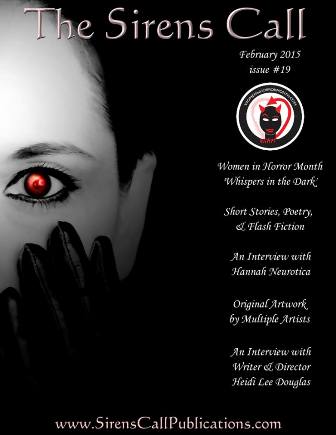
Sirens Call Issue 19I believe that if someone wishes to delve into the horror-writing world, then by all means do so. Never allow anyone to say that it’s impossible( Remember I’m Possible!) or you cannot do it because you can. Just have to believe in yourself and some positive energy. Allow yourself to not only read horror works, but diverse works because you never know when your next “Oh, yeah, that’s it…The Big Idea!!!” will find you. Keep your mind open and allow all sorts of ideas to fly in freely, keep the ones you want and tuck the other ones away for future assessment…

I love your website. It’s a great combination of your published work as well as lists of your favorite stories, authors, films, and music. What are you currently watching/reading/listening to, and how is it affecting your creative process?

Wow, thank you for your lovely comments about my website, Gwendolyn. Means a lot.

Just finished watching the first season of The Strain on Hulu. I’m so glad that I didn’t let it pass me by because it is one of the best horror/suspense series I’ve watched in awhile. Great story and characters! Cannot wait for season two, which starts next week. If you like vampires and amazing new twists, then you will not be disappointed. I highly recommend. Sure the series rocks. Will be placing on my reading list soon.

I’m watching The Secret Life of the American Teenager now on Netflix. Love it and the world of teens. It has five seasons and several episodes, so it will keep me busy for a bit. I watch an episode or two each day, when breaking from writing/organizing my thoughts and all.

I listen to all types of music when I write. I’m now currently listening to a mix and the song playing as I complete your interview is “I could never take the place of your man” by cutie-pie, Jordan Knight, originally with New Kids on the Block.

I’m currently reading two books by two author good buddettes, The Countess (a series) by Holly Hudspeth and Midnight Outbreak by Brandy Corona. They both rock!! Check these ladies out on Amazon and their websites!

Movies, music, and reading all impact my writing all the time. It gives me future ideas and allows my writing to flow…

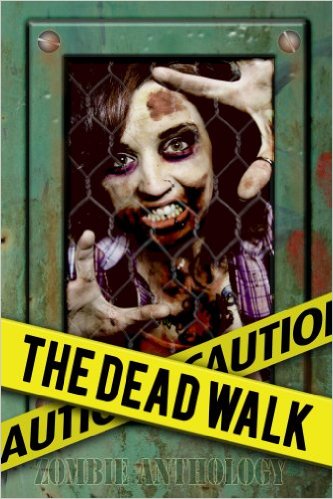
The Dead WalkOut of your published pieces so far, do you have a personal favorite?

“The Meat Lover’s Special” (found in Luna’s Children: Full Moon Mayhem) and “The Study Break” (found in The Dead Walk).

What projects are you currently working on?

I’m in the process of my first collection of short stories to be published within the next few months, I pray. It’s called Boundless and a very eclectic collection of diverse themes of horror/suspense, betrayal, love, fantasy, and more. It’s one where the reader can really open her/his mind up to anything being possible, I mean anything…

I’m currently working on my first stand-alone novel with supernatural and comedic elements called Lonestar UnOrdinary Girl.

I’m also working on a novelette called The Doll, tentative title, about a little tale involving a mean teen girl, outcast teens, and a little witchcraft. Gotta Be careful what you wish for sometimes…

Where would you like your writing career to be in five years?

I pray to be writing full-time and hopefully a few novels on my bookshelf with more to come…

Big thanks to Miracle Austin for being part of this week’s author series! You can find her on her website as well as on Facebook and Twitter. Also, keep your eye out for her short story collection coming soon from Bathory Gate Press!

Happy Reading!

Bard Guard: Interview with Quintin Peterson

After a two-month summer hiatus, today marks the return of my author interview series! This week’s writer, Quintin Peterson, specializes in crime fiction and thrillers. He’s been featured in the Washington Post and Shakespeare Magazine among other prestigious publications. Between projects, Quintin was kind enough to share a little about his own creative process as well as what it’s like to guard some of the most famous works of literature.

A few icebreakers to start: when did you first decide to become a writer, and who are some of your favorite authors?

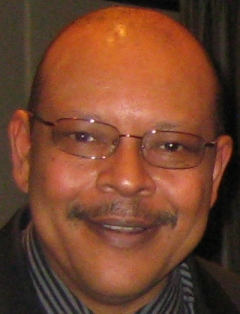
Quintin PetersonA few of my favorite authors are James Baldwin, Octavia Butler, Richard Wright, Tananarive Due, Chester Himes, Laura Lippman, George Pelecanos, James Patterson, Nelson DeMille, James Grady, and Lee Child.

I’ve been writing most of my life. In high school, I won the National Council of English Teachers Award for my essay, “Notes of a Wayward Native Son.”

You’ve led a fascinating life that includes not only your fiction and poetry writing but also a long tenure in law enforcement. How did you balance two vastly different professional paths, and were you ever surprised at how the two could sometimes overlap?

It’s quite a juggling act, but working odd hours helps. On the police department I worked shifts like 3:00 pm – 11:00 pm, 11:00 pm – 7:00 am, 6:00 pm – 2:30 am, 8:00 pm – 4:30 am. As a rule, I wrote for two hours before I went to work and for two hours after I got home from work…which I continue to do to this day. (I work 3:00 pm – 11:00 pm, Tuesday – Saturday at the Folger Library.) As a police officer, the kinds of stories I wrote changed. Before joining the police department, I wrote science fiction and horror, and plays similar to Lorraine Hansberry’s A Raisin in the Sun. As a police officer, I began to write crime fiction. I am now known for my “hard-boiled police procedurals”.

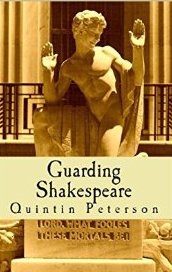
Guarding ShakespeareYour novella, Guarding Shakespeare, follows a protagonist who gets harangued into breaking into the Folger Shakespeare Memorial Library where many Shakespeare works are housed. What is your favorite Shakespeare play, and what made you want to write about the library?

My favorite Shakespeare play is Othello. I retired from the Metropolitan Police Department, D.C., after more than 28 years of public service on April 23, 2010 and started working at the Folger Shakespeare Memorial Library’s Department of Safety and Security on December 14, 2010. Shortly thereafter I learned that April 23rd is Shakespeare’s birthday. Other coincidences that struck were, 1) I was sworn in as a D.C. police officer on December 14, 1981 and issued badge number 2807, and 2) the badge number I was issued as a Folger Shakespeare Library Special Police Officer is 28. As a crime fiction author, the story of a heist job at the Folger Library occurred to me very quickly. Othello was playing at the Folger Theatre as I penned Guarding Shakespeare, so that is what is playing as the heist job ensues behind the scenes…

You’ve been a writer for decades, and your output has most certainly been prodigious. What advice do you have for new writers on how to get their work out there?

Aspiring fiction authors should first pick the genre they are most interested in, read a lot of work in that genre, and write a lot. Enter contests in that genre and surf the Net for anthologies in that genre seeking submissions.

Anyone who has been in the business for as long as you have has certainly faced rejection, both from editors and readers. How do you cope with the constant struggle of being an artist?

I’ve been rejected a number of times, but everything I’ve written that was rejected is now in print. Acceptance is subjective. The trick is to find out when a story has been rejected because it is rotten or just was not an editor’s cup of tea. You may never know which, really. You just have to actively pursue the study of the craft and keep at it. Find employment in another field to pay the bills and keep plugging away.

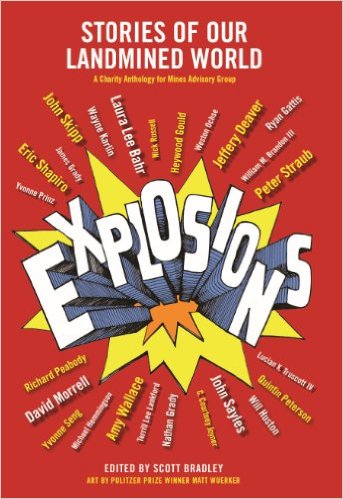
ExplosionsOut of your published pieces so far, do you have a personal favorite?

My favorite novel is Guarding Shakespeare, because it is lighter than my other work; more fun. My favorite short story is “Broken Doll,” because it features my new character Private Eye Luther Kane, who debuted in “Damaged Goods,” which is featured in the star-studded Mines Advisory Group (MAG) charity anthology, Explosions: Stories of Our Landmined World, edited by Scott Bradley. All of the proceeds from the sale of Explosions are being donated to MAG.

In what directions would you like to take your writing in the future?

Aside from continuing to write crime fiction, I’d like to return to horror and science fiction, which I did with “Hope to Die,” featured in the British horror magazine, Sanitarium. Also, I’d like to feature Private Eye Luther Kane in a graphic novel. I’d also like to see Guarding Shakespeare produced as a film. The Pitch: The Maltese Falcon meets The Da Vinci Code.

Big thanks to Quintin Peterson for being part of this week’s author spotlight! You can find out more about his work at his Amazon author page and his online gallery of artwork.

Happy reading!

The Strangely Funny World of Publishing

Last year, my very first short story, “Bedroom Bureau,” made its debut in Strangely Funny II. Ever since then, I’ve done everything I can to promote publisher Mystery and Horror, LLC. After all, finding an editor to take a chance on a previously untested author isn’t something that happens every day.

Strangely Funny 2.5For their latest project, which is a follow-up to Strangely Funny II–the aptly titled Strangely Funny 2 1/2–Mystery and Horror, LLC is featuring a whole new batch of authors, all of whom are adding their own bizarre spin on the nexus of comedy and speculative fiction.

Here’s a quick blurb about the anthology:

Because one book wasn’t enough to contain the insanity. A collection of humorous paranormal short stories. See what happens when the new kid in school is the Antichrist. Aliens get fang marks from their newest abductee. Plus, we put a new wrinkle on the term ‘ghost writer’. Featuring stories from Rosalind Barden, Chantal Boudreau, and David Neilsen.

For this week, you can get a Kindle copy of Strangely Funny 2 1/2 for only 99 cents! Seriously, what’s your excuse now? That’s what I thought. And if the above teaser isn’t enough, then check out this table of contents, which includes everything from selkies and skeletons to troll dolls and the fountain of youth.

Table of Contents

“Knewscast” By Kevin Quirt – Reporting the news before it happens can still leave one prey to the unexpected.

“The New Kid” By Tim McDaniel – What happens when the new kid in school is the Antichrist?

“The Pillow” By Fred McGavran – The fountain of youth can also give you a magnetic personality.

“Inheritance” By Kristina R. Mosley – Every family has its skeletons.

“The Snout” By Matthew Pegg – Jon Darkness meets The Gnawer at the Threshold.

“Alien Dust” By Chelsea Nolen – The latest alien abductee isn’t getting probed.

“Outsourcing” By Gary Piserchio & Frank Tagader – If you can code in your sleep, these guys still have you beat.

“The Demon of City Hall” By Rosalind Barden – A troll doll is the first victim of demonic activity in an unimportant government office.

“Sadie’s Selkie” By C.A. Rowland – A selkie’s kiss can be dangerous, given some allergies.

“Getting A Head” By Joette Rozanski – Troll weddings have unusual party favors.

“Folkesmuir” By John Grey – The village’s first director of tourism gives his all to bring in visitors.

“Hell’s Working Girl” By Dan Foley – A succubus walks into a bar…

“Unimpressed” By David Neilsen – Summoning eldritch creatures as party entertainment proves ill-advised.

“Stephen, the Well-Adjusted Vampire” By Katrina Nicholson – How can a nice vampire find love, when all the girls prefer his bad-boy brother?

“Beehives of the Dead” By Elizabeth Allen – A woman is buried with the wrong hairdo and takes exception.

“The Other Half” By A. Steven Clark – A doctor has a sure-fire vaccine to prevent zombism.

“Dead to Write” By Chantal Boudreau – The alternative to ghost writers.

For even more crazy good times, be sure to check out Strangely Funny and Strangely Funny II. There’s plenty of speculative tomfoolery to go around!

Happy reading!

“Calling Hours” Debuts in Morpheus Tales!

It’s been a bit of the old radio silence here on the blog, but that doesn’t mean I haven’t been busy behind-the-scenes (more like constantly arranging and rearranging my writing and workload until my hair goes gray). Fortunately, it’s been an exciting couple of weeks with three new stories debuting in print and digital formats!

Today I’d like to announce the release of the June issue from Morpheus Tales. Among many other incredible horror stories from the likes of Rose Blackthorn, Scarlett Algee, Caitlin Marceau, and Daniel Weaver is my brand new flash fiction piece, “Calling Hours.” This work is in the same vein as “The Clawfoot Requiem” and features two sisters coping with the thin veil between this life and the next. Have I piqued your macabre-loving interest yet? If so, check out the amazing cover artwork by Joe Young as well as a full table of contents below!

Morpheus Tales

A Late Night Summons At The Crossroads By Andrew James Woodyard
Illustrated By P. Emerson Williams

Burnt Offerings to Disaster By Robin Wyatt Dunn

Creatures By Leon Saul

Farishta By Mithun Mukherjee
Illustrated By Joe Young

Calling Hours By Gwendolyn Kiste

Mercy By Scarlett R. Algee
Illustrated By Candra Hope

Mrs. Flim Is Dying By Arthur Staaz
Illustrated By Jeffrey James Oleniacz

After Life By Richard Farren Barber
Illustrated By Tex McCranie

Stitches By Caitlin Marceau

That First Real Kill By Daniel Weaver

Obsidian Heart By Rose Blackthorn

Be sure to check out the preview of Morpheus Tales here, or buy your copy, either in digital e-book format or old-fashioned print, complete with mega-cool illustrations. Find out why Morpheus Tales has been called one of the UK’s most controversial horror magazines. You know you want to know…

Happy reading!