Category Archives: Interviews

The Horror of Versailles: A Historical Roundtable on Marie Antoinette

Welcome back, and happy July! Today, I’ve got a brand-new roundtable about a topic that you probably won’t see on most other horror websites: Marie Antoinette.

I’ve been fascinated by the story of Marie Antoinette since my high school days when my French teacher informed us that the ill-fated French queen never said “Let them eat cake.” That was more than a little intriguing to me, considering that was one of the primary things I knew about her. From there, I learned that Marie Antoinette was a much more complicated figure than she’s often depicted. Add in Sofia Coppola’s polarizing biopic, Marie Antoinette, from 2006, and the former French monarch has swirled around quietly in my mind ever since.
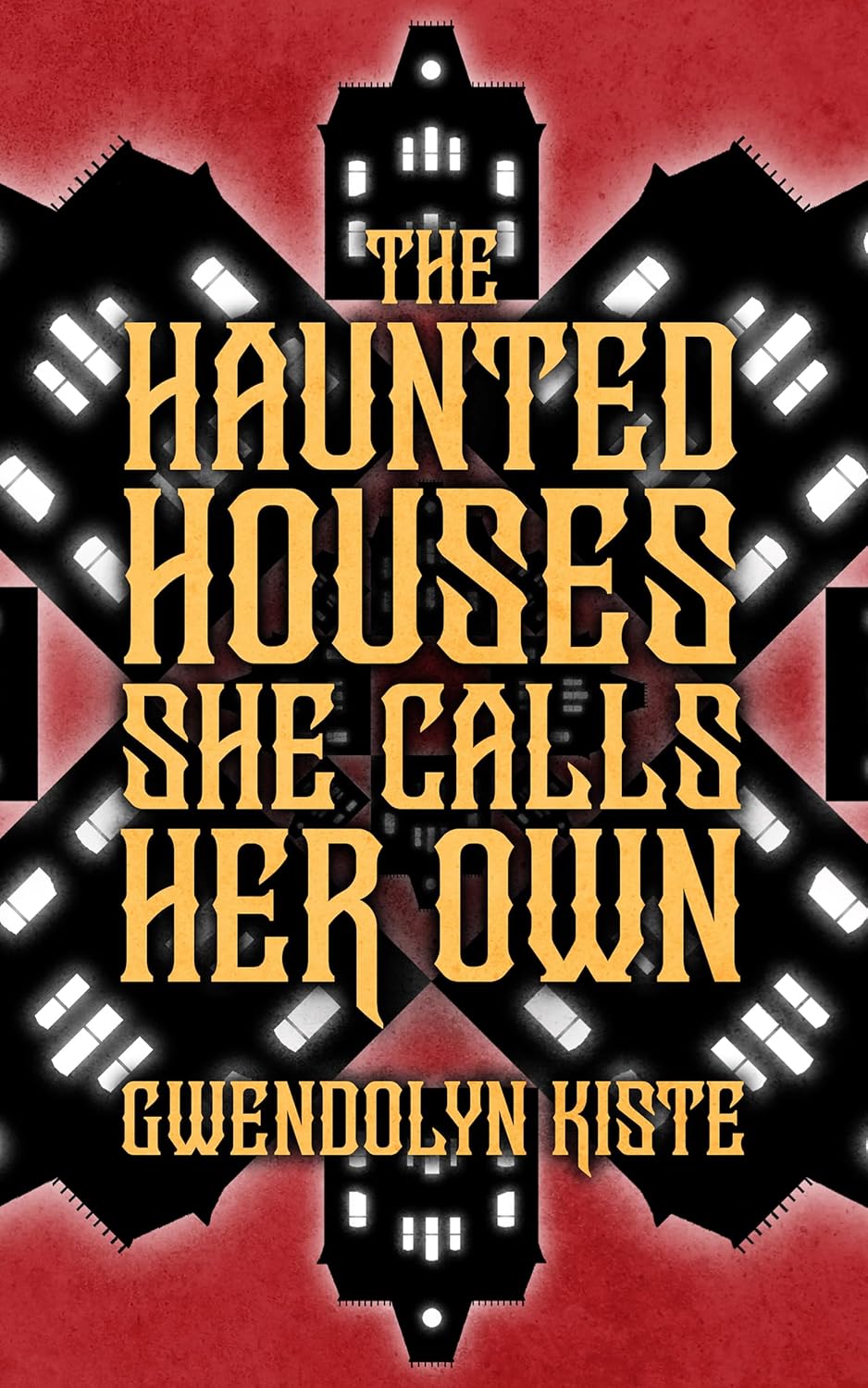
That interest in Marie Antoinette came to fruition in my story, “Lost in Darkness and Distance,” which is one of the three brand-new tales in my new collection, The Haunted Houses She Calls Her Own. In the story, Marie Antoinette digs herself and her disembodied head out of a shallow grave and wanders the European countryside. That is, until she stumbles into the famous ghost story at Lord Byron’s estate and meets Mary Shelley herself. Soon Marie becomes Mary’s very own Frankenstein’s monster, and the two women find themselves bonding and sparring over their respective lots in life. It’s one of the stranger stories I’ve ever written and also one of my personal favorites.

Fortunately, I’m not the only horror and dark fantasy writer out there who finds Marie Antoinette to be a complex and even misunderstood historical figure. I recently gathered together three other authors whose recently released books explore Marie’s legacy. Together, we discuss how we discovered the life of Marie Antoinette and why we decided to include her in our own body of work.

What made Marie Antoinette someone you wanted to write about? Do you remember the first time you came across information about her? Or was there a particular moment when something clicked for you, and you knew this was someone whose legacy inspired you in some way?

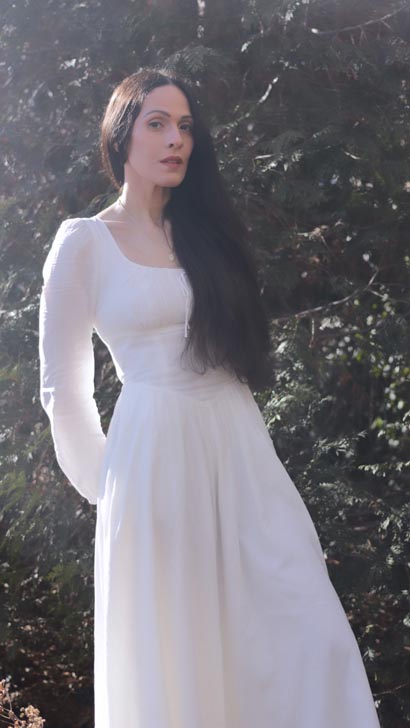
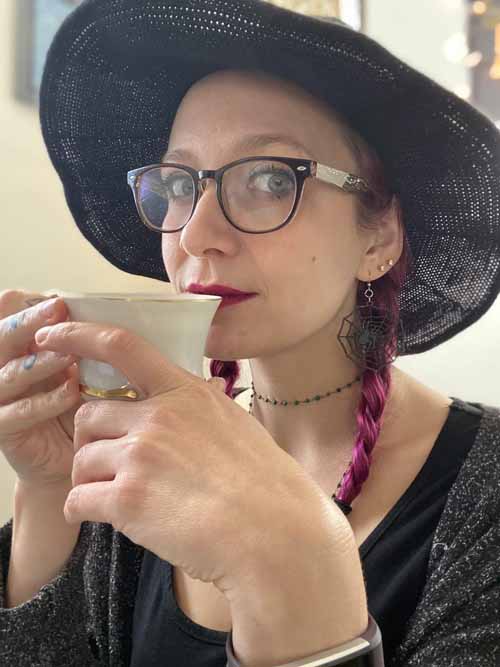
AZZURRA NOX: My fascination with Marie Antoinette began when I was three years old, after watching the anime series The Rose of Versailles. The story follows Oscar, a fictional woman raised as a man who rises through the royal military to become Captain of the Royal Guard. Her life becomes deeply intertwined with that of Marie Antoinette, and through their relationship the series introduced me to both French history and the human drama behind it. What struck me most was that the show didn’t shy away from the brutality of the French Revolution or Marie Antoinette’s tragic fate.

That early fascination grew into a lasting obsession. I spent years reading biographies, watching films, and researching her life, yet I was consistently frustrated by how narrowly she was portrayed. Most depictions focus on her youth and extravagance, reducing her to a symbol of excess while overlooking the complexity of who she became later in life. She arrived in France at only fourteen years old to marry Louis XVI, and yes, she could be naïve and frivolous in her early years. But what moved me was the strength and dignity she displayed after losing everything.

In her darkest moments—stripped of her titles, separated from her children, imprisoned, and facing execution—she did not lash out with bitterness or demand revenge. Instead, in her final letters, she urged her children to forgive the French people and expressed regret that she had not fulfilled her role as queen more successfully. That resilience and compassion are rarely explored, even though they reveal the most human side of her story.

That is why my book, Panico! Marie Antoinette’s Journey During the Reign of Terror, focuses primarily on her final years. I wanted to tell the story of a woman who, despite her flaws, faced unimaginable loss with remarkable composure and courage—qualities I believe history and popular culture often overlook.

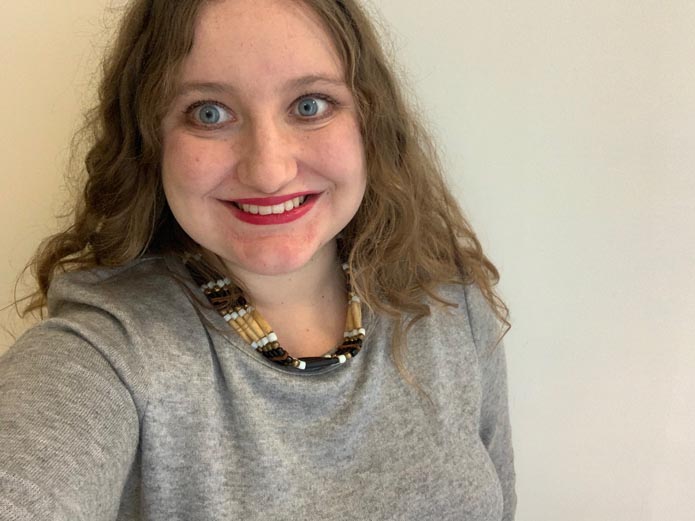
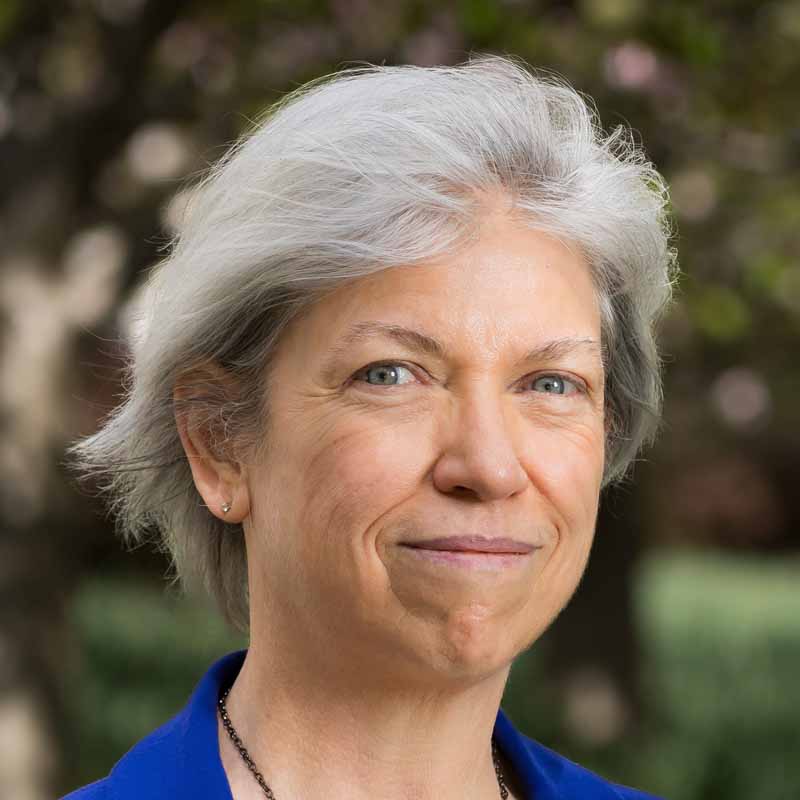
JULIA JACKSON: I have always been obsessed with history. In particular, I have always adored the works of French artists and the political landscape that shaped their work. I studied art history, devoured history docs and books, and somewhere along the way stumbled upon Marie Antoinette. When I finally travelled to France to see all I loved, outside of projector slides and in the flesh, I made sure Versailles was top of my list. To walk where Marie had was surreal, and something clicked for me that day. Walking through the gardens and down the hall of mirrors, I felt I understood her better. Beyond ink on paper, she was indeed a living, breathing girl who held so much weight upon very small shoulders.

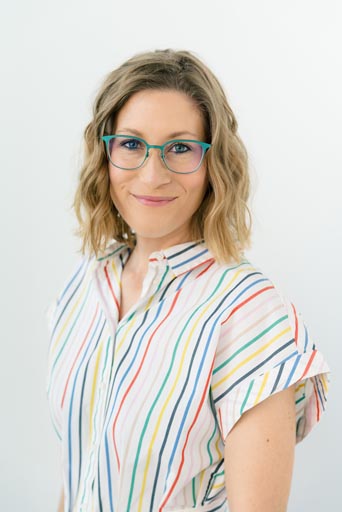
JESS HAGEMANN: European history never stuck in my head until I learned about Marie Antoinette. I think it was the fact that she was so young when she was married off to France and how she met her grisly end. The guillotine is iconic. Still, apart from watching and loving Sofia Coppola’s Marie Antoinette in 2006, I didn’t become obsessed with the queen’s story until I took a 23&Me DNA analysis test and learned I “shared a common ancestor” with Marie Antoinette. My mother-in-law gifted me the DNA test. She then gifted me Antonia Fraser’s comprehensive biography of Marie Antoinette, and the rest was history. I knew I needed to adapt her story in some way because so many parts of it, from her child-bride status to the way she was “canceled” by the French peasantry, still feel resonant today.

All of your books contain elements of either horror, fantasy/magic realism, or both. What is it about Marie Antoinette and her legacy that blend so well with the horror and fantasy genres?

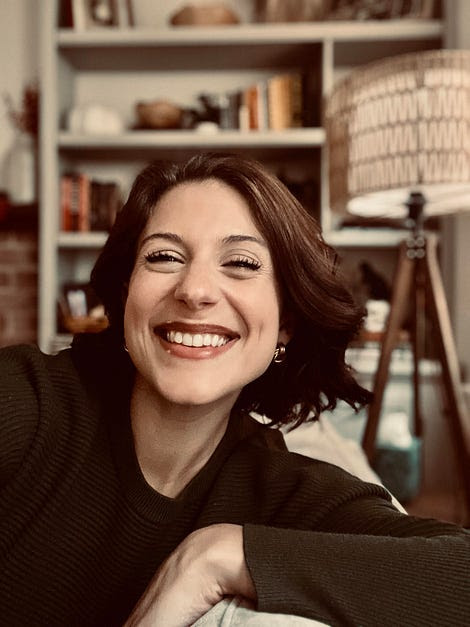
JULIA JACKSON: I had just finished a manuscript and needed to dive into a new project. I’ll never forget driving along the highway from my day job and suddenly thinking about Marie. How she went through so much at such a young age. I thought about my young daughter and how I couldn’t imagine her going through that in just a few years time. It was horrifying, really – this 14 year old girl who endured some of the first braces without anesthesia. Who had everything she knew and loved in Austria stripped from her to go to France at 14. To marry a complete stranger at 14 and then have the court gather round to encourage consummation. A young girl used as a political pawn, used as a scapegoat, labelled as the villain, and finally, used as a symbol of the end of the monarchy with the blade of a guillotine. And it hit me then. Marie‘s story was a horror all along, and it was meant to be my next book.

JESS HAGEMANN: That blade! That drop! The way her head bounced, eyes still open, as onlookers rushed to soak their handkerchiefs in her royal blood! Marie Antoinette‘s is a real-life horror story. I just updated it to include some of today’s horrors, including making her the pupil of a Jeffrey-Epstein-inspired teacher, who was in turn modeled on another real-life figure, Count Axel Fersen. In MOTHER-EATING, she also rules over a sex-and-torture cult in Austin, Texas instead of the country of France.

AZZURRA NOX: I think the horror element in Marie Antoinette’s story is almost impossible to ignore because so much of her life was defined by real, human terror long before the French Revolution reached its peak. She was sent to France as a bride at just fourteen years old, became queen at eighteen, and suddenly carried the expectations of an entire nation on her shoulders. On top of that, she endured years of scrutiny and humiliation over her marriage and her inability to conceive children—only to later lose several of the children she fought so hard to have.

People tend to picture Marie Antoinette through the lens of luxury and extravagance, but when you look closer, her life was already a kind of psychological horror long before she was imprisoned and taken from Versailles. The fear, isolation, public judgment, and eventual loss of everything she loved are what drew me to telling her story through a darker, more emotional lens.

Some readers have described my book as having elements of fantasy, but I see the only “fantasy” aspect as my decision to write from Marie Antoinette’s point of view rather than from a distant third-person perspective. I wanted readers to experience her humanity directly—to feel her fear, grief, confusion, and resilience as if they were living through it beside her. For me, stepping into her perspective was the only way to tell her story with the emotional honesty it deserves.

Are there any particular books, films, or documentaries about Marie Antoinette that you used in your writing process?

JULIA JACKSON: Sofia Coppola’s Marie Antoinette brought history to life. It showed the soft, tender side of Marie. The girl who wanted to have fun and make the most of a new life, all while having the crushing pressures of court upon her. When the film was first released, I went to the theatres to see it more times than I should admit. And many years later, when I decided to write Powder & Poison, I studied it all over again. I spent six months not writing a single word of my book. Instead, I immersed myself in all the history books I could get my hands on. I painstakingly studied courtlife, Marie and all those around her, and I even studied detailed layouts of Versailles and its gardens. Half a year of research was well worth it, and I am so happy I got to know her world as well as possible before putting pen to paper.

AZZURRA NOX: I read countless books while researching Marie Antoinette, but the sources that affected me most were the ones that brought me closest to her final days as a prisoner. Marie Antoinette’s Darkest Days: Prisoner No. 280 in the Conciergerie by Will Bashor was especially influential because it captures the fear, isolation, and emotional strain she endured during imprisonment. I also spent a great deal of time reading the actual court documents and trial transcripts from 1793 through Gallica, which preserves records from the Revolutionary Tribunal. Reading her words and the accusations leveled against her, in their original form made her feel startlingly human rather than mythologized.

I’ve also watched nearly every major film adaptation about Marie Antoinette, and my personal favorite remains Marie Antoinette (1938) starring Norma Shearer. There’s a tragic elegance and emotional depth in her performance that has always stayed with me.

I do appreciate the visual style and atmosphere of Marie Antoinette (2006), and I think Sofia Coppola genuinely tried to capture the feeling of girlhood inside Versailles. I’m also a fan of Kirsten Dunst. But for me, that version still leans too heavily into the popular caricature of Marie Antoinette—the frivolous, out-of-touch queen—and in doing so, it unintentionally reinforces many of the damaging myths surrounding her, including the infamous “Let them eat cake” quote, which she never actually said.

JESS HAGEMANN: Yes! Besides Sofia’s film and Fraser’s biography: The Queens podcast and History Chicks podcast episodes about Marie Antoinette. We also hired a UK-based artist, James Hutton, to re-interpret a real political cartoon of Marie Antoinette that circulated during her reign and depicted her as a harpy. That’s the sweet MOTHER-EATING cover art!

If there was one thing you wish people knew about Marie Antoinette, what would it be?

JESS HAGEMANN: She was, in my opinion, so unfairly maligned. She’s one of history’s most hated characters, but I don’t believe she deserved it. Imagine being “traded” by your mother to a foreign country at 14. You don’t speak the language, you don’t know the customs, you’re married to a fellow strange child, and you’re navigating all of it in the public spotlight. Of course you’re going to be naive, and of course you’re going to make mistakes. While she probably was a little ignorant when it came to the true plight of the French people, she never said “Let them eat cake” and wasn’t owed beheading.

AZZURRA NOX: More than anything, I want people to understand that in her darkest moments, Marie Antoinette revealed an extraordinary kind of courage. By the end of her life, stripped of power, separated from her children, and condemned by the public, she faced her fate with remarkable stoicism and dignity. That is the side of her I feel history often overlooks.

If I were to share one fact that many people may not know, it’s what happened after her execution. Her body was reportedly left near the scaffold for nearly two weeks before being taken to a cemetery and thrown into a common grave. It wasn’t until the Bourbon Restoration in 1815 that her remains—and those of Louis XVI—were exhumed and finally given a proper royal burial.

Learning that deeply affected me. The image of her body being discarded so carelessly, almost as if she were no longer human but simply an object to be disposed of, says so much about the dehumanization she endured during the Revolution. It reinforced for me how easy it can become for societies to strip people of their humanity once they are turned into symbols rather than seen as individuals.

JULIA JACKSON: Marie never said “Let them eat cake!”  A quote was taken from a book and attributed to her because it so perfectly fit the propaganda of Marie being out of touch with the people of France and living a life of luxury without a care in the world. Propaganda turned into a globally believed fact across time—that sounds like true horror to me. And that’s what the horror genre is able to do more than any other: confront the horrors of humanity, shining a spotlight on how terrifying things that were happening hundreds of years ago are still happening today.

What are you currently working on? Any upcoming projects you’d like to share with everyone?

AZZURRA NOX: I’m currently working on a horror novel set during World War II in Gela, Sicily. The story centers on a secretive cult of women who worship Medusa, and how their lives are completely upended when they take in a wounded American soldier. It’s a blend of psychological horror, mythology, and wartime tension, which has been incredibly exciting to write.

JULIA JACKSON: I am currently working on a found footage cult book with lots of twists!

I recently finished an angry little novella called TELL ME YOU LOVE ME that I think every woman will relate to in some way or another…one that, very intentionally, has many trigger warnings. Think MAEVE FLY x SALTBURN.

I also co-founded Grave Belles, a small press dedicated to raising female and non-binary voices, focused on dark story telling and building community. Our first anthology, OF PLAGUES AND BLASPHEMY released on May 5, with proceeds going to The Trevor Project. The next anthology, THE CAGES WE ENDURE, is out October 6, and we are currently accepting submissions for our SUMMER SLASHER anthology.

JESS HAGEMANN: This year I novelized an existing movie for Encyclopocalypse Publications! My treatment of BURNING PALMS (2010) by screenwriter/director Christopher Landon drops August 11, 2026. I’m also at work on a new body horror novella! Stay tuned at www.jesshagemann.com

Thank you so much to my three featured authors! It was so much fun talking to them about Marie Antoinette and horror!

Happy reading! 

Queer Horror Favorites: Part Three of Our 2026 Pride Month Horror Spotlight

Welcome back for the third and final part of our Pride Month horror spotlight! As I discussed in our previous two posts, I recently asked a group of fabulous LGBTQ+ horror authors the same question: who’s your favorite queer character in horror that really changed your life?

And now I’ll let our writers in our third installment share their favorites!

J.A.W. MCCARTHY: I first saw Lucky McKee’s 2002 film May at a time in my life when I was facing my sexuality again, after years of shelving that part of myself. Bisexuality was often portrayed as an identity invented by people who wanted an excuse for their indecisiveness and promiscuity. I had friends who believed that. When I saw the titular May yearning for companionship and understanding, her desires clear-eyed and open regardless of gender identity, I saw a piece of myself.

I can’t say if May would identify as bisexual, pansexual, or something else. What I know is that she’s lonely, hungry, and honest in her need for connection. Though she was ostracized as a child for a physical difference, she remains hopeful in adulthood, eager for companionship even as she stumbles through social interactions and struggles to keep her urges at bay. She becomes infatuated with a male mechanic and female coworker, optimistically exploring relationships with both. Angela Bettis portrays May with an aching vulnerability and guilelessness, making her increasingly unhinged actions believable in her pursuit of love and acceptance. How could you not root for May? The problem is, she takes things way too far.

Despite her actions (mind the CWs), I found myself identifying and sympathizing with May back in 2002 and today. Like her, I know the pain of being hungry and lost, searching for another soul who will understand and embrace me, bad-weird parts and all. While there are many queer characters I love, May is my tender underbelly turning towards the light.

L.L. MADRID: Dorian Gray was one of the most attractive monsters in the show Penny Dreadful. With his soulless nature, he wasn’t a role model, but I couldn’t help but admire how unapologetic he was regarding his sexuality.

When Penny Dreadful first aired, I was a quiet, semi-closeted bisexual. I’d only had casual flings with women and been in just a couple of serious relationships, both with men, which felt safer. My youth had been church-heavy, and it was hard to get rid of the ever-lurking sense of shame.

Dorian had no shame. He didn’t concern himself with gender norms or social standing. A true hedonist, he sought pleasure, taking lovers he found alluring. He didn’t deny or suppress his fluid sexuality and reveled in the diversity of his partners. Dorian Gray inspired me to cease thinking about those who would disapprove and to create queer characters who may feel shame, but never about who they love.

KATHERINE SILVA: One of my first introductions to queer characters in horror was in the 2000’s with Willow Rosenberg and Tara McClay of Buffy The Vampire Slayer. The beautiful and dark places their relationship went as they grew closer, the hurtles they had to overcome and the loneliness they felt were all so palpable and rare for television, especially in shows aimed at young adult audiences. To this day, I think they are two of the best depictions of a lesbian relationship in horror because they show that queer characters are allowed to be fully-developed powerful individuals who are more than the tropes their sexuality is often portrayed as.

MARTIN AGUILERA: The queer character in horror that haunted my adolescence and, to a degree, impacted my life, was the character of “Nothing” from the novel LOST SOULS by Poppy Z. Brite. As a teen in the mid-90’s I was fully aware of my sexuality, and thankfully never struggled with owning my identity to myself or the people in my circle, but growing up in El Paso, Texas was a very alienating experience for me. I was in love with the prose of Edgar Allan Poe, Stephen King, Clive Barker, V.C. Andrews, and the queen Anne Rice’s sensual, gothic Old World vampires. But it was Poppy Z. Brite who showed me a character who felt as alienated and isolated as I did, and who was also contemporary. That’s what really made him stand out. “Nothing” was a version of me, but also a version of the emo boys I was attracted to at the time, and his descent into darkness was equally profound and entirely titillating. I’ve never forgotten him, or the novel, which isn’t talked about as much anymore, but I hope is ready for rediscovery, along with the complete body of work by Poppy Z. Brite (now William Martin).

HARALAMBI MARKOV: As with most media, there is a significant delay between horror anything being released in the US and it finding its way to Bulgaria. Being a former communist country meant much catching up to do, so it wasn’t until my late teenage years I watched the Nightmare on Elm Street series. I was particularly drawn to A Nightmare on Elm Street 2: Freddy’s Revenge, agreed by everyone to be queer-coded on steroids and it really did me in as a closeted teen.

My heart raced every time Jesse Walsh appeared to the screen and confronted not just Freddy but something else that I didn’t have the language for then. Part of it was definitely the fact that Mark Patton was cute, but also that he was vulnerable and displayed masculinity that didn’t conform to the macho male archetype that I grew up with. Jesse quelled my worries that I was very much wrong. I remember how viscerally I lived through Jesse’s discomfort as a young queer person and the sense of isolation that comes with your entire reality being upended by some internal force that you can’t name. I was going through it at the time and honestly, Jesse Walsh calmed me down a lot during those years where I fought my own demons. Cheers to the male Final Girl!

MAE MURRAY: Lestat and Gabrielle de Lioncourt. I know it’s probably a cliche, and I wouldn’t be surprised if others said the same, especially about Lestat, especially if they’re Gen X or Millennial. But reading The Vampire Lestat as a pre-teen truly changed the trajectory of my life. I first read it over 20 years ago, and I still remember the lighting in my bedroom and how I was lying on my belly, feet kicked up, when I read the Wolfkiller scene (IYKYK). Anne Rice had a way of living through her characters, both Lestat and his mother Gabrielle, who, when turned into a vampire, began to dress as a man and cut her hair short. Anne Rice herself said she never felt like a woman. “I would see a gay man in the park and think, ‘That man has my body,'” she once said. “I felt like an imposter as a woman.” “I feel like I’m gay and forget I have a gender.” In Lestat, Rice showed me how to be fearless in feeling. In Gabrielle, she showed me another way to be a woman. And in all her works, she showed me how to create queer worlds that are alive.

CATHERINE LUNDOFF: Dr. Frank-N-Furter from The Rocky Horror Picture Show was probably the first bi/queer media character that I was aware of before I came out. Out, loud and deliberate, no coding needed, no ambiguity – it was a revelation in 1982 or so when I first saw him! My high school friends and I would dress up as the characters (I was Magenta) and go see the Rocky in Greenwich Village in the early 1980s and it was one of the first times that I can recall having a sense of belonging. Just a bunch of freaky, geeky high school kids who would eventually come out as queer or as crossdressers in later years. Bearing in mind that this was the height of what would be historically known as the AIDS Crisis and we were in NYC’s epicenter for the plague, having someone represent being queer as joyous and powerful, if a tad fucked up, was pretty amazing. I can still sing along with most of the songs and cheer every time I see Tim Curry in any role because what he gave us was a gift to be treasured.

RACHEL BOLTON: Many bisexuals can relate to the idea of “do I want to be her or with her?” When I was young, I did not understand that this feeling was attraction to women. But there was one male character who invoked this in me, Jeremy Brett’s Sherlock Holmes. While not straight up horror, the Granada adaption of Sir Arthur Conan Doyle’s short stories have strong horror elements. The Hound of the Baskervilles is a gothic mystery and several cases are quite gruesome.

I remember watching Brett’s Holmes with layers of admiration. It was more than just a crush, I wanted to be as observant, smart, and capable as he was. This blend of desire and mimicry was normally reserved for characters like Shego from Kim Possible or Judy Funnie. I dressed up as a detective for career day and made my sister and friends play Sherlock Holmes with me.

While Jeremy Brett never publicly talked about his sexuality, he was known to have relationships with men and women. I admire him as Sherlock Holmes for more than just being under the same part of the rainbow. Brett was committed to portraying an accurate version of the character and stories. During the end of the series, Brett continued playing Holmes even as he was struggling with bipolar disorder and dying from a lifetime of complicated health. His only complaint on set was saying, “But, darlings, the show must go on.”

CHAD STROUP: Though this choice may be a bit too recent to qualify as my “favorite” queer character in horror, I’m going with Owen from I Saw the TV Glow, because the portrayal of this tragic soul deeply affected me and has stuck with me since. Upon finishing the film and soaking in Owen’s journey of existential horror, I was awestruck. Yet at first I wasn’t sure why, so I allowed the story’s impact to sit with me for a few days. Then it hit me–Owen’s tragedy could have easily been mine had I not finally lived my truth. As someone who came out as nonbinary fairly late in life (at about age 47), I was at risk for living an inauthentic existence. Growing up as a teen in the late 80s/early 90s, I didn’t have access to the same vocabulary and support many queer people have today. Despite occasionally toying with gender in various capacities, there was no epiphanic moment. Only confusion and thoughts of, “Oh, I’m just weird, I’ll grow out of this.” And so I locked it all away instead. Just like Owen. Fortunately, my story has a far less somber ending, as finally coming to an understanding of my personal relationship with gender has led to me becoming a much more content and complete human. I only wish Owen could have been so lucky to experience the same joy.

THERESA DERWIN: This one is tricky as a woman coming out in her forties, especially as a late bi awakening descended on me. Ironically, everyone I then told – and it took years – said “Oh I knew” or “Oh, I assumed.” So, I have to be honest, Orange is the new black hit that button. At the same time I was devouring American Horror Stories; the first run. And a figure in a certain black body suit.

In retrospect it was obvious. I was reading Clive Barker, Poppy Z Brite, Christopher Fowler – And then I found Spanky.

Something about Spanky – and let’s face it, that original kinkster cover – spoke to me. Spanky was the brave, sexual, sarcastic and cheeky devil I wanted to be. He helped Martyn discover his real self.

I was never that comfortable with my body or the feminine aesthetic. That came later in life but even now it’s easier to wear joggers or shorts with t-shirts.

In later years the discovery of the kink (BDSM) community gathered me in its arms and welcomed me. I started going to the BBB event in Birmingham and finding new friends, new family.

To be fair, my family did kind of notice I was a rebellious little devil.

And now, in my fifties and my post menopausal era … I’m even more so.

AMANDA HEADLEE: How could I have known, as a teenager in the late ’90s, picking up Sabriel by Garth Nix for the first time, that the book was the beginning of a chapter that would lead me down a road toward understanding who I am?

Garth Nix’s Old Kingdom series has had a profound impact on my life as both a reader and a writer. These dark fantasy novels shaped my love of fiction, magic, and worldbuilding. I still find myself reflecting on how Nix constructed the Old Kingdom and its unique magic systems, as well as the depth he brought to every character, from the protagonists to the supporting cast. Looking back, I can see just how much these books have influenced my own approach to storytelling.

But it wasn’t until I read Clariel, the fourth book in the series, in my late 30s (yes, I know I was a bit late to the book), that the series took on a much deeper personal significance for me. There was something about the protagonist, Clariel, that resonated with me in a way no fictional character ever had before. She is most fulfilled when pursuing her own interests rather than seeking romance. She resists her family’s attempts to push her toward marriage and struggles to understand the complexities of romantic relationships and society’s fixation on them.

Her strongest desires are never framed in terms of love or partnership; instead, they center on independence, nature, and the ability to determine the course of her own life.

What I admire most about the book Clariel is that these traits are never presented as a lesson or reduced to a label. Clariel simply exists as herself. Her asexuality emerges through her thoughts, feelings, and actions rather than through explicit explanation. As a reader who spent much of her life feeling out of step with expectations surrounding romance and attraction, I found something deeply familiar in her experience.

After finishing the book, I learned that Nix had intentionally written Clariel as an asexual character. I was familiar with the term, but I had never taken the time to explore what it really meant. Curious, I started reading. One article led to another, and before long, I found myself learning about asexuality, aromantic identities, and the broad spectrum of experiences they encompass.

The more I learned, the more I recognized myself in what I was reading. For the first time, I had language for feelings (or the lack thereof…no pun intended) that had accompanied me throughout my life. Things I had once dismissed as personal quirks or as simply failing to meet social expectations suddenly made sense. I wasn’t broken, and I wasn’t missing something everyone else seemed to have. I simply viewed attraction, relationships, and connection differently. I now understand that romance doesn’t have to be a priority in my life and that I don’t need to squeeze myself into the perfectly shaped “ideal woman” box that society deems acceptable.

When I first entered the Old Kingdom, I was captivated by bells that bound the dead, ancient magic, and dark journeys through Death. I never imagined that years later, the most important thing I would find there would be something far quieter: a character who helped me
understand myself more clearly than ever before.

Sometimes self-discovery doesn’t arrive in the first chapter. Sometimes it arrives decades after the story has already begun.

And that’s part three in our spotlight on queer horror characters! Please check out part one and part two of our series as well! And be sure to celebrate queer horror all year-round! 

Happy reading, and happy Pride Month! 

Queer Horror Favorites: Part Two of Our 2026 Pride Month Horror Spotlight

Welcome back for part two of our Pride Month Horror Spotlight! As I mentioned in our last post, I recently asked a group of wonderful LGBTQ+ horror authors the same question: who’s your favorite queer character in horror that really changed your life?

So I’ll let our writers in part two take it from here!

ADDIE TSAI: Jareth in Labyrinth. I was completely entranced with Bowie’s embodiment on stage and how the character encapsulated villain and prince, flamboyant and masculine, powerful and vulnerable. I would later realize that his genderbending aesthetic immensely influenced my own genderfluid style, in ways that persist to today, especially in terms of its theatricality and pageantry.

REI ALYSSA MURRAY: This character will probably appear several times throughout this post from various authors, but I am too spiritually connected to her to say anyone otherwise: Carmilla. Vampires have always been a very important archetype to me, and as someone who has identified with the image of the female vampire for a long time, this mysterious lesbian vampire has always been dear to my heart and has helped me to build an internal image that I am trying to externally express now.

My honorable mentions, speaking of vampires, would be Lestat and Louis. Those two definitely had some gay stuff going on.

JESSICA MCHUGH: Dr. Frank-N-Furter and the cast of the Rocky Horror Picture Show had a profound effect on me. I’d probably pinpoint that as my introduction to queer culture in a visual sense, not just as a topic of conversation at slumber parties…where I also had some of my scariest and gayest experiences up to that point. 😉

The campy horror glam won me over instantly—every sparkling weirdo, every boisterous song—and I found Frank-N-Furter endlessly intriguing. I already knew and loved Tim Curry from roles like Legend and Annie, but I was utterly fascinating by this man embracing femininity while still being so dominant, so fearless. He was beautiful and powerful, wild and wounded, and entirely unapologetic about who he was.

Personally, that scene of him hooking up with Brad followed by a hookup with Janet had my brain buzzing. Like, you can DO that? Brad AND Janet?! BOTH?! It would be years before I came out as bisexual, but middle school Jess was enthralled and curious and very excited to discuss this interesting development at the next slumber party…right after being dared to leave a hickey on Emma H’s butt cheek.

ANGELA SYLVAINE: My favorite queer character is Lucy Westenra from Bram Stoker’s Dracula. I first saw the movie in my teens on the big screen, and it’s my first memory of seeing a bi character. While Lucy wasn’t explicitly bi, it was pretty obvious to me, and I was smitten. She was so incredibly vibrant and unapologetically herself.

Lucy helped me realize I was bi, but she’s also meaningful to me because of what she endured. From her suitors to Dracula, no one cared what she wanted, only what she could give them. While she seemingly had a repressed hunger that was released at her turning, she never had a choice. I remember being very angry that she was villainized and “saved” from her own impurity by the same men who sought to possess her. Sure, she was about to feed on a baby, but a girl’s gotta eat (#girldinner).

She showed me that women are often judged and used and controlled and owned. That we are robbed of choice. That we aren’t allowed to be vibrant and unapologetically ourselves. And if we dare, we may pay a painful and perhaps deadly price. There was time when I internalized this as a cautionary lesson, but in recent years that caution has burned away to leave only fury at how she, how we, are treated. For me, Lucy has shifted over time from a crush to a monstrous femme icon. I wonder if we should all become monsters.

SARA TANTLINGER: Dr. Alana Bloom from NBC’s Hannibal is one of my favorite queer characters. In the books, Dr. Bloom is a male character with a minor role, so for showrunner Bryan Fuller to gender-swap the original and give her a complex storyline was exciting. Plus, by season 3, we learn Alana is bisexual. Watching this show in my early 20s and seeing not only the most beautifully macabre show I had ever seen, but for there to be queer characters and a bisexual woman was so meaningful.

Seeing any queer female character in horror media who wasn’t being treated as an object for the male gaze was significant. When she begins her relationship with Margot Verger, I remember some of the backlash that came out. Viewers were upset that her sexuality wasn’t hinted at more obviously before, and I thought that was a ridiculous criticism. Someone not revealing their bisexuality right away isn’t a “trick” that they’re hiding. Then again, I was never surprised by her bisexuality. Something about her character made more sense to me when she bonds with Margot over the visceral horrors they both endured. Alana spends so much time trapped between the desires of Hannibal and the breakdown of Will Graham. To see her become stronger in season 3 as she embraces a little darkness, and with Margot by her side, only made her cooler in my view. It is definitely a character arc that really had an impact on me and continually inspires my writing!

BILL COZZA: A queer horror character who has never left my brain is Will Rabjohns, from Clive Barker’s Sacrament. As I started really digging into horror, as a bi man, I paid close attention to how certain groups were represented, and most of what I was picking up portrayed queer people very stereotypically, almost never as the main character. Then I read Sacrament, and the thing that struck me about Will is how unremarkable his sexuality is in the scheme of the book. Will’s a gay man, and a portion of the book is him reflecting on AIDS and its effect on his community. But when it comes to the overall plot, Will is just like any other male protagonist. He acts the same way a straight man does, he makes the same decisions, deals with the same things. He’s introspective, he’s brave, he’s complex. He’s not written as a “gay main character.” He’s just the main character. Coming from Clive Barker, one knows this is intentional and to prove a point. And knowing that Clive had a fight over publishing this book because Will was gay (and this is only the mid-90’s), his refusal to change this aspect to sell better has always been a beacon to me. I’ve always looked for bi representation, but Sacrament was the first book I read that showed me that queer characters in general could carry a story, unapologetically, and not stereotypically, as main characters. So, Will stays with me after all this time.

ALAN KELLY: American Horror Story: Asylum‘s Lana Winters is my Favourite Queer Character

AHS: Asylum follows reporter Lana Winters (Sarah Paulson), a woman whose storyline initially resembles a Final Girl narrative arc; she gradually evolves into an infinitely more complex and well-rounded character as the season progresses. As much a literary homage to the brazenly Sapphic characters of a Rita Mae Brown novel as she is a non-traditional horror story heroine — exactly what LGBTQ people need in our dark times – Lana Winters is one of the strongest queer/lesbian characters in horror.

MAY WALKER: To age myself in spectacular fashion, I remember watching Isabella Rossellini in Death Becomes Her at a sleepover party, while eating Green Apple Jolly Ranchers. My brain tends to file important memories away in full sensory detail, and that one is etched in neon green. And I’m far from the only one. To paraphrase an article from Vanity Fair, Isabella Rossellini said she can predict with 90% accuracy if someone is gay by telling her they loved her in Death Becomes Her. She might be onto something.

GARRETT COOK: I think my favorite Queer character in horror cinema is Doctor Septimus Praetorius from The Bride of Frankenstein. Ernest Thesiger’s performance is so shamelessly gay at a time when homosexuality in public life was still a huge taboo. He is big, broad and ridiculous and instantly transports this gothic production into a world of Bizarro camp with a laboratory full of weird little homonculi. Praetorius is a good role model in this way because he reminds us that being authentic genuinely transforms the world around you. He might be a campy archvillain but he has control of the world around him, control of the plot and knowledge of what it is to be an outsider. Praetorius is just really cool.

SAMANTHA CURTIN: Surprising to no one who knows me, my queer horror icon is the great character of Tiffany Valentine who graced the screen in the 1998 Bride of Chucky. Since seeing her in both human and doll form unlocked something in my baby queer self that I’ve been trying to embody ever since. Tiffany was also notably played by a queer horror icon in her own right: Jennifer Tilly. The fact that later on in the series they went meta and she played not only Tiffany, but herself, continued to prove just how iconic she is.

VIOLET MCMASTER: For my response, I offer my unhinged beloved May Dove Canady, the titular character of the 2002 film, and played sublimely by Angela Bettis. May’s attempts at desire throughout the film felt like the fumblings of someone uncomfortable in both body and sexuality. Desire for friendship and connection gets wrapped up with sexual exploration, culminating in a sense of confusion and performance as a means of finding recognition, of feeling seen. But humans are untrustworthy. They so often flee at the first sign of strangeness. If we can’t find friends…we must make them.

May likely had little understanding of the totality of queerness throughout the events of the movies, but she was figuring it out before the string of rejections that awakened her inner Victor Frankenstein. Queerness here has less to do with sexuality and more to do with isolation bred from the pursuit of perfection as a means of fostering connection. Obsession leads to her undoing, yes, but this world wasn’t built for her trauma in the first place. May is receiving a well overdue reevaluation, and I think we can thank the Weird Girl movement in film and literature, as well as more normalized conversations regarding queerness and the myriad expressions it takes. Yes, her methods for making friends are questionable on many levels, but at least her heart is sort of in the right place…as is her eye.

KRISTY PARK KULSKI: It’s Lisa from Girl, Interrupted. Sure, Angelina Jolie holds an honored place in my realization of being a bi-sexual woman and this movie was significant part of that self-discovery process—but I see Lisa as something more significant. She’s permission to be dangerous. While not classified as a horror, to me, Girl, Interrupted is a horror. To be institutionalized for being “problematic,” for needing something the world will not give, for being true to ourselves as women, even more so as queer women—that is where horror lives.

Oh, cruel, raw, yet powerful, Lisa, who says, “some advice. Don’t point your fucking finger at crazy people.”

How can we exist as queer women and not feel fucking crazy sometimes? Who doesn’t get tired of the bullshit? Lisa drags the rage and pain into the open and laughs at it, at us. She calls people out. She knows that makes her dangerous. Be inconvenient, make others uncomfortable, be imperfect and damaged. Be human.

Lisa doesn’t just say the truth, she mocks you with it. She can’t stand you holding back either. What she wants is the truth—no matter how horrible or painful it is. She wants you to tell her the truth about herself too. We already know she’s not healthy, but she doesn’t pretend to be either.

She knows she’s a problem, but she won’t stop—can’t stop—and I both love and hate her for it. Worse, I want her to be okay. But she won’t be and that’s part of the horror.

STEPH PATTERSON: One of my favorite queer characters in horror is Yaya Betancourt from Queen of Teeth by Hailey Piper. A queer cosmic body horror. As a bi woman with chronic illness, I absolutely devoured this book. A woman named Yaya discovers she has teeth between her thighs and then it transforms into a large entity with tentacles and a mind of its own. During all this, she falls in love with a woman named Doc.

Reading about a queer character going through unimaginable body horror, falling in love, and then becoming fantastically larger than life was empowering and healing. It made me reflect about my own queerness, and how often as a teen I was taught to shrink that part of myself. I now fully embrace my bisexual identity.

Yaya was so badass and inspiring to me that I wrote a poem called “Devour Me.” It’s an ode to Yaya, her love for Doc, and the entity that becomes Magenta. An ode to when queer love cannot be contained. I first posted it on my Instagram, and then later published it in the anthology The Alien Buddha Loves You Too from Alien Buddha Press.

JOHN LINWOOD GRANT: To find a queer character with a direct influence on my own life, I have to go back to the folk-horror television play Penda’s Fen, which I watched as a teenager when it first came out, in 1974. A strange and very personal encounter for me, because like the play’s protagonist, Stephen, I too was at an old-fashioned all-boys school and lived in a small village; I too wandered a rural setting which could set the imagination ablaze. More than that, in those days we really did fear the techno-atomic threat which is an undercurrent in the play – not so far North of our village stood an early-warning station, a constant reminder of destruction.

Against that backdrop, Stephen wrestles with life and, crucially, with his sexuality; I had a swooning crush on our gorgeous village paper-boy, extremely non-Platonic feelings about male schoolmates, and yet found some of the local girls almost as attractive – just to confuse my adolescent brain. And as I watched the play, I walked alongside Stephen with his musings/fears; I echoed him, or he echoed me. So I still remember Stephen well, a boy who turns from a conflicted prig into – essentially – a free thinker, with hope. Maybe others found hope from Penda, and from recognition that life is a constant, flexible dialogue, informed by history but not constrained by it, not an orthodox monologue to be hammered into us. Queer, ironically, can also turn out to mean unfettered.

BRONTE ROWAN: I’m writing this shortly after arriving back in my hometown after attending a human rights conference. Already I can see my colours fading.

Honestly? It hurts to let the rainbow bleed out of me.

It is in moments like this that I remember my favourite anti-hero, Lestat de Lioncourt. What would he do? He’d raise hell in the name of equality. In The Vampire Lestat, he plans for vampires to come out – Anne Rice was very much aware of what she was doing with her monsters.

There is a certain kind of poetic justice in queering vampires.

Eternal love is a beautiful juxtaposition to how queer love has always been erased. Lovers are historically portrayed as friends, a whole generation of queer people was left to die during the AIDS crisis, and queer people face horrendously high violent crime rates.

The vampire is also a metaphor for found families because through blood, Lestat establishes his own coven of people to create the family he always longed for – people who care for each other.

I know that, as queer people, we still scare others because of our identity and sexuality. I feel sorry for those who believe that the only kind of love is of a sexual nature.

Anne Rice’s characters – Lestat in particular – toy with that. He is unafraid of what others have taught him to fear.

Happy Pride – stay safe, embrace your (found) family, and scare the hell out of the bigots by being your beautiful, queer selves.

That’s part two of our Pride Month Horror Spotlight! Please check out part one and part three while you’re here! 

Happy reading, and happy Pride Month!

Queer Horror Favorites: Part One of Our 2026 Pride Month Horror Spotlight

Welcome back, and happy Pride Month! I’m so thrilled to present this year’s Pride Month Horror Spotlight! I’ve asked a group of amazing LGBTQ+ authors the same question: who’s your favorite queer character in horror that really changed your life? The answers are of course just as incredible as the authors themselves!

So without further ado, here’s part one in our Pride Month horror roundtable!

JESSICA GLEASON: I thought about this, pressing myself to find something poetic to say. As a teen, soaking in the more adult horror, representation was sporadic at best. Often, the queer character was the monster, a big reveal to villainize the othered. We didn’t have Mindy Meeks, a cynical horror-loving nerd, whose queerness is part of the whole. She’s a real girl instead of a plastic token. No Cole and Rust, gay heroes, not victims. For me, Willow Rosenberg is a standout, her sexuality fluid as she moves from her longing for Xander Harris to her relationship with the wolfish Oz and onto her love affair with Tara Maclay. She was imperfect and, at times, downright awful. I would never call her a role model or something to aspire to, but she represented possibility. Choice. Never once did I question her varied tastes, each partner made sense as she let her heart and not gender guide her romantic entanglements. Is she my favorite, though? No. That spot belongs to the alluring and unhinged Dr. Frank-N-Furter. So much of my youth and tastes were, in some way, a reflection of Tim Curry’s version of the character. Black clothing. Dramatic makeup. Tattoos. And, a love for Brads and Janets everywhere. “Don’t dream it. Be it.”

KASSIDY VANGUNDY: I know it’s a little basic, but my favorite queer character from a horror film is Jennifer Check from Jennifer’s Body. Although I’m probably more of a “Needy” myself, Jennifer and her gorgeous succubus ways had me rooting for her throughout the entire movie. It was so camp and transgressive. Her iconic “I go both ways” line made teenage me flip out as one of the few openly out queer kids at my Midwestern high school. Suddenly, I felt affirmed as a fellow bisexual femme who also had a bit of a toxic crush on one of her best friends at the time – a hallmark of queer adolescence really.

C.R. LANGILLE: I didn’t really become active in the LGBTQIA+ community until I hit my 40s after I transitioned. It was during this time that my egg broke, and when it did, it hit me like a cannonball. So, I don’t have a lot of influential queer characters that were a huge influence or that have changed my life. I will say, watching I Saw the TV Glow and what the character, Owen, endured by staying closeted was heavy to watch and a reminder of what a possible future could look like when hiding that side of yourself.

I am happy to see that queer horror is really starting to stand on its own two feet now. Representation matters, and seeing so much trans and queer horror coming out from different authors and presses has helped fill my little dark heart with love. I hope to see the trend continue to grow as more and more folks feel comfortable writing the stories that they need and want.

SIAN PENNY: Let’s talk about how entirely I vibe with Alexia from Titane (Julia Ducournau, 2021). Not that I have all that much in common with a lesbian serial killer who gets herself pregnant with a cyborg baby after having sex with a custom car and goes on the run by pretending to be a dead teenaged boy. But the thing about Titane is that it’s not really a film about a genderfucky transhuman psychopath, it’s really a film about how genderfucky transhuman psychopaths are still human beings who absolutely, completely can be loved and adopted with a pure, unconditional fervour.

And in the eyes of so many people we’re monsters and we receive the treatment that people think are due to monsters. Many of the worst people in the cishet world have people who love them. So why don’t we get that?

Alexia is a messy, spiky character, who doesn’t conform to any idea of “good representation” — but that’s a domesticated idea anyway. Alexia is a monster, but she’s one of the most authentically human monsters in cinema. And people like us need that.

CHLOE SPENCER: For me, it’s gotta be Deena Johnson from The Fear Street trilogy. She’s badass, resourceful, and unapologetically queer. What’s also significant about Deena is that she’s a major queer character that’s headlining an entire trilogy. Yes, technically the 2nd and 3rd films focus on other characters, but she’s present throughout each of the films and is ultimately the one that propels the action throughout the interconnecting story. It’s refreshing to have a character who is confident in her sexuality and who she is.

SARAH GRAVEN WEIR: Having grown up in the nineties, Tara Maclay in Buffy the Vampire Slayer was the first queer character I truly remember seeing on television. A shy outsider with a gentle soul, Tara stood out to me because she felt different from the louder
female characters often portrayed. She was soft-spoken, emotionally intelligent, awkward, kind, yet quietly powerful, and she carried a strength that didn’t rely on toughness or clichés. Her relationship with Willow Rosenberg gave viewers a chance to see themselves reflected in horror during a time when queer representation still felt rare. As someone still
trying to figure things out, Tara resonated with me because she felt believable rather than
exaggerated or performative.

I’ve always found outsider characters far more intriguing, particularly within gothic and supernatural horror because they often carry vulnerability and more hidden depth beneath
the surface.

Although I wasn’t keen on the way Tara’s story ended, especially during a time when
queer characters rarely received happy endings, her death became a turning point for
Willow’s darker storyline surrounding grief and addiction. Even so, Tara’s impact lasted long
after the show itself ended. She also helped challenge stereotypes that not all queer people
look or behave the same, and opened the door for more layered LGBTQ+ characters within
the horror genre.

During my final years at school, I also had the pleasure of meeting Amber Benson at a
signing in Forbidden Planet in Birmingham, UK, which made Tara feel even more
meaningful to me personally.

GAYNOR JONES: Can you say you were in the closet if you didn’t even know you were? The question’s lingered since acknowledging my bisexuality in my 40s, and I thought it often while watching Daniel Molloy in AMC’s Interview With The Vampire adaptation. Here, the interviewer has aged; he’s in his 70s, he’s ill, but sharp, astute. Though perhaps not about his own sexuality. Early episodes give glimpses – in the way he shifts when Louis comes close, and especially the way he gazes at Rashid. Indeed, when Louis feeds on Rashid in front of him, Daniel wonders what he tastes like.

Daniel’s sexuality is more explicit in flashbacks, where young Daniel tells Louis, “I mean, if something happens, you know, I’m cool”, then removes his shirt to “[fulfill his] side of the social contract” with an expectant grin wide on his face.

I kissed girls when I was younger, I collected clippings of female celebrities, paused and rewound certain films at certain times – but I was straight, right? I used to drink heavily then, Daniel did drugs; maybe we were looser, or maybe categories just didn’t occur to us.

Back in the present, when Daniel is jokingly propositioned by Louis, he blinks and swallows but doesn’t answer. He presents as a man who is clearly queer, but amongst openly queer people can’t quite acknowledge it. I think of myself – married to a man, doubted by friends, still in the closet to most people – and I fully understand why I relate to him so much.

HAILEY PIPER: I wracked my brain for a more direct choice, but I can’t deny the Gillman. The Creature from the Black Lagoon is a classic, but specifically the third movie in that trilogy, The Creature Walks Among Us, was the one that hit me in a unique way. After a fire burns the Gillman, it’s discovered he has traits that make it possible for him to live on land, and the other characters attempt to make him part of the human world. It goes disastrously because the key theme of the trilogy continues to be: this creature was doing just fine before humans decided they needed to have their way. Much of the movie disgusted me as they try to change the Gillman, and though I didn’t have the phrase as a closeted queer child, it read as conversion therapy. “Who you are, how you are happy, these are wrong. We will make you right.” I’d seen attempts to tame and cage movie monsters before, but I’d never seen attempts to fundamentally change who and what they were until then, and it was disturbing. Perhaps that’s projection to some extent, but that’s just how art works sometimes.

ROBERT LEVY: One of my all-time favorite protagonists is Cass Neary, Elizabeth Hand’s mad, bad, and dangerous-to-know bisexual photographer who first appeared in the novel Generation Loss. I’ve long been attracted to damaged characters, and not only is Cass herself damaged but she also has a preternatural ability to spot this trait in others; in fact, it helps fuel her art.

Hand once described Cass a kind of alternate, frayed version of herself if she’d had her brakes cut, a concept that’s stuck with me over the years. There’s something inherently uncanny about queerness—ostensibly appearing normal, but in fact being different or somehow “off”—and the idea that as writers we can create fictional versions of ourselves on the page with varying fates is a natural extension of this same queer uncanniness.

NICK AUCOIN: While perhaps more horror-adjacent, the first queer character I remember having a big impact on me was Willow Rosenberg in Buffy the Vampire Slayer. Watching her character realize that she’s developing feelings for another woman, explore that, come out to other characters on the show, and then grow into a relationship she hadn’t considered before meant a lot to my younger self.

AZZURRA NOX: My favourite queer character in horror is Lestat de Lioncourt from The Vampire Chronicles. I discovered the series when I was thirteen, and up until then I hadn’t really encountered queer characters in the books I read. What made Lestat so important to me was that he existed with complete fluidity in his sexuality. Many people place him under the bi umbrella, and I understand why, but what resonated with me was that he never seemed confined by labels — he simply was who he was.

For me, that was incredibly liberating. I was growing up in a deeply homophobic environment: a Sicilian town and a private American school where being queer was treated like a character flaw. I remember people I considered friends saying things like, “If my child was gay, I’d feel like I failed as a parent,” or reacting to Madonna and Britney’s MTV kiss by calling it “disgusting.” Against that backdrop, Lestat felt radical. He was unapologetic, expressive, and entirely free in the way he loved and desired.

That freedom shaped the way I think about sexuality myself — as something fluid rather than rigid or boxed into a single label. While “bi” is probably the closest term for me, what I connected to most in Lestat was his refusal to be limited by definitions.

SUMIKO SAULSON: Like many young goths in 1983, at fifteen, I was obsessed with vampires. My most recent cinema crushes on Irena Gallier (Natasha Kinski) and Paul Gaullier (Malcolm McDowell) in 1982’s Cat People, made me aware of my bisexuality, but I was still closeted. Then The Hunger hit the big screen. A perfect vehicle for my adolescent fantasies: from the minute the Bauhaus started performing “Bela Lugosi’s Dead” in the opening credits, I was hooked.

It’s a steamy love bloodsucking love triangle where Miriam Blaylock is the hinge. Powerful, sophisticated, immortal, and eternally young, the charismatic Miriam sucks in her human companions with promises of immortality. Once changed, they live for hundreds of years before suddenly, rapidly aging. To our horror, they don’t die. The book’s author Whitley Strieber is heterosexual, as is Catherine Deneuve, who plays Miriam, but both David Bowie, the actor who plays her husband John, and Susan Sarandon, who plays his would-be replacement Sarah, are bisexual.

Because the characters were openly bi, and Bowie was already out at the time, it served as a platform for discussions with friends and family about bisexuality, and I came out to my cousin, Gina, during a conversation about the movie. Sarandon came out as bi many years later.

The AIDS/HIV Pandemic deeply impacted our young lives at the time, and made The Hunger important as a queer cinema of the era. Gay and bisexual men were being prohibited from donating blood, and vampires were an obvious metaphor.

SEREN LEE: As my 2014 Instagram bio can attest (“Don’t Dream It, Be It!”), The Rocky Horror Picture Show‘s Frank-N-Furter had a life-altering effect on my creative development. Call me Brad and Janet (asshole! slut!), but as a closeted theater kid with a cookie-cutter framework, Tim Curry’s audacity and fishnets embodied a version of authenticity I had never seen before. Though murderous and imperfect, he loves big, loves freely – and it’s that determined self-assurance that infects all mere mortals who dare to enter his castle. May we all stand in our power, follow our desires, and leave the critics shaking with an-tici——pation!

NICOLE GIVENS KURTZ: My favorite queer character in horror that changed my life was when I first watched Ruby Baptiste (played by the astounding Wunmi Mosaku) sing in episode one of Lovecraft Country, I not only fell in love, but also changed my life. Here, for the first time, was a Black woman who wasn’t rail thin, blonde, or racially ambiguous. Ruby was confident and independent, sexy and queer.

Initially, she’s wooed by a white man named William, but she later discovers that it is a disguise for the treacherous white woman Christina Braithwhite. The discovery of the betrayal doesn’t stop their now bisexual relationship. As noted in A Guide to Watching Lovecraft Country, Ruby and Christina’s relationship is intertwined with body horror. When Ruby is temporarily transformed into a white woman to get a taste of privilege she’s missed out on as Black woman, it’s Christina’s potion that provides the means to do so. Her lover grants her wish, but it serves only to remind Ruby of the great width between their stations.

Moreover, it isn’t stated what happened to Ruby at the end of Lovecraft Country. It isn’t necessary, because I know what effect she had on me. Watching Ruby’s fall into her bisexuality was confirming to me. I didn’t discover I was bisexual until I was 24 and falling in love with a woman for the first time. Upon reflection, I realized I’d fallen for women many times before but due to society and religious pressures, I denied them. It wasn’t an open acknowledgment but rather, a “I love this person who happens to be a woman…”

The same was the case with Ruby. She fell for William, but when it was discovered that it was a woman, she still stayed. Because she loved the person, gender didn’t matter.

And for me, it still doesn’t.

And that’s part one of our Pride Month Horror Spotlight. While you’re here, consider checking out part two and part three of our spotlight as well!

Happy reading, and happy Pride Month! 

Good for Her: Part Two of Our Favorite Resilient Female Characters in Horror

Welcome back to part two of our Women in Horror Month spotlight on resilient female characters in horror! Since our theme for this year’s Women in Horror Month was all about resilience, this seemed like the perfect topic to discuss with other female horror authors.

And with that, our featured authors can take it away!

CYNTHIA PELAYO: Clarice Starling’s resilience is disciplined and intensely internal. She enters spaces designed to intimidate her, but she doesn’t flinch. What moves me is how her vulnerability becomes a part of her superpower, and how ultimately she doesn’t become hardened by her experiences but sharpened.

MADISON MCSWEENEY: In Clive Barker’s Cabal, Lori is introduced as the supportive girlfriend of Aaron Boone, a mental patient and suspected serial killer who is gunned down by police. Visiting the site of his violent death, Lori discovers he’s still half-alive: the newest member of a cult of subterranean, flesh-eating monsters. As a war brews between humanity and the Nightbreed, Lori helps Aaron accept his new identity and ultimately chooses to join the Breed herself, knowing she’ll suffer displacement and persecution along with them. She’s not simply following her lover into the darkness; Barker writes Lori as an independent, self-assured woman who has made her peace with losing Aaron. It’s her strong will and sense of self that allow her to recognize her own kinship to the monsters.

JESS HAGEMANN: My favorite resilient female character in horror is Jenny from The Green Ribbon. She resists pressure from everyone around her until the end, when she takes her fate into her own hands.

GRACE R. REYNOLDS: When I think of resilient female characters in horror, the first that comes to mind is Tess from the film Barbarian. She subverts the trope of the Final Girl by questioning her surroundings and refusing to be a passive victim in the depths of the Mother’s lair. She wields patience and empathy as a weapon, quite literally, to pull herself out of the pits of hell!

L. MARIE WOOD: I’d have to say Nancy from A Nightmare on Elm Street. Specifically the original. She was a teenager doing teenage things who got caught up in a terrible nightmare that could cost her life. After losing her best friend and her boyfriend, Nancy didn’t just wait to die – she fought Freddy Krueger with everything she had, sacrificing her body in the process to pull him into the light. It was badass and that was punctuated by the way she said, “Screw your pass,” when the hall monitor asked for it. Side note, the amount of times I say, “Screw your pass!” when I don’t want to do something is embarrassing.

MAY WALKER: I’m not sure if Jane from The Autopsy of Jane Doe is my favorite, but she’s certainly resilient, surviving torture, time, misogyny, and the stripping of her identity. She deserves her vengeance, and in this dark time in history, this is a feeling that resonates.

MICHELLE RENEE LANE: One of the most resilient female characters I’ve seen in a horror film recently is Hailey Freeman, played by Danielle Deadwyler in 40 Acres (2025). Hailey is a complicated character who takes the trope of the strong Black woman to the extreme end of that spectrum as her blended family’s matriarch. Hailey lives with her partner and their children on an isolated farm in Canada that has passed down to her through multiple generations from her great great grandfather who escaped slavery. A former soldier, she has trained her family like a special ops team to protect them from cannibalistic raiders in a post apocalyptic, near future world ravaged by pandemics, wars, and species extinction. Hailey has high expectations and strict rules in her household and insists on being in control to keep her family safe. A series of unfortunate events leads her to risk her own life to save her loved ones. Reluctantly, she finally yields some of that control enough to trust her family to look after themselves after she nearly dies to rescue them and ends up being saved.

ANN FRAISTAT: Pearl from Ti West’s Pearl. I admit Pearl is a bit of an oddball choice, as her resilience does ultimately fail her, time and time again—but that said, her shattering resilience is precisely what makes for one hell of a villain origin story. Pearl is ravenous for stardom, determined to the point of delusion to escape her austere and lonely life, and when her glittering defiance does crack into bloody rage, it’s a pain I can feel in my bones. Plus, she has a pet alligator named Theda, which obviously gives her bonus points.

ERIN AL-MEHAIRI: Rose Madder, from the Stephen King novel of the same name, has always been a strong example of resistance and resilience to me. In the wake of leaving her abusive husband, scared and alone, she becomes powerful not just with help from the magical world, but by channeling her anger and rage into something far more powerful and life-changing. As a survivor of domestic violence myself, this book and its main character helped me through so much in my escape to a new life and taught me how to be resilient even in confronting extended periods of abuse and harassment before and after leaving and all the obstacles that kept jumping in my way. It’s really the catalyst of why I began to write horror.

KENYA MOSS-DYME: One of my favorite resilient women in horror fiction is Brittany from the story “Armor”. Armor is one of the short stories in the Maleficient Tales (2025) collection by author Mya Lairis. Brittany, a quiet but angry teenager, has experienced deep trauma within her own household and was left unprotected and savaged by those she loved and trusted. In the story, she experiences a brutal and monstrous transformation that allows her to heal from the inside out, so to speak. It’s haunting, ugly and raw, but. I think about Brittany often because she shares a name with my daughter and because I wish every daughter have some sort of armor against the world.

RACHEL BOLTON: My resilient female character in horror is Christine the 58′ Plymouth Fury from the 1983 film.

Christine may be a car but she is coded as female. She is a lady and expects to be treated like one. Her first on screen kill is a man who dared to smoke a cigar in her interior. Sure, she is possessive, a child murderer, and evil, but Christine always gets what she wants. From putting her broken frame back together to driving down the street on fire, Christine is unstoppable.

CHRISTINA SNG: I’ll have to say Carol in The Walking Dead. She’s had such an incredible journey from battered wife to the strongest and smartest survivor in the show. Her resilience and her resourcefulness sets her apart from everyone else. If something goes wrong, it’s Carol who saves the day. I admire her so much and aim to be like her when I grow up!

NICOLE M. WOLVERTON: My favorite resilient female character in horror is the narrator of “The Yellow Wallpaper” by Charlotte Perkins Gilman, which I realize is an odd choice–except that she is so single-minded in her pursuit of gaining agency for herself in a world where women are denied the freedom of movement and their own desires. Given the effort in contemporary politics to effect a backslide in freedoms for women, it feels particularly of-the-moment in some ways. I am particularly fascinated by the use of food in the story and the way the narrator opts out of her forced diet of “cod-liver oil and lots of tonics and things, to say nothing of ale and wine and rare meat” as a way to carve out some semblance of decision-making and its place in setting her free, for what it’s worth, by the end of the story.

LISA MORTON: I’m going with Clarice Starling (and yes, dammit, The Silence of the Lambs absolutely IS a horror/mystery!). So many women in horror novels and films exist to be victims – even when they are the protagonist – but Clarice is so great because throughout her life she has worked to raise herself up, and in the story’s finale she firmly catapults herself out of any potential for victimhood.

AGATHA ANDREWS: Lolly Willowes from the book LOLLY WILLOWES by Sylvia Townsend Warner – She was tired of everyone taking advantage of her and making demands on her life, so she became a witch and sold her soul to the devil just so she could get some peace and quiet. Then she tamed the devil.

LYDIA PRIME: My favorite resilient female character in horror is a bit hard to pin down, but I’ll go with Maya from The Butterfly Garden by Dot Hutchison. Imagine being kidnapped, permanently marked, and kept for years; staring your only conceivable twisted end in the face day in and day out. Maya expertly navigates not only her captivity in ‘The Garden’ but several, if not all, of her fellow prisoners to foster some level of comfort… well, what little comfort they can find in this place. To hold on to one’s sanity knowing the clock is ticking for yourself and those around you, I can’t imagine a stronger person.

CATHERINE JORDAN: Noomi Rapace is a favorite character in my favorite drama horror movie, You Won’t Be Alone, and endures her kidnapping by becoming the other, by allowing herself to be shaped by watching and feeling. She stands as a profound yet overlooked resilient woman because she does not want to be saved; she learns and lives within her experience.

TRISH WILSON: I chose Rynn Jacobs from “The Little Girl Who Lives Down The Lane”, a 1976 horror film starring 13 year old Jodie Foster in one of her first major movie roles. The movie takes place in a conservative small seaside town in Maine. Martin Sheen stars as pedophile Frank Hallet, with Geraldine Page as his nosy, enabling mother, Cora Hallet. Scott Jacoby rounds out the main cast as Rynn’s only friend, disabled teenager Mario Podesta. Only a year earlier, Sheen starred in “Sweet Hostage” opposite a teenaged Linda Blair. The movies are uncomfortably similar. “Sweet Hostage” romanticized Sheen’s charismatic escaped mental patient who seduces Blair, resulting in Blair’s case of Stockholm Syndrome. He quotes Coleridge and devolves into frightening and violent flights of fantasy. The similar characters yet very different and disturbing portrayals offset each other quite well.

While Rynn is only 13 years old, her intelligence and lack of naivete enable her to fend off the lecherous pedophile, Frank, as well as keep nosy neighbors at bay since the townspeople wonder where her poet father is. He is never home when people barge in unannounced or he is writing and can’t be disturbed. Rynn is perfectly capable of taking care of herself, but she trusts Mario enough to let him get close to her and to help her. Frank continues to sexually harass Rynn, who has her own effective ways of dealing with him. I won’t discuss details of the plot so I leave no spoilers. Suffice to say Jodie Foster knocks her performance out of the park – so much so she won a Saturn Award for Best Actress.

AMY GRECH: Offred in The Handmaid’s Tale by Margaret Atwood, is my favorite female character. I love her steadfast transformation as she struggles with her identity in a patriarchal, totalitarian state of Republic of Gilead where women’s bodies are owned through political subjugation and complicity is the norm.

Saba Syed RazviSABA RAZVI: The resilient horror heroine is the ultimate final girl of the page: Scheherazade from The 1001 Nights. Even though this is not a typical horror story as seen through the lens of Western narrative structures, it sprawls across all the nightmares and atrocities of the East in an unapologetic and intricately faceted way. And, if you take a step back from the frame tale or the whimsy it contains, you can see how horrific the scenario is. The frame tale is structured around sustained horror and serial murder, and the tales contained within it feature all kinds of adventure and danger and nightmare, which are offset by the whimsy or beauty or ephemeral. You can get lost in the stories, and forget which threads connect to each other. The premise and the atmosphere are a nightmare that suggest that survival is a fragile kind of miracle or a gift for the lucky or the cunning. Scheherazade jumps into the dangerous situation of choosing to marry a serial killer (let’s face it, he is doing exactly that through his revenge agenda of “marry, seduce, and kill” with state power sharpening his sword).

But she sees the haunted palace that he is. And, she refuses to be defeated or annihilated, surviving solely though the force of her imagination. She walks into the nightmare and decides to save herself and Shahryar from his violent plan with nothing but a story that she pauses at just the right time to keep things going. Her resilience is a reminder that time is always running out and the stakes are always life or death when we go all in with our endeavors. Her narratives feature all the darkness of humanity: strangeness and excess, jealousy, cruelty, demons and jinn, sorcery, shipwrecks and false faces…and even the heart of the king’s psychic wound, jealousy, betrayal, and tenderness. She sneaks beauty in to disarm the horror, but it’s always an otherworldly kind. What I love about her resilience is that it reminds us of the power of words and that narrative can be dangerous and risky as well as it can be liberating. It is the poetry of our language that takes us into the darkest parts of ourselves, but leaves us a thread we can use to wind our way back out. Her resilience comes at the risk of herself, but she believes in herself and in the power of her own imagination, her own ability to transform the nightmare. By invoking the horror, she finds a way to turn it into hope. In our world, today, trauma seems to lurk everywhere, and the path to surviving it is connected to faith in the self, fascination with imagination, and indulgence in the lyricism of language. Her resilience reminds me that if you pull the monster into your own story, you can find a way to survive the trauma he imposes, to write yourself free.

And that’s part two of our Women in Horror Month spotlight on female characters. While you’re here, please consider checking out part one and part three of our resilient characters spotlight! 

Happy reading, and happy Women in Horror Month! 

The New Blood, Part Two: Roundtable with Seton Hill’s Up-and-Coming Horror Writers

Welcome back! Today, I’m thrilled to share part two in our roundtable featuring Seton Hill University’s female horror students. As I mentioned in Part One earlier this week, all of these writers are part of the Writing Popular Fiction program at the university, and they’re some of the most promising up-and-coming authors you’ll find in the genre.

So once again, I’ll let them take it away!

This year’s theme for Women in Horror Month is Horror and Resilience. Do you have a favorite resilient female character in horror?

JENNIFER VILLALOBOS: A female character who has always stayed with me is Carrie White from Stephen King’s Carrie. Carrie endures relentless bullying at school and suffocating religious abuse at home from her fanatical mother. I think many of us can relate to the cruelty of the high school experience. Along with the isolation, there’s the realization that we may never truly fit in, yet most of us have a support system somewhere; Carrie does not. What I think makes Carrie so compelling is not just her suffering but her breaking point. She’s pushed beyond what anyone should have to bear until she finally claims her power. But it’s only claimed in a way that destroys those who hurt her and herself. For me, she’s a reminder that resilience has its limits because, frankly, there’s only so much shit we should have to put up with. I just wish that Carrie had survived in the end.

BETHANY NEAL: I think Grace in Ready or Not is the epitome of resilience. She’s thrown into a murderous game with a family (that she was about to marry into!) full of psychopaths, and she doesn’t hesitate or give up on surviving. For her, survival is the only option. That’s admirable…and a little funny.

JEMMA K. DRAPER: My favorite resilient female character in horror is Rosemary from Rosemary’s Baby. I have always loved the complicated resolution to her story. For all its angst, Rosemary is a character who made the best of her situation, willing to smile in the face of the literal devil.

BUFFY NESBITT: It’d be remiss to talk about resilience without mentioning my nickname’s namesake, Buffy Summers of Buffy the Vampire Slayer. My dad showed me the series as a kid to introduce me to what a strong, modern woman could look like. It kind of worked; I definitely didn’t get physically tough, but I’ve used lessons from the series in some of the roughest patches of my life. Buffy hit a lot of stereotypes of nineties girls–she was fashionable, wore heels and makeup, liked her pretty bad boys in leather jackets–but she never failed to kick ass and save the day, no matter what she was going through, and damn, did she go through a lot. And she was written with great nuance, more than many of other female leads on TV at the time. She did fail sometimes; she made mistakes, had regrets, and even was held back by them sometimes, though her friends were always there to carry her through. The series is definitely a relic of its time (and I won’t speak kindly now of Joss Whedon) but it was formative for me in many ways!

ALEX BELANGER: This may be a hot take, because I know a lot of people do not like this genre of revenge movies, sometimes they do feel exploitative, but I would say that the female character that stands out to me the most, even years after watching the movie, is Mary Mason from American Mary, due to the lengths to which she is willing to go to, to rise above a rigged system which protected her abuser. She finds an alternative (though illegal) career that leverages her underappreciated skills and knowledge and empowers herself—making good money and demanding respect— as an underground bodymod surgeon. She then uses her power to avenge herself against the man who abused her when she was at her most vulnerable. To the very end (spoiler) she fights to maintain her reclaimed autonomy, performing surgery on herself, while bleeding to death, as the cops rush in to arrest her. It’s a very moving closing scene, and I feel Mary’s story is one of the most visceral depictions of the female struggle that I’ve seen within the horror genre. She is without a doubt in my mind a feminist icon.

GRACE MCKAY: I adore Deena Johnson in the Fear Street Trilogy. While the movies themselves were exciting, the reason I was invested was because of Deena as a character. As a queer woman myself, it was refreshing to see a queer lead fight to save the woman she loves—a tale we have seen countless times from a heterosexual perspective. Despite the seemingly endless obstacles Deena faces, she remains relentless and focused on her goal to save Sam from the witch’s curse. As the leader of the group in this series, Deena shows resilience in how fast she jumps back into action following tragedy.  She is messy and imperfect, which, to me, makes her feel more human. If she made all the right choices, the story wouldn’t be as interesting. I hope to see more characters like her in horror going forward. Women deserve complicated and resilient heroines.

A.N. MILLER: It’s so hard to narrow down to a particular character given that horror has so many resilient female characters, but if I had to choose just one, I’d say Denver from Beloved by Toni Morrison. Her growth from a sheltered agoraphobe to a strong woman dealing with impossible circumstances in an unforgiving environment is a perfect foil to Sethe’s downward spiral, culminating in her rallying the community to save her mother and home at the climax of the novel. Denver’s journey is both moving and deeply satisfying.

ZOE FALK: My favorite resilient female character in the horror genre is Selene from the Underworld series. Though the franchise is not considered horrific by critics, Selene’s intelligence and determination make her a fabulous protagonist. For me, she’s on the same level as Sarah Connor and Laurie Strode

KARI J. WOLFE: There are two that I will mention:

Ellen Ripley of Alien and, sure, the second movie too. She’s intelligent and she keeps her head while dealing with an indestructible xenomorph.

The Biologist/Ghost Bird of The Southern Reach Series. She stays steady and collected while everyone else starts to go to pieces.

TERI HAWK: If I had to choose the female character that stands out the most for me, it would be Ripley from the Alien films. Ellen Ripley was originally written as male, but when they decided they wanted a female lead, the writers didn’t rewrite the script. They just replaced “he” with “she” and left the rest as-is. And so, we have Sigourney Weaver’s Ellen Ripley, a strong female protagonist portrayed the same way a strong male protagonist would have been. I think this is striking for me personally as a retired member of the Navy. They talk about resilience a lot in the military. And, while the official materials never singled out women, it was not uncommon to hear mutterings about how much less resilient women were than men. How women shouldn’t be going on deployments because they supposedly couldn’t handle it like men could. That kind of thinking infuriated me. So, seeing Ripley on the screen, going through hell while being just as tough as the next guy, meant a lot to me.

VICTORIA HUGHES: Though usually considered to be a psychological thriller, The Collector by John Fowles features a woman named Miranda who is held captive by an obsessive man named Frederick Clegg. I won’t say much more on the plot of the novel, as it is one I think everyone should read, but throughout the book it becomes clear that Miranda is certainly deserving of the term “resilient.” Kim White from Full Brutal was also resilient, though in a very different way. I won’t spoil this book either, but she just… kept going.

What are your hopes for the future of women in horror? Likewise, what are your hopes for your own future in the genre?

JENNIFER VILLALOBOS: For one, I’m thrilled to see so many more women writing in horror. It feels like we’re seeing more characters with real agency, women who make proactive choices and fight patriarchal norms rather than being beaten down by them. I also love the growing intersectionality in the genre, with more BIPOC and LGBTQ+ authors becoming true standouts. I say that as an older straight white lady, but I love it. I love seeing new perspectives, new fears, and new forms of resilience represented. Horror has always been about more than just instilling fear. For me, it’s a way to say something about society, about how the very things we are taught to fear often hold us back. It’s a space to fight injustice and challenge the powers that be, all while creating cool monsters and letting our imaginations go wild. For myself, I hope to keep writing, get published, and be part of the community and the conversation.

BETHANY NEAL: I hope the future of horror embraces female rage. For so long, in basically every other genre, female rage has been deemed “unlikeable” and “unsellable”. I think horror is primed to embrace that coming of rage moment in female-driven horror stories.

As a female writer filled with pent up rage (who isn’t?!), I hope my future holds an outlet to share my writing not only for entertainment, but to also offer a rage release. Working on a Bloody Mary retelling has been quite cathartic for me. Hopefully, I can share that experience with readers when that novel is published.

JEMMA K. DRAPER: My hope for the future of women in horror is to have more women in horror. Of the women that write in the horror genre, few seem to make it to a bookshelf in a Barnes & Noble, so we simply need more of them. My hope for my own future is to be the author of a book that made someone a new fan of horror. I want to bring someone from perusing the horror section to being a devout follower of the genre.

BUFFY NESBITT: Women have always been a driving force in horror, even if their contributions have been overlooked or ignored! And womanhood/girlhood/the entire concept of gender in a socioculturally enforced binary system are themes that are horrific in real life as well as in fiction. Margaret Atwood’s The Handmaid’s Tale is, in so many ways, a horror story. Oddly, I don’t consider myself a woman so much as the rest of the world does–if anything, I’m a dedicated femme, and I’ll commit to a joke before I ever commit to a gender–which comes with its own fascinating elements of horror that plague my life and the lives of many nonbinary queer individuals in the modern world. The relationship between me and my body is a complicated mess of codependent loathing, and that’s before ever bringing chronic disability into it. I guess it shouldn’t surprise anyone that body horror is one of my favorite subgenres. Still, horror is all about challenging the status quo, recontextualizing the world around us, and exploring fears, and there are few people better poised in the world’s societies today than minorities (even if women are ~50% of the population… there’s horror in that, as well).

ALEX BELANGER: I would love to see more women writing horror, directing horror, and starring in it. I would also like to see more diversity in terms of the women telling the stories, how they’re told, and how the women in these stories are portrayed. I would say that I still often struggle to identify with female characters in the mainstream, as someone who does not identify with gendered expectations or stereotypes, so I’d like to see more female characters that challenge the mainstream’s idea of what a woman can be. As for myself, I hope that my work too, someday contributes to making more readers feel seen within the horror genre.

GRACE MCKAY: A lot of the horror I was exposed to while growing up used women and other minorities as objects to drive the story forward. Although we are seeing a shift, there is still much work to be done. I hope that the presence of women in horror will grow as we continue to expand and innovate the genre, providing fresh ways to shock and horrify readers from a new perspective. We deserve to have our voices heard. As for my future in the genre, I expect I will return to horror often. It has provided me with a place to process and work through my anxieties in a way no other genre has. I would like to write more short horror stories to sharpen my craft and build upon what I learned while writing my first novel.

A.N. MILLER: Women are marginalized across the arts in general, but horror definitely has a reputation for being more of a “boy’s club” with its dearth of slashers chasing scantily clad women and scream queens. My hope is that horror will continue to evolve past the cliches of ‘70s and ‘80s franchises to better represent the lived experience of women from all backgrounds, particularly women of color and the queer community. The world is a scary place, and being able to exorcise some of the anxieties and fears of modern life through fiction can make it easier to face them. My hopes are to publish my most recent novel in the next one to two years and find a home for some of the short stories rattling around my hard drive. Long term, I’d love to be able to quit my day-job and write full-time.

ZOE FALK: I predict women taking over horror in the future, and I cannot be more excited. I encourage women to give the genre a try. I never thought my work would be considered dark fantasy, but the more I kept writing, the more my work felt alive. There is beauty in horror, and anyone can create from it. They need only a pen and paper.

KARI J. WOLFE: I think the more women authors there are, the more changes we’re going to see in how women are seen in horror. Personally, I would like to see more women whose bodies age and whose stories don’t just evaporate because of it. Our culture tends to sidelines women after youth — I don’t want my horror to do that.

I would like to see more actual women in horror, rather than final girls. There is something to be said about a middle-aged housewife who mocks the demon in her attic by playing it Hank Williams Sr. albums all day, right? Right?!

I want a world where the girls who weren’t chosen are still powerful.

My own future is in writing these types of stories.

TERI HAWK: I think it’s very interesting that women are one of the most underrepresented groups in horror writers, running around 45% lower than in literature overall. Yet female protagonists account for nearly half of protagonists in horror. I’d love to see more women telling their own stories. When people write from a place of experience, telling their own lived horror, they can paint it in a way that paves the way for universal understanding. An example that comes to mind is the recent film Nightbitch based on the novel by Rachel Yoder. I remember an abundance of talk around the film festivals when it was released, from men being made deeply uncomfortable to women feeling like they were seeing a part of themselves on the screen that society always made them feel the need to hide away. But what stood out the most for me was hearing men express that the film provided them insight into their partners’ lives like never before. I’d love to see more women telling stories like that, and I hope my work does the same for someone else someday.

VICTORIA HUGHES: In the future, I hope to read more from women in Splatterpunk and extreme horror. I think a few new, ambitious voices could absolutely dominate in those subgenres. And while there is already such great stuff written by women in the “transgressive” side of horror fiction, I firmly believe there is great potential for more, so hopefully (and very likely) in the future we’ll get more of that. In a similar vein, I think it would be great to be one of those authors. That is the dream, anyway, but for the near future, I hope to start getting some of my short stories published before I publish my debut novel in the next couple of years.

Thank you so much to the Seton Hill MFA students for being part of this roundtable! Be sure to keep an eye out for their work in the years to come!

Happy reading! 

The New Blood, Part One: Roundtable with Seton Hill’s Up-and-Coming Horror Writers

Welcome back! Today I’ve got a special treat here on my blog. I’m a mentor and instructor at Seton Hill University in their Writing Popular Fiction MFA program. Each semester, I get to work with so many incredibly talented up-and-coming authors, and it’s so inspiring to see all the amazing work they’re doing. For this Women in Horror Month, I invited ten of our current horror students to discuss their writing as well as what draws them to the genre.

So I’m thrilled to let them take it from here!

Tell us a little about yourself. What kind of horror do you write, and what projects are you currently working on?

JENNIFER VILLALOBOS: I’m a student in Seton Hill University’s Writing Popular Fiction program. I prefer my horror to be supernatural. Give me ghosts, demons, vampires, and witches, then throw in a haunted house or a cult, and I’m all in. Currently, I’m finishing the revision of my thesis, which I originally intended as a mystery, but it turned into a horror/mystery. My mentor writes cozy mysteries (sorry, Valerie). My story takes place in 1984 and the present, tracing a rock band’s unnatural rise to fame after a woman who uncovered the dark force behind their success dies under mysterious circumstances. Decades later, her niece, Claire, inherits her house and discovers the evil, a modern cult, and a lot of bodies tied to the band.

ALEX BELANGER: I write Gothic horror, cosmic/Lovecraftian horror, and weird fiction, but Gothic horror is definitely my favorite. Right now, I’m working on my first novel as part of the program while also trying to polish up some short stories, so I have something to send out to journals and magazines after graduation. I also have a few ideas for a comic which I’ve had floating around for years, and which friends keep asking about, so I’d like to do something with that too maybe. Perhaps a webcomic or graphic novel. We’ll see what happens.

JEMMA K. DRAPER: My name is Jemma K. Draper, and I write Domestic Horror. I am currently working on a project inspired by Rosemary’s Baby and a YA Horror series idea.

BETHANY NEAL: I write female-driven horror with psychological elements. I’m currently working on a modern retelling of the Bloody Mary urban legend set on a college campus. Think Promising Young Woman meets Candyman.

BUFFY NESBITT: I’m Elizabeth “Buffy” Nesbitt, I’m a neuroscientist at the University of Michigan, and I am a longtime fan of horror. While what I’ve written of it is limited–I’ve been meaning to assemble a collection of short horror stories, but I’m a little intimidated to put them out for publication–but all of my projects, from sci-fi to high fantasy, have at least some element of horror to them. I can’t imagine a world without it, and certainly not a story. Right now, my main project (my TWP) is a dark fantasy about a demon-slayer possessed by another person, werewolf-style.

GRACE MCKAY: My name is Grace McKay and I am currently in my final semester of Seton Hill University’s MFA in Writing Popular Fiction. My interests lie in horror that centers queer themes or discussions of autonomy. My thesis project is a horror novel that follows a genderqueer teenager juggling a gender identity crisis and demonic possession. However, I am also interested in other areas of speculative fiction and would like to write fantasy or science fiction in the future.

A.N. MILLER: I enjoy a wide variety of subgenres of horror, with my favorites being super-natural and psychological horror. I think one of the unique perks of horror is its ability to turn a mirror on societal issues, so using the monster as a metaphor to examine something more closely is one of the reasons horror is my favorite genre to write. I particularly enjoy using first-person and unreliable narrators in general to further unsettle the reader and add an element of disquiet to the story beyond the plot itself. Currently, I’m wrapping up a science fiction-horror novel about an alien wreaking havoc on a small town in upstate New York and the repercussions for the town decades later.  I’m also toying with an idea about doppelgangers in rural Maryland; I definitely seem to fear small towns more than anything!

ZOE FALK: Hello, my lovelies! My name is Zoe Falk, and I am a dark fantasy writer. I specialize in
surrealism, liminal spaces, and dissecting humanity’s moral compass. My interests involve
painting, video games, and Ballet. I am currently working on my debut novel, Habitable Zone,
and am in the midst of having a short story, Millie, read on Maxwell Vagus’s podcast, The Atomic
Voodoo Lounge.

KARI J. WOLFE: I am a horror author transplanted from Appalachia to the Front Range of the Colorado Rockies almost 20 years ago. After proving to myself I could do the “hard stuff” with a degree in physics and mathematics, I’m now doing what I always wanted to do when I grew up.

I am fascinated with weird horror and stories that stick with you because they grab a part of you that you may or may not have known about and don’t let go. A bit of Appalachian folk horror sprinkled in there every now and then for good measure, a bit of spice.

My current novel (my WPF thesis novel) deals with themes of systemic decay, moral fracture, and more subtle horror. Grief from loss, grief from denied expectations, and dealing with public exposure of private matters.

My brain is always working on something — I have a critique group of friends who get together once or twice a month. I have another 4-month workshop where I have a monthly submission. I’m also part of Larks & Katydids with the Horror Writers Association, a group within HWA’s Mental Health Initiative reaching out to our members for a monthly social chat.

TERI HAWK: I struggle sometimes to put my writing into a single genre because I’m influenced by so many things. In a bookstore, my work would mostly be shelved under fantasy, and I lean toward grimdark. My current project is a novel about life after trauma that opens with a heavy gothic horror influence and then turns into a monster/body horror, but in a fantasy setting. Someone once told me that authors revisit one tale repeatedly through varied expressions, and my narratives consistently involve forging a fulfilling existence within a world that presents constant opposition. I think that’s why I’m naturally drawn to horror—it’s the perfect genre to explore the hard parts of being human while highlighting the most beautiful parts.

VICTORIA HUGHES: My name is Victoria Hughes. I live in Salt Lake City, Utah. I am currently a student at Seton Hill University’s Writing Popular Fiction MFA program. In addition to writing, I enjoy taxidermy, collecting weird things, and playing the piano. I usually write psychological horror and “crime” horror, but I often write dark fantasy and erotic horror, as well. Also, I occasionally experiment with horror set in historical and especially post-apocalyptic settings. I am currently working on my MFA thesis novel, and I am also starting to work on two other ideas that I feel are potentially suitable for novel-length projects.

What brought you to the horror genre? How long have you been a fan, and what are some of your favorite horror books and films?

JENNIFER VILLALOBOS: I entered my MFA program as a mystery writer, but I soon realized horror is my true love. I think I just wanted to challenge myself by writing a mystery. I was lucky to have a mom who would never deny me a book. Once I got past the usual chapter books that were “age appropriate” (Nancy Drew, Hardy Boys), I stole her books. She had a library of Agatha Christie, Norah Lofts, and Mary Stewart. I read The Little Wax Doll by Norah Lofts and discovered witchcraft! From there, I bought mass-market paperbacks (RIP) at garage sales. I still have my copies of The Shining and The Exorcist. I was definitely not old enough to read The Exorcist, but I did. I was terrified, and I was hooked. As far as favorites go, I’m old school. I love The ExorcistRosemary’s Baby, and The Haunting of Hill House, the books and the original films. I also have a soft spot for Stephen King’s IT (despite some glaring issues) because I read it while visiting my grandmother in a very small town in Iowa, and I had a very hard time walking past the storm drains. Still. Do.

BETHANY NEAL: My love for horror began when I accidentally watched a VHS of Poltergeist when I was six years old. There was a little girl on the cover, so I figured it was a kids’ movie. Ever since, my love for horror can be summed up in a Wes Craven quote: “Horror films don’t create fear. They release it. I like to address the fears of my culture. I believe it’s good to face the enemy, for the enemy is fear.”

As a woman, there’s a lot for me to fear in society. Horror offers me a release and shows it’s possible to stand up to that fear and fight back.

JEMMA K. DRAPER: I came into the genre gradually. I was a fan of Tim Burton animated movies and then of Edgar Allen Poe. My favorite horror book was Hyde by Daniel Levine which is a re-telling of The Strange Case of Dr. Jekyll and Mr. Hyde.

BUFFY NESBITT: My introduction to horror came from my dad, who used to watch Buffy the Vampire Slayer with me when I was but a kindergartener. He kept me from getting too scared by reminding me that all the scary demon guys were just wearing makeup–I was afraid of wearing any for years, until I learned that my mom (who is certainly not a monster) wears mascara! But I didn’t get really into the genre until I was in high school and dealing with a severe anxiety disorder. I was constantly afraid and having self-destructive panic attacks on the regular. Around that time, I first read the work of H.P. Lovecraft, and was immediately interested in a new game that was largely based on his work, Frictional Games’ Amnesia: The Dark Descent. It was so beautifully written, so deep and clever, and wildly frightening! And amazingly, my anxiety always felt better after playing it–weird, considering how stressful it was to get through any level!

But I found that horror was a great outlet for my anxiety. When I read, played, and watched horror media, I was the one in control of my fear, choosing to feel this way and choosing when to stop it, and experiencing amazing stories with a world of depth and meaning that I’d never known before. I’ve been hooked ever since. I especially enjoy metaphorical horror, especially psychologically challenging themes. Shirley Jackson’s The Haunting of Hill House is not just my favorite horror novel, it’s one of my favorite books of all time, as is Mark Z. Danielewski’s House of Leaves. I’m a big fan of classic short-form horror, especially sci-fi horror–Harlan Ellison’s I Have No Mouth and I Must Scream, Ray Bradbury’s There Will Come Soft Rains, Joyce Carol Oates Where are You Going, Where Have You Been–perhaps I’m just a fan of long titles. I’m a diehard fan of horror games, too! Silent Hill 2 (the others, too, but 2 in particular!), SOMAHomebodyDarkwood, and, of course, the Amnesia and Penumbra series; video games are an oft-overlooked medium in which horror thrives!

ALEX BELANGER: As someone raised under the strict watch of Christianity, I struggled a lot with self-image as a teenager. I think that’s why I came to sympathize with many monsters in horror and the Gothic heroes & antiheroes who often existed in some sort of opposition to the cultural establishment—or as misunderstood outsiders. I also saw myself in the female characters who were, in these stories, often forced to confront patriarchal systems of oppression for survival. Basically, horror offered an escape to interesting places where the dangers were, at the very least, more exciting than in my own life.

Discovering Anne Rice’s The Vampire Lestat and Poe’s “The Tell Tale Heart” in middle school really got me into reading and inspired me to want to write too. Among my other favorite works of literature are Dracula, The Picture of Dorian Gray, Rebecca, The Woman in Black, and The Ballad of Black Tom. Some of my favorite horror movies are Evil Dead II, Event Horizon, The Ring, The Wolfman (2010), Sweeney Todd, Dracula Untold, Pan’s Labyrinth, and The Devil’s Backbone.

GRACE MCKAY: I started reading and writing horror very recently, but I have watched horror movies since I was a young teenager. The first horror movie I ever watched was Paranormal Activity (2007). A friend showed it to me during my freshman year of high school. I remember loving the rush I felt when Katie got dragged out of the bed. Years later, I began writing horror because I wanted to challenge myself. Most of my experience prior to my thesis project was in fantasy. Horror has won me over.

Some of my favorite books include My Best Friend’s Exorcism by Grady Hendrix and Where He Can’t Find You by Darcy Coates. A few of my favorite horror films include The Fear Street Trilogy (2021), The Menu (2022), Paranormal Activity (2007), and The Substance (2024).

A.N. MILLER: I’ve loved folk tales and myths and legends and grew up reading and hearing them, and my love of ghost stories and creepy tales grew out of that naturally. I loved Goosebumps and Mary Downing Hahn’s ghost stories as a young reader and my tastes evolved from there—I guess you could say I’ve always been a horror fan. Some of my favorite horror novels include Beloved, Negative Space, the Area X novels, The Cipher, Our Share of Night, The Red Tree, the works of Flannery O’Conner, and anything by Shirley Jackson, particularly We Have Always Lived in the Castle. Some of my favorite horror films are The Black Coat’s Daughter, Hereditary, The Vvitch, The Wind, Alien, and The Silence of the Lambs.

ZOE FALK: I have always been fascinated with the horror and fantasy genres. Growing up in a Catholic family in Texas, I was introduced to the supernatural and spiritualism at an early age. Everything had a purpose, and nothing was coincidental. This propelled my curiosity, thus fueling my writing style. My favorite horror novels and films are Sleepy Hollow, The Birds, and Lapvona. I also have a deep love of analog horror, such as The Blair Witch Project.

KARI J. WOLFE: Growing up, I was always drawn to mysteries. Encyclopedia Brown was my jam. Nancy Drew (the classic version). Alfred Hitchcock and the Three Investigators. At some point, I stumbled across Edgar Allen Poe’s “The Tell-Tale Heart” and “The Gold Bug.” The Newberry Award winners. And, around 12 years old, I found Pet Sematary by Stephen King. I was sold.

I grew up wanting to watch all the slasher movies. Friday the 13th which was more gore. And Nightmare on Elm Street which was just a dark comedy in the later movies. In the 90s, when Freddy vs Jason was released, I rooted for them both 🙂

A few favorites include:
Last Days by Brian Evenson is an extremely strong contender for my favorite horror novel.
I love The Southern Reach Series by Jeff VanderMeer. And I love that he continues to write more books.
The Last House on Needless Street by Catriona Ward
IT by Stephen King is by far my favorite of his novels. The runner-up? 11/22/63.

More than novels, though, I keep coming back to short stories such as “Father, Son, and Holy Rabbit” by Stephen Graham Jones. Authors like Laird Barron, Brian Evenson, Richard Thomas as well as Kelly Link, Shirley Jackson, Joyce Carol Oates, and Flannery O’Connor. I always pick up The Best Horror of the Year by Ellen Datlow when it’s been released.

TERI HAWK: I came to horror somewhat late in my reading practice. For a long time, I thought horror was simply supernatural or hack-and-slash stories. However, when I read “The Yellow Wallpaper” by Charlotte Perkins Gilman for an undergraduate American literature class, my perspective shifted. I realized that horror was nuanced and varied. Horror possesses the power to reveal harsh realities, offering solace and comprehension for those who have endured terrible events. I began taking classes that looked at various parts of the genre, such as the uncanny and symbolism in horror. That’s where I fell in love with Shirley Jackson’s work, especially We Have Always Lived in the Castle. I often look to her work for inspiration or just for pure enjoyment. I also love the television show Severance, which is a notable example of uncanny horror.

VICTORIA HUGHES: I suppose it was my early fascinations with death, bugs, and criminal behavior that brought me to horror. I started reading Goosebumps and stuff like that when I was quite young, and from there I quickly escalated into watching any horror film I could find. It was a bit later when I got more into horror fiction. I’ve been a horror fan for most of my life, since I was about seven years old or so. Zombie by Joyce Carol Oates is definitely one of my favorite horror novels, as are Exquisite Corpse by William J. Martin and Full Brutal by Kristopher Triana. Additionally, Dracula by Bram Stoker and Carmilla by Joseph Sheridan Le Fanu remain beloved novels. In terms of films, I really loved watching May (2002), Excision (2012), and Nosferatu: Phantom Der Nacht (1979). I also loved the Saw series, and The Golden Glove (2019).

That’s it for part one of our roundtable! Join us later this week as I talk with these up-and-coming horror authors about their favorite resilient female characters in horror! 

Happy reading! 

Real-Life Horrors and Beyond: Part Two of Our Women in Horror Month 2025 Roundtable

We’re heading into the homestretch of Women in Horror Month, but we’re not done yet! Today, we’re back with part two of our awesome roundtable featuring nine amazing female horror authors. Below, we talk more about villains as well as what these amazing women have planned next!

Do current events creep into your villains as you’re writing them, or do your villains serve more as a kind of escapism? Or perhaps a bit of both?

LIZ KERIN: I think current events always seep into them, particularly nowadays when there are so many real-life villains creeping around. That said, I feel like you kind of have to hide the ball. The inspiration can’t be 1-to-1. I’ll pull traits from a couple different real-world deplorables and toss them in a dark fantasy blender. For example, General Simeon in THE PHANTOM FOREST is playing both sides, trying to appease the gods while he supports a fascist regime that actively seeks to eradicate them. He’s an opportunist whose loyalties can turn on a dime. It’s probably pretty obvious who this reminds us of. But I do try to hide the ball behind horror/fantasy tropes whenever possible.

SHANTELL POWELL: God is an unseen but ever-present villain in my novel-in-progress The Everwhen, an intertextual retelling of the Great Flood story. The story draws upon current events: climate catastrophe, mass extinction events, and wars spurred by limited resources. I started writing it as a means of dealing with my religious trauma and climate anxiety. Writing it has been therapeutic and cathartic. The same goes with my novella-in-progress The Development, which reads like a cross between “The Yellow Wallpaper” and a Cronenberg flick. This modern gothic story addresses the ongoing destruction of the Green Belt in southwestern Ontario and the isolation of a climate refugee living in suburban sprawl. The villain is the unchecked capitalism, car culture, pollution, and political corruption which endanger us all.

JENNY KIEFER: A little of both. I’m also a bookseller, and tend to notice unintentional trends across books every year, like there’s some zeitgeist infecting everyone. A couple years ago — just a few years after lockdowns in 2020 — there were a lot of parenting books. There’s a lot of religious horror coming out, including American Rapture, This is My Body, and others, including my forthcoming book Crafting for Sinners. And I think horror is inherently political, so sometimes even if it wasn’t entirely intentional, it’s still there.

My debut, This Wretched Valley, has elements of (light) eco-terrorism, if you consider the humans in the story to be villainous. My next book’s villains are very much based on current events or real-life groups that want to do harm… but I hope it’s as cathartic to read as it was to write.

ZIN E. ROCKLYN: A bit of both. I tend to want the escapism of my work, but I can’t help but have the incredibly dangerous times leak in as well.

FRIDAY ELLIOTT: I’d say a bit of both! My “villains” may have human faces sometimes (though more likely to be transdimensional monsters, the Catholic church, or even nature itself), but I would say that “current events” are certainly the villain themselves more often than not. I guess I see villains as effigies for our fears: a representative of a greater concern we can look in the face and put in a tidy, fightable package.

CARLIE ST. GEORGE: Maybe a bit of both? “Creep” might be exactly the right word here. I can only think of one story offhand that I wrote as a conscious response to current events, but I do often reread my stories as I edit them and go, “… ah, I see where this is coming from” or “… oh, it appears I’ve written this particular theme. Again.”

SONORA TAYLOR: My villains usually give in to the worst impulses that lots of people feel but don’t act on (or at least, don’t act on in ways that hurt others). They’re humans unchecked, and I often make them women because it’s interesting to think how little women would need to do to be labeled as a villain when they lose control even though they get pushed so much further and so much more often than the average man.

MAE MURRAY: Because so much of my writing is drawn from my own experience, I think it’s inevitable that my villains are directly tied to what is going on socially and politically.

CYNTHIA GÓMEZ: I guess my above answer kind of tackled that one! But, seriously: I think that as long as we’re forced to live under a system that creates these monsters, we’re going to see them come up in our fiction, consciously or not. And, yes, for me it’s a bit of both. I wrote a story that’s wending its way through submission land right now that’s about a wealthy CEO who gets composted by his own trees, and where something very… interesting happens to the fruit that comes from those trees. It was fun to both create that villain, borrowed from and inspired by real people – but definitely my own creation – and also to daydream about the spark of hope that might come from some of these horrors. I’m really into fiction as daydreaming and wish fulfillment.

The world is filled with a lot of real-life villains right now. In your opinion, what’s the role of horror when things are so grim?

LIZ KERIN: Here’s what I love about villains, in both the real world AND in horror: they always seem to fall on their own sword. They chase away their supporters with their erratic behavior and have too much pride to ask for help. They make rash decisions out of anger and nervousness. The role of horror is to remind us that these monsters, both real and imagined, all have an Achilles heel. They can, and WILL, screw something up. The serial killer will get sloppy and leave evidence. The vampire will accidentally expose himself to sunlight. When this happens, it’s up to us to seize the moment and take our power back.

SHANTELL POWELL: I think horror provides a safe medium for readers to confront their anxieties. Horror can also educate. It shines a light on issues folks would not have otherwise considered, or it provides new perspectives on those topics. I’m a huge fan of literature written by folks outside the status quo. Amplify marginalized voices. Their wisdom is vital.

JENNY KIEFER: I have always used horror as a way to channel my anxieties. It’s a way for us to control the narrative and pick the ending. Sometimes it’s a way to stretch intrusive thoughts further into the realm of the weird or fantastical. I think there’s going to be both ends of the spectrum. You’ll have books that directly push against these real-life villains with more direct representations of the villains or stories, and you’ll have others that are more opaque allegories. Horror can be both a way to push against the status quo and a form of escapism.

ZIN E. ROCKLYN: Horror is that escape, that catharsis that teaches the evil a lesson. Evil doesn’t exactly mean villain either. Good stories make you question which is who.

MAE MURRAY: I can say that the kind of horror I like to write and read doles out some kind of justice to the real-life villains who feel untouchable. I think it serves a similar function as a person posting a photo of a guillotine. The person posting that photo probably won’t be erecting a guillotine in the town square, but it’s nice to dream that someone somewhere is making building plans.

FRIDAY ELLIOTT: Horror’s great gift to its consumers is catharsis. I really believe that a great number of horror lovers are most drawn into the genre in order to process difficult concepts and feelings. Sure, horror is fun and there’s simple appeal to a scare (hence funhouses, right?), but horror as a media genre, an area of immersion and contemplation, I think serves a deeply therapeutic role for a lot of folks. I know it does for me! My favorite subgenres, tropes, and subject material in the horror space are always directly linked to my personal traumas and anxieties. Horror gives us a place to unpack the ugliness and the fear, process it, and wrap it back up again. When the world is extra grim, horror seems to me an extra healthy and necessary outlet.

CARLIE ST. GEORGE: I don’t know if horror has one specific role, exactly. Sometimes, we need scary stories that are just as angry and hopeless and afraid as we are. Other times, we need stories where people defeat the evil, come back from the dead, survive the night. And other times we just need some silly, gory escapism to take a break from all the many, many real-world atrocities. Whether you come to horror for truth, comfort, validation, or any combination thereof, it can be a safe place to work through your anxieties, your trauma, your rage.

SONORA TAYLOR: To give people horrors that they can escape from by putting the book down, and also give people horrors they can experience and live through by nature of they’re not actually being the characters harmed in the story. It creates the relief of survival, which is comforting.

CYNTHIA GÓMEZ: Often what’s going on in real life is so awful that the only way we can even comprehend it is through metaphor. Metaphors are the eclipse glasses to the horrors of our lives. It’s often said that watching horror or consuming it can be a way to take our anxiety and fear and experience them in controlled doses, through several layers of metaphor and removal. I’m sure you have your comfort horror films: mine is Rosemary’s Baby. (Also, believe me when I say I’m very aware of the irony there, given who made that film.)

There’s comfort and catharsis in horror, for those of us who love it. I feel it when I write, and hopefully that’s what some of my readers get when they read my work. I do write about a lot of oppressors doing their whole oppression thing, because that’s what does happen in the world, and it’s pretty damned dark, but in my work the oppressors or would-be oppressors often get consequences. So my writing is dark but it’s lighter than reality often is.

What’s next for you? What are you working on, and what’s coming out soon for you?

LIZ KERIN: I’ve got a new spec fic out on sub right now and my debut, THE PHANTOM FOREST, is being re-released on May 27th!

SHANTELL POWELL: Next month, I’ll be going to the Banff Centre for Arts and Creativity for a horror residency. I’ll be working with Jessica Johns (author of Bad Cree) and doing a deep dive into the horror genre. I received grants from the Ontario Arts Council and the Waterloo Arts Fund to create a collection of short stories tentatively titled Breath Sea Earth Flesh, and I’m writing one new story a month for it. I have a few horror stories coming out this year: “The Qalupalik” is being published in the “Dark Waters” edition of Flash Fiction Online on March 14. It’s a story about what happens when two little kids meet up with a terrifying monster from Inuit folklore. My story “All That Came From Our Lips Were Lilies” has been accepted by Hedone Books and will be published in the erotic eco-horror anthology Silk and Foxglove. I don’t have a publication date for that yet. Neither do I have a publication date for the horror anthology Asylum of Terror Vol. 2. My story “The Infective,” an uncanny tale of COVID anxiety, will be published in it. Other than that, I’m revising The Everwhen and completing the first draft of The Development. If all goes well, I’ll be sending The Everwhen off to agents and publishers this year. I post publishing updates on my blog, Nudity is Only Skin-Deep, at http://shanmonster.dreamwidth.org

CARLIE ST. GEORGE: Actually, this is the first time in a while I don’t have any short stories on the horizon. I’ve mostly been focused on novel writing lately. Right now I’m working through 3rd Draft Edits on a psychological horror novel about grief, road trips, and corpse art. Once all crits and edits are done, I’ll (hopefully) begin the Great and Dreaded Agent Hunt again. *crosses fingers*

JENNY KIEFER: Crafting for Sinners releases on October 7, and should have exciting things coming up soon like a cover reveal and reviews. I also have a story in The Rack Vol. II sometime later this year. I have some inklings for a third novel and some other secret projects I’ll be working on.

ZIN E. ROCKLYN: I’m working on my second novella, a short story collection, and short stories in general, all in horror this time.

MAE MURRAY: I’ve had a pretty stressful few years, both personally and professionally, so right now I am dialing things back and learning to find joy in writing and the daily task of living again. The political climate doesn’t make it easy. I hope to start querying and become agented at some point. On the horizon, I have plans for a vampire novel and a grief-horror novella, but everything is in early stages.

FRIDAY ELLIOTT: Tea work keeps me very busy, so my writing is pretty slow-going. I have three writing projects on my bench bringing me great joy and inspiration, and to be perfectly honest I have no idea when they’ll be finished! One is a short story collection framed as a history of California through horror bites. The next is a full-length novel (or maybe a novella?) in a “Teeth meets Black Swan meets The Fly” kind of vein. The third is a melancholia novel-in-vignettes set in a small mining town during the gold rush in which the dead don’t stay asleep. They all thrill me, and I sure hope to finish and share them at some point in the next year or two. In the meantime, I’m putting out short stories, flash fiction, and “screams of consciousness” blog posts on my personal site at fridayelliott.com!

SONORA TAYLOR: I’m working on my next novel. I have no upcoming releases just yet, but you can follow along with what I’m doing on my website.

CYNTHIA GÓMEZ: I’ve got a flash piece coming up in Nightmare, one of my bucket list publications, and I’m so excited about it. But what’s really fun is coming next year; I have a novella coming out called Muñeca, and it’s about a working-class witch who sets out to rescue a bespelled heiress to Spanish colonial wealth, and loses control of her powers and her heart in the process. It’s got queer found family, colorism, class hatred, and a little window into 1968 Oakland.

And that’s our roundtable interview series for Women in Horror Month 2025! Tremendous thanks to our amazing women authors for being part of this!

Happy reading, and happy Women in Horror Month!

Women in Horror Month 2025: The Villain Edition

So here we are on the final day of this year’s Women in Horror Month! It’s been a bit of a whirlwind, since many of the celebrations came together so quickly in the last week or so of February. But it’s been a wonderful occasion to see all of the incredible accomplishments of women writing and working in the horror genre today!

To finish up the month, I asked a group of phenomenal women in horror to tell me all about their favorite female villains. The answers were of course incredibly varied and insightful. From Jennifer Check in Jennifer’s Body to fearsome matriarch Cathy in East of Eden, here’s a wide array of villainous ladies to watch out for!

FRIDAY ELLIOTT: My favorite female villain is Villanelle from the TV show Killing Eve. She’s the rare example of a sociopathic character with an emotionally complex inner world. I love her shameless hedonism and attachment to luxury by her own definition, and she’s a totally unique take on the “sexy evil assassin/spy” archetype.

CAROL GYZANDER: Annie Wilkes, in Stephen King’s Misery: A Novel, is hands-down my favorite female villain. After all, she totally supports her author and encourages his writing because she is his ‘NUMBER ONE FAN’! So I axe you, isn’t she awesome?

KYLE TAM: My favorite female villain in horror is a bit of an off-kilter one – the villainess protagonist of Torture Princess, Elizabeth le Fanu. She has a bloody history behind her, a villain who is deployed to destroy other villains. Both noble and violent, both monstrous and almost heroic, she’s a controversial figure both in and out of universe and I love her to bits!

ANGELA SYLVAINE: My favorite female horror villain is Jennifer Check from Jennifer’s Body, the sacrificial victim turned monstrous demon. I love her because she uses her sex appeal to lure men, only to feed on them. She’s also, in my interpretation, a messy bisexual who is complicated and imperfect. She clearly loves and is attracted to her best friend, Needy, but is also jealous and wants to hit her where it hurts.

FRANCESCA MARIA: Lilith. I love Lilith because she was born equal to man, not made from a portion of his being. She is completely independent in her thoughts and acts solely based on her own will and needs.

MORGAN SYLVIA: I have to go with Nancy from The Craft. Not only was this one of the most iconic performances ever, it’s also a fascinating take on the perils and repercussions of using power for greed.

Now I want to go rewatch it for the gazillionth time…

L.E. DANIELS: After a hot tip from Geneve Flynn, I’m preoccupied with Lady Maeda, played by Claudia Kim, in the South Korean Netflix series Gyeongseong Creature set in Seoul during the Japanese occupation in 1945. Lady Maeda is complex, cunning, and utterly spotless in her silk couture as she quietly rules this male-dominated era. Through horror, the series is a social exorcism of the real-life war crimes committed to the Korean people during this period by the Japanese and once again, shows us how emotionally informed and truthful horror can be. Even the conclusion to Lady Maeda’s character arc is surprising and achingly beautiful, and she will inhabit me for some time.

CATHERINE JORDAN: My favorite female villain is the female cenobite, a former nun—Sister Nikoletta—who became obsessed with sin. Her character is dark and mysterious and there’s so much about her that I want to know. As a writer, there’s more that I’d like to explore.

KC GRIFANT: The Xenomorph Queen in Aliens. She is ruthless, intelligent and resourceful. And she’ll do whatever it takes to ensure her offspring survive!

EMMA MURRAY: Cathy Ames from East of Eden by John Steinbeck. On one hand, she’s a fascinating portrait of psychopathy: unable to feel the normal depth of emotion but learned to imitate them to manipulate others, always behaving callously selfish, and utilizing her beauty and ability to charm to use then discard everyone around her. On the other hand, she’s a force of feminine rage in a patriarchal saga, and though she definitely acts malevolently, I’m always impressed with how she goes against everything a woman is expected to be in that time and place.

DESTINY KING: Annie Wilkes defies Stephen King’s stereotypical female roles, acting as a dual-sided figure who challenges gender norms and Gothic conventions. While she exhibits nurturing and even wife-like traits, she is also dark, abusive, and dangerously volatile. Her history as a serial killer, revealed through a chilling scrapbook, culminates in one of horror’s most iconic torture scenes.

JAN STINCHCOMB: It’s a tie (if that’s allowed) between Mrs. Danvers of Rebecca (1938) and Mary Katherine Blackwood––Merricat––of We Have Always Lived in the Castle (1962).

They’re both coming from similar places, in that their evil acts are informed by a perverted sense of love and family loyalty. Mrs. Danvers is caught in a love relationship with a dead woman she would kill for, while Merricat strives, after committing multiple murders, to preserve a solitary life with her beloved sister. Place plays a huge role in the lives of both characters: Manderley for Mrs. Danvers and the Blackwood house for Merricat. Both sites are doomed, as are these characters. I love them because of the cursed, uncompromising intensity of their emotions.

ABIGAIL WALDRON: Countess Marya Zaleska is the protagonist/antagonist of Dracula’s Daughter (1936). Despite being written in the 1930s, her character remains complex to this day and is a vessel for queerness. Sadly, the Countess is quite self-loathing, wishing away her vampiric urges. However, by film’s end, she becomes a true antihero for spooky lesbians everywhere. Long live the Countess!

MAY WALKER: Typically, I’d follow the rules and choose one character, but these characters have decided to hold hands in my mind. I love a good backstory, but in the case of Virginia Merrye from Spider Baby, and Elaine Parks from The Love Witch, it’s all about performance, and the shift from prey to stalker. These enchanting women stand out for the unapologetic pursuit of their desires, of which one is love, ranging from romantic, to the unconditional familial variety, to the glee of playing spider.

CLAIRE L. SMITH: I am team ‘Carrie White did nothing wrong’. I watched (and later read) Carrie when I was first getting into horror and it was the first instance I’d seen where the villain of a horror movie wasn’t some masked killer but a victim that flipped the tables on her abusers. The moment she finally snaps after one last brutal act of humiliation from her peers is so horrifying but oddly vindicating in a perfect ‘good for her’ moment that will forever stick with me.

CHLOE SPENCER: Jennifer Check from Jennifer’s Body! One thing that I love about Jennifer is that although she uses her powers to terrorize and murder others, in a way, she’s also reclaiming her autonomy. Jennifer takes her beauty, which has been weaponized against her, and turns it into her own weapon in order to take down her prey.

MAE MURRAY: Abigail. I just enjoyed the hell out of watching that little vampire torment her would-be captors! Alisha Weir’s performance as the immortal ballerina, alternating between helplessly sweet and gleefully merciless, makes her an all-time female villain and movie monster. Move over Megan, because there’s a new dancer in town, and she’s classically trained to beat your ass.

Tremendous thanks to our women authors for sharing their favorite villains!

Happy reading, and happy Women in Horror Month!

Feminine Rage and Fabulous Villains: Part One of Our Women in Horror Month 2025 Roundtable

We’re over halfway through Women in Horror Month, but that doesn’t mean the fun is over yet! Today, I’m thrilled to spotlight nine amazing female horror authors. We talk all about their work as well as this year’s Women in Horror Month theme: villains!

So let’s take it away, shall we?

Please tell us a little about yourself and your writing.

LIZ KERIN: I’m a spec fic, horror, and fantasy buff with a background in film and TV. I’m obsessed with super dark female-driven narratives (particularly coming of age stories) that have something important to say about the world we live in. I’m the author of the NIGHT’S EDGE duology (those sad mother/daughter vampire books), and THE PHANTOM FOREST (my debut, a dark fantasy that’s being re-released this spring!).

SHANTELL POWELL: I’m an emerging author based out of so-called Kitchener, Ontario, Canada. I’m a Two Spirit Indigiqueer swamp hag and elder goth. I was raised by a nomadic family in an apocalyptic cult on the land and off the grid. My writing reflects my upbringing. Frequently ecologically-based, it plays with religious themes in a sacrilicious way. I also write through a decolonial lens while I work at Indigenizing myself. I don’t have any books (yet!), but my work has been published in a wide variety of magazines and anthologies.

JENNY KIEFER: As a Kentucky native, most of my work is set in Kentucky–at least all of my novels. It’s not just because I’m familiar with the state (the summer after high school, I traveled around the state working as a mascot for the state fair!), but because Kentucky has such a strange history and varied geography. There’s rolling hills, giant rock columns, cave systems, sinkholes… there was even a meat shower. A lot of my writing also involves body horror, whether it’s someone’s body transforming into something it shouldn’t or just visceral descriptions. I LOVE doing research and often find that there’s always something weird that really happened that I would have never thought to include on my own.

ZIN E. ROCKLYN: My name is Zin E. Rocklyn and I write dark fantasy and horror stories. I mostly enjoy writing the dark works, works that make people uncomfortable, make them think about their role in the world and how insignificant it may be.

MAE MURRAY: I’m Mae Murray, and I’m the author of I’m Sorry If I Scared You, which was released in November of last year. I’ve also edited two anthologies, The Book of Queer Saints Volumes I and II. The first volume was nominated for a British Fantasy Award, and is definitely what I’m best known for. My work focuses on queer, working class stories, mostly set in the American South. I also like to write Indigenous stories that deal with the loss of identity that comes with being part of the Indigenous diaspora.

FRIDAY ELLIOTT: Hello! I’m Friday (she/her/ella), a Seattle-based Chicana newbie horror author originally hailing from the Motherlode in central California. While I often joke that spanglish is my first language, I really think flavor is! My lexical-gustatory synesthesia gives me a unique relationship with words, as I’ve tasted them all since birth. I’ve used this superpower for fifteen years to make immersive teas inspired by pop culture, art, books, music and more in my day job as CEO & Head Tea Witch at Friday Afternoon Tea. For the past few years, I’ve been exploring the other side of that superpower in writing sensory-forward melancholia cusp with heavy influence from Mexican horror, folklore and magical realism. I’ve had a few short stories published here and there and currently have three fairly experimental, ambitious, hopefully tasty full-length writing projects on my table!

CARLIE ST. GEORGE: I’m Carlie St. George. I’m from Northern California, and I primarily write contemporary dark fantasy and horror short fiction. I’m particularly fond of ghost stories, fairy tales, weird slashers, and playing with unusual narrative structures. My story “Forward, Victoria” was nominated for the Shirley Jackson Award, and my debut collection YOU FED US TO THE ROSES came out in 2022 from Robot Dinosaur Press.

SONORA TAYLOR: I have been writing and publishing for almost nine years. I write both novels and short stories. My horror tends to be quieter, dark, feminist, and twisty.

CYNTHIA GÓMEZ: I write horror and other types of speculative fiction, set primarily in Oakland, where I make my home. I mostly write feminist horror and I especially love themes of revenge, retribution, and resistance to oppression. Sexual harassers or greedy developers or brutal cops facing consequences, etc etc. My work has appeared/will appear in Fantasy Magazine, Strange Horizons, Luna Station Quarterly, Nightmare Magazine, and numerous anthologies. My first collection, The Nightmare Box and Other Stories, was released from Cursed Morsels Press in July 2024.

Our theme for this year’s Women in Horror Month is all about villains. How do you craft villains in your own work? In your opinion, what makes a good villain?

LIZ KERIN: Wickedness takes root in people when their fears and insecurities start running the show. They fear this person, or this entity, or this horrible outcome… and they’re willing to eradicate that fear by any means necessary. When I sit down to write a villain, the first thing I ask is what they fear, and why. If that character’s anxiety feels grounded and realistic – even if we’re dealing with a WORLD that’s anything but – then I believe that villain will come to life on the page. For example, in the NIGHT’S EDGE books, you might say there are actually TWO villains because there are two characters infected with this vampiric illness who live in fear of being caught and hospitalized. One of them depends upon her daughter to survive and spends years draining her lifeblood (both literally and figuratively), and the other keeps purposefully spreading the disease in order to find safety in numbers. Both of which are totally villainous, but also totally understandable reactions to a horrific situation.

SHANTELL POWELL: I don’t often use physical villains in my writing. In a lot of my stories, the villain is colonialism or capitalism. Drunken white men with untreated PTSD are villains in a couple of my stories, but the real villainy is the system which chews up people and regurgitates them as monsters. I think the best villains represent things/people who have terrorized you personally. I guess that means I need to hurry up and write scary stories about corrupt cops and vicious teenage girls.

JENNY KIEFER: I think the best human villains have a complex motivation and the best non-human villains have an unfathomable motivation–or maybe no motivation. In This Wretched Valley, you could almost argue that I explored both. The cursed/evil/malicious earth itself is unknowable and mysterious, purposefully left a little vague in its workings and intentions. But the humans who go to this space are also villains, in a sense — every human who ends up there wants to use the land for their own gain, whether it’s colonization, murder, or fame and fortune. My next book, Crafting for Sinners, is about a bisexual woman trapped in a craft store owned by a religious cult who wants to use her for a ritual. It has human villains and it took a few edits to get it right and make them into a villain that wasn’t one note or “cartoony”. I hope I hit the right chord.

ZIN E. ROCKLYN: I LOVE VILLAINS. they’re my absolute favorite to write. Villains have the same goal as I do: to think about your place in the world and how it affects others. I craft them from experience and from my own dark side. A good villain makes you challenge the status quo.

MAE MURRAY: The villains in my work tend to be people who wield their power in cruel, destructive ways, and they’re often rooted in real-world issues. My villains are colonizers, white men, police officers, rapists. Sometimes my villains are the philosophy of a place. Lack of education, lack of resources. For me, the best villains are the villains we encounter every day, who are allowed by society to commit atrocities and thus normalizing them.

The other side of that coin is the villain that is fashioned by society because of the normalized atrocities. The villain who isn’t really a villain, but a person or creature out of place, out of step with a strange and violent world.

FRIDAY ELLIOTT: I haven’t put a lot of thought into villain craft in my own writing (though I sure will after this conversation), but I can speak to this idea in my tea work! My synesthesia associates complex and distinct flavor profiles with archetypes, feelings, characters, and so on. I’ve found a villain-inspired tea will always have three dimensions to my palate: smoothness, depth, and bite. In my mind, a good villain must be enticing or intriguing (a smooth texture with floral aroma), must have something ugly hidden inside of them with an edge of uncomfortable relatability (depth and complexity of flavor), and they must shock you in some way (a surprising counternote with a biting edge to break the line of the flavor profile). Now that you’ve asked and I’ve had the opportunity to dissect this, I’ll definitely be reverse-engineering the flavor structure to match villains in my own writing and fill them out as characters!

CARLIE ST. GEORGE: I don’t necessarily subscribe to the notion that every villain thinks they’re a hero, but I do think that villains who believe themselves to be reasonable can be extremely effective—even when they’re absolutely not. It’s not about thinking that their actions are righteous or correct, only that they’re understandable, rational. What anybody in their position would do. A villain who’s convinced that everything they’ve done is reasonable can be—depending on the story—tragic, hilarious, or deeply creepy.

My own villains tend to be manipulative and possessive, convinced of their own entitlement: they want, therefore they deserve. Or I’ll write girls seeking bloody revenge … but are those girls really villains? Like the good meme says, God forbid women have hobbies.

SONORA TAYLOR: A good villain is someone or something that’s scary because they seem unbeatable or only able to be taken down with the utmost effort of the protagonist or, more likely, their own folly. In addition, a great villain is someone the reader empathizes with and is subsequently horrified that they empathize with them.

CYNTHIA GÓMEZ: I think there’s room for different kinds of villains in fiction, because in real life there are different kinds. Sometimes they have all kinds of complicated architecture to their motivations and this whole story that they’ve twisted so that they’re the good guys. Take somebody like Ronald Reagan. He caused tremendous damage and death and destruction while justifying every one of his actions, twisting them into a story where it was fine to let people with AIDS waste away and die because his God had cursed them with this affliction, and it was important to invade and destabilize countries because capitalism was supposed to be a force for good. (Spoiler: capitalism was not, in fact, a force for good.) It’s always interesting to engage with how our fictional villains justify their actions to themselves, because fiction is about empathy, and when we see the ways that fictional villains justify the horrible things they do, it can help us to recognize that same kind of justification when we see it around us.

But then there are times when we want our fictional villains to be violent and power-hungry because they like violence and power. Nothing more involved than that. Because sometimes our villains are like the ketamine-guzzling black hole in the White House and the orange shitstain who just got elected. They’re not complicated; they’re cartoons. And in fiction and art, it’s fun – and, paradoxically, realistic – to have some plain old cartoonish villains. Especially when you really give them their thorough comeuppance.

In the novella I’m editing now, I gave my readers one of each. And I have another character who… let’s just say I’ll let the reader decide if they’re a villain or not. This character was absolutely my favorite character to write, because what can be fun with fictional villains is the way they act more freely than most of us ever do. This character does not give one solitary fuck about being kind or being good or whether they hurt other people or not, and that gave an energy and a fire to their dialogue that were so freeing to me. And terrifying.

Since it’s Women in Horror Month, let’s talk about female villains in particular. Who are some of your favorite female villains in the horror genre, and why do you love them?

LIZ KERIN: I think female villains work best when they get to be the protagonist of their own story – an anti-hero. For example, I never considered Carrie White to be a villain, but technically I guess she is. We see her FIRST AND FOREMOST as a traumatized, outcast young woman. We understand her pain and what motivates her violence, so that when said violence descends, it feels so deeply justified and visceral. Another one like this is Ji-won from Monika Kim’s THE EYES ARE THE BEST PART. We say, “Go off girl, eat those juicy blue eyeballs! F*ck your mom’s godawful boyfriend.” On the opposite end of the spectrum, though, you have a character like Maeve from CJ Leede’s MAEVE FLY who tells the audience right off that bat that she doesn’t NEED a traumatic reason to be violent, thank you very much. That’s equally subversive and intriguing!

SHANTELL POWELL: I grew up infatuated with evil queens, whether from old Hercules movies or Disney cartoons. Maleficent is a were-dragon. How awesome is that? And although I don’t consider her a villain, Medusa’s ability to turn her attackers into stone with a single glance is delicious. And then there’s Annie Wilkes from Misery. She crosses the line from fanatical devotion to violence in a believable and unforgettable fashion.

MAE MURRAY: The first female “villains” I love that come to mind are Dark Willow and Vampire Willow from Buffy the Vampire Slayer. I remember being obsessed with those sides of Willow when that show was airing. Dark Willow had a rage I could relate to as an adolescent growing up in an abusive household, and Vampire Willow was funny and seductive, and maybe one of my earliest crushes. Currently I love the titular character Abigail. I think that performance was very underrated; you could really believe this centuries-old vampire was trapped in the body of a little girl, and making the very most of it. Similarly, Claudia from Interview With the Vampire. Has it become clear yet that I love vampires?

JENNY KIEFER: Maybe it’s because I love Ruth Gordon, but I love Minnie Castavet in Rosemary’s Baby. I think this character is very well crafted; she’s not pure evil. She does actually care about Rosemary and respects Rosemary’s role in her schemes.

I also love Jennifer from Jennifer’s Body. I love that this film plays with the roles of victim and villain, of which Jennifer Check is both. Plus, it’s just really fun!

On a side note, why do so many call Carrie the villain? Maybe she’s in the same boat as Jennifer, but her carnage seemed more than justified.

ZIN E. ROCKLYN: Hands down, Ursula. She was that bitch. King Triton was a hater.

FRIDAY ELLIOTT: My favorite female villain is absolutely Villanelle from the TV show Killing Eve. She’s the rare example of a sociopathic character with an emotionally complex inner world. I love her shameless hedonism and attachment to luxury by her own definition, and she’s a totally unique take on the “sexy evil assassin/spy” archetype. I also have a deep love for the unhinged fangirl villain archetype (hello, Misery). The intensity, obsession, and delusion of a Swimfan type villain tickles me in a way I can’t quite put a finger on. Somehow I find them intriguing, terrifying and kind of funny all at once? There’s even a little bit of relatability there I don’t like to look at too closely…

CARLIE ST. GEORGE: Oh, Margaret White has gotta be pretty high on that list. Piper Laurie is creepy as hell in Carrie, and—judging from a few other notable favorites, like Pamela Voorhees in Friday the 13th (creatively violent, obsessed with avenging her dead son), Bev Keane in Midnight Mass (religious zealot, ruthless and ruthlessly competent), and Mommy in The People Under the Stairs (racist abusive zealot/horrifying maternal figure), I … may have a villainous type here.

Some other favorite villains: Oh Yeong Sook in The Call, Patricia Bradley in The Frighteners, Nancy Downs in The Craft, Rose the Hat in Doctor Sleep, and Rose Armitage in Get Out.

SONORA TAYLOR: The mother in Flowers in the Attic. Imagine being such a monster that you literally leave your kids to rot, starve, and assault each other so you can earn the approval of their bigoted grandmother and start a new life without them, all while pretending they’ll get out soon, promise! I also like her as a villain because she’s only revealed as one in the second half of the story.
CYNTHIA GÓMEZ: The image that pops into my head is that infamous leg-crossing scene from Basic Instinct. Catherine Tramell treats every person in the world as an object, even herself, and everyone she comes into contact with is her toy. She’s a classic example of a villain who gives herself complete freedom to be as destructive as she wants, and it’s fascinating. Of course, she’s written to be pure wish fulfillment: she’s beautiful, she’s rich in that convenient movie way, and she’s so cunning that we can’t help but watch in admiration as she runs circles around everybody else. She’s fun because she’s a complete fantasy character in a movie that thinks it’s doing cold procedural realism.

On a completely different angle, there’s Annie Wilkes, who gets no joy from the hurt she lays on people. She also gets scandalized if people swear around her and she’s a Church Lady about casual sex, but she’s fine with the whole torture and murder thing. (I bet Annie loved old Ronald Reagan.) Those characterizations are fascinating to me, as was the gruesomeness of the scenes with Annie and her implements. I first read that book at age eleven, so you can imagine it was pretty indelible. Only later did I come to explore how much misogyny is woven into her characterization; Meg Elison’s essay “All the King’s Women: Annie Wilkes is the Mother Goddess of Cocaine” is a great place to start exploring that question.

Oh, and I have to give a shout-out to Aunt Helene from Ready or Not. Sitting there at her nephew’s wedding just giving this absolutely acidic stare to the goddamned bride. Later on, with her quips, like “Brown-haired niece. You continue to exist.” Wielding that axe like she was born for it. (In a way, she kind of was.)

And that’s part one for our Women in Horror Month roundtable! Please join us next week as we delve into even more horror with this fabulous group of female authors!

Happy reading, and happy Women in Horror Month!