Welcome back, and happy Women in Horror Month! For my final feature for March, I asked a group of incredible authors about their favorite resilient female characters in horror. I received lots of amazing answers. So many in fact that this is only the first of three different posts about it!
So without further ado, here’s part one of our Women in Horror favorite resilient characters in horror!
 AI JIANG: One of my favourite resilient female characters in horror is Amanda from Umma (2022) who is able to overcome her generational trauma and reconcile with the her daughter. Amanda comes to recognize the suppressed pain and insecurities that she is projecting onto others and is able to find peace in her present by facing her past rather than continuing to avoid it. Amanda undertakes the difficult task of untangling her identity from own mothers so she can heal from both her emotional and physical wounds.
 CHLOE SPENCER: One of my favorite characters in horror is Erin from the 2011 film, You’re Next. Growing up in a survivalist cult gave Erin trauma, but she’s able to navigate that trauma and utilize her skillset in order to take down a series of bloodthirsty killers that are attacking her boyfriend’s family home. She is compelled to survive by any means necessary, even at one point jumping out a window to evade the killer. In the end, when she discovers that she’s been horribly betrayed, she does what she needs to do in order to deliver justice.
 TAMIKA THOMPSON: My favorite resilient female character is Jessica Jacobs-Wolde, a journalist, wife, and mother in Tananarive Due’s African Immortals Series (My Soul to Keep, The Living Blood, Blood Colony, and My Soul to Take). In Book One alone, Jessica discovers an earth-shattering truth about the love of her life, David, who is her husband and the father of her child, and she faces so much unspeakable loss over the course of the book. I love her because despite this she still fights to uncover the truth, embodies bravery, asks tough questions, and allows herself to remain open to love.
 KATHERINE SILVA: My favorite female character in horror is Buffy from Buffy the Vampire Slayer. Her entire journey as the slayer is fraught with mistakes, with grief, with non-stop betrayal, but most importantly, empowerment. She’s young, she’s human, and she’s stumbling through potential apocalypse after potential apocalypse, kicking ass and taking names. At the end of the day, you are always rooting for her no matter the odds or who she’s up against.
 G.G. SILVERMAN: My favorite resilient female character in horror is Sethe in Toni Morrison’s Beloved. She endured the brutality of slavery and made difficult choices in the name of survival. Her forging ahead with life, despite all she’s lost, is a testament to the strength of Black women.
JACQUELINE WEST: One of my recent faves is Cora Zeng, from Bat Eater and Other Names for Cora Zeng by Kylie Lee Baker. When the  book begins, Cora is only a vague outline of a person, someone with no real identity except in relation to her older sister. But when her fragile life gets shredded by a serial killer, Cora builds a new one, even while surviving a global pandemic, malignant anti-Asian racism, and several hungry ghosts. It’s an amazing book—gruesome and layered and funny and smart—and Cora Zeng is the persistently beating heart of it.
 DONNA TAYLOR: Deena Johnson from the Fear Street trilogy really sticks in my head as a girl who won’t give up. No matter how deeply her girlfriend spirals or how many people she loses, she won’t stop searching for the truth and putting an end to all the Shadyside killings because that’ll mean she can still save the people she has left. And putting the bad people in their rightful places is the cherry on top of the bloody sundae.
 JESSICA GLEASON: Laurie Strode. The last three Halloween movies came up against some harsh criticism for not being what people expected, but I loved them because I viewed them as Laurie’s story. In that, you see such powerful transformation. This character spans decades. She is your quintessential “final girl” but as she ages and struggles with alcoholism and PTSD, she is reborn. She is messy and human, and she loses everything in the name of survival, and she never really moves on from her trauma, remaining vigilant in her self-preservation. Her final confrontation with Michael transcends survival; it’s about letting go and becoming more than just a survivor.
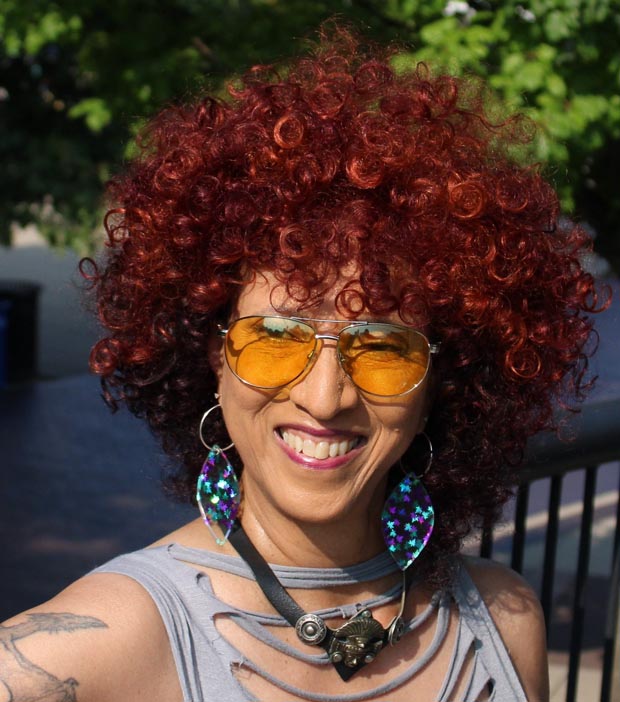 LINDA D. ADDISON: One of my favorite resilient female characters I often think about is the character Rebecca “Tank Girl” Buck from a 1995 post-apocalyptic film (Tank Girl). In the film the character “Tank Girl” sees her boyfriend killed and children abducted as well as being captured herself, but throughout she shows no fear against the head bad guy who tries to intimidate/torture her, always throwing snarky responses to him. Tank Girl doesn’t respond as a nice “girl” when pushed, and I find her attitude inspiring when I need energy in a tough/confrontational situation.
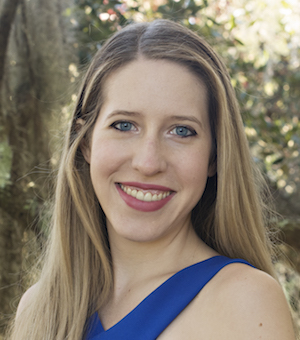 VIGGY PARR HAMPTON: When I think of resilience, Maggie O’Shaughnessy from Maria Tureaud’s haunting This House Will Feed springs to mind. Not only has Maggie survived Ireland’s Great Famine, but she’s also suffered the unimaginable losses of the man she loves and her child. Despite that avalanche of mental, emotional, and physical suffering, Maggie continues to strive to survive. Just when she thinks she’s escaped the torment of her past, new terrors unfold, which she meets with the same resilient attitude and strength of spirit that have thus far ensured her survival. Maggie bears trauma after trauma with grit, determination, and the belief that good still exists in the world.
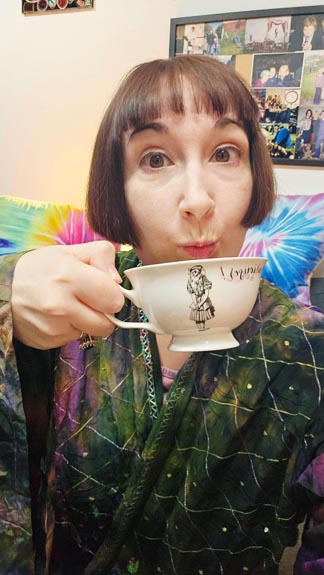 MADELEINE SWANN: The main character of Sister Midnight (directed and written by Karan Kandhari) first has to find a way to cope in an arranged marriage before muddling through, and then thriving, in her new ruthless, blood sucking form. Also the scene of her on the beach wearing sunglasses and holding a black umbrella, surrounded by colourful saris and happy people, is iconic
SAMANTHA BRYANT: I love Noemí Taboada from Silvia Moreno-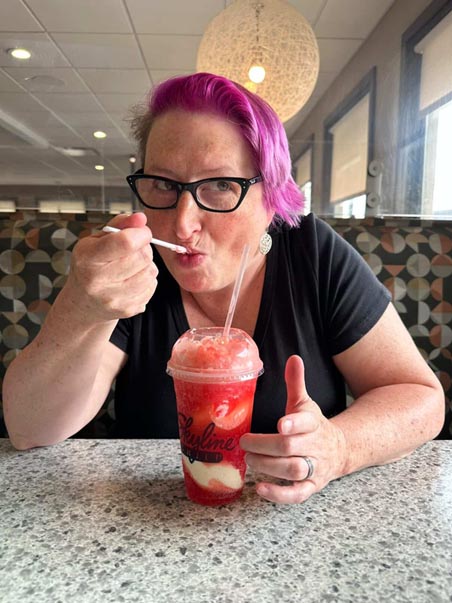 Garcia’s Mexican Gothic. She doesn’t seem like a heroine starting out, but she faces down terrifying truths and secrets to save herself and others. The epitome of “underestimate me at your own peril.”
LEANNA RENEE HIEBER: Edith Cushing from Guillermo del Toro’s Crimson Peak is the definition of a Gothic Victorian Final Girl and I  love her because despite everything she endures, she manages to keep her head and her humanity through it all. I particularly love Edith’s interactions with the house’s ghosts, all of which are grotesque and terrifying at first, but they’re actually trying to help Edith survive. As my own Gothic, Gaslamp Fantasy novels are full of helpful ghosts and that sentiment crosses into my non-fiction work about ghosts such as America’s Most Gothic, a setting where a heroine can heed a good spectral warning makes Edith all the more special.
 DIANA RODRIGUEZ WALLACH: We currently live in a country where Roe-v-Wade has been overturned and politicians are threatening to take away “no fault divorce,” this is why lately I’m admiring the resilience of a famous female horror character who lived before these women’s rights were ever available—Rosemary Woodhouse.
I’m talking about the horror novel, not the movie, because screw Roman Polanski. Rosemary’s Baby, written by Ira Levin, was published in 1967. We follow Rosemary as her abusive, mediocre, narcissistic husband sells her body to a Satanic cult. Abortion was not an option for Rosemary at this time. Neither was divorce, unless she could prove her husband was a devil-worshipper in a court of law.
Rosemary endures a ritualistic rape, then finds the strength to stand up to the controlling husband who had chosen her doctor, her pre-natal vitamins, and her friends. She realizes the evil around her isn’t just demonic, it’s cuddled in the bed beside her. So when Rosemary reaches into that black bassinet at the end of the story, she’s making a choice for herself. One her husband will not like. Rosemary is literally choosing a demonic baby over the vile man she married, and that is giant F You worth celebrating.
 JENNIFER LEWIS: I chose the unnamed child/woman narrator of Jacqeline Harpman’s I WHO HAVE NEVER KNOWN MEN, translated by Ros Schwartz.
Women are vastly and unsurprisingly resilient, as the expectation has always been that we simply tuck away our pain, contain our anger, and smile even in the face of grief and horror. But I think Harpman wrote something that not only allows women to forgo the “grin and bear it” standard we’ve evolutionally assumed, but also encourages us to linger in its disquietude, settle into the building rage, and feel it as we see fit.
It’s not difficult to see ourselves in the unnamed child/woman who challenges not just what it means to be a woman, but what it means to be human. She is disconnected yet seeks connection. She is naive yet welcomes knowledge, often desperate for it. She is unknown to herself and her emotions yet still learns what it means to grieve and love despite existing in such inhospitable environs. And beyond logic and reason and in the face of such horrific despair, she clings to the hope that there is something else, something more, just over that next hill—even after years of journeying without answers. Even after all the other women are dead and gone.
She endures. She survives.
 ISEULT MURPHY: Faith, from ‘The Ungodly Duology’ by S.H. Cooper. I love to read realistic women going up against impossible odds. Not superheroes, just ordinary women trying to do their best against evil interdimensional beings. I could read about them all day.
Faith is aptly named. She’s the plaything of an ungodly monster and she’s having none of it. Yes, the odds seem stacked against her. Yes, she suffers and sacrifices. No, she won’t stop. Ever.
I wish I was more like Faith. Not in the sense of being hunted by creatures from my worst nightmares. More in her resilience, her fortitude, and her perseverance.
 LCW ALLINGHAM: I know Sarah Conner is sort of Sci-Fi Horror, but when I was a child she offered a range that went far beyond what I saw in typical female characters. She started out soft and pretty but found the well of resilience in her to fight on. Then she was so hard and tough yet still kept her heart, still cried when she had a safe moment. I think I love Sarah most because although she’s unique to film and genre, she is not a unique woman, but an example of the resilience innate to women who, when faced with all terrible choices, keep going until they can fight their way out.
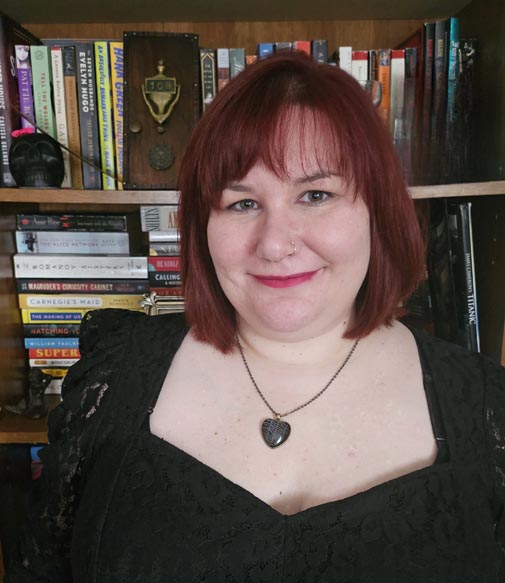 AMANDA WITTMAN: Sophie from American Rapture by CJ Leede is my favorite example of a resilient female in horror. Driven by a quest to find her brother, she navigates the apocalypse and teenage hormones while confronting her own religious trauma. Throughout the novel Sophie must contend with large scale societal collapse while the foundation of her faith also begins to crumble. Yet, in a tumultuous time of turmoil she finds her own direction and moral compass to guide her path.
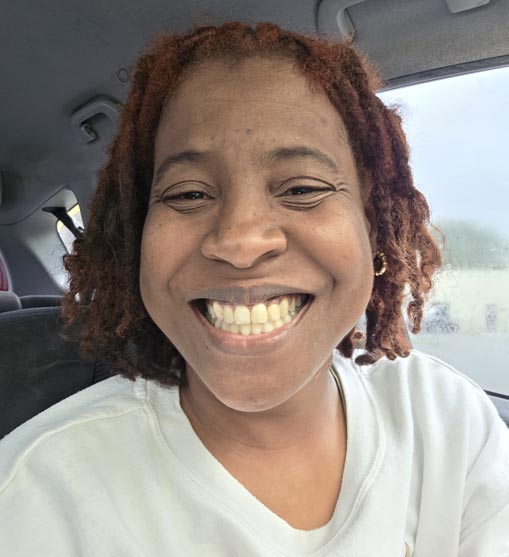 TABITHA THOMPSON: If I had to pick a resilient woman in horror, it would be Sarah from 2005’s The Descent.
I like Sarah because despite what she had gone through by losing her husband and child in an unfortunate accident, she decided to not dwell on grief and face her fear of not being held back by going on a caving adventure with her friends.
Throughout their adventure, I loved the fact that Sarah was becoming more and more resilient with the challenges that she was facing; whether it was dealing with the fact that her husband had an affair with one of her “friends”, or dealing with the possibility that her and her friends would meet an untimely demise due to the cave dwellers, Sarah’s mode became less of a ‘flight’ and more of a ‘fight’.
At the end of the film (U.S. version), although Sarah lost her friends with plenty of nightmare fuel, she managed to survive the cave, showing her fearlessness, resilience, and determination to stay alive, no matter the cost. To have those traits despite everything going
against her was pretty inspiring to me in the sense of not allowing fear to hold you back in any endeavor.
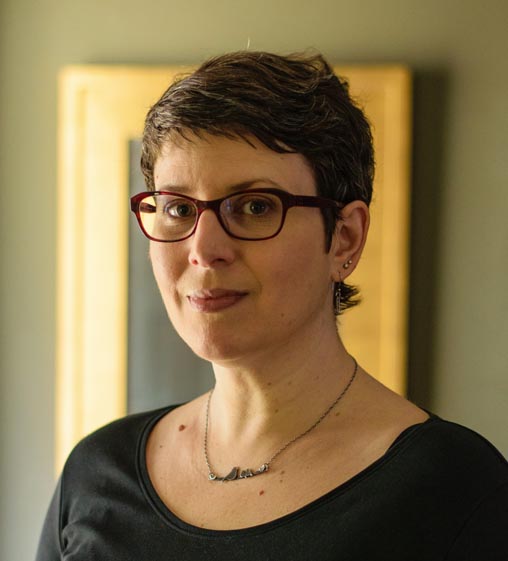 PAMELA WEIS: As for a favorite resilient female character, it’s so hard to decide! But I’m going with Dr. Linda Farmer from A Better World by Sarah Langan: Dr. Linda Farmer is an ordinary, imperfect, middle-aged mom and pediatrician who cares deeply about her patients and her family. She and her family move to a strange corporate town where things are not as perfect as they appear at first. She digs, trying to find out what’s behind the veneer. Townspeople try to divert her. She keeps digging. And ultimately uncovers a bizarre and horrific truth.
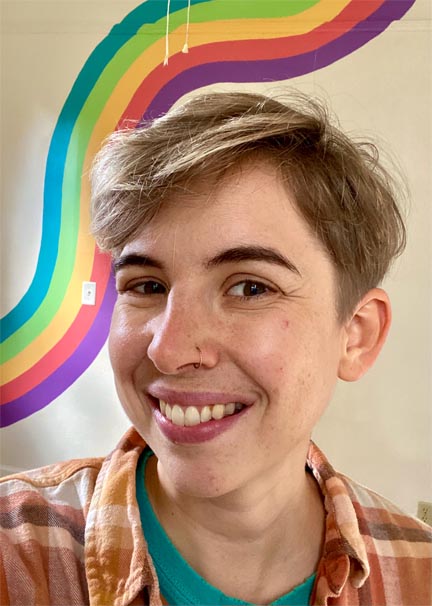 MEL HAMMOND: Gloria Stephens from Tananarive Due’s The Reformatory! She’s 16 years old and a badass big sister who relentlessly works to free her little brother from a deadly reformatory run by a racist psychopath. What I love most about her character arc is that she must learn that following the rules doesn’t work when you’re fighting from within a racist political structure.
 NICOLE GIVENS KURTZ: Until fairly recently, thanks in part to Black Women in Horror project and Women in Horror Month, there hasn’t been Black characters in horror that didn’t die off in the first few pages of a novel or series. When they weren’t killed for fodder, they were turned into the magical negro, giving all of themselves for the white protagonist to level up and survive. Rarely are Black female characters the final girl.
Growing up with such little choice left me with one of the most flawed, grossly misused, but redeemed character in horror—Susannah Deane of Stephen King’s The Dark Tower.
I’ve written about the problematic aspects of Susannah’s character.
How problematic? Very. A note here that a middle-aged Stephen King, perhaps still firmly planted in the bottle, wrote her. She makes her appearance in The Drawing of the Three, which is probably my favorite in the series.
For starters, she’s disabled, having both her legs cut off below the knee due to a racist incident before she arrived in MidWorld. She doesn’t arrive in the otherworld alone. She has a split personality—Detta. And Detta is a vicious, mean, and caricature of what King probably thought white people think Black people think of them. She’s also heavily sexualized as Detta, and she sleeps with white boys to steal from them in our world in the Jim Crow Era. King even has Susannah engage sexually with a demon, to occupy it while Jake is brought over into their world. I’m still upset about this use of Susannah, and while she consents to it, it is horrible optics considering how many Black women were assaulted by a menacing presence during slavery.
I did mention the character was a mess. Right?
Why choose this character if King got it so wrong?
Because she is messy, like me, like a real human being, and as a teenage girl growing up, I knew people who hated the way Detta hated. I knew Black women who’d been hurt the way Susannah had been, both physically and emotionally by racism.
What I do love about Susannah is that out of all of Roland’s ka-tet, Susannah grows the most. She becomes a fierce warrior, and she learns to love all the aspects of herself, the scary hateful Detta. How many of us have qualities or have done actions that both shame us and make us feel worthless? Not only does Susannah embrace those aspects of her personality, but she also forgives herself. She leaves the past where it is, in another world.
It is through the rest of the series, but especially in Songs of Susannah, where she shines and King, I would like to think, having grown in his knowledge and experience, attempted to redeem himself from his previous depictions of her. She is strong, even in the face of loss. She remains one of the last of Roland’s ka-tet in the end, and unlike the others, she chooses her end.
Those aspects of Susannah Dean is the reason I adore her as a character. Despite the numerous hardships, she continued moving forward, adapting, learning, elevating, just like Black people have been doing for 200+ years in this country, taking adversity and making it love, joy, and culture.
And that’s part one of our feature on resilient female characters! While you’re at it, consider checking out part two and part three of our resilient characters spotlight!
Happy reading, and happy Women in Horror Month!