Welcome back, and happy July! Today, I’ve got a brand-new roundtable about a topic that you probably won’t see on most other horror websites: Marie Antoinette.
I’ve been fascinated by the story of Marie Antoinette since my high school days when my French teacher informed us that the ill-fated French queen never said “Let them eat cake.” That was more than a little intriguing to me, considering that was one of the primary things I knew about her. From there, I learned that Marie Antoinette was a much more complicated figure than she’s often depicted. Add in Sofia Coppola’s polarizing biopic, Marie Antoinette, from 2006, and the former French monarch has swirled around quietly in my mind ever since.
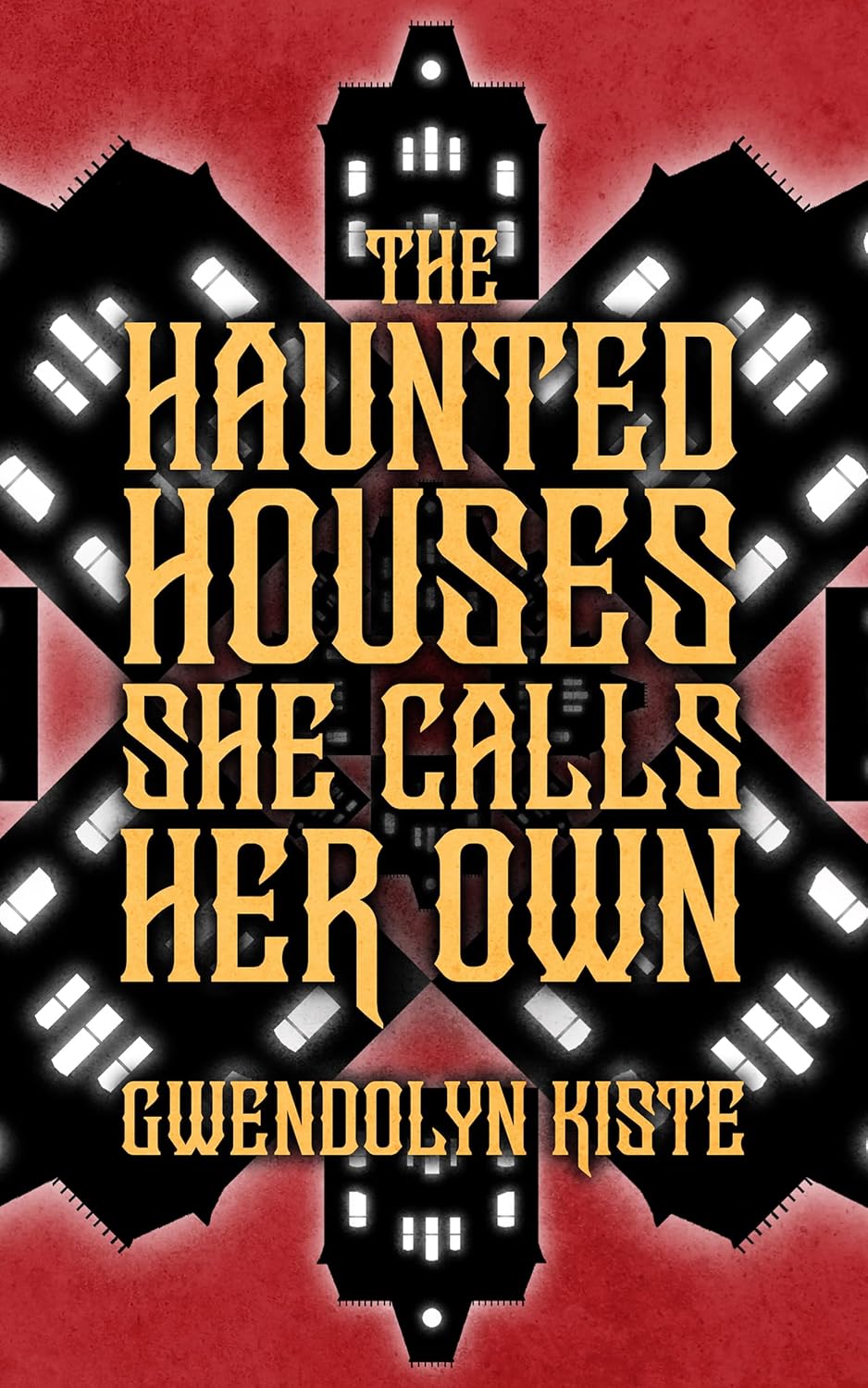 That interest in Marie Antoinette came to fruition in my story, “Lost in Darkness and Distance,” which is one of the three brand-new tales in my new collection, The Haunted Houses She Calls Her Own. In the story, Marie Antoinette digs herself and her disembodied head out of a shallow grave and wanders the European countryside. That is, until she stumbles into the famous ghost story at Lord Byron’s estate and meets Mary Shelley herself. Soon Marie becomes Mary’s very own Frankenstein’s monster, and the two women find themselves bonding and sparring over their respective lots in life. It’s one of the stranger stories I’ve ever written and also one of my personal favorites.
Fortunately, I’m not the only horror and dark fantasy writer out there who finds Marie Antoinette to be a complex and even misunderstood historical figure. I recently gathered together three other authors whose recently released books explore Marie’s legacy. Together, we discuss how we discovered the life of Marie Antoinette and why we decided to include her in our own body of work.
What made Marie Antoinette someone you wanted to write about? Do you remember the first time you came across information about her? Or was there a particular moment when something clicked for you, and you knew this was someone whose legacy inspired you in some way?
 AZZURRA NOX: My fascination with Marie Antoinette began when I was three years old, after watching the anime series The Rose of Versailles. The story follows Oscar, a fictional woman raised as a man who rises through the royal military to become Captain of the Royal Guard. Her life becomes deeply intertwined with that of Marie Antoinette, and through their relationship the series introduced me to both French history and the human drama behind it. What struck me most was that the show didn’t shy away from the brutality of the French Revolution or Marie Antoinette’s tragic fate.
That early fascination grew into a lasting obsession. I spent years reading biographies, watching films, and researching her life, yet I was consistently frustrated by how narrowly she was portrayed. Most depictions focus on her youth and extravagance, reducing her to a symbol of excess while overlooking the complexity of who she became later in life. She arrived in France at only fourteen years old to marry Louis XVI, and yes, she could be naïve and frivolous in her early years. But what moved me was the strength and dignity she displayed after losing everything.
In her darkest moments—stripped of her titles, separated from her children, imprisoned, and facing execution—she did not lash out with bitterness or demand revenge. Instead, in her final letters, she urged her children to forgive the French people and expressed regret that she had not fulfilled her role as queen more successfully. That resilience and compassion are rarely explored, even though they reveal the most human side of her story.
That is why my book, Panico! Marie Antoinette’s Journey During the Reign of Terror, focuses primarily on her final years. I wanted to tell the story of a woman who, despite her flaws, faced unimaginable loss with remarkable composure and courage—qualities I believe history and popular culture often overlook.
 JULIA JACKSON: I have always been obsessed with history. In particular, I have always adored the works of French artists and the political landscape that shaped their work. I studied art history, devoured history docs and books, and somewhere along the way stumbled upon Marie Antoinette. When I finally travelled to France to see all I loved, outside of projector slides and in the flesh, I made sure Versailles was top of my list. To walk where Marie had was surreal, and something clicked for me that day. Walking through the gardens and down the hall of mirrors, I felt I understood her better. Beyond ink on paper, she was indeed a living, breathing girl who held so much weight upon very small shoulders.
JESS HAGEMANN: European history never stuck in my head until I learned about Marie Antoinette. I think it was the fact that she was so young when she was married off to France and how she met her grisly end. The guillotine is iconic. Still, apart from watching and loving Sofia Coppola’s Marie Antoinette in 2006, I didn’t become obsessed with the queen’s story until I took a 23&Me DNA analysis test and learned I “shared a common ancestor” with Marie Antoinette. My mother-in-law gifted me the DNA test. She then gifted me Antonia Fraser’s comprehensive biography of Marie Antoinette, and the rest was history. I knew I needed to adapt her story in some way because so many parts of it, from her child-bride status to the way she was “canceled” by the French peasantry, still feel resonant today.
All of your books contain elements of either horror, fantasy/magic realism, or both. What is it about Marie Antoinette and her legacy that blend so well with the horror and fantasy genres?
JULIA JACKSON: I had just finished a manuscript and needed to dive into a new project. I’ll never forget driving along the highway from my day job and suddenly thinking about Marie. How she went through so much at such a young age. I thought about my young daughter and how I couldn’t imagine her going through that in just a few years time. It was horrifying, really – this 14 year old girl who endured some of the first braces without anesthesia. Who had everything she knew and loved in Austria stripped from her to go to France at 14. To marry a complete stranger at 14 and then have the court gather round to encourage consummation. A young girl used as a political pawn, used as a scapegoat, labelled as the villain, and finally, used as a symbol of the end of the monarchy with the blade of a guillotine. And it hit me then. Marie‘s story was a horror all along, and it was meant to be my next book.
 JESS HAGEMANN: That blade! That drop! The way her head bounced, eyes still open, as onlookers rushed to soak their handkerchiefs in her royal blood! Marie Antoinette‘s is a real-life horror story. I just updated it to include some of today’s horrors, including making her the pupil of a Jeffrey-Epstein-inspired teacher, who was in turn modeled on another real-life figure, Count Axel Fersen. In MOTHER-EATING, she also rules over a sex-and-torture cult in Austin, Texas instead of the country of France.
AZZURRA NOX: I think the horror element in Marie Antoinette’s story is almost impossible to ignore because so much of her life was defined by real, human terror long before the French Revolution reached its peak. She was sent to France as a bride at just fourteen years old, became queen at eighteen, and suddenly carried the expectations of an entire nation on her shoulders. On top of that, she endured years of scrutiny and humiliation over her marriage and her inability to conceive children—only to later lose several of the children she fought so hard to have.
People tend to picture Marie Antoinette through the lens of luxury and extravagance, but when you look closer, her life was already a kind of psychological horror long before she was imprisoned and taken from Versailles. The fear, isolation, public judgment, and eventual loss of everything she loved are what drew me to telling her story through a darker, more emotional lens.
Some readers have described my book as having elements of fantasy, but I see the only “fantasy” aspect as my decision to write from Marie Antoinette’s point of view rather than from a distant third-person perspective. I wanted readers to experience her humanity directly—to feel her fear, grief, confusion, and resilience as if they were living through it beside her. For me, stepping into her perspective was the only way to tell her story with the emotional honesty it deserves.
Are there any particular books, films, or documentaries about Marie Antoinette that you used in your writing process?
 JULIA JACKSON: Sofia Coppola’s Marie Antoinette brought history to life. It showed the soft, tender side of Marie. The girl who wanted to have fun and make the most of a new life, all while having the crushing pressures of court upon her. When the film was first released, I went to the theatres to see it more times than I should admit. And many years later, when I decided to write Powder & Poison, I studied it all over again. I spent six months not writing a single word of my book. Instead, I immersed myself in all the history books I could get my hands on. I painstakingly studied courtlife, Marie and all those around her, and I even studied detailed layouts of Versailles and its gardens. Half a year of research was well worth it, and I am so happy I got to know her world as well as possible before putting pen to paper.
AZZURRA NOX: I read countless books while researching Marie Antoinette, but the sources that affected me most were the ones that brought me closest to her final days as a prisoner. Marie Antoinette’s Darkest Days: Prisoner No. 280 in the Conciergerie by Will Bashor was especially influential because it captures the fear, isolation, and emotional strain she endured during imprisonment. I also spent a great deal of time reading the actual court documents and trial transcripts from 1793 through Gallica, which preserves records from the Revolutionary Tribunal. Reading her words and the accusations leveled against her, in their original form made her feel startlingly human rather than mythologized.
I’ve also watched nearly every major film adaptation about Marie Antoinette, and my personal favorite remains Marie Antoinette (1938) starring Norma Shearer. There’s a tragic elegance and emotional depth in her performance that has always stayed with me.
I do appreciate the visual style and atmosphere of Marie Antoinette (2006), and I think Sofia Coppola genuinely tried to capture the feeling of girlhood inside Versailles. I’m also a fan of Kirsten Dunst. But for me, that version still leans too heavily into the popular caricature of Marie Antoinette—the frivolous, out-of-touch queen—and in doing so, it unintentionally reinforces many of the damaging myths surrounding her, including the infamous “Let them eat cake” quote, which she never actually said.
JESS HAGEMANN: Yes! Besides Sofia’s film and Fraser’s biography: The Queens podcast and History Chicks podcast episodes about Marie Antoinette. We also hired a UK-based artist, James Hutton, to re-interpret a real political cartoon of Marie Antoinette that circulated during her reign and depicted her as a harpy. That’s the sweet MOTHER-EATING cover art!
If there was one thing you wish people knew about Marie Antoinette, what would it be?
 JESS HAGEMANN: She was, in my opinion, so unfairly maligned. She’s one of history’s most hated characters, but I don’t believe she deserved it. Imagine being “traded” by your mother to a foreign country at 14. You don’t speak the language, you don’t know the customs, you’re married to a fellow strange child, and you’re navigating all of it in the public spotlight. Of course you’re going to be naive, and of course you’re going to make mistakes. While she probably was a little ignorant when it came to the true plight of the French people, she never said “Let them eat cake” and wasn’t owed beheading.
AZZURRA NOX: More than anything, I want people to understand that in her darkest moments, Marie Antoinette revealed an extraordinary kind of courage. By the end of her life, stripped of power, separated from her children, and condemned by the public, she faced her fate with remarkable stoicism and dignity. That is the side of her I feel history often overlooks.
If I were to share one fact that many people may not know, it’s what happened after her execution. Her body was reportedly left near the scaffold for nearly two weeks before being taken to a cemetery and thrown into a common grave. It wasn’t until the Bourbon Restoration in 1815 that her remains—and those of Louis XVI—were exhumed and finally given a proper royal burial.
Learning that deeply affected me. The image of her body being discarded so carelessly, almost as if she were no longer human but simply an object to be disposed of, says so much about the dehumanization she endured during the Revolution. It reinforced for me how easy it can become for societies to strip people of their humanity once they are turned into symbols rather than seen as individuals.
JULIA JACKSON: Marie never said “Let them eat cake!” A quote was taken from a book and attributed to her because it so perfectly fit the propaganda of Marie being out of touch with the people of France and living a life of luxury without a care in the world. Propaganda turned into a globally believed fact across time—that sounds like true horror to me. And that’s what the horror genre is able to do more than any other: confront the horrors of humanity, shining a spotlight on how terrifying things that were happening hundreds of years ago are still happening today.
What are you currently working on? Any upcoming projects you’d like to share with everyone?
 AZZURRA NOX: I’m currently working on a horror novel set during World War II in Gela, Sicily. The story centers on a secretive cult of women who worship Medusa, and how their lives are completely upended when they take in a wounded American soldier. It’s a blend of psychological horror, mythology, and wartime tension, which has been incredibly exciting to write.
JULIA JACKSON: I am currently working on a found footage cult book with lots of twists!
I recently finished an angry little novella called TELL ME YOU LOVE ME that I think every woman will relate to in some way or another…one that, very intentionally, has many trigger warnings. Think MAEVE FLY x SALTBURN.
I also co-founded Grave Belles, a small press dedicated to raising female and non-binary voices, focused on dark story telling and building community. Our first anthology, OF PLAGUES AND BLASPHEMY released on May 5, with proceeds going to The Trevor Project. The next anthology, THE CAGES WE ENDURE, is out October 6, and we are currently accepting submissions for our SUMMER SLASHER anthology.
JESS HAGEMANN: This year I novelized an existing movie for Encyclopocalypse Publications! My treatment of BURNING PALMS (2010) by screenwriter/director Christopher Landon drops August 11, 2026. I’m also at work on a new body horror novella! Stay tuned at www.jesshagemann.com
Thank you so much to my three featured authors! It was so much fun talking to them about Marie Antoinette and horror!
Happy reading!