Category Archives: Interviews

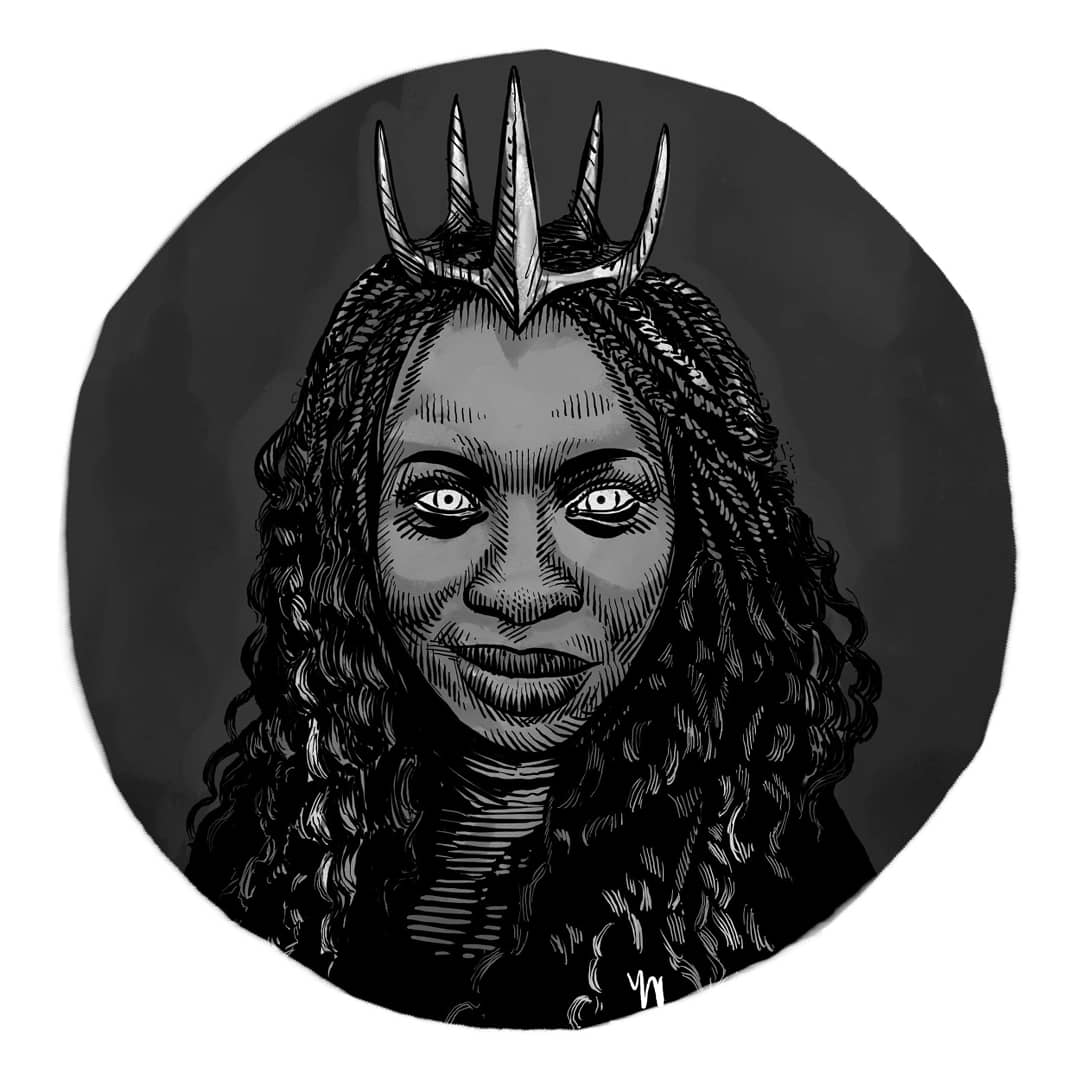
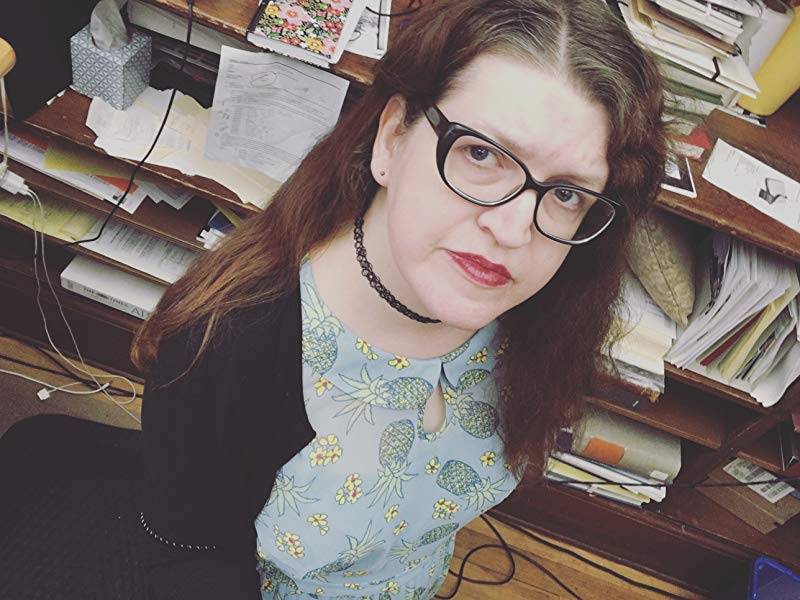
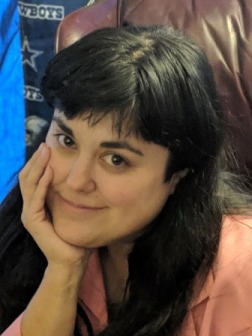
Summer Skin and Night Sun: Interview with teri.zin

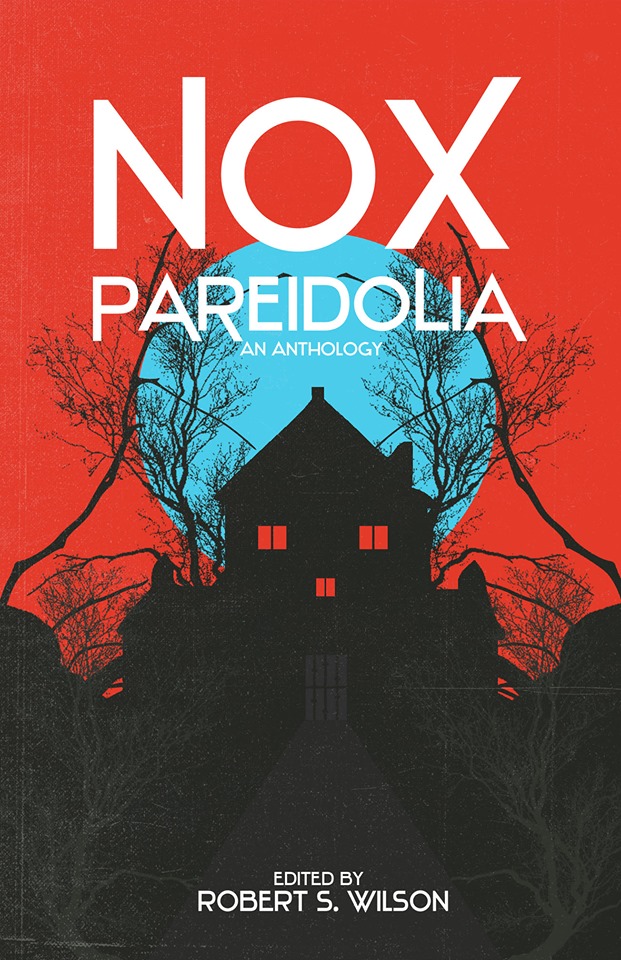
Welcome back for this week’s interview! Today I’m thrilled to feature author teri.zin. teri.zin who writes under the name Zin E. Rocklyn has been published widely, including at Tor.com and in anthologies including Sycorax’s Daughters and Nox Pareidolia.

Recently, she and I discussed her inspiration as a writer, her favorite authors, and what she’s planning on writing next.

A couple icebreakers to start: when did you decide to become a writer, and who are some of your favorite authors?

I never really thought I could hack it as a professional, but it feels like i’ve always written. i enjoyed stories and storytelling; it was fun to come up with worlds and make friends with characters. I think I started writing stories in earnest when I read the Fear Street series by RL Stine around 9yrs old. I remember the first character I’d created who I truly fell in love with: MoniLove Monet. She was everything I wanted to be when I was going to be a teenager. Things turned out much different, except for my love of horror, that only increased.

My favourite authors are NK Jemisin, Octavia Butler, Nathan Ballingrud, Clive Barker, James Baldwin, Zora Neale Hurston, Helen Oyeyemi, Stephen Graham Jones, and Kathleen Collins, to name a few. There are too many!

Congratulations on the recent release of “The Night Sun” at Tor.com! What can you share about how this particular story developed?

The beginning of the story was sitting in my notes on my phone for literal years after seeing a drawing that struck me. It was until I went to Viable Paradise in 2018 did I have the opportunity to work on it. I had no idea where it was going when I jotted it down, but the prompts we received helped click things into place. The title came from a brain fart. The moon was full and gorgeous one night on Martha’s Vineyard and I mouthed Night Sun instead of full moon. I’m terrible at titles so I just ran with it.

Last fall, your story, “Birds,” was released in Nox Pareidolia from Nightscape Press. What was the inspiration for this story?

I have a deep desire to explore complex familial relationships, especially between a mother and daughter. Though the story is about two sisters, it is the mother’s treatment of either daughter that influences their relationship. As with most of my stories, it was also born of frustration. I was seeing a lot of calls for diversity but only a certain kind of acceptable diversity. It was diversity through a very white lens, a lens not exclusive to just white people either. So I wanted to write something where there are no heroes and the ugliness of white supremacy could be shown: you can have Black friends, lovers, coworkers you get along with, that doesn’t mean you’re not racist.

Your debut short story, “Summer Skin,” appeared in the highly lauded Sycorax’s Daughters in 2017. What is it about body horror that draws you in as an author?

Growing up, I had terrible eczema and when it was my turn for the chicken pox, I got the blisters instead of the itchy welts (trust me, it’s gross). It was traumatic having skin that was actively attacking itself, creating sores and crusty wounds that kids would point and laugh at or be obnoxiously disgusted by. It was also terribly painful. I battle chronic pain and PCOS, plus I was the kid always getting injured in some way. Horror is cathartic for me. It helps me process when my skin rebels, when my body is twisting upon itself. It helps me externalise the pain of depression and the constant discomfort of anxiety.

Are there are other subgenres of horror that you’re particularly eager to explore in your writing?

I love Gothic horror and would love to tackle it! Sci-fi horror and horror-westerns interest me, too.

If forced to choose, which is your favorite part of the writing process: developing characters, crafting settings, or writing dialogue?

Aw, man, that’s tough! I’d have to say crafting setting is the most fun for me. I like feeling creeped out and it’s even better if I can create it for myself!

What’s next for you? What projects are coming out soon? What are you currently working on?

I hope to have some work out soon! Right now, I’m working on a dark fantasy novella and several horror short stories. Times are a bit tough for creating, but I’m still plugging away!

Where can we find you online?

You can find me on Instagram at teri.zin or Twitter at intelligentwat. My website terizin.com is still under construction.

Huge thanks to teri.zin for being this week’s featured author!

Happy reading!

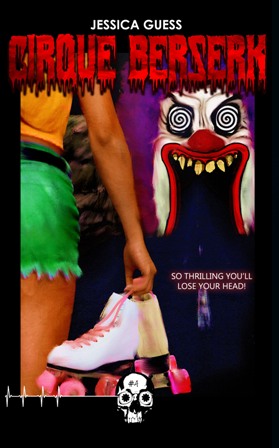
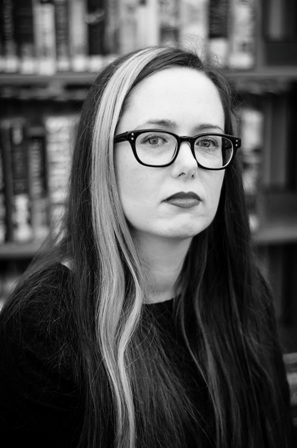
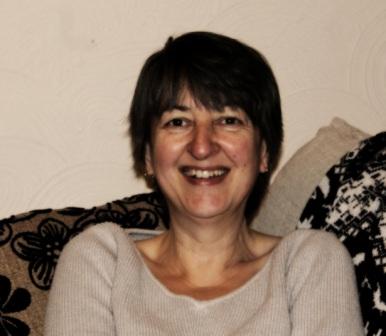
Roller Skates and Horror: Interview with Jessica Guess

Welcome back for this week’s author interview! Today I’m thrilled to spotlight Jessica Guess! Jessica is the author of Cirque Berserk, a new novella from Unnerving’s Rewind or Die series.

Recently, Jessica and I discussed how she got started as a writer as well as her working process and what awesome horror she’s got planned next.

A couple of icebreakers to start: when did you decide to become a writer, and who are some of your favorite authors?

In my junior year of college, I watched a Ted Talk on creativity by Elizabeth Gilbert and she said, “Why are we afraid to do the thing we feel God put us on this earth to do?” Until then I was trying to be a doctor or a lawyer, you know, really safe career choices my Caribbean parents would approve of. I hated it. The only thing I enjoyed, the thing I felt compelled to do, was write. After I watched that Ted Talk, I decided to go for it. Some of my favorite authors are Stephen Graham Jones, Gillian Flynn, and Marlon James.

Congratulations on the release of Cirque Berserk! What can you share about how this story developed?

I got the idea after watching The Strangers Prey at Night. The way they used 80s music in that movie was immaculate. That night I got the image of a character on roller skates doing something horrible to another character while DeBarge’s Rhythm of the Night played in the background. I asked myself, why are they doing that? Why are they on skates? Where are they? And the story developed from there. Another thing that helped the story develop was that I wanted to see a slasher story with a strong emotional center. A lot of times, slashers are considered shallow, but I wanted something with a heart that was as strong as the hook.

What in particular draws you to the horror genre? Do you remember your first horror film or horror book?

I know this goes against evolutionary instinct, but I like being scared. It’s kind of a rush. When I was younger, I considered it a challenge. Like, if I could watch something scary and not be completely terrified, then I won. That’s where it started, but now I love it because horror is a genre where the stakes are always high, so it feels like it really matters. I don’t remember my first horror film, but I always say it’s either Brides of Dracula or A Nightmare on Elm Street because those are the earliest in my memory. As for books, it’s probably The Girl Who Cried Monster by R.L Stine. I read that one in elementary school and loved it.

You’re the founder of the fantastic site, Black Girl’s Guide to Horror. When did you first decide to create the blog, and what’s been the most exciting or surprising part of running the site?

I decided to create Black Girl’s Guide to Horror when I finished graduate school and the job search was going terribly. I needed something to take my mind off everything and I wanted to talk about horror movies, so I made a blog and it grew from there. I don’t know if anything is exciting, but there’s a lot that’s been educational. I like learning about all kinds of writing and blogging is its own specific genre. It’s taught me a little about search engine optimization and what audiences like to hear about when it comes to horror.

Your short story, “Mama Tulu,” appeared in Luna Station Quarterly. What was the inspiration for this piece?

Both my parents are from Jamaica and there are always stories about obeah women or obeah men. For clarification, obeah is just what we call voodoo. My mom especially told me some pretty scary stories when I was a kid about obeah women. One day I got this image of a girl walking through some tall grass and bushes in Jamaica. She was on her way to a wooden shack in the middle of the night and I decided to write it. I had to ask why would she be doing this at night? In Jamaica, it’s taboo to go to obeah people. You can be shunned, so it would have to be done in secret and I realized that’s where the girl was headed. The story grew from that.

If forced to choose, which is your favorite part of the writing process: brainstorming new ideas, working on a first draft, or polishing an almost finished story?

If I had to choose, I’d say brainstorming is my favorite. I love coming up with an idea and plotting it out a bit before I write it. I always have to know who my main characters are and what they want and why they want it before I write anything. That’s my favorite part.

What projects are you currently working on?

I’m working on an erotic horror story and a script about a haunted childhood home. Both of them are in the early stages meaning I’m still getting to know the characters.

Where can we find you online?

I’m on Twitter at @jessiguess90 and @BlackGrlsHorror and you can always stop by Black Girls Guide to Horror dot com. You can also pick up my book Cirque Berserk on Amazon.

Tremendous thanks to Jessica Guess for being part of this week’s author interview series!

Happy reading!

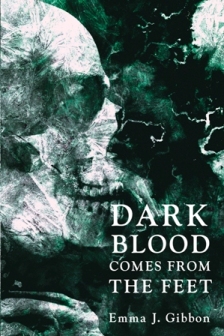
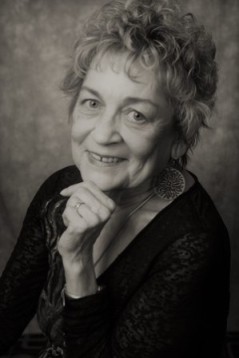
Dark Blood and Poetry: Interview with Emma J. Gibbon

Welcome back for this week’s author interview! Today, I’m excited to be talking with author Emma J. Gibbon! Emma’s debut collection, Dark Blood Comes from the Feet, is set for release later this month from Trepidatio Publishing.

Recently, Emma and I discussed the inspiration behind her new collection as well as what draws her to the horror genre.

A couple icebreakers to start: when did you decide to become a writer, and who are some of your favorite authors?

It didn’t come all at once for me, I sort of realized in stages. I’ve always been a reader. As soon as I knew how I just read whatever I got my hands on. I started writing poetry at first, in my teens, and then went on to short stories mainly. I think confidence was part of it, and also not really knowing where I fit in, in all of it so getting very close to publishing but not quite. Weirdly, something clicked when I turned forty—just being a lot less afraid of failure and really not caring what people thought. I began making connections in the horror community and getting my work out there and it worked! I started getting publishing credits and such very quickly. I feel like one of those actors who get called an overnight success when actually they’ve been working at their craft for years!

My favorite authors! I know I’m going to forget someone but off the top of my head: Shirley Jackson, Angela Carter, Daphne du Maurier, George Saunders, Kelly Link, M. Rickert, Neil Gaiman, David Mitchell, Donna Tartt, Stephen Graham Jones, Sarah Monette, Mervyn Peake, V. C. Andrews. I do read a lot of horror, but I’m pretty omnivorous when it comes to books. I read all kinds of things.

Congratulations on the forthcoming release of your debut collection, Dark Blood Comes from the Feet! What can you share about this book? How did you choose the stories to include, and is there a particular theme or themes in the collection?

Thank you so much! Dark Blood Comes from the Feet is a collection of seventeen stories. Some of them have been previously published, but most are original to the collection. I would say that they come from the last decade of my work. They’re mostly horror, but they do dip into other genres too. “Sermon from New London” is post-apocalyptic, for example. As a reader, I like to see a range of different stories in a collection so as this is my first, I really wanted to show people what I could do. I went for the most variety of styles and moods and settings. I know that one of my strengths is my versatility and I heavily favor first person narrative so I wanted to show that. That said, there are themes and motifs that do reoccur because my own preoccupations find their way into my work. You will find a lot of references to illness and in particular, tuberculosis, you will find women characters who have deviated from “normal” lives, there are geographical places I return to and I often make people who are not usually in the limelight the protagonist. I have a huge chip on my shoulder about being a woman from a working class background so that comes through. In my stories, the monsters usually win and are not necessarily the ones you should fear anyway.

What draws you to the horror genre? Do you remember your first horror film or horror book?

I think it’s just in my DNA, honestly. I come from an ex-mining town in Yorkshire in the UK. There’s a saying “It’s grim up North” and it’s not just the weather! I say this with a lot of love but my people are a morbid, darkly comic bunch. I tell stories to my husband (who’s American) about my childhood and it just sounds…Dickensian. I intend to write a short nonfiction piece about it all. I just need to find a publisher interested in Yorkshire Gothic!

At a very young age, I used to beg my mother to let me stay up to watch Hammer Horror films and Tales of the Unexpected (based on Roald Dahl’s short stories for adults.) I was too young to remember actually watching them now, except for Tales of the Unexpected’s intro, which I highly recommend on YouTube, it’s mesmerizing. When video stores became popular, my brother and I used to go and look at all the covers in the horror department. Our favorite covers were The Lost Boys and Fright Night, but I think the first one we could convince someone to rent was Love at First Bite. When we finally got our hands on Lost Boys, we watched it every day. I still know all the words.

The first horror book I remember was the first book I ever bought for myself at a Scholastic book fair in middle school! It was called something like Ghosts, Spirits and Spectres and was an anthology of classic and contemporary ghost stories. It had a picture of a cursed doll on the front. I read that thing so many times it fell to pieces. My favorite in there was Laura by Saki. I really have been myself for a very long time.

What is it about the short story format that appeals to you as a writer?

It’s definitely the format that I feel most confident in. I love writing poetry, but it has a lightning from the sky element to it that I can’t quite understand, whereas as I reader I have always favored short stories—I’ve always been a big reader of anthologies and collections. I’ve read a lot of them. It’s a place I feel comfortable in. As a reader, I like the way I can fully immerse myself in a space/time in one short sitting. I like the focus of them. I like open endings where I can imagine a life for the characters after.

When I was a teenager, in the golden MTV years of the nineties (in my opinion), I really wanted to be a music video director. I think what I really wanted to do, and what appeals to me about writing short stories, is to convey a very condensed, intense experience where theme and language and imagery can combine in a compact space. You have to get your characters and setting and mood established fairly quickly, and I like the challenge of those constraints.

You write both fiction and poetry. How does your approach to each form differ, and how is it similar?

They’re similar as in they tend to come out of my brain ooze in an almost unconscious way. I mull things over, worry at them, have obsessions that I read and well, obsess about, and it all turns up in my work, no matter the format, and in such a way that I rarely realize until later. I can identify what time in my life I wrote something without looking at dates because I recognize what my concerns were at the time but it’s retrospective. I have no idea when I’m actually writing it.

As I’ve said elsewhere in this interview, poetry often comes to me in a flash. That first draft comes out whole, then I leave it for a while and go back to edit when it doesn’t feel like it’s from me. Short stories are a much longer process. I am getting quicker, but some of the stories in the book took up to ten years to find their “final form.” Ray Bradbury in Zen and the Art of Writing (which I loved) compared ideas to trying to befriend cats. You have to act casual at first, like you’re not that interested. George Saunders said something similar and I can’t find where I read it for the life of me but he talked about seeing it in the corner of your eye, letting the ideas sidle up to you. This is how I write stories. Elements of them come to me and start connecting together, then eventually a piece’ll connect where I am ready to start writing. Then I have to Jedi mind trick myself into believing I’m not really writing a story, no, I’m just noodling around, no pressure…until I have something. As you can probably guess, I’m not much of a planner.

Out of your published work, do you have a personal favorite?

Dark Blood Comes from the Feet is my first book so I’m going to say this! It’s been a dream of mine to have my own collection for a long time and now it actually exists! As far as individual stories go, it’s like choosing between children but the two that stand out to me the most as I write this are “Cellar Door” and “This is Not the Glutton Club.” “Cellar Door” is a story that I really wanted to write for a long time. It has some of my favorite things in it—an unreliable narrator, a haunted house, spatial weirdness, which is something that genuinely terrifies me, and the house is based on my actual home. I wanted to write it so badly that I was scared I couldn’t do it justice. In the end, I nanowrimo-ed it so I wouldn’t get in my own way.

“This is Not the Glutton Club” is memorable because I wrote it while bedridden with double pneumonia! It’s my version of a nested story about a group of Victorian gentlemen who catch illnesses on purpose. I couldn’t sit at my desk, so I handwrote the first draft for the first time in years. I realized how much I missed the experience of writing like that, and I’ve been using that method ever since. I also crowdsourced the research I needed for that story using my phone and Facebook because I was so sick—I have very clever and generous friends.

As for my poetry, I would say “Fune-RL” which is up for the Rhysling this year! Not only did it get in Strange Horizons, which is a dream market, but it was one of those rare times when I knew I had something. I wrote it early one morning (which is unheard for, for me. I am emphatically not a morning person) and it just…came out, pretty much as it was published. It was only looking back at it that I could see all of the things that I had been thinking about and worried about all woven into one poem. It felt close to magic.

What projects are you currently working on?

Oof, that’s the question. I’m in a bit of limbo at the moment, partially pandemic related but not entirely. I think it’s about time I wrote a novel and I did write some notes before Covid hit but I’ve got quarantine brain right now and concentrating on anything is hard. I think I’ve got enough material for a poetry collection so that’s a possibility and I have some short stories that I want to write and edit. For now, I’m in input rather than output mode. I’m reading in short spurts (quarantine brain, again), catching up on shows that I missed, re-watching favorite movies. I know that my brain is churning away in the background and I’m hoping it’ll let me know what project I should do next.

Tremendous thanks to Emma J. Gibbon for being part of this week’s author interview series! Find her online at her website and on Twitter!

Happy reading!

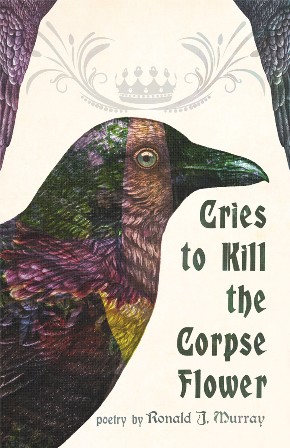
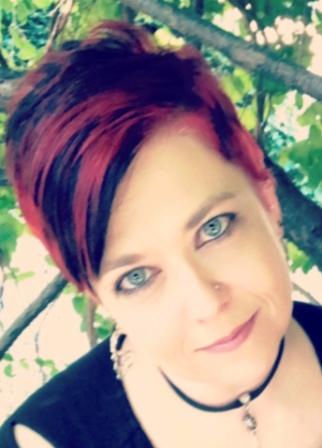
Crows and Corpse Flowers: Interview with Ronald J. Murray

Welcome back for this week’s author interview! Today, I’m thrilled to spotlight Ronald J. Murray. His debut poetry collection, Cries to Kill the Corpse Flower, is forthcoming from Bizarro Pulp Press, an imprint of JournalStone.

Recently, he and I discussed his inspiration as a writer and how the Pittsburgh area influences his work as well as what he’s got planned next.

A couple icebreakers to start: when did you decide to become a writer, and who are some of your favorite authors?

My only vivid memories from elementary school are sitting in the library, listening to our librarian read to my class, so I guess it’s fair to say that I’ve always been fascinated by the art of storytelling. However, I found out that writing was a part of me when my seventh-grade literature class took turns reading paragraphs from Edgar Allan Poe’s “The Tell-Tale Heart.” My parents got me The Complete Tales and Poems of Edgar Allan Poe the following Christmas, and with a mind full of terrors and mysteries and vicariously experienced losses, I began experimenting with my own stories and poetry.

I’d have to say that my favorite authors are (have I mentioned Poe?) Neil Gaiman, Josh Malerman, Patrick Rothfuss, Steven Erikson, Junji Ito, Sara Tantlinger, Claudia Gray, Timothy Zahn, Robert W. Chambers, and H.P. Lovecraft. This is probably cheesy to say, since you’re the one interviewing me, but I really enjoyed your collection And Her Smile Will Untether the Universe, and it’s definitely listed among my favorite books.

Congratulations on the forthcoming release of your poetry collection, Cries to Kill the Corpse Flower. What can you share about how this book developed?

Thank you, thank you! The funny thing about Cries to Kill the Corpse Flower is that I consider it to be an accidental poetry collection. I was going through a pretty severe depressive episode at the time I was writing it. I’d take cigarette breaks at work and just write these bursts of emotion in my notepad app on my phone. I’d go out for cigarettes at home and do it again. I’d just jam my thumbs onto the touchscreen keyboard any time I felt the fiery whirl of anxiety rise in me, whether I was in bed or taking my dog for a walk or drinking my morning coffee. Then, I put them all in a Word document so I didn’t lose them and realized I had forty poems about the same thing, using the same metaphors. So, I put them into a manuscript and gave them a collective title and sent them to Jennifer Wilson to be edited. From there, Nicholas Day and Don Noble acquired the collection for Bizarro Pulp Press, and here we are, with Cries to Kill the Corpse Flower available in print on June 29th of this year.

What draws you to horror poetry in particular? Is horror your favorite genre of poetry, or do you widely read other genres as well?

I feel like I am drawn to horror poetry because dark imagery packed into powerful sentences just resonates with me as a person. I’ve always been a dramatic, emotional person, and I’ve always been drawn to the dark side of life.

I’ve been reading a lot of horror poetry lately! I just finished the HWA Poetry Showcase, Volume VI. There is a lot of great work in there! Other recent horror poetry collections I’ve read is Stephanie M. Wytovich’s Hysteria, Sara Tantlinger’s Love for Slaughter (for the second time; god, I love that collection), and Donna Lynch’s Choking Back the Devil. But, I am a fan of poetry in general, especially love poems and just anything generally moody.

How does your approach differ when writing poetry as opposed to fiction?

Fiction, for me, takes a lot more planning to write than when I am writing poetry. Though, lately, I’ve been playing with discovery writing, or “pantsing,” and just taking notes on important story elements that I want to revisit later in a separate notebook so I don’t forget them. It is more careful and calculated.

When I write poetry, it’s like I’m quietly screaming whatever comes crawling out of my heart at my notebook or notepad app or word processor. Then, I step away from the piece for a couple of days until it becomes a stranger and edit it then.

You reside in the Pittsburgh area. With Romero’s zombie legacy looming large over the region, do you find that living in such a horror-centric city influences your work?

I know that I like to work in the café at the Monroeville Mall Barnes & Noble because it feels good to say I’m writing in the Dawn of the Dead mall! I do feel like the general air of horror interest in Pittsburgh helps to keep me exploring the horror genre. There is also a lot of amazing artistic talent in this city, especially in horror, and being around that talent definitely influences me to keep pushing myself forward in the constant development of my skills as a writer.

If forced to choose, which is your favorite part of the writing process: crafting language, establishing setting, or developing characters?

Developing characters would have to be my favorite part of the writing process. I love figuring out what makes my characters click, what makes them do what they do and where that will lead them and how the consequences of their actions will affect their changes as the plot rolls forward.

What are you working on next?

I just finished a new chapbook of poetry about the pain of failed love, which uses a lot of dark, sad imagery to get its message across. Once I edit that and send it to a second set of professional eyes, I’ll start shopping it around for publication. Otherwise, I’m playing with a lot of ideas for pieces of longer fiction, including trying to solve some seemingly insurmountable issues with a novel I’d been working on for some time. But those projects are still in their infant stages, so I can’t say much about them.

Big thanks to Ronald J. Murray for being part of this week’s author interview series. Find him online at his website as well as Twitter and Tumblr.

Happy reading!

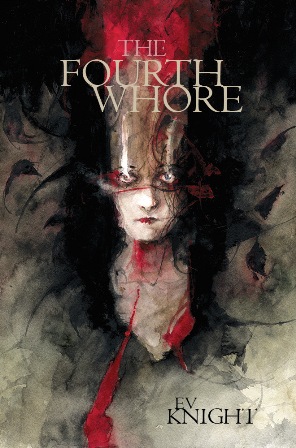
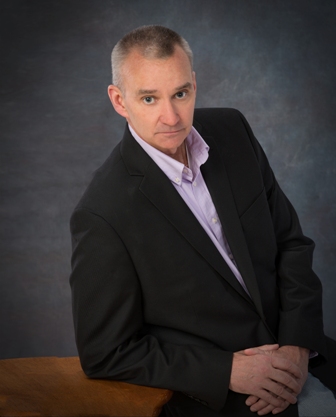
Mythic and Apocalyptic: Interview with EV Knight

Welcome back for this week’s featured author interview! Today I’m thrilled to spotlight the fabulous EV Knight! EV’s debut novel, The Fourth Whore, was just released through Raw Dog Screaming Press to much acclaim, and she has even more horror fiction on the way later this year from Unnerving.

Recently, EV and I discussed her inspirations as well as what it was like writing her first book.

A couple icebreakers to start: when did you decide to become a writer, and who are some of your favorite authors?

I have always been a voracious reader, my grandmother read Grimm Brothers’ Fairy Tales to me every night growing up which I think is what made me seek out the darker side of literature. When I was in sixth grade, I read my first Stephen King book–Pet Semetary and I was hooked. I loved the way he wrote, the way he put words together and the stories he told. Not only did I want to read more of his work, I wanted to write like he did. That’s when I knew I wanted to be a writer. Of course, up until then, I wanted to grow up to be a doctor so of course my family preferred that dream and continued to encourage medicine as a career and writing as a hobby. So, it wasn’t until I completed medical school and had been working as a physician that I began to revisit the idea of writing more seriously.

My favorite writers…there are so many. Clearly, I love Stephen King but lately, I have been reading a lot of Ania Ahlborn, Josh Malerman, Victor LaValle, and my literary hero: Shirley Jackson.

Congratulations on the release of your debut novel, The Fourth Whore! What can you share about the inspiration for the book?

The inspiration for The Fourth Whore came during the 2017 Women’s March in D.C. I was there and marched beside so many amazing people. I kept hearing women invoking the name Lilith and after some research, I knew I had to have her in my novel.

What was it in particular about Lilith and the Four Horsewomen of the Apocalypse that made you want to tell their story?

After discovering Lilith’s religious mythos, and hearing the phrase “the war on women” over and over that year (2017), I imagined a war started by women. And since I was using Lilith’s religious background, I went to the Book of Revelation and looked into the “end of the world” scenarios. In my mind, Lilith wanted to wipe out the world as is and bring on a new world where women would rule. She wanted to write her own “Bible.” The Four Horsemen, to me made for a good plot of four different ways to bring about the end of the world and could easily be renamed “The Four Whores” because it was the very thing Lilith was “taking back.”

What were the biggest surprises for you as you wrote and edited your first book?

The process of writing a novel is long and complex! You think you know your story and characters and won’t forget details, but you do. And I had to go and decide to write a novel with multiple character’s story lines woven together so keeping track of where I was and where each character was at any given time, was so stressful.

By the time, I got to the end of the story, I didn’t think I ever wanted to look at it again. But then, you have to edit. If I had to do it all over again, I would have probably chosen a more straightforward story for my first novel and worked my way up to something like this. That being said, I learned so much about myself, my process, and the industry in general, it was a good experience.

What draws you to horror as both a writer and a reader?

Horror is the great escape. It’s the endorphin rush, the blood pumping, thought provoking study of all the things that we as humans keep locked away in darkness of our imaginations. All those “what ifs” that never left us from childhood. It allows us to get in touch with our animal brain. I love that about us as a species. The things we, as adults would never admit out loud—that our hearts still beat a little harder and we quicken our steps after turning out the basement light to head back upstairs. When our child swears there is something under their bed or in their closet and we have to look, there is that tiny voice inside that says “there might actually be something there.” I love that. I love feeding that idea.

If forced to choose, which is your favorite part of the writing process: drafting ideas, working on a first draft, or polishing up an almost finished piece?

I am a plotter. I plot overall, and then I replot each chapter before I write it. I love it. I love the brain storming aspect. The planning part is the most enjoyable.

I carry notebooks, note cards, and sticky notes everywhere. I have a giant dry erase board in my writing room for mind maps and note taking. For me, it’s like mining for gold. Working an idea until it shines. That is, without a doubt, my favorite part.

What’s next for you? What projects are coming out soon, and what are you currently working on?

I have a novella–Dead Eyes–coming out in November from Unnerving. It is part of the Rewind or Die series celebrating the 80’s horror film craze. I had so much fun rewatching a lot of those old films from my middle school sleepover days in order to write it.

My next big project is a four novel series centered around a commune that once belonged to a hippie cult calling themselves the children of Demeter. They disappeared overnight in 1973. Since then, the land has been dead and barren, but maybe not everything at the commune has died.

Tremendous thanks to EV Knight for being part of this week’s author interview series! Find her online at Twitter, Facebook, and her author website, and also check out her podcast Brain Squalls!

Happy reading!

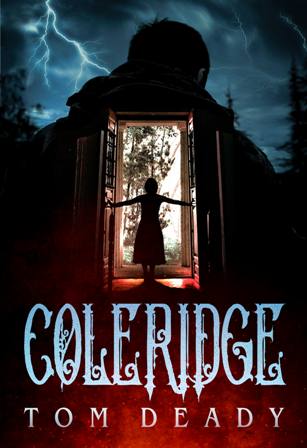
A Haunted House Haven: Interview with Tom Deady

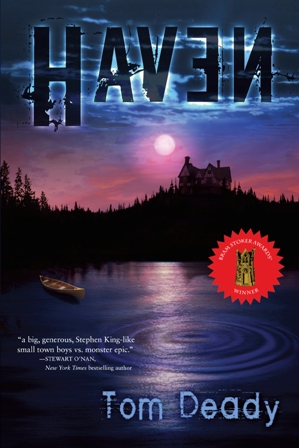
Welcome back! Today, I’m thrilled to feature author Tom Deady. Tom is the Bram Stoker Award-winning writer behind Haven, Backwater, and Weekend Getaway, as well as numerous short stories that have appeared in Hardened Hearts and Unnerving, among other outlets.

Recently, Tom and I discussed the inspiration behind his new book, Coleridge, as well as his favorite part of the writing process and what he has planned next.

A couple icebreakers to start: when did you decide to become a writer, and who are some of your favorite authors?

I think I’ve always known I wanted to be a writer, I just didn’t do anything about it for a long time. Haven was written in fits and starts between 1995 and 2010. When that was finally finished, I decided to take my writing seriously. I got my Masters in English and Creative Writing and have been writing ever since.

Anyone who has read my work knows Stephen King is a major influence in my writing, but there are so many writers I admire. Early Dean Koontz, Shirley Jackson, Rio Youers, Josh Malerman, Tana French, Peter Straub, C.J. Tudor, Simone St. James…I could go on and on.

Congratulations on your new book, Coleridge! What can you share about the process behind this story?

Coleridge started out as a short story for a modern gothic anthology. Like many of my stories, the characters took over. I had originally planned a traditional haunted house story, but Dalia, Zadie, and Slade had other plans. I’m really happy with the way it turned out, It’s a little out of my comfort zone as a writer so I’m pretty nervous about how it will be received.

Coleridge is all about a very creepy, atmospheric house with a dark history. What are your favorite haunted house stories or films? Was there one in particular that really helped to inspire this book?

I love haunted house stories. The Haunting of Hill House is a classic, and while the Netflix show really just used the name, it was a fantastic series. The Elementals by Michael McDowell is a master class in creating the slow burn and creepy atmosphere. The Marsten House in ‘Salem’s Lot fascinates me, I’d love a prequel that focuses on what happened there before Barlow and Straker arrived. The House Next Door by Anne Rivers Siddons and The Invited, Jennifer McMahon’s latest are both unique takes on the haunted house.

I can’t say there was one in particular that helped inspire Coleridge, I think they all did in some way.

You’ve been steadily releasing new books, starting with your novel, Haven, in 2016, which won the Bram Stoker Award. How do you find time to write? Are there certain tips you use to keep yourself focused, or particular writing rituals that have helped you over the years?

Finding time to write is never easy. I’m a night owl, so a lot of my writing is done after the rest of the family is in bed. I’m fortunate to have an incredibly supportive wife who helps carve out writing time for me.

One thing that has always worked for me is NaNoWriMo (National Novel Writing Month). I’ve done it for the past six years and made fifty-thousand words three times. I finally figured out why it works: keeping track of word count. I started doing that this year and it helps me a lot. I can’t hide from the spreadsheet and its empty cells on days I don’t write.

I don’t have any life-changing words of wisdom. I started taking my writing seriously pretty late in life, and I feel like I have a LOT of stories to tell, so time is a great motivator for me.

In addition to your novels and novellas, you’ve also written a number of short stories. How is your approach to your short fiction different or similar to your approach to writing long fiction?

Short stories are honestly not my favorite format, whether reading or writing. I grew up reading the doorstop horror novels of the eighties, so character development and subplots are everything to me. Short stories are too abrupt and always leave me wanting to know more.

If forced to choose, which is your favorite part of the writing process: developing characters, crafting dialogue, or establishing setting?

Character development. Obviously, all three are important, but for me, stories are ultimately about people. Watching a character grow (or devolve in the case of some) as a story progresses is what fascinates me. I look at books like It by King and Summer of Night by Dan Simmons as the blueprints for character development. The depth and complexity of each player in those stories is amazing.

What’s next for you? What projects are coming out soon, and what are you currently working on?

After Coleridge, I’m going to release a short story collection. Details aren’t worked out yet, but it should be out this summer and featuring some great artwork by a very familiar name. I have a short story called “The Legend of Stingy Jack” in Haverhill House’s folk horror anthology Would But Time Await that should be out in the fall. Early next year, my novel, The Clearing, is due out from Vesuvian Books. This one has been in the works for a while and I’m very excited about it.

Where can we find you online?

The best place to get in touch is www.tomdeady.com. All my social media links are there, as well as the link to my Amazon author page and the opportunity to purchase signed books.

Tremendous thanks to Tom Deady for being this week’s featured author!

Happy reading!

Women in Horror Month 2020 Roundtable Coming Soon!

Welcome back, and welcome to Women in Horror Month! Throughout the month of February, I’m absolutely thrilled to be featuring a roundtable interview series with a group of supremely talented female horror authors! I’ll be talking with them about their work, their inspiration, as well as their hopes for the future of women in horror.

So without further adieu, here are the awesome female authors who are part of this year’s roundtable!

Erin Sweet Al-MehairiErin Sweet Al-Mehairi is a writer, editor, and PR Professional with degrees in English, Journalism, and History. Breathe. Breathe., published by Unnerving in 2017, was her debut collection of dark poetry and short stories and was an Amazon #2 best-selling paid title in women’s poetry, behind NYT best-seller Rupi Kaur, and top five in horror short stories several times since its publication. Her work has been called raw, honest, evocative, and beautiful. She has poems and stories featured in several other anthologies and magazines, including the recent 7 Deadly Sins of the Apocalypse which was an Amazon #1 paid best-seller in horror anthologies upon release, was the co-curating editor in 2018 for the gothic anthology Haunted are these Houses, and is the editor of the 2020 anthology Survive with Me. As an editor and publicist, she assists publishers and authors in the horror, fantasy, sci-fi, and historical genres and has worked on and with many award-winning and nominated titles for the Bram Stoker Award, Shirley Jackson Award, and more.

Within the publishing world in an effort to support book communities, besides managing her own site Oh, for the Hook of a Book!, she also has conducted interviews and written reviews and features for Beneath the Underground, The Horror Tree, Machine Mean, and more in the horror genre, as well as served as an independent award judge in the historical fiction genre.

She is currently completing two poetry collections and a short story collection with more in the works. Find more about Erin at www.hookofabook.wordpress.com or follow her on Twitter (@erinalmehairi).

Violet Castro is originally from Texas, but now resides in London with her partner and three children. Her books include: Maria The Wanted; The Erotic Modern Life of Malinalli The Vampire; Switchblades and Hairspray (Feb 2020- Unnerving); Rigor Morbid: Lest Ye Become – “The Latin Queens of Mictlan”; Co-editor of Latinx Screams. A Latinx horror anthology from Bronzeville Books (Fall 2020); and Latino Book Month Curator for StoryBundle (May 2020). Violet writes book and film reviews for SciFi & Scary and Latin Horror as well as contributing articles to Ginger Nuts of Horror, Ladies of Horror Fiction, Burial Ground and Kendall Reviews. You can find out more about V at www.vvcastro.com or @vlatinalondon on Instagram and Twitter.

Larissa Glasser is a librarian-archivist from New England. She writes dark fiction centered on the lives of trans women, library science, and heavy metal. Her work is available in Transcendent 3: The Year’s Best Transgender Themed Speculative Fiction (Lethe Press) and Tragedy Queens: stories inspired by Lana Del Rey and Sylvia Plath (Clash Books). Her debut novella F4 is available from Eraserhead Press. She is on Twitter @larissaeglasser

Mackenzie Kiera holds an MFA in Fiction and Nonfiction Writing from the University of California, Riverside where she studied with Dr. Stephen Graham Jones. She is the author of over 30+ articles, essays and short stories that have appeared in Gamut Magazine, The Mighty, The Nervous Breakdown, The Manifest-Station, Ink Stains Anthology Vol. IV, and This Is Horror. For several years, she was a contributing author to LA’s The Last Bookstore’s blog Dwarf+Giant, where she reviewed books and interview authors. Currently, she is the co-host of a dark fiction podcast: Ladies of the Fright, and is the author of a forthcoming novella ALL YOU NEED IS LOVE AND A STRONG ELECTRIC CURRENT from Unnerving.

Michelle R. Lane writes dark speculative fiction about women of color who battle their inner demons while falling in love with monsters. Her work includes elements of fantasy, horror, romance, and occasionally erotica. Her short fiction appears in the anthologies Dark Holidays, Terror Politico: A Screaming World in Chaos, and The Monstrous Feminine: Dark Tales of Dangerous Women. Her debut novel, Invisible Chains (2019), is available from Haverhill House Publishing. She lives in South Central Pennsylvania with her son. You can follow her blog, Girl Meets Monster, where she talks about some of her favorite subjects: reading, writing, and monsters: https://michellerlane.com/.

Lisa Quigley is a writer, mother, wife, and irreverent witch living in New Jersey. She holds an MFA in Creative Writing from the University of California, Riverside’s low-residency program in Palm Desert. Her work has appeared on The Manifest Station, Dwarf + Giant, Automata Review, and Unnerving Magazine. She is the co-host of the dark fiction podcast Ladies of the Fright and a columnist for This Is Horror. Her debut novella, Hell’s Bells, is coming in May 2020 from Unnerving.

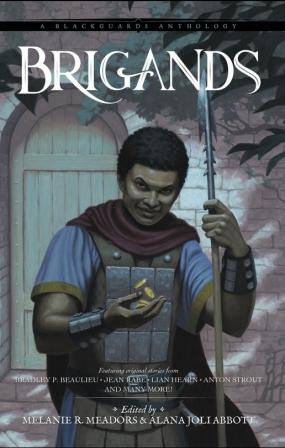
Of Trinidadian descent and hailing from Jersey City, NJ, Zin E. Rocklyn‘s stories are older than her years, much like the name she’s chosen to pen them under. Her work is currently featured in the anthologies Forever Vacancy, 2017 Bram Stoker Nominated Sycorax’s Daughters of which her story Summer Skin was longlisted for Best of Horror 2017, Kaiju Rising II: Reign of MonstersWeird Luck Tales No. 7Brigands: A Blackguards Anthology, and Nox Pareidolia. Her non-fiction essay “My Genre Makes a Monster of Me” was published in Uncanny Magazine’s Hugo Award-Winning Disabled People Destroy Science Fiction and Fantasy 2018 issue. Tor.com will be publishing her latest release in March of 2020. Her personal website, terizin.com, is currently under construction, so stay tuned for all of her weirdness in HTML form. In the interim, you can follow her on Twitter @intelligentwat.

So those are our seven amazing women who are part of this year’s roundtable! Stay tuned for the interviews to commence later this week!

Happy reading, and happy Women in Horror Month!

Wild Doorways: Interview with Eric J. Guignard

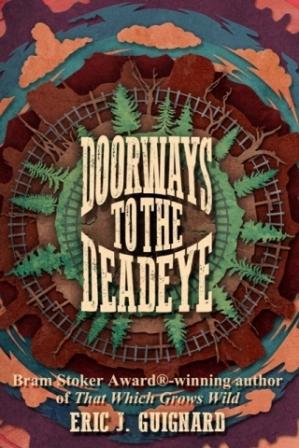
Welcome back! This week, I’m happy to spotlight author and editor Eric J. Guignard. Eric is the Bram Stoker Award-winning author of That Which Grows Wild and Doorways to the Deadeye.

Recently, Eric and I discussed his inspiration as a writer as well as how his work as an editor at his publishing house Dark Moon Books has affected his work as a writer.

A couple icebreakers to start: when did you first decide to become a writer, and who are some of your favorite authors?

First, of course, thanks so much for this interview, Gwendolyn!

Now for your questions: I’ve been writing fiction with the goal of publication since February, 2011. However, I’ve been writing and drawing stories ever since I was a child. I’d just done it previously for my own interest, or for friends. I stopped in college, in order to pursue business and serious-minded life necessities… which, of course, I now regret. I don’t regret the pursuit of those things, but rather having given up writing for so many years. I only jumped into as a potential career-type desire after the realization struck me that I was missing out on something I was passionate about!

Some authors I currently adore and consider influences and inspirations include Joe R. Lansdale, Cormac McCarthy, George Orwell, Stephen Graham Jones, Jeffrey Ford, Lisa Morton, Kaaron Warren, Dennis Lehane, Seanan McGuire, Lauren Beukes, Jack Kerouac, Mark Bowden, O. Henry, James Ellroy, Neil Gaiman, Steve Rasnic Tem, Helen Marshall, John Steinbeck, Weston Ochse, and many, many others.

Your debut novel, Doorways to the Deadeye, was released last year through JournalStone. What can you share about the process of writing your first novel, and what has the release been like so far?

Since Doorways to the Deadeye was my first full-length novel, the process went pretty much all over the place, and it became a melting pot of worlds and styles.

I wrote this book for “me” (rather than for a particular market, which ultimately wasn’t the best decision!), examining insights and feelings, and also experimenting with structure, and digging into new themes as well as ones I often include in my other writings: Death and how we handle it; the fluidity of memories; explorations of uncharted territory; loss of loved ones; unexpected ways to emerge victorious from dark situations… There’s elements of Dark Fiction; Speculative Fiction; Magic Realism; Thriller; Light Horror; Urban Fantasy, etc.

Since this book is about legend-building and memories, and the search for perseverance after death, it’s also meant to go “all over the place,” as the voices change, and the stories within the greater story; it’s all meant to evolve as the book progresses, just like in life that as we tell stories they change, and so do the memories of those involved. Then I framed all this in the travels of a 1930s-era train-hopping hobo, and the homeless narrator who is trying to keep the stories literally “alive”.

I know that can sound pretty flighty, so here the P.R. synopsis: A Depression-era hobo rides the rails and learns the underlying Hobo Code is a mystical language that leads into the world of memories, where whoever is remembered strongest—whether by trickery, violence, or daring—can change history and alter the lives of the living.

As far as results of the release, I feel it’s gone well. One can always wish for greater acclaim of course (it’s never enough!!), but I’m happy with sales and reviews so far. This type of book is definitely not for everyone, and I know that … I’ve had a few people tell me they can’t understand it after the first couple of chapters and give up. But most readers and reviewers have given it solid, heart-warming praise, and some have even told me it’s changed the way they read and write stories.

If I may be so bold as to drop a few lines of reviews here, they include the following:

“…Guignard captures the depth of emotion underlying fictional terrors.”—Library Journal

“This novel is a stunner… shocking to see how powerful the author’s lines were, how well-drawn the characters had become.” —Cemetery Dance Magazine

“Rich, strange, and wonderful.” —Michael Marshall Smith, NY Times bestselling author

And I literally just got a new wonderful review five minutes ago from The Horror Fiction Review, which made my day, as well as an inclusion on the 2019 Bram Stoker Awards® Preliminary Ballot this morning!

Congratulations on your Stoker win last year for That Which Grows Wild! How did that collection of short fiction develop?

That book is a collection (my first!) of previously published works, the stories having first appeared in various anthologies, magazines, etc. Each story in itself had its own inspiration or aim, so the collection is more about which stories would work well together in a grouping. I worked with editor Norman Prentiss at Cemetery Dance to select ones that presented a wide range of material, but at the same time weren’t too far “out of the box”. Originally I had some other choices that were more “weird” or satire or dark, and Norm suggested switching out those to ones a bit more in the same mood, so voilà, the finished product, which I’m happy with!

How does your approach to short versus long fiction differ? Do you prefer one length over the other?

My favorite thing to write (and to read) has always been fiction short stories, rather than novels, so that’s usually been my focus. But I am proud to have now gotten my first novel under my belt (Doorways to the Deadeye), as there seems to be this lack of gravitas for anyone who claims they’re a writer but hasn’t put out the “full-length” book!

And interestingly, over the nine years I’ve been writing short stories, I do find them getting longer and longer on average (in word count), so perhaps it’s a natural progression that will lead into more novels.

I probably should have a more formal approach to writing as well, but I still mostly just write what I feel like, when I feel like it, and I also write more in terms of being a “Pantser,” i.e. writing as I go, although if the story becomes complicated or I get burned out, or stuck, then I turn to plotting or outlining to figure the proper direction.

You’re also an award-winning editor. What inspired you to become an editor, and how has editing informed your fiction writing and vice versa?

I started editing because I wanted to improve as a writer, and it’s helped immensely. I recommend it to anyone wishing to improve their writing. By reading submission slush I saw what everyone else was writing about, the same tropes and styles, and immediately knew to write something going the other direction. By an aggregate of stories, I would find flaws in writing that I would then recognize in myself. And I learned it’s true that you can accurately judge a story based on the opening paragraph, and in most cases the opening sentence. From editing, I gained experience in story development, author communications, layout, promotions and so on. I now look at projects from the multiple eyes of “Editor,” “Marketer,” “Distributor,” “Publisher,” and it’s made me a better person.

I find editing is easier for me than writing, although writing brings more satisfaction. Writing is emotionally exhausting, whereas editing I can do all day long. And I’m always thrilled with the chance to connect and work with other writers while editing. But I love so much to type “The End” at the end of a writing piece—it’s a wonderful, fulfilling sense. Both are different journeys to a creative destination.

As an aside, my day job is working as a Technical Writer, which can get dull at times, but it’s also definitely improved my fiction writing, by articulating stories in concise language, with focus on impact, brevity, and an understanding of audiences.

If forced to choose, which part of the writing process is your favorite: brainstorming an idea, writing a first draft, or polishing an almost-finished piece?

“Polishing an almost-finished piece” is the easiest for me, fine-tuning the details (probably more aligning with my day-job work of Technical Writing). Brainstorming ideas is my favorite, because it involves a lot of daydreaming and idea sketches and just letting my mind wander, although 99% of those ideas don’t go anywhere, and sometimes it turns into this very stressful realization of wasting time! A slightly different response is that the most satisfying part of the writing process would be to get down the first draft; this is absolutely the hardest part for me, so when completed, I feel a natural exhilaration for the rest of the day. (And then the next day, it’s back to something else, haha!)

What projects are you currently working on?

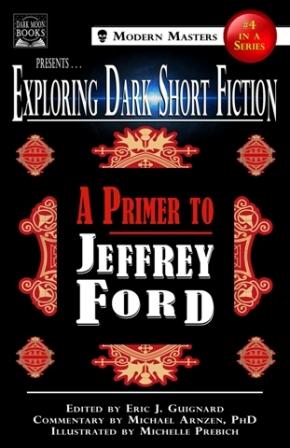
Through my press, Dark Moon Books, I’m continuing to publish a series of author primers created to champion modern masters of the dark and macabre, titled: Exploring Dark Short Fiction (Vol. 1: Steve Rasnic Tem; Vol. II: Kaaron Warren; Vol. III: Nisi Shawl; Vol. IV: Jeffrey Ford; Vol. V: Han Song; Vol. VI: Ramsey Campbell).

And through SourceBooks I’m curating a new series of books titled, The Horror Writers Association Presents: Haunted Library of Horror Classics with co-editor Leslie S. Klinger (to begin publishing 2020).

I’m also still writing short stories, and I’ve started THREE new novels, although I’m not very far into any of them! One is a pulp science fiction, one a paranormal detective series, and one a literary historical horror.

I also have hopes to launch a new anthology series in the future, if I can ever get my publishing finances out of the red!

Tremendous thanks to Eric J. Guignard for being part of this week’s author interview series. Find him online at his author site and Dark Moon Books as well as on Twitter, Goodreads, and Instagram!

Happy reading!

Looking to the Future: Part Four of the HWA Poetry Showcase Roundtable

Welcome back for the final installment of our HWA Poetry Showcase roundtable! This week, the featured poets share their future plans, specifically what they have in store for the horror genre!
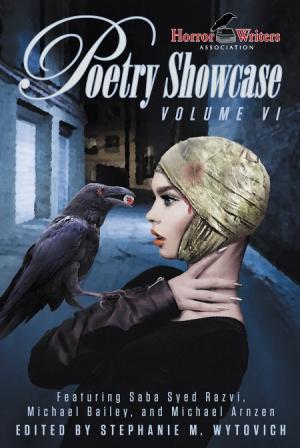
What projects are you currently working on? Do you plan to stay primarily in the horror genre in the immediate future, or are you looking to branch out or even combine genres?

CURTIS M. LAWSON: I’m working on a series of interconnected short stories about an aging rock star trying to find himself and his place in the world after the death of his wife. It draws from and mirrors a lot of Egyptian mythology, and has weird and supernatural elements, but I don’t think I’d call it horror. Maybe surrealist dark fantasy?

As for my commitment to horror, I think anything I do will have an element of that in it, but I’ve always blended genres in my work. All of my work is dark, but I draw from anything I enjoy and that feels right for the project be it horror, black comedy, grindhouse flicks, or superhero comics.

PETE MESLING: I think the horror genre works best at the shorter word counts accommodated by poetry and short fiction, to be honest. As a result, the two novels I’ve written so far, though not yet published, are both in genres other than horror. One is a middle-grade fantasy novel, and the other is a large-scale global thriller. I also have three planned short story collections (two horror, one crime), and of course there’s much more poetry and stand-alone short fiction in my future. I have a story in the forthcoming Dig Two Graves, Vol. 2 anthology from Death’s Head Press, and I have a few things out in the marketplace that I’m very excited about but can’t discuss quite yet. I’d love to publish a poetry collection one day, but again, horror would probably only be part of the mix.

CARINA BISSETT: Everything I write is tinged with horror and darkness even though my work tends to blend multiple genres. I’m a fabulist, and there is no stepping away from horror when working with myth, fairy tale, and folklore. It’s part of the landscape. I’m currently finishing up a very strange WWI novel about monstrous women. This fall, I have plans to finish my first poetry collection, which is also centered on fairy tales and myth. When I’m not writing, I teach generative writing workshops at The Storied Imaginarium including the popular Intersections: Science Fiction, Fairy Tales, and Myth. Even though a science topic is always part of the discussion with each fairy tale or myth used as a prompt in these modules, more than ninety percent of the stories that come out of that particular workshop contain horror in some shape or form. Following the successes of these writers only adds to joy of leading a literary life, and I look forward to seeing where we all end up next.

ROBERT PAYNE CABEEN: I just handed off the adapted screenplay for my novel, Cold Cuts, to a producer I’ve worked with several times in the past. Don’t worry, I’m not a novelist who wrote his first screenplay, I’m a screenwriter who wrote his first novel. Making that transition wasn’t easy. All the things you can never do in a screenplay, you must do in a novel. Now that I think about it, the focus and economy of words in poetry is closer to screenwriting than prose fiction.  Also, the beats–you have to feel the beats in poetry and screenplays. That’s one thing I couldn’t give up when I wrote my novel. I had to feel the beats of the story, even if it meant missing out on luxurious details and fun tangents.

I’m a horror guy and I have no desire to work outside the genre. There are elements in Cold Cuts that would definitely be considered science fiction because I tend to avoid the supernatural in my horror. I rely on weird science to introduce uncanny elements. We all know horror when we see it, no matter which genre it may be hiding in.
MONICA S. KUEBLER: I’m currently immersed in writing the final book in my YA vampire series/serial, the Blood Magic saga. As far as poetry goes, the majority of my poems are not horror poems. I was a poet long before I was a horror journalist or author, so I tend to use whatever genre a specific poem requires. That said, I also don’t expect to stop exploring dark territory anytime soon.

MICHAEL ARNZEN: Non-fiction is on my front burner right now, with academic writing for the Exploring Dark Short Fiction series for Dark Moon Books, as well as some film scholarship. Although I have been placing a lot of flash and poetry here and there, I’ve not been publishing a lot lately, partly because of life, and partly because I have several “big projects” I’m juggling — a very unique vampire novel, a pair of collections, a non-fiction book I re-booted from scratch on The Popular Uncanny — and all of it will likely gush out all over the place like multiple stab wounds in the near future. Interested folks should keep an eye on my website, gorelets.com for news.

ADELE GARDNER: I love the horror genre, as well as many others, and will continue to work in all of them.  One of the current horror projects I have going is a young adult novel related to my story “Soul Cakes” in the Lost Souls anthology by Flame Tree Publishing.

RISSA MILLER: At the moment, I am working a collection of horror poems that explore the darker side of emotion seen through the lens of traditional nightmare monsters. The Temptress is a character in that chapbook. While I also write horror fiction, and have a few pieces in the works, my first novel is quite different, more like a romantic comedy, and will hopefully be out soon. Other projects include a serious stage play about the challenges women face in traditional corporate workplaces, and I’m also a history tour guide and wrote a new tour about the True History of Witches in Maryland.
E.F. SCHRAEDER: I’m working on several pieces including a full length manuscript of poems and a longer fiction project.  Most of my current projects have speculative elements, and I tend toward genre blurring (perhaps all label blurring, in general), with current fiction projects that include elements of mystery and horror, primarily.

SUZANNE REYNOLDS-ALPERT: I started writing in the scifi/fantasy genres and have steadily moved toward horror. I plan to stay here for a while—I love how supportive the community is. I’m currently tweaking some prior work, trying to get it publishable. I’ve also recently discovered that I love to paint, and I’ve been focusing most of my creative energies there. I’ll be illustrating some of my poems this summer.

MARTY YOUNG: I’ve got a very dark horror novel I’m shipping around at the moment, plus another horror-sci-fi about to go out to my editor. Then there are the short stories I (try to) work on in-between. I find myself spreading my horror wings more and more lately, delving into horror-sci-fi and exploring the darkly fantastical. The two genres work perfectly together.

ROBERT CATINELLA: Currently I am working on a series of short stories that focus on the balance between the unknown and perception, especially in regards to the natural world. I am fascinated by how much is always going on and how the world does not owe anyone an explanation of its behavior.

I am going to remain in the weird horror genre for the time being, but I hope to branch out eventually into more psychological horror.
NICOLE CUSHING: As I type this in early July, I’m looking over the final edits for The Half-Freaks, my novella from Grimscribe Press due out later this year. I’m also spreading the word about my new novel, A Sick Gray Laugh, which Word Horde will release on August 27.

As for future directions; well, I don’t think I ever consciously chose horror. Instead, the events in my life (early encounters with death, trauma, etc.) have been such that horror chose me. I don’t think I can leave horror any more than I can leave my own skin. That having been said, I think my take on the genre has evolved. After reading several books of weird, dark literary fiction in translation (works by folks like Witold Gombrowicz, Ahmed Bouanani, and Dubravka Ugresic), I have a broader frame of reference. I have more ideas about how fiction can work.

G.O. CLARK: I just sold a SF related poetry collection, “Easy Travel To The Stars”, to Alban Lake Publishing, due out 2020. Always working on new poems, and the occasional short story. I’ve been working in horror and SF genres for many years, sometimes combining the two as in my poem “Again The Night Too Deep”, and will do so till the bitter end. Thanks!

DAVID SANDNER: I have a chapbook novelette, “Mingus Fingers,” coming out from Fairwood Press in November…it’s a kind of weird fantasy, not horror. I have been writing a lot of horror lately, though (I think it has to do with the current political situation, which is a horror show itself and calls out for our genre to deal with it). I am also a scholar, and just turned in a collection I edited, Philip K. Dick, Here and Now, to McFarland, and hope to see that sooner rather than later as well. I have finished a mystery I am trying to sell. Horror informs whatever I do and is central to the larger field of the fantastic in which I like to roam around…and poetry is something I can’t escape, even if I wanted to…so I will continue to produce works like my poem for the Showcase.

INGRID L. TAYLOR: I’m currently working on a dark poetry collection that centers on folkloric, fairy tale, and plant magic themes. I’m also writing a science fiction novel set in the near future Southwest United States. I am particularly drawn to ecohorror, which provides wonderfully creative options for exploring today’s pressing issues, such as speciesism, climate change, emerging technologies, and mass extinctions, so that will certainly be a future direction for me.
JOHN CLAUDE SMITH: I am presently working on a novel, one of a couple and a novella in progress. The novel on the front burner is a curious thing, not really horror, but should appeal to the horror fan; speculative, for sure, with a strong weird element and even a nod toward something within that I would call a kind of social consciousness, though throughout the first half, there’s no way you’d think that, haha… So, I guess my answer to the second part of the question is I enjoy playing in the horror sandbox, but sense a melding of genres will be more of a regular thing as I’ve already touched on some with recent work (“The Glove,” from my latest collection, Occasional Beasts: Tales, is a prime example of something that’s weird, perhaps horror, but also SF).

TRAVIS HEERMANN: I play in many different sandboxes. Horror is just one of them. I write YA fiction under the pseudonym T. James Logan, and I’m currently working to finish the second book my Lycanthrope Trilogy, which features a sixteen-year-old girl versus the werewolf apocalypse. I would call it more of thriller than horror, however, as it’s more about action and wild chase scenes than straight-up horror. Beyond that, I’m booked up for the next several months working on two different fantasy novel series, so that’s going to keep me busy for a while.

I’m also developing my Ronin Trilogy into a comic book series and trying to get some screenplays developed and into hands that might want to produce them. I’ve had the good fortune to be a finalist or winner at several horror film festivals over the last year or so, and I’m hoping to capitalize on that.

ANN K. SCHWADER: I’ve just signed a contract with Joe Morey’s Weird House for a new collection of horror and dark SF poems.  Look for Unquiet Stars next year, I hope!

DONNA LYNCH: I’ve been working on what I hope will be my third novel if I can ever get my shit together, sort of a “but who’s the REAL monster” yarn.

I’ll certainly be working on another poetry collection, and I have a short story collection in the works that has a central character that appears throughout. My husband/ partner in our band Ego Likeness are working on a new album or EP, so I’ll be penning lyrics for that.
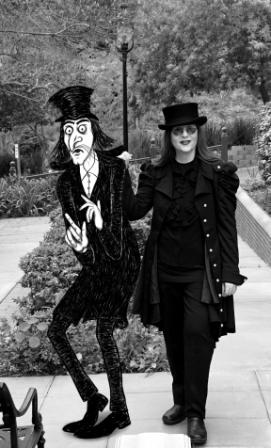
LORI R. LOPEZ: As well as being an author-slash-poet, I recently finished illustrating the Print Edition of my 2017 poetry collection Darkverse:  The Shadow Hours.  Not surprisingly, there are monsters.  I’m working on art for a 2018 collection, Volume Three in my Poetic Reflections Book Series, along with preparing Second Editions of the first two volumes.  New projects include a collection of ghost stories and a sequel to my rhyming tale The Dark Mister Snark titled The Darker Mister Snark.  And yes, there will be a Darkest Mister Snark.  I currently have two other books waiting for illustrations, my 2016 novella Leery Lane and my 2018 horror-fantasy The Witchhunt.  I’ll be releasing those in Print later this year.

I will definitely continue writing and drawing Horror!!  I’ve been combining genres for years, from Speculative to Horror mixed with Humor and Fantasy, Fantasy-Adventure and so on.  I write for both kids and adults.

ANNA TABORSKA: I just had a cat-themed horror story micro-collection called SHADOWCATS come out with Black Shuck Books, and the first piece in that was actually a poem. I have a collection of horror short stories called BLOODY BRITAIN coming out soon with Shadow Publishing, and I recently started work on my first novel, TALES FROM THE ORGAN GRINDER. I definitely plan to stay within the horror genre.

Thank you very much for giving me the opportunity to share my thoughts on horror poetry with you.

EV KNIGHT: My debut novel The Fourth Whore is scheduled for release in 2020 by Raw Dog Screaming Press. On July 1st, the first episode of a podcast I cohost with my husband aired. The podcast is called Brain Squalls and in it we brain storm stories based on prompts and talk about story creation.  In the podcast we try to cover all genres. As I writer though, I tend to stay with horror as a genre.  I am currently writing my second novel, about an ambiguously haunted house tentatively titled The Last Sacrifice.

DAVID POWELL: I’ve written horror, noir crime, dark paranormal, surrealist, and science fiction. I love crossing genre lines, though learning how to describe my work for editors is a challenge. It’s worth it, though. For me, writing that’s hard to classify sticks with you the longest. I’m currently working on a novel based on something that happened in a school where I used to work–the only outbreak of genuine mass hysteria I’ve ever seen up close.
MICHAEL BAILEY: I recently finished a memoir about forever-burning California called Seven Minutes, which I wrote in a span of twenty-three days—the lifespan of the fires. It’s nonfiction, but the most horrific story I’ve ever written. Josh Malerman recently stated “You’re gonna cry” in part of his blurb for the book, and he’s right. The emotions too difficult to convey with narrative are expressed poetically throughout the book. This thing is a rollercoaster of emotion, and unbelievably honest. Prior to that, I finished a psychological thriller called Psychotropic Dragon, and The Impossible Weight of Life, a fiction collection featuring mostly autobiographical work. And while those three books are seeking homes with publishers, I am finishing Seen in Distant Stars, which I guess could be called a dark and dystopian science-fiction thriller, and then the plan is to write Hangtown, a historic western-kinda-thing set in my hometown. All these books have elements of horror. I have never considered myself a “horror” writer; I simply write what I need to write (some call it literary), and sometime later it’s given a label.

GERRI LEEN: I have a longer, middle grade speculative project I’m working on right now and a contemporary fantasy novel to finish redrafting. For shorts, I go back and forth between sci fi/fantasy and dark fantasy/horror, with little dips into mainstream fic and even romance under the pen name Kim Strattford. And of course, I’ll be working on poetry. Always poetry.

NACHING T. KASSA: At this time, I’m writing a short story about Sherlock Holmes and an Occult Detective of my creation. Everything I write has that special touch of darkness. I may combine genres such as mystery and romance, but I don’t see myself leaving the horror genre anytime soon.

LISA MORTON: I’m always exploring new paths, and have recently published stories in the mystery and young adult fields. However, most of this year will belong to a new non-fiction book: I’m currently working on Calling the Spirits: A History of Seances for Reaktion Books. I’m also having too much fun providing the weekly “Ghost Reports” on a delightful podcast called Ghost Magnet with Bridget Marquardt.

LEE MURRAY: Don’t tell anyone, but I’m not really a horror poet, or even a poet—I have more published novels than poems—but, somehow, I have managed to slip into the room. I rather like the company.

TRISHA J. WOOLRIDGE: I write all over the place! Because of all my recent medical issues and being so mentally, emotionally, and physically exhausted from them, a lot of my more recent work has been some of my darkest horror. But…I’m also working on a really lighthearted paranormal adventure romance thing that…don’t laugh too hard…is inspired by the current reboot of DuckTales. I also have an epic fantasy series that I’m working on… and two separate epic fantasy stand-alone novellas or novels that came from short story attempts. I also have some dark SF… oh, and I write a lot of children’s work, too. I had three middle grade novels, two dark fantasy and one SF adventure, that are currently out of print, I have another on submission, and I’ll be in next year’s New Scary Stories to Tell in the Dark. On the poetry end, I’m working on a collection based on having ADHD and some ekphrastic poems—poems inspired by photos I’ve taken. (I may have a special thing with those for October’s Merrimack Valley Halloween Book Fest!)

STEPHANIE ELLIS: I’m currently working on a folk horror novel on and off whilst I try and home two other novels (one folk horror, the other industrial horror). I have just started writing a new poetry collection, tentatively called Dietary Requirements and am planning a collection of mixed poetry and flash fiction with friend and fellow horror writer Alyson Faye. I am also part of an online writing group which keeps me developing my craft in short stories.

I think I will probably remain primarily in the horror genre, or more accurately, dark fiction. I do have an idea for a book whose overall premise is very dark but which might fall into the thriller category. I have a weakness for Scandi noir and would like, one day, to write something which falls more in that field. I can guarantee though, I will never write a Mills and Boon!
PETER ADAM SALOMON: My new poetry collection, PseudoPsalms: Revelation should be out soon, and my next novel, MORSUS, should follow later this year. PseudoPsalms: Onan is scheduled for some time in 2019 and it is a completely new experiment for me, not so much horror as psychological and questioning, in all the best ways.

My latest novel, EIGHT MINUTES, THIRTY-TWO SECONDS, is a Young Adult Science-Fiction/Thriller which touches on horror and is, perhaps, the scariest thing I’ve ever written.

SARA TANTLINGER: I am currently working on a historical horror novel, but I have a vague idea of what I’d like to do for my next poetry collection, too! I think no matter what I write, horror will always be the dominant genre or element, but I’m a big fan of hybrid and cross-genres.

OWL GOINGBACK: I’m currently working on a few short stories for horror anthologies, along with a follow-up to my recently published horror novel Coyote Rage. I also have a few scripts in the works, including a couple for comics. Having won the Bram Stoker Award, I’m best known for horror novels and stories. But I’ve also written fantasy, science fiction, children’s books, comics, self-defense articles, even ghostwritten for Hollywood celebrities, so you never know where I might turn up in the future.

LISA LEPOVETSKY: As for the future, after my first book of dark poetry, VOICES FROM EMPTY ROOMS, I have two volumes of poetry in the works: one is another book of dark poetry generated from my fear of circuses and carnivals, and the other is a more literary series of persona poems based on the life of an ancestor of mine. Thanks for this opportunity to share my love of poetry and the dark side.

MARGE SIMON: Mary A. Turzillo and I are putting together a poetry/prose collection, VICTIMS. I’ve been combining genres since I started writing. It’s what I do!

Thanks for creating this forum for the Showcase poets!

DEBORAH L. DAVITT: Honestly, I’m rarely not working on things! I freely move between and bend genres. I have a poetry collection forthcoming from Finishing Line Press later this year called The Gates of Never (here, have a link! https://www.finishinglinepress.com/product/the-gates-of-never-by-deborah-l-davitt), which moves smoothly between science and myth, fantasy and science fiction, and sure, there are pieces in there that could be considered horror. I have short stories sitting in a dozen slush piles, and two novels that I need to get back to once life finally quiets down a bit for me. And of course, I have another poetry chapbook making the rounds, and an eye towards writing a themed collection of historical-with-fantastic elements sometime . . . soonish? We’ll see if life decides to give me the space to do so, though.
COLLEEN ANDERSON: I often write dark but once in a while something brighter is born. And I write some mainstream poetry as well. I’ve been exploring a lot of forms lately and I want to keep doing that. I’m also working on two poetry collections, mostly of poems published over a host of years. But I’m thinking of doing another new collection. It’s just I keep sending it out there to the world and they’re published before I get anything together. But it’s time to get a book out. Overall I’ll just write what ever pops into my mind, but when it does it’s usually dragging something strange and disturbing behind it.


And that’s Part Four of our roundtable! Thank you so much to our featured poets for being part of this month’s author series! Please be sure to check out the HWA Horror Poetry Showcase, Volume 6! It’s a fabulous anthology and one that will feel quite at home on your horror-loving bookshelf!

Happy reading!
Poetry Favorites: Part Three of the HWA Poetry Showcase Roundtable

Welcome back for Part Three in our author roundtable series for December. This week, the poets of the HWA Poetry Showcase, Volume 6 are talking all about their love of horror poetry along with some of their favorite horror poets, both past and present!

What is it about horror poetry in particular that appeals to you as an author? Also, do you have a favorite horror poet or poem?

CURTIS M. LAWSON: I’ve only recently begun to explore horror poetry, but I played in black and death metal bands for years before pursuing writing, so some of my earliest notebook scrawlings were lyrics. There is a clear overlap between strong lyricism and poetry, so I guess it was only natural that I’d develop an interest in exploring dark verse.

I find that horror is extremely conducive to the kind of intense imagery and metaphor that poetry allows one to explore. Verse also allows me to explore interesting concepts and atmospheres that might not have enough “meat” to create a longer form narrative.

As for a favorite horror poem, I would say Annabel Lee, which is probably a dreadfully typical answer, but it’s true. It’s an incredibly powerful piece in word and meter.

PETE MESLING: Sometimes I like to think of horror as a mode, or mood, rather than a genre. Great literature that wouldn’t be labeled as horror is often filled with horror moments. Sykes’s murder of Nancy in Oliver Twist is a great example. That scene was written with the relish of a horror writer. To bring this idea back to poetry, Shakespeare is probably as good an example as any. Picking a favorite poet, in any genre, is as hard as picking a favorite short story writer or novelist, but Poe is certainly a contender (both for short stories and poetry), and The Raven is probably my favorite of his poems. It’s so dreadful and atmospheric, not to mention musical.

Carina BissettCARINA BISSETT: For me, horror in poetry, especially women’s poetry, is the horror present in everyday life. My favorite poet is Anne Sexton; her Transformations changed the way I view poetry, and her work in this series continues to shape the pieces I write today. More recently, I read Ada Limón’s Bright Dead Things, which was a finalist for the National Book Award. I keep circling back to the poems in this collection because they resonate with me. They offer a glimpse of mundane horror through a slanted lens. I love the sound of her phrases as they roll off the tongue. I love the way her words haunt the reader long after the book is closed. What poet doesn’t want that power? I certainly do.

ROBERT PAYNE CABEEN: I love the way horror poetry is so damn gluey. It sticks inside your head like a long remembered song lyric or ad jingle. When I was in high school, I’d gather a crowd of friends together, and we’d take over the local IHOP on Friday nights. I’d jump up on a table and recite poetry—Poe, Kipling, Coleridge. As much as I loved those poets, I felt the need to write my own poetry–and I did. Later, when I joined a rock band, I realized that a song is just a poem with music. Several poems in my collection, Fearworms, are actually song lyrics–as if there’s a difference. Like music and film, poetry has the element of time. It begs to be performed. I hope some of our readers become reciters.

MONICA S. KUEBLER: For me, it’s another way to explore the dark and unsettling – in a more lyrical and often more personal manner than I do in fiction. But please don’t make me pick favourites. It’s too hard!

MICHAEL ARNZEN: I write in all the modes except scripts, but poetry is my go-to for capturing a crazy idea that won’t otherwise work for fiction.  I always love unique approaches to the genre, and poetry seems to have the utmost flexibility in experimenting with old familiar tropes. I mean, a sonnet in iambic pentameter on the surface sounds the most rule-based form you could get, but writing a sonnet about a zombie eating a brain… well, that would be unique, you know?  I fuel my creative brain by reading everything, and I’ve always enjoyed the surprises lurking in the poetry of the pulp era and such. But as a poet, mostly I’m just playing around with ideas, and I tend to write poetry in common language and free verse, just lending it a cadence to the concepts that feels disturbing.  That’s all I’m after.

ADELE GARDNER: I love the compressed shiver!  The way a poem can haunt you–enchant you–refuse to leave you alone, with the power of a spell–or a demon.  My favorite dark poet?  Edgar Allan Poe, bar none.

RISSA MILLER: It would be wonderful to say there was a precise moment when I was curled in a shadowy corner of a library and stumbled into a rare volume that made me fall in love with horror poetry. Alas, that would be a big lie. I didn’t even realize I loved horror poetry – or that is was a genre – until about three years ago! Duh! I was at a conference called HallowRead and signed up for “The Pleasures of Horror Poetry” class taught by a local poet named J.A. Grier. How had I not realized that Poe wrote horror poems?! I live in Baltimore, after all, where the Raven casts a plumed shadow across our city.  So embarrassing! Of course I’ve loved the gothic and nightmarish all along, and simply didn’t have a label for it. My writing career had focused more on journalism and scripts, and until recently, my love for horror in all categories (film, fiction, poems, history, even autumn’s haunted houses) had simply been hobby. Since discovering that both stage plays and poetry can also fit into the horror category, I’ve been crafting them non-stop!

E.F. SCHRAEDER: As an author, the appeal to horror poetry in part centers on the openness- writing with no limits on possible worlds and virtually no taboos. As a reader, there are many qualities to adore about horror poetry, not least among them the range of voices, styles, and topics— there’s so much layered, complex feminist horror work happening now (across multiple forms) that it’s very exciting time to be a horror reader.  There’s a raw urgency to horror poetry that I appreciate, a striking attention to undercurrents and hidden possibilities, that sense of unearthing the unseen. Favorites are tricky (too many to list!) but one of my longtime favorite collections of horror poetry is Anne Sexton’s Transformations.

SUZANNE REYNOLDS-ALPERT: I also write short fiction, but poetry allows a greater range of expression that lends itself nicely to the horror genre. My favorite horror poem? The Raven.

MARTY YOUNG: Sorry, I’m a real novice when it comes to poetry. My poetry, before now, has only ever been a very personal thing, written for me as a means of dealing with internal demons. I know a lot of poets but I’m ashamed to admit that I rarely read poetry. So I’m certainly looking forward to reading this anthology!

ROBERT CATINELLA: I subscribe to the school of thought any short work should invoke a singular emotion. Poetry is a crystallization of this, existing as an elegant scarcity of words. This spike drives into the human brain via the eye. Once there, the key parts unfold and draw on the victim’s imagination. What blossoms is personal yet timeless and infect the host so they are never the same again.

My favorite Horror poem is Night-Gaunts by H.P.Lovecraft. It is about a sleeper transported to a vast dream realm by faceless, flying creatures. I love how it gives the sense these objectively terrifying nightmare creatures are just beings like the rest of us. The vast world is shown as a nightmare but everything described sounds like it could be viewed with wonder if only for the individual’s relationship with the unknown.

NICOLE CUSHING: Horror poetry can evoke the most deliciously primal aspects of fear, because it often has the flavor of an occult chant. But, in my opinion, the best horror poetry balances this primal aspect with a touch of beauty (or at least, a touch of grandeur). The collision of these two forces is fascinating. It’s a fun energy to play with. As for a favorite poem, I can narrow it down to two:  Lord Byron’s “Darkness” and Poe’s “The Conqueror Worm”.

G.O. CLARK: I enjoy writing horror poetry, as it helps to exorcise my dark demons. That said, many of the poems have a humorous twist to them, which reflects my personality. Marge Simon and Bruce Boston are favorites when it comes to horror and SF poetry.

DAVID SANDNER: I wonder about that, actually. I consider myself a fiction writer, but I produce poetry, too. The poetry tends to demand to be written, and then to force my attention on matters of style and poetics in a way that breaks prose. I am able to contemplate and set out writing stories, but the poetry tends to follow inspiration. For my piece in the Showcase, once the first line popped in my head, I had to set to work planning and working on it, but the first thing, characteristic for me as a poet, was just something weird that seemed to imply a dream logic to its form if I could only work it out. Mr. Poe is my favorite practitioner of the form; “The Raven” my favorite poem. I think I’m not alone in this.

INGRID L. TAYLOR: I love the imagery of horror poetry, and the freedom to really explore dark aspects of the human psyche in ways that are moving and beautiful. I particularly like Linda D. Addison’s collection Consumed, Reduced to Beautiful Grey Ashes, and I find that I return to the poems in this book over and over for inspiration. The field is full of fantastic poets, including Stephanie M. Wytovich, Christina Sng, Donna Lynch, and many others whose works have informed and inspired me. They motivate me to always strive to become better with my poetry.

JOHN CLAUDE SMITH: Darkness of vision, that’s what works for me. Doesn’t have to be bloody or gross—though it can–but eeriness and, again, darkness of vision is key. As for a favorite poem, I was going to say something by Clark Ashton Smith would rank high as he’s one of my favorite writers, though with the mention of darkness above, I am reminded of Lord Byron’s brilliant apocalyptic poem, “Darkness.” Definitely my fave!

TRAVIS HEERMANN: I like horror in general, and poetry is just another means to express it. The reason horror poetry works so well, I think, is that poetry is concentrated language, a distillation of words that heightens emotion, and what is horror if not heightened emotion?

Ray Bradbury’s mastery of language never fails to astonish me, whether he’s writing outright poetry or just incredibly poetic prose.

ANN K. SCHWADER: Favorite dark poet, probably Georg Trakl (in translation, sorry).  I love being part of the centuries-long tradition of caging fear in verse.

DONNA LYNCH: I was young enough that I only sort of understood ‘The Conquerer Worm’ but that was the first Poe piece I was drawn to. I didn’t get into other horror poetry until much later in life, but what really hooked me were poets who were not genre, but just wrote the occasional extremely dark piece. I saw it with Dorothy Parker, with Emily Dickinson, Charles Bukowski.

Later, I got into Nicole Blackman and Lydia Lunch, who were nothing BUT dark, but all of them wrote a very different kind of horror. It was emotional and personal and spotlighted the hell that people create every day. That really spoke to the little kid in me—haunted by both real experiences and by her own device.

Poetry is such a great medium. You’re forced to choose your words and phrases carefully, so as to make the biggest impact. There’s no room to pull punches.

LORI R. LOPEZ: Growing up, in addition to Mary Shelley and Bram Stoker and others, I became a fan of Edgar Allan Poe, primarily from movies based on his stories.  But one poem stood out, “The Raven”, along with “The Highwayman” by Alfred Noyes.  The stories they told!  The atmosphere!  I was also fascinated over ballads such as “Barbara Allen” and “Tom Dooley”.  Coleridge’s “Ancient Mariner”.  I’m a big Alice fan.  Lewis Carroll’s poetry and prose may be more humorous than dark but has moments of malice or madness, and I like to include humor in my horror.  Going way back, I must mention Doctor Seuss and The Grinch!

ANNA TABORSKA: In poetry every word counts, even more so than in other forms of writing. I enjoy the opportunity of creating an atmosphere of horror or a mini horror story within the discipline of poetry – choosing words sparingly and with extra care. Horror poetry also allows one to concentrate on getting across a particular feeling or atmosphere without the absolute necessity of plot, and this can be quite liberating. I realise I’ll score no points for originality here, but my favourite horror poem has to be THE RAVEN by Edgar Allan Poe. I am also very fond of what is in many ways the opposite of The Raven in terms of the kind of language used (chillingly understated as opposed to emotional and Gothic in tone): MY LAST DUCHESS by Robert Browning. I realise that rock lyrics aren’t generally considered to be poetry, but there are many heavy metal songs that would, to my mind, qualify as great horror poems.

EV KNIGHT: I love horror poetry because it takes something traditionally considered ugly and makes it beautiful. Like Caravaggio’s Judith Beheading Holofernes, you can truly appreciate the artist’s talent for capturing a scene, even if that scene itself is horrifying. You can write a grotesque sequence in a novel and make it work, but to take that same thing and put it to prose takes a specific talent not everyone has. Classically, my favorite horror poet is Poe, but right now, I am in love with Sara Tantlinger’s and Stephanie Wytovich’s work.

DAVID POWELL: The first poems I remember were the parodies from Alice in Wonderland.  I knew “Twinkle, Twinkle Little Star,” and realizing you could turn the language around like that was fun, but also a bit unsettling. I also grew up in Appalachia, and terrible things happen in those folk songs I learned. It was a short hop from “Long Black Veil” to Poe’s poems. Though not strictly horror, Allingham’s “The Fairies” pops into my head every time I hike in the woods.

MICHAEL BAILEY: Poetry is the shortest form of writing, simple, yet complex. Good poets can express more with a few words than some writers can convey with entire chapters, with entire books! Horror poetry, in particular (at least the stuff I enjoy), expresses the emotion I seek in all written work. Emotion is power. If I am not moved by a book, or by a story, or by a poem, then what’s the point? Linda D. Addison can move me with as little as three words, so I guess she’s a favorite.

GERRI LEEN: I like to go dark. I like a twist. And you can really experiment when it’s the shorter, looser form of a poem, especially free verse. Favorite horror poem? W.B. Yeats’s “The Second Coming.” To write like that…

NACHING T. KASSA: I love the imagery of horror poetry and the symbolism behind the verse. My favorite horror poet is Edgar Allan Poe and I love “The Raven.”

LISA MORTON: I’ll be the first to confess that I’m a much better prose writer than poet (!), but I love the challenge of condensing everything down to just a few words. I’m a big fan of the work of poet K. A. Opperman, since he often explores one of my favorite themes – Halloween (and in the interest of transparency – I provided the introduction to his forthcoming collection Past the Glad and Sunlit Season).

LEE MURRAY: Horror poetry is to horror fiction as Brussel sprouts are to the cabbage: equally layered and nuanced just more intense and immediate given they’re packaged in a single mouthful. (For the record, I love Brussel Sprouts!) It’s impossible to choose a favourite poet: I love so many, including those in this table of contents, but I’d love to draw readers’ attention to a mentee, New Zealand poet, Emma Shi, the author of Somewhere Else. While still in high school, Emma won our 2013 Young New Zealand Writers writing competition with a horror poem called this heart beats faster than normal. She later studied creative writing at Victoria University, going on to win the Poetry NZ Prize in 2017 with skipping dead insects across the ocean. As a poet, she is as humble as her work is startling. I expect her to one day make New Zealand Poet Laureate. Watch this space.

TRISHA J. WOOLRIDGE: The first time I distinctly remember feeling horrified by a poem was from a book of childhood verses; I came across “The Walrus and the Carpenter,” where, spoiler alert, whilst spewing a bunch of nonsense at each other, they decide to kill and eat an entire school of “child” oysters! Even as a kid, I saw how much truth was hidden in that nonsense, how people use nonsense to hide horrific acts. And while I also remember feeling physically ill after reading that poem and not being able to read for a day or two after, wanting to find more like that because it created such a real and potent feeling. That’s a bit divergent from the question… but the crux of it is that poetry, to me, is a vehicle of concentrated truth about the world. And the world has a lot of horror in it hidden by nonsense and fancy language—I like to turn that on its head and use fancy language and nonsense to shine a light on that truth.

STEPHANIE ELLIS: I write in a number of forms but I enjoy writing poetry when I can, something I have neglected for a while but now, particularly after my inclusion in this book, something which I intend to remedy. I have always loved words, and I love to paint images with these words, play with them until they create just that right hint of darkness, bring the fears crawling out of the shadows, make you shiver. I love the subtlety of poetry, the scope to simply hint, to be ambiguous, to play on a person’s emotions and fears. That such a small piece of work can have such a huge impact is amazing.

I have recently been reading the work of Alessandro Manzetti. I enjoyed his No Mercy collection and am currently reading The Place of Broken Things co-written with Linda D. Addison.

PETER ADAM SALOMON: Horror poetry is a place for courage, bravery, and exploring the absolute limits of imagination. There is a freedom in the ability to discover the shadows, the deeps, the breadth of the human experience and beyond. It is a safe space thanks to a rich and vibrant community that supports and encourages everyone, that welcomes everyone, that is everyone.

I have so many favorites I’d be sure to leave people out if I started listing them, but I am honored and thrilled to be included with all the brilliant poets in Volume VI of the Horror Poetry Showcase.

SARA TANTLINGER: Poetry is amazing at training yourself to create strong, poignant scenes and imagery with tight structure and without wasting words. Adding horror to the mix really appealed to me because it continually challenges me to try different themes, rhythms, and sensory descriptions in order to create something new every time. There are so many incredible horror poets and poems out there, but one of my biggest inspirations has been William Blake’s darker works. He had an incredible mind.

OWL GOINGBACK: I like that horror poetry can convey emotions, create chills, and provide lasting mental imagery with only a few words. I don’t have a favorite poem or poet, but do find myself rereading Poe’s work more often than other authors.

LISA LEPOVETSKY: As far as favorite contemporary horror poets are concerned, I’m a fan of Stephanie Wytovitch, Bruce Boston, Marge Simon and Mary Turzillo, among many others. There’s a lot of talent out there right now in the dark arts. I think the compression of poetry lends itself to darkness.

MARGE SIMON: Poetry affords a wonderful opportunity for expressing fear, anxiety, angst and remorse. The world is not a bowl of cherries.

DEBORAH L. DAVITT: Horror poetry appeals to me because you can get down to just that crux, that moment, in which the horror of the situation, of the person, becomes manifest. It’s that lightning flash that usually occurs at the climax of the novel or the short story, the epiphany moment for the character or audience (or both) that this is unsettling or wrong. Poetry in general lets you go for that brilliant burst of the flashbulb on the subject, but it’s particularly effective with dark materials, because in that moment of illumination, everything becomes so stark and clear. Or at least, I like to think it does.

COLLEEN ANDERSON: Horror poetry allows us to explore themes with beautiful and terrifying language. Poetry can condense a feeling, an image, a tale to its essence, like a distilled poison. My mind just goes there. When we explore the shadow side, without succumbing to it, we can balance ourselves better in the world so in a way, as horror poets we are shamans and witches realigning the world. Edgar Allan Poe is a classic poet who influences me. There are many great modern poets such as Christina Sng, Deborah Davitt, Linda Addison, and I do adore Sandra Kasturi’s poetry. Ursula LeGuin was another brilliant poet and the world is poorer for her absence. Really, any of the poets in the Rhysling anthology is a great indicator of the breadth and depth of good spec and often horror poetry.

That’s all for Part Three of our Poetry Showcase roundtable! Please stop by next week for the fourth and final part of our series as we find out what all these authors have in store for us next!

Happy reading!