Category Archives: Fiction

Sweet as Gingerbread: Interview with M. Brett Gaffney

Welcome back to another author interview! This week, I’m pleased to present M. Brett Gaffney! Brett is the art editor for the consistently lovely Gingerbread House Literary Magazine, an online publication featuring the best and most beautiful in fairy tales, magic realism, and other works of the fantastic. Brett is also an author in her own right with poetry published at such places as Stone Highway Review, Cactus Heart, and Penduline.

Recently, Brett and I discussed her work at Gingerbread House as well as lots of other great tidbits (Island of the Dolls, anyone?).

A couple icebreakers to start: when did you first decide to become a writer, and who are some of your favorite authors?
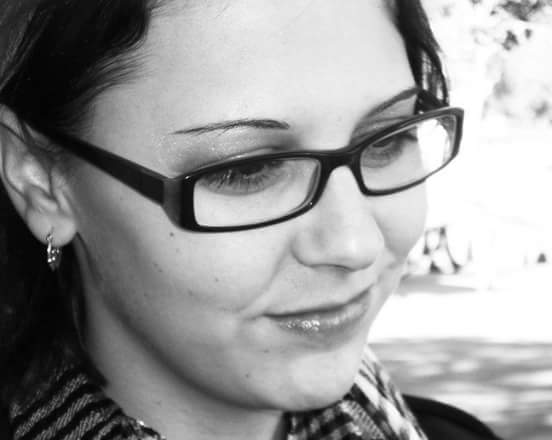
M. Brett GaffneyI grew up making stories, filling notebooks with poems and stories, even fan-fiction. But I think I decided to become a serious writer when I was in college. I was an English major taking a poetry course at Stephen F. Austin University in Nacogdoches, Texas. My then professor, now friend and chief editor of Gingerbread House, Christine Butterworth-McDermott took an interest in my poetry. When she first suggested I submit my work for publication, I thought, oh man, maybe I’m a writer. It’s weird how powerful others’ validation is with regards to the things we do, but I respected her (and her husband, John McDermott, creator of the BFA program in Creative Writing there) so much that her encouragement gave me the boost I needed to really work at it. The writers I read then are still some of my favorites today: Kristin Naca, Kim Addonizio, Patricia Smith, Marisa Silver, Stewart O’ Nan, Toby Barlow… And then some newer favorites: Jamaal May, Ada Limon, Ross Gay, Tarfia Faizullah, Aimee Bender, Benjamin Percy, Rick Yancey… I’m also reading a lot of nonfiction right now, books about Jonestown and American “murder houses” at the moment.

You are the art editor at Gingerbread House Literary Magazine. How did you become involved with the publication, and what is your process in curating such a lovely and effective collection of art for the site? 

During my last year at SFA, Christine and I talked about starting a literary journal catering specifically to fairy tales. And then two years later during my MFA program at Southern Illinois, we made it a reality along with Kay Winfield, our web editor, and Kayla Haas, our fiction editor. We knew we wanted to pair the poems and stories with some images but the art curation truly started while putting together our third issue. I was a fan of photographer Brooke Shaden’s work and then realized one of her pieces would pair great with a poem we were publishing. So I emailed her for permission and she said yes. Ever since, I’ve adopted the title of art editor and commenced an ongoing search of social media, deviant art, and other journals for artists that embody the kind of work we look for: strange, surreal, and of course fairy-tale-esque. I’m actually in the midst of finding art for our February issue. We of course choose our literature first then search for the right artistic pairing; it’s always an exciting challenge. And now I feel we’ve become a journal that prides itself on our visual aesthetic just as much as the literary work. It’s a beautiful hybrid. This month (February) will mark our seventeenth issue.
Gingerbread House LitAs a poet, do you have a specific process behind your work, or do you allow each poem to develop organically in its own way?

I think each of my poems requires its own process and most of the time it is very organic, usually drafted initially by a feeling or image. Though some require research, like poems about Waverly Hills Sanatorium, and that process is a bit more methodical. I find the facts I want to tether the poem to and then work around them. Though I have to be careful not to rely on research or else the poem starts to feel too loaded down with history, more like a textbook. Most of the time it’s just me, the laptop, and a bit of music. The other night I started writing to Disturbed’s cover of “The Sound of Silence” by Simon and Garfunkel on a loop. What I got out was raw and powerful but now I just need to go back to it and see which lines are really good and which ones are mostly tears.

All of your writing is captivating, but my own favorite is your poem, “La Isla de las Muñecas, Xochimilco, Mexico.” What inspired you to write about the Island of the Dolls, and have you ever visited the infamous island yourself?

Thank you! I wish I could say I’ve visited the island. Alas, I’ve only watched what few documentary segments I could find about it. I first read about Xochimilco on some website, probably Cracked, as one of the most haunted locations in the world. But then of course I needed to know more, get as close to the truth of the place as I could. The images of the dolls alone are terrifying but this one man’s dedication to the collection is what really captivated me. So I carved out a story for him and tried my best to both unsettle my audience and also pull them in, make them want to leave a doll offering themselves. That’s also one of my first poems to be published so it holds a special place in my heart.

What upcoming projects are you working on?  

I have a list, haha. But the two I keep coming back to are my poetry collections about Waverly Hills Sanitorium in Louisville, Kentucky and my time working as an actor at the Dent School House, a haunted house in Cincinnati, Ohio. Waverly has captured my attention for about six years now and I’ve written thirty plus pages of poetry on the hospital, its history and its ghosts. My Dent poems are newer, as I’ve only worked two Halloween seasons there. So far, the poems I’ve drafted look at the haunted house from behind the scenes. For example the one I’m working on right now specifically deals with my getting punched in the face by a customer I successfully scared.

Huge thanks to M. Brett Gaffney for being our featured author this week. Find her online, and keep an eye on Porkbelly Press for updates on the upcoming release of Brett’s chapbook, “Feeding the Dead.”

Happy reading!

Weird and Wonderful: Interview with Kristi DeMeester

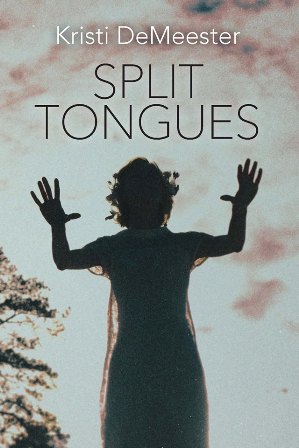
Welcome back! This week, I turn a spotlight on purveyor of horror and the weird, Kristi DeMeester. Kristi is the author of numerous short stories as well as the chapbook, Split Tongues. Her fiction has been featured widely in publications such as Black Static, Shimmer, and Three-Lobed Burning Eye among others.

Recently, Kristi and I discussed where she’s been as a writer and where she’s planning to go (and she even hinted at her forthcoming and highly anticipated short fiction collection).

A couple icebreakers to start: when did you first decide to become a writer, and who are some of your favorite authors?

Kristi DeMeesterWhen I was younger, I was always more of a reader than a writer. I’m not the person who can say “Oh, I wrote my first story when I was six.” But I ingested every book I could get my hands on. I did try to write a novel when I was eleven. I think I got three spiral bound pages in and stopped. I titled it Who Made You the Boss Anyway. Yeah. I didn’t start writing seriously until I was 24. When I left my MFA program two years later, I started writing horror.

Some of my favorite authors are Flannery O’Connor, Joyce Carol Oates, Shirley Jackson, Livia Llewellyn, Laird Barron, Michael Wehunt, Poppy Z. Brite, John Langan, I could go on and on.

In only a few years, you’ve already reached so many milestones in your career, with stories appearing in Black Static, Shimmer, The Dark, and Year’s Best anthologies. When it comes to your short fiction, what’s left on your to-do list? Are there still publications out there you’re eager to crack?

I’d love to have a story in Nightmare, Apex, and Cemetery Dance. And, of course, I’d like to be on a Datlow or Guran list at some point.

As I read multiple stories from authors, I always love to search for the threads that connect the writer’s world. One primary theme I’ve noticed that permeates your work is your frank and nontraditional exploration of motherhood. You’ve confronted the subject from various angles: a mourning mother looking for something transcendent in “Like Feather, Like Bone”; unlikely mother figures searching the hungry darkness in “All the World When It Is Thin”; a lost mother who must be retrieved in “To Sleep in the Dust of the Earth”; and a predatory mother who offers her child as a sacrifice in “The Marking.” When crafting these stories, did you set out specifically to explore a certain aspect of motherhood, or did that develop naturally as you wrote? Also, it can sometimes be difficult to get editors to pay attention to narratives that plumb the depths of “the monstrous feminine.” Have you experienced any resistance when writing such female-focused stories?

Motherhood is a topic I come back to because I’m constantly trying to work out my own issues with it. What it means to be the daughter of a terrible mother; how frequently daughters don’t recognize how much of themselves has been sacrificed in the face of a self absorbed mother; how that might ultimately affect my own abilities to mother and the fear of ultimately turning into the monstrous thing my own mother was. Because even though I’ve separated myself from that abuse and toxicity, she’s still a part of me. Lurking somewhere under my skin and lying wait in my blood. And I think too frequently, women have a lot of pressure to be this selfless, giving fountain of love and are expected to lose themselves in their children. I have a lot of fear about that as well because I can’t do that, and the associated guilt is enough to drown, and I wonder if I’m going to turn into her no matter how hard I rail against it. Much of my fiction centers on those fears because I think it’s a dark underbelly that women often try to ignore. I know that I have tried.

I haven’t experienced overt resistance necessarily. No one has told me explicitly that my story would be a hard sell. But some of my stories that deal with the darker aspects of femininity have been tough sells. “The Marking,” which appeared in Three-Lobed Burning Eye and which will be reprinted in Year’s Best Weird Fiction Volume 3, was rejected eight times before it sold. It’s one of the more intense stories I’ve written dealing with mother/daughter relationships. I’m still in shock that it was selected for Year’s Best Weird.

Congratulations on the recent release of your chapbook, Split Tongues! What was the process behind launching the project through Dim Shores, and was there anything about putting together your first chapbook that was particularly surprising or challenging?

Split TonguesThank you so much! I was so excited when Sam reached out to me. I didn’t have anything at the time that was the length he was looking for, but I had an idea in the back of my mind about a teenage girl and speaking in tongues. I sat down the same day he emailed me and started “Split Tongues.” A week and a half later, it was finished, and I sent it to him. After that everything came together beautifully. I was so impressed with how professional and courteous Sam was. Working with him was a dream. Anytime an editor allows the author to help with design and artwork, it’s a phenomenal experience, and I was thrilled when I found Natalia Drepina, whose photography appears in the book. Thankfully, Sam liked her work, too. It was a lovely experience.

Looking forward in your career, you’ve mentioned in previous interviews that you have your first collection of short fiction in the works. What can you reveal about that project at this point? Have the stories been selected, and can we expect some never-before-released pieces in the table of contents?  

Unfortunately, I can’t reveal much. The stories have all been selected, but there may be one or two never released pieces that will be added.

Out of your published stories so far, do you have a personal favorite?

It’s titled “The Beautiful Thing We Will Become” (and will appear in Word Horde’s upcoming Eternal Frankenstein anthology).

Tremendous thanks to Kristi DeMeester for being this week’s featured author! Find her at her author site, and pick up a copy of Split Tongues, while you still can!

Happy reading!

Criminal Mind: Interview with Calvin Demmer

Welcome back! For this week’s author interview, I’m excited to spotlight Calvin Demmer. Calvin is a mystery, crime, and horror writer whose fiction has appeared in multiple publications including Sanitarium Magazine, The Sirens Call, and Pilcrow and Dagger.

Recently, Calvin and I discussed writing rituals, favorite stories, and finding inspiration in creepy medical procedures.

A couple icebreakers to start: when did you first decide to become a writer, and who are some of your favorite authors?

Though recollections of my youth are vague, I do recall making up many stories, but more importantly always having a lingering desire to write them down. My clearest memories of this was when I was around twelve or thirteen and actually typed a few stories out on the PC just for the joy of it (one was about zombies breaking into a research facility and another was about a possessed guitar). That probably truly lit the flame, but it wasn’t until about mid-2014 that I actually rekindled that fire and started to sit, write, edit, and then submit completed work. Once again, I found that I enjoyed creating my own characters, and sending them on arduous journeys through the worlds and situations my mind could think up. So I’ve stuck with it ever since.

My favorite authors list grows by the day and seems to be ever changing. However, looking at some authors/writers who heavily influenced the first phase of my writing, I’d say: Dan Simmons, Philip K. Dick, Richard Matheson, Stephen King, Joe Hill, Alan Moore, Brian K. Vaughan and Dean Koontz.

Do you have any rituals as a writer? Also, do you subscribe to the “write every day” philosophy, or do you simply write when inspiration strikes?

Finding the perfect conditions to write everyday can be difficult, but I’m sure I will develop some habits as I go along. I do tend to grab an energy drink and put on the headphones (usually hard rock/metal). I’ve heard a couple of writers talking about this “wall of sound” when writing, and after trying it, I have found it can work for me at times.

I try to write everyday, but some days are just more productive than others. I do find myself editing most days though. I seem to blaze through a first draft of anything, and then end up spending ten times the amount of time going through it and making it better. But there is joy in that process as well, being able to get the story tight and clear.

Much of your work is in the speculative and mystery/crime genres. What in particular draws you to this type of fiction?

It’s what I’ve always read, so I guess it just came naturally.

My first few stories were either all fast-paced pulp-style mysteries or horror stories with a twist, some with a bit of a Twilight Zone feel. Of late, I have written more science fiction and fantasy stories, but once again it all falls under the umbrella of the type of stories I enjoy reading.

I don’t doubt I will eventually try other genres, I find it interesting to push myself and try things that are different, but speculative and mystery/crime genres will always be home.

Audrey at NightOut of your published stories, do you have a personal favorite?

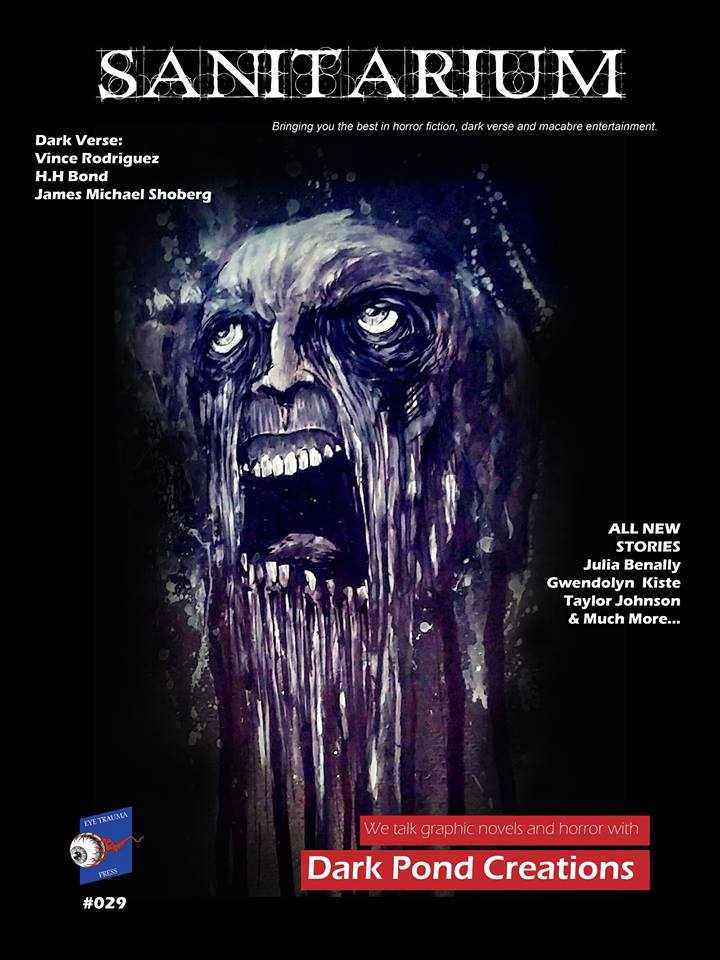
If I had to pick one on the spot, I’d say “Heartless” which was my first published story (Sanitarium Magazine issue #29). I was reading a book on medical procedures, can’t even recall why now, and when I came to the section on heart surgery, I thought, that’s cool, but how can I make this into a dark, creepy tale? . . . And through that, my character James Vandersson was born.

Where would you like to see your writing career in five years?

Having the time to construct longer and more complex worlds and plots for my characters is definitely a goal. So, hopefully in five years I would have written a novel or two.

Also, I want to venture down the other paths writing can take you. This includes things like comics and graphic novels. I enjoy the whole writing process, and am eager to see and try the different ways stories can be presented.

Big thanks to Calvin Demmer for being part of this week’s author interview series! Find him online at his website and on Twitter.

Happy reading!

Paranormal Legacy: Interview with Lloyd Green

Welcome back once again! For this week’s interview, I’m thrilled to present the awesome Lloyd Green. Lloyd is a writer with quite an impressive resume. He’s penned numerous short stories and novels, and he has an impeccable eye for research in his historical genre-blending fiction.

Recently, Lloyd and I discussed ghosts, horror, and how his incredible writing career came to be.

A couple icebreakers to start: when did you first decide to become a writer, and who are some of your favorite authors?

Lloyd GreenFirst of all, Gwendolyn, I’d like to thank you so much for the opportunity to be interviewed.
I’ve been writing short stories since I was a teenager and I’ve always been interested in reading science fiction and horror novels. I didn’t seriously think about being a writer until seven years ago. A high school friend, who now lives in another country, located me through Facebook. I proceeded to email her pages and pages of narrative in an attempt to bring her up to date about decades of relationships, jobs and family. She repeatedly commented that what I was sending her seemed more like a fascinating book and asked if I had ever considered writing. Some of the material in those letters, I eventually used in my first book Reflections of EL: In Search of Self. So my need to seriously write science fiction and fantasy really began with this first fan and it expanded from there.

Without a doubt, Stephen King is my all time favorite writer. I’ve been reading his work since Carrie first called out to me from the retail bookshelf. The man writes his characters and plots as if he were standing there watching the action. Second is Frank Herbert because of his effective world and history building as shown in his Dune series and finally there’s Orson Scott Card beginning with his book Ender’s Game. I admire the plot twists and secrets in this book and also the following ones in the series.

You and I share a bit of educational background: we both hold psychology degrees. Has your education ever worked its way into your writing in surprising ways, and do you have any advice to newer writers out there about how to get inside the heads of their characters?

If I’ve learned anything, I recognize not to compartmentalize a character. When writing about a criminal, don’t just figure that he must have had a dark past and he has to be evil to the core. His course might have begun with the purest of intentions. The real core of the character is the reasons for the decisions he makes. The more his reasoning feels similar to the reader, the more a reader will identify with the criminal and understand the path that he takes in an attempt to accomplish his goals. Understanding the criminal’s motivations also means the reader understands that there are layers of good and evil in all of us. We are all complicated beings but above all else, we yearn to be noticed and heard.

The same holds true for the intellectually disabled individuals who I worked with for decades. Recently, I wrote a short story, “Poor Interfaces,” which describes the relationship between a staff person and the one that he cares for. Being able to relate to the disabled as people who have something in common with you instead of people who are different, moves the relationship from administrator or direct caregiver to one of friendship. There will always be the professional side that has to be maintained but in the long run we are more drawn to help our friends because we feel that we are also helping ourselves.

Your work often touches upon a variety of paranormal elements. Have you always been a fan of the horror and fantasy genres?

The Green LegacyAs far back as I can remember. As a child, I was scared to death of horror movies. When I finally understood that my imagination and what I thought might happen was scaring me worse than the actual event, everything changed. After this realization, I began to look forward to the presentation of the rush of fear that the writers and/or directors were serving up.

I’ve always believed in otherworldly life. We usually become afraid of whatever cannot be concretely explained. I’ve only had one paranormal experience and to this day, I’m not certain if it was real. One morning in 1994, I woke up to find an elderly woman standing a few feet away from my bed. From behind her, sunlight softly bled through the sheer window curtains. Her entire form was shimmering as if she were glowing. Her stringy hair was bleached white and her outstretched gnarly hands reached out towards me. She did not say a word and for this I was thankful because I feared what message she might present to me. I shut my eyes in terror, praying that this horror was not real.  When I was brave enough to open one eye, she was not there. I’ve never been able to determine whether the entity was real or a dream.

In my writing, I use mystical and/or frightening characters that are just a bit too human. I get the reader to identify with the seemingly odd character by writing about them as if they were a close friend or family member. This would slowly get the new acquaintance crawling under the reader’s skin because they feel they understand the character. In spite of the character being frightening, this finally leads to the reader caring when the creature is not making appropriate decisions. A successful writer has learned to realistically portray the monster, which lives in all of us.

In some of your work, including The Green Legacy, which takes place in the nineteenth century, you interweave elements of historical fiction. What is your research process when writing a time period piece?

I love historical fiction because there is a frame of reference that the reader might already be familiar with. After I decide on the time period, I dig into finding as much information on the town and its people as possible. There will always be fact-finders who will stop what they are reading in order to look up the background circumstances that the writer is describing. Since I’m going through the trouble of documenting and presenting, it only makes sense that I deal with information that can be proven. It cuts down on arguments and it’s a lot less embarrassing when others begin to pick apart facts.

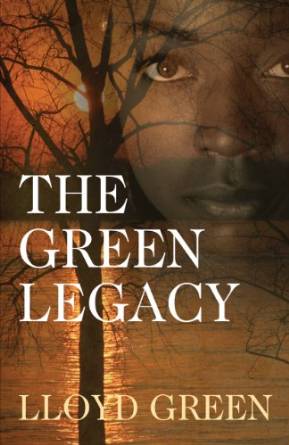
While putting together my book, The Green Legacy, I started with a search of my own family tree. I came across a branch that held two different names for the same distant relative. That made it difficult to verify who this person was and her true place within the family. In this case, I collected as much history as I could from relatives and again explored Ancestry.com in an attempt to verify her place in the Green family lineage. Only after all of this did I begin to include this person as part of what I call factual family history. After this foundation was set, I then moved into the fictional story that I really wanted to tell, which is about a sixteen-year old with psychic abilities who is sold into slavery and her secret agenda.

You’ve written both novels and short stories. How is your process different (or similar) depending on the length of the work?

Not really different. I write out my general ideas but I eventually turn it all into a chart. How extensive the chart becomes will sometimes determine the length of the story. The chart is necessary to ensure consistency between plot twists and secrets. As most writers know, you can never say, “I’m going to write a 350-page speculative fictional story today.” Stories take on a life of their own and they will be as long as they need to be. My outline simply helps with consistency because it drives me nuts to proofread and find facts out of place or secrets mistakenly revealed too early.

Out of your published stories, do you have a personal favorite?

That’s easy. “Halloween – 1979.” It was published through Sanitarium Magazine. It’s a short story about two couples that decide to visit a well-know haunted house on Halloween night. One participant discovered that the creeping fear was not contained within the established house of horrors. The basis for this disturbing story is based on a factual personal event.

Huge thanks to Lloyd Green for being our featured author this week! Find him online at EndlessPerceptions.com and at LloydGreen.org. You can also follow him on Facebook and Twitter.

Happy reading!

Feathers, Friendship, and Skulls: The Story Behind “Baby Bird”

February is rapidly slipping away, and what a month it’s been! A great Women in Horror Month to be sure, in which I met lots of new creators in the genre. If you haven’t been keeping up with all the great goings-on, I definitely recommend catching some of the final horror-laden events.

Before the month evaporates entirely, let’s talk a little about fiction. I am a fiction writer after all! Earlier this month, I was thrilled to see my story, “Baby Bird,” debut at Triptych Tales, a fantastic website that focuses on a broad range of speculative literature.

Like my tale, “Something Borrowed, Something Blue,” that appeared in the fall at Three-Lobed Burning Eye, “Baby Bird” delves into avian body horror. It’s strange how cyclic creativity can be. 2015 was definitely a birds sort of year for me. There was even a third bird story that never reached the light of day (c’est la vie, unfinished projects!). However, the similarities between this story and “Something Borrowed, Something Blue” pretty much end there. “Baby Bird” is much more of a coming-of-age tale with some darkly fantastic twists. This story follows two outcasts named Calla and Rhee as they forge an unlikely friendship in an unwelcoming small town.

The inspiration for “Baby Bird” was simple enough: my husband surprised me with a bird skull necklace (all pewter bones, so no actual birds were harmed in the making of this story). It was such a fun gift and an unusual one too that I immediately knew I had to write a story about it.

While this tale definitely has some grisly elements, the process behind “Baby Bird” was a joyous and straightforward one. I started the first draft back in early December, and the story was finished and ready for submission less than two weeks later, about four days before Christmas.

Accompanying the story on the Triptych Tales site is an incredible original illustration by Wendy Quirt. Wendy is a nature illustrator, and she uses the bird skull mentioned in the opening line as the focal point of her wonderfully simple artwork. It’s exciting enough to be published, but to also get an original piece of artwork just really puts the experience over the top.

So if you dig offbeat tales of friendship—that spotlight a healthy dose of the macabre—then head on over to Triptych Tales and catch my tale, “Baby Bird.” Calla and Rhee will thank you.

Happy reading!

Mysterious and Horrific: Interview with Sarah E. Glenn

Welcome back to our final Women in Horror spotlight of 2016! My, how February went too fast!

Women in Horror Month 7Today, I am super excited to present editor and writer Sarah E. Glenn. With her wife, Gwen Mayo, Sarah is the purveyor of Mystery and Horror LLC, a fantastic small press that recently received two nominations for the Agatha Award! In addition to her editing, Sarah is also an accomplished author in her own right with stories in State of Horror: Louisiana and Fish Tales: The Guppy Anthology.

Sarah and I recently discussed the genesis of Mystery and Horror, LLC as well as the trajectory of Sarah’s fantastic fiction writing career.

A couple icebreakers to start: when did you first decide to become a writer, and who are some of your favorite authors?

Sarah GlennI knew I wanted to be a writer when I was still in elementary school. I loved to read, and couldn’t imagine anything nobler than creating stories like the ones I enjoyed. Now that I’m older, I have a greater appreciation for the other people who helped bring those wonderful books into being.

Favorite authors: I know this sounds corny, but I enjoy Stephen King. I started with Carrie when I was eleven. Anne Perry and Louise Penny are also favorites due to the depth of their characters and plots. I loved the Chris Claremont era of the X-Men, and, later, the Neil Gaiman Sandman tales;  as a teen, I had a burning desire to work for Marvel Comics.

Then, there’s Robin Cook. His best books explore current issues in medicine, like the impact of genetic research on who may and may not be able to buy health insurance. Lately, he’s taken on nanomedicine. Very technical stuff, but he presents it so it makes sense.

What inspired you and Gwen Mayo to start your own small press? What’s been the most surprising part so far about running Mystery and Horror, LLC?

I’ll take ‘Indie Press Folds’ for $300, Alex. Our first novels were published by Pill Hill Press, a great small press that frequently published stories that were nontraditional even by speculative fiction standards. The owners’ family expanded, and they decided to close the press for the time being. I hope Pill Hill resurfaces – they had a good crew of authors on their forums and took suggestions for anthologies.

Gwen and I were sorry to see it go, and we decided to open our own press. We could have taken the self-publishing route, I suppose, but we really wanted to work with other writers, too. Some of the Pill Hill authors came over and submitted stories to us; Monstermatt Patterson, who had published Monstermatt’s Bad Monster Jokes with Pill Hill, has done two collections with us.

What surprises me the most is how genuinely nice most writers are. There’s a stereotype of the author who takes herself too seriously, and some of those do exist, but most of the people I’ve encountered are friendly, generous, and funny. I think I’ve found my people at last.

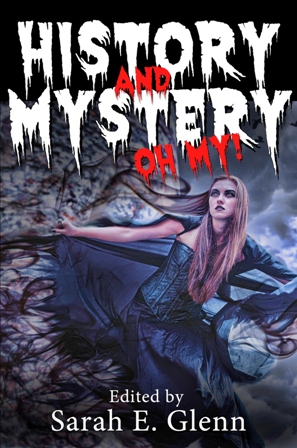
History and Mystery, Oh My!When you’re reading through submissions, is there something specific you’re looking for in a story? Also, do you have a preference for character-driven stories or plot-driven stories?

A good idea is what snags my interest. The idea can simply be an interesting situation (a toothless vampire, e.g.), but I also love a whodunit where the reader gets a chance to identify the killer. If you want me to follow a series, though, you need to have good characters.

How do you balance your work as an editor with your work as a writer? Is it ever difficult to make time for both?

I work full time, plus I have a long commute. Yes, it is difficult to make time. I come home during the week and just want to crash. Some people stand on their feet all day; I stand on my brain. I try to be constructive, though, and right now, editing is winning.

Out of your published fiction as a writer, do you have a personal favorite work?

I’d have to say I’m especially pleased with the short story “Caldera of Trouble”. I’ve been to the island of Santorini, and I worked hard to capture its beauty and eeriness in words. I also drew my information on the vrykolakas from scholarly works, rather than pop culture. It was a pleasure to write. It’s still available on Amazon under my name.

Where would you like to see your writing and editing career in five years?

Gwen and I have been working on a novel featuring two retired nurses from World War I. It’s called Murder on the Mullet Express, and it should come out later this year. I hope, in five years, that we’ll have a sequel published or in the works. I plan to reissue my first novel, All This and Family, Too, with revisions. I also have a separate novel I’d like to finish and publish, one that is darker than my usual material, but I’ve already entered Fantasyland in this paragraph.

As an editor: I want to publish more anthologies with interesting themes, including a Best of Strangely Funny book. I’m dealing with the fourth collection now; I don’t think that’s unreasonable. Gwen and I want to grow the press and publish more award-winning books; we’ve been fortunate with the authors we’ve chosen so far.

Big thanks to Sarah E. Glenn for being part of this week’s author interview series! Find out more about Mystery and Horror, LLC on its official site, and pick up a copy of Sarah’s story, Caldera of Trouble, on Amazon.

Happy reading!

Horror Luminary: Interview with Sumiko Saulson

Welcome back! For our third interview for Women in Horror Month, I’m thrilled to present Sumiko Saulson! Sumiko is the scribe of Solitude, Happiness and Other Diseases, The Moon Cried Blood saga, and many other fantastic titles. In addition to being an incredibly accomplished author in her own right, Sumiko is also a huge supporter of her fellow writers. In 2014, she compiled 60 Black Women in Horror Fiction, an invaluable nonfiction resource that features interviews, short stories, and biographies spotlighting some of the very best names in horror.

Recently, Sumiko and I discussed her lifelong love of speculative fiction as well as her plans this February to celebrate both Women in Horror and Black History Month.

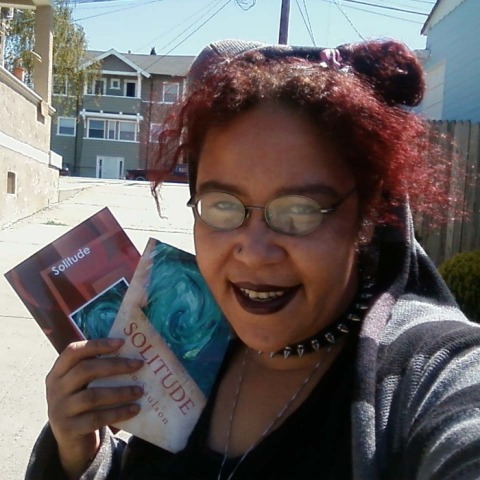
Sumiko SaulsonA couple icebreakers to start: when did you first decide to become a writer, and who are some of your favorite authors?

I decided I wanted to write when I was very young. I was an early reader – I was three when I started to read. When I was five, my father asked me what I wanted to be when I grew up, and I said a writer, an artist, or a veterinarian. I was writing poetry for money by the time I was in third grade. They were short poems for the inside of custom greeting cards and wedding invitations. I was on my high school newspaper. I got my first job as a writer when I was nineteen, writing for a computer magazine called The Node and its sister music publication, RockHEAD. They were local free newspapers in San Francisco.

Some of my favorite writers are Anne Rice, Christopher Rice, Stephen King., Toni Morrison, Frank Herbert, L.A. Banks, Susan Cooper, Dean Koontz, C.S. Lewis, Peter Straub, and Edgar Allan Poe.

Women in Horror Month 7What in particular drew you into the speculative fiction world? Have you always been a fan, or did your love for horror, science fiction, and fantasy develop later?

I’ve always been a fan. My parents were fans, so I started reading and watching sci-fi, horror, and fantasy at an early age – and particularly, horror and science fiction. My father subscribed to Issac Asimov’s Science Fiction magazine and I read the short stories when I was ten years old. The first novel I read was my mom’s copy of Peter Straub’s Ghost Story. I was in fifth grade. By the time I was twelve, I was reading things like Frank Herbert’s Dune and Stephen King’s The Stand

You’ve been an ambassador for Women in Horror Month in the past. Do you have anything special planned for the 2016 event?

I don’t have anything special planned for WiHM yet this year, but I am doing something special for February: I am hosting a month of African American horror blogs over at HorrorAddicts.net in honor of Black History Month. Many of the writers are black female writers I met when I was putting together 60 Black Women in Horror for WiHM back in 2012 and 2013, but the bloggers are not exclusively women. We have a lot of male speculative fiction writers involved as well.

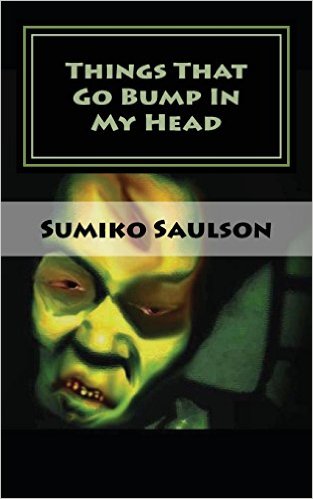
Things that Go Bump in My HeadYou’ve written both novels and short fiction. How is your process similar (or different) depending on the length of the work?

I write character sketches and plot notes for novels. I never find that necessary for short fiction. I can outline the plot for a short story from beginning to end in my mind, and don’t have to spend much time making sure that the details don’t get away from me, or become convoluted. Sometimes I can get so confused when writing a novel that it seems almost impossible to finish it. I’m there over and over again with the sequel to Solitude, my first novel. It is called Disillusionment. I get so confused about details pertaining to timelines (since this deals with alternate timelines) that I have to go back and re-write things. I hate to re-write in the middle of a first draft. That’s almost never necessary with a short story.

Out of your published works, do you have a personal favorite?

Happiness and Other Diseases is my favorite. It’s the first romance I ever wrote. I didn’t think I would want to write anything remotely resembling a love story – not even one that takes place in a dark fantasy world, like Happiness does. I really fell in love with the characters. It’s also the first book I wrote a sequel to. I became very inspired when writing that book. It’s also one of the fan favorites, along with “Warmth.”

Where would you like to see your writing career in five years?

I would like to make a lot more money as a writer. It would be ideal to be able to support myself through writing within the next five years. I have that as a goal.

Big thanks to Sumiko Saulson for being part of this week’s Women in Horror author interview series! Find her online at her author website!

Happy reading!

Arachnophobia: Interview with Betty Rocksteady

Welcome to our first interview of February! As you might already know, it’s Women in Horror Month! That means for the next four weeks, I’ll be featuring some awesome spotlights on those morbid females like me who like our genre blood and guts-filled.

Women in Horror Month 7For our kickoff interview for Women in Horror Month, I’m pleased to present author and artist Betty Rocksteady. I first discovered Betty’s work through her illustrations at Theme of Absence. She created an incredible black and white image for my story, “One Wish for the Wishing Well.” That’s when I went down the rabbit hole and learned about her other illustration work as well as her illustrious career as a fiction writer.

Recently, she and I discussed favorite authors and artists as well as her recently released novella, Arachnophile.

A couple icebreakers to start: when did you first decide to become a writer, and who are some of your favorite authors? Likewise, who are some of your favorite artists?

Betty RocksteadyI decided to be a writer when I was about 6 or 7 years old. I was an avid reader and I wanted to be the youngest published author, but I could never seem to finish anything. I had quite a few stops and starts with writing over the years since then but never really took it seriously. When I started approaching 30, I realized it was up to me to make it happen. For a long time I believed I wasn’t a writer because it didn’t come as naturally as I wanted it to, but then I realized it was a skill like anything else and if I was willing to be bad at it for a while, I could end up being pretty good at it. So I wrote a story a week for a year or so, and read a ton of books on writing, and took some workshops, and things are starting to come together for me! I’m really proud of how far I’ve already come.

I read a lot of horror, and Stephen King has been my favorite since I was around 12. I still read everything he writes. I also like the usuals – Clive Barker, Joe Hill, Jack Ketchum, John Wyndham, Richard Matheson. Ira Levin, Nick Cutter. Mo Hayder writes some really really weird crime fiction. Lately I’m into Kealan Patrick Burke, Max Booth, C.V. Hunt… Oh god, this is a huge list.

My favorite artists are Edward Gorey, Virgil Finlay, Sam Keith. I like pen and ink illustrations and weird comic book art.

You are both a visual artist and a fiction writer. Is your approach different when creating a story versus creating a sketch or a visual piece? Do you often illustrate your own stories?

I’ve illustrated a couple of my own stories, and I also do illustrations for other people’s fiction monthly on Theme of Absence. Drawing and writing are actually more similar in process than I realized until you asked! Usually they both start with a seed of an idea that I chew on for a few days, turning it over in my mind. Eventually I progress to sketching/brainstorming on paper. When I’m writing, I like to know where I’m going and how I’m getting there. I always know beginning middle and end when I start, but sometimes it goes differently than I expected once I start pounding the rough draft out. Drawings start rough and loose and get tightened up with each stage of drawing.

Your sideshow poster art is incredible! A fantastic combination of the vintage and the macabre! Have you ever daydreamed of joining a sideshow, and if so, what would your special performance talent be?

Thanks! I love sideshow lore and I used to read a lot about it. If I were in a sideshow I would be some sort of cat trainer. Or a fortune teller. Or I would combine the two and train cats to help me tell fortunes.

ArachnophileYour recent novella, Arachnophile, involves a man who becomes romantically entangled with a spider. Tell me a little about the inception of this story.

I was invited to submit something for the New Bizarro Author Series, and my editor, Garrett Cook helped me brainstorm some pitches and we tossed ideas back and forth. The one he liked best was one that I wasn’t all that sold on, but he encouraged it into fruition and a lot of strange and unexpected things happened. I’ve always been really creeped out by spiders, much like the protagonist of this book. Things sort of changed as I researched and wrote it though… also like my protagonist, although not quite to the same extent! The whole book has a warped Eraserhead vibe to it, and it plays on a lot of my personal fears and disgusts, and I’m really happy with how personal and strange it ended up being.

You’ve written short fiction and now novella-length fiction. Any plans for writing a novel in the near future?

I would love to write a novel some day. I have another novella I’m finishing edits on now, and it’s really terrifying. I’m also working on some more short fiction. A novel is definitely going to happen, but I’m not sure whether it will be sooner or later. Once an idea comes that needs a novel to breathe in, that’s when it will happen.

Out of your published works, visual or fiction, do you have a favorite?

I’m really proud of Arachnophile. I have a brand new story called These New Appetites in F*cked up Fairy Tales Volume 1 that has some of my favorite characters I’ve ever worked with. It’s an unsettling story of when girl meets wolf.

Big thanks to Betty Rocksteady for being part of this week’s author interview series. Find her online, and be sure to check out the official Women in Horror page for ways you can get involved this wonderfully bloody February!

Happy reading!

Apex Author: Interview with S.A. Mckernan

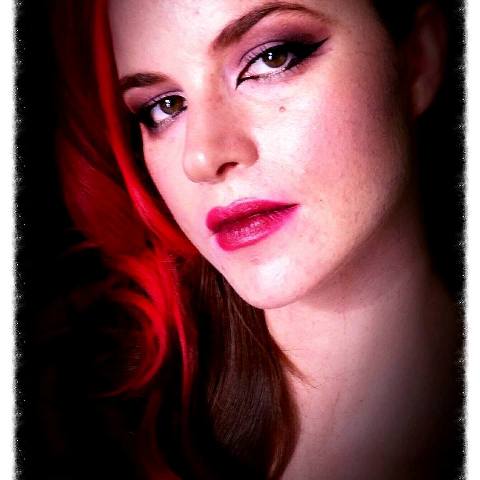
For this week’s author interview, I’m thrilled to introduce S.A. Mckernan. This dark fantasy author crafts incredibly beautiful and terrifying worlds while doing some real beauty work in front and behind the camera as a makeup artist.

We talked recently about her work as a writer and artist as well as her future plans in the publishing and beauty industries.

A couple icebreakers to start: when did you first decide to become a writer, and who are some of your favorite authors?

ScarlettI began creative writing in high school when I needed extra credit for my English class. I wrote a short story based off a dream I had, so in a way I was stricken by sudden inspiration and necessity, which are two amazing motivators. After boosting my grade I decided to continue writing. I eased into it because I enjoyed the creative process as well as the creative outlet. One of my biggest inspirations is Anne Rice. Not just because of her stories, but because of her writing style, especially in her earlier works. Of course, there’s J.K. Rowling. Growing up I read a lot of Harry Potter. Mary Stanton is amazing. I adore her Unicorns of Balinor novels. Then there’s Walter Farley, who wrote the Black Stallion. Then there’s Abigail Tartellin who wrote the Golden Boy.

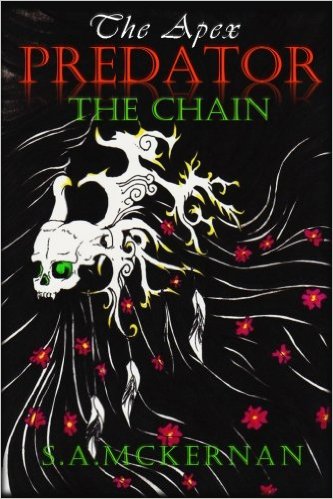
Your novel, The Apex Predator: The Chain, debuted last year. What was the best part about your experience writing the book, and are you currently working on the follow-up?

The best part was when the story/novel finally came together. I loved stitching up the seams of that monster and finally seeing the end result. Apart from the editing (which I did plenty of) I drew the cover artwork and designed the cover as well as the interior formatting.

A sequel is in the works. I don’t have a specific due date, but I’m shooting for completion in mid-late 2016.

Your work leans toward horror and the darker side of life. Have you always been a fan of horror, and what was your earliest experience with the genre?

Apex PredatorNo, I haven’t always been a fan of horror. My first love was fantasy. It was through video games that I began liking and appreciating horror, especially psychological horror. The first truly frightening video game I ever played, and which still remains a big influence is Silent Hill 2. The protagonist receives a letter from his dead wife who is claiming to be waiting for him in a haunted town called Silent Hill so, of course, he goes in search of her. Along the way he encounters monsters, a handful of people, and most disturbingly various levels of the town. The town transforms into hellish states. Silent Hill is a manifestation of the individual’s psychological state. The monsters that he fights are symbols of various aspects of his torment and personality as are the people that he encounters. The disturbing levels the town transforms into are levels of his emotions, from foggy and empty to bloody and decaying. It’s frightening and fascinating. Since this game I’ve always enjoyed horror. It’s that type of visceral horror I enjoy. But horror has to have a purpose. I don’t write horror for shock value. There’s always a reason for it.

In addition to your writing, you’re also an accomplished makeup artist. Your designs are incredible! How did you get started with makeup art?

Thank you! I started studying makeup because I wanted to apply better makeup on myself. During my studies I developed an obsession with the transformative powers of makeup and beauty. My goal with makeup/beauty is to do more with less. Most of the time the biggest transformations can be made with the smallest touch.

Where would like to see your writing career in five years?

Ideally, I would like to be publishing with traditional publishers. Hopefully I’ll have more novels out as well. I have such minimal expectations it’s really hard to say what I want for the future without sounding arrogant. Right now I’d like to have more novels published and an increase in book sales. That would be super.

Big thanks to S.A. Mckernan for being part of this week’s author interview series. Find her online at Facebook and Twitter, and pick up The Apex Predator: The Chain on Amazon!

Happy reading!

Mangled and Macabre: Interview with Justin Hamelin

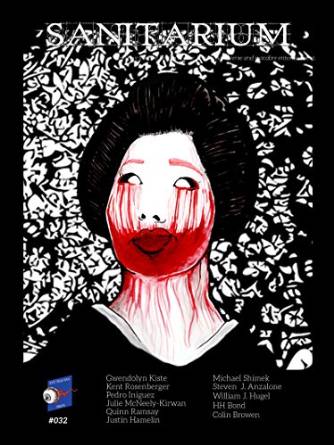
Welcome back for another author interview! This week, it’s all about author Justin Hamelin. I first became acquainted with Justin’s incredible horror fiction through his story, “Sick Love Potion,” in Issue 32 of Sanitarium Magazine. Since then, I’ve enjoyed reading his interviews at his site, Mangled Matters, where he was kind enough to spotlight yours truly a few months back.

Recently, Justin and I discussed his inspiration growing up in Ray Bradbury’s hometown along with the future directions of his very promising horror career.

Justin HamelinA couple icebreakers to start: when did you first decide to become a writer, and who are some of your favorite authors?

I fell in love with reading and writing at a very young age. I was fortunate to be raised in a household that really encouraged creativity, reading, writing and just about anything that stimulated the mind, so I was pretty young when I realized I wanted to do something that involved excessive creativity at a young age. Some of my favorite authors include R.L Stine, Stephen King, Joe Lansdale, Poe, Shirley Jackson, Richard Matheson and Ray Bradbury. Stine and King were huge inspirations for me growing up.

You and I have talked about this so much already, but it bears repeating: you live in Waukegan, Illinois, hometown of the inimitable Ray Bradbury. How has growing up surrounded by Bradbury lore affected you as a horror writer? Any great Bradbury-related trivia you can share with those of us unfamiliar with Waukegan?

Bradbury still is, rightfully so, a huge part of the Waukegan scene. I actually only started reading Bradbury late in high school. I would tell people I wanted to be an author, and a few teachers of mine suggested I do some research and learn about Mr. Bradbury. My first experience in the world of Bradbury was Something Wicked This Way Comes, and I immediately fell in love. I’ve also done a few Bradbury tours, both official and unofficial, around town and it’s really simply inspiring. As far as Bradbury in Waukegan today, the most exciting info is that the city is really working on opening a Ray Bradbury museum at the city’s old library location. The old library is actually a Carnegie building and it’s just the coolest little spot on a corner in downtown Waukegan that I think would be absolutely amazing to hold a Bradbury museum in!

You’re also a blogger at your site, Mangled Matters. How do you balance your nonfiction writing, such as your regular interviews, with your fiction work? Does one frequently influence the other?

It can be quite a juggling act! I love my blog and sometimes I do get sidetracked by one or the other, either the fiction or the nonfiction. Sometimes whichever one I’m working on less often does get put on the back burner inadvertently. I make a conscious effort to try and keep a pretty fair balance, though, between things like interviews and taking time out to write fiction.

I’ve been blessed to speak with so many amazing people, whether they be authors, filmmakers, actors and actresses, or simply horror fanatics like myself. Sometimes the conversations do lead to some inspiration for stories and such, but usually when I’m speaking with somebody for the blog, it’s almost solely on their work and celebrating their awesome achievements!

Your horror collection, The Darkest Corner, earned some fantastic reviews. The book is currently out of print; any plans for a second edition?

Oh man, I cannot wait to get that collection back in print! It was an amazing learning experience to get that first book published, and I was blessed to have a incredible group of friends, family, and horror fans from around the world really support me and that book.

I’d like to think that The Darkest Corner will be available again sometime very soon.

Sanitarium MagazineOn the personal side of things, I’d like to say congratulations on your recent wedding! Just from Facebook and our previous conversations, I know what a major influence your wife, Krystina, is on your writing. Is she a first reader on your work? Since writing is at times such a solitary pursuit, do you have certain ways that the two of you work together when you’re writing a story, such as brainstorming in the early stages or editorial suggestions in the later drafts? Also, is she a writer or artist in her own right?

Thank you very much! It may be a cliché, but it’s absolutely true for me—Krystina is my world. She is my muse, my biggest fan, my most honest critic and I love the heck out of her for putting up with hours and hours of brainstorming, reading ideas, and really just supporting me in anyway possible.

She knows and completely respects that I usually write alone; however she is always there to provide feedback or whatever I may need to keep a story idea going. Once the story is complete, she is always the first to read it and usually offer insight, suggestions or questions that tend to make the story 100 times better!

While she is not a published writer, she is one of the most creative people I know and dabbles in just about every artistic angle you could think of!

Out of your published stories, do you have a personal favorite?

My favorite would have to be the one that was featured in Sanitarium Magazine alongside your awesome work! “Sick Love Potion” was a blast to write. It practically wrote itself but I absolutely love it.

I also have a fairly personal one from The Darkest Corner, titled ‘The Man Next Door’. There is a lot of emotional weight in that story, for me personally.

Where would you like to see your writing career in five years?

Simply put, I just want to continue to write and have a great time doing it! A career as an author certainly would be awesome, but I don’t write for the paychecks. I’d be awfully broke if I did!

I’m challenging myself to submit as many stories as possible this upcoming year, and I have a few half-baked ideas that deserve to be finished and put out there.

Big thanks to Justin Hamelin for being part of this week’s author interview series! You can find him at his Facebook author page as well as his site, Mangled Matters. This writer of weird fiction is definitely one to watch.

Happy reading!