Author Archives: gwendolynkiste

A Master Class with Gerri Leen

This week’s interview is with an author whose work I’ve admired from afar for months. Gerri Leen is an accomplished genre writer who’s been widely published in anthologies, magazines, and literary journals. I first came across her work last summer, and her talent and prolific output astounded me. Gerri has a lot to teach all of us up-and-coming fiction writers. At the very least, the advice she offers throughout this interview helped me feel a little less alone when it comes to the sometimes lonely world of writing, editing, acceptances, and the dreaded rejections.

A few icebreakers to start: when did you first decide to become a writer, and who are some of your favorite authors?
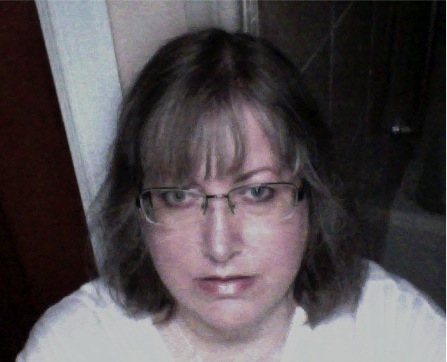
Gerri LeenI had opportunities to pursue writing when I was younger, and writing seemed to come easily (at least as far as school projects were concerned—I never tried to get published back then other than one poetry submission to Omni that I never heard back on), but it never seemed a viable way to make a living—and I was all about supporting myself back then.

So the ability was there but not much experience and definitely not a lot of drive. For years I wrote poetry to quench the thirst to write. But after my mother died in 1998, I quit writing poetry for a while, and I found that there were stories that needed to come out. I started writing fanfiction in 1999 to scratch that itch, and sent in my first professional submission to the Star Trek Strange New Worlds contest in 2004—and got in on my first try. And then didn’t make it into the next volume or make a sale for original fiction for quite a while after that, so I had to really examine why I was doing it. Once I decided I was writing for myself, I could keep going. And things have progressed since. I started writing poetry again, and now I have some poems published. When I was in my teens and twenties, I would say that I would write when I was old. Well, I’m sure the me of back then would think that I’m old now, so prophecy fulfilled.

Favorite authors really run the gamut. I tend to read mainstream fiction, young adult (both speculative and non) and speculative fic. I am sort of weird in that I don’t tend to like series—I much prefer a stand-alone book with an actual ending—so that sort of leaves out a lot of fantasy and YA.   In mainstream fiction, I adore Stewart O’Nan, Gillian Flynn (way before Gone Girl), Armistead Maupin, Doug Coupland, Max Barry, Ron Rash, the thrillers of Louisa May Alcott, and Matt Ruff (although some of his are borderline speculative). In speculative, I love Connie Willis, Joan Vinge, Jane Yolen, Daryl Gregory, Scott Westerfeld, Robert Heinlein, Anne McCaffrey, Richard Matheson, and Ray Bradbury.

You craft a variety of stories, including horror, fantasy, and science fiction. Do you prefer writing in one genre above and beyond the others, or do you love them all equally?
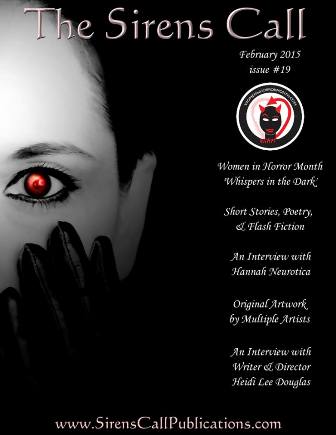
Sirens Call Issue 19I tend toward mythology-related things. That would probably be my favorite: any time I can rework a myth (or a fairy tale or a legend).   I often don’t get dark enough to nudge my stories out of dark fantasy and into horror, so it’s fun to see the ones I have managed to push over the cliff get accepted. Just when I think I’m not really a sci-fi writer, the muse will pull something new out of her bag of tricks and I realize that I still am. I’m sort of a commitment phobe, so I love being able to go back and forth among all these genres (and even mainstream) and try new things. I recently started writing romances under the pen name Kim Strattford. I also do fiction with romance under my own name, but the stories tend to be dark or bittersweet. For the real romance stories, it seemed wise to create a pseudonym that readers could count on for the happy endings they crave (and that the genre demands).

With hundreds of published stories over the last few years, you have an enviable output as a writer. How do you keep yourself focused and avoid burnout?

Thank you! I’ve been doing this for ten years now, so I guess I’m in it for the long haul. But if I feel burnt out or unfocused, I don’t write. Sometimes I just don’t feel like writing. Sometimes I’ve got things going on in life that sort of take over the brain so I don’t have the energy to write—and I often feel like the muse is diverted to handle the crisis, guess she’s an all-purpose inspirer. I have frequent severe migraines and sometimes they take me off the playing field (other times, writing through them is the only thing that makes them tolerable—although the stories don’t always make a whole lot of sense when I read them the next day). I’m pretty chill when it comes to any kind of schedule. If I’m meant to be writing, I’ll write. If not, I’ll do something else.Bottom line, this should be fun. If it’s not fun, take a break till it is. At least for me, when the story is there, it’s going to flow. But if it’s not there, no amount of me hitting keys is going to get it there. I’ve learned not to force it.

It’s also fun to have projects that are really close to your heart to keep your interest level up. I have a collection coming out from Inkstained Succubus Press that will feature genetically enhanced racehorses that manage their own careers. I have written in this world before and they offered me the chance to do a novel-sized collection of interconnected shorts, and since I’m an avid follower of horse racing, I jumped at the chance. I also am editing a collection of speculative companion/service animal stories for Hadley Rille Books that will benefit an animal rescue group I support in Northern Virginia. Health issues on several fronts have delayed this book, but we are ready to get going on it again. I think it’s a really fun group of stories and poems, and it was oh so enlightening getting to go through the slush pile. I have a much greater appreciation for why things get rejected and how it may not be any reflection on quality, just a case of a story not fitting the theme, or being too much like another story that fits better for whatever reason (although an astounding number of people don’t read the guidelines—I was a little shocked). I think having done a stint as editor on a slush pile, I am much more copacetic when I get rejected.

If forced to choose, which part of the writing process is your favorite: developing characters, establishing setting, or crafting dialogue?
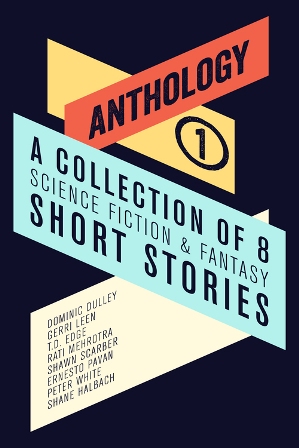
Anthology 1 Gerri LeenDialogue, for sure. There are times when I’m writing, if a scene is in my head and I just want to get it captured, I’ll just do the dialogue and work out the connective tissue later. I think I would be very happy as a screenwriter, because dialogue is the part that’s always come naturally to me (this kind of makes sense since a friend and I used to do plays of fairy tales in elementary school for the younger classes—sometimes making up the thing as we went along). I’ve had to work on the texture part, of setting the scene and bringing it alive as the character sees it. Writing poetry before I did much prose can at times be a problem. In poetry, every word counts, so I am often fighting my own tendency to be spare or choppy. But I’m learning.

For character development, I think a lot of that often comes through in the dialogue as much as the inner monologue and action moments, so I see that as part and parcel of the dialogue process. I always go back to shows like Joss Whedon’s. If you hear the dialogue, you can pretty much tell who would have said the line. So much of what made his characters who they were was how they said things. I’m not sure I’m there yet, but it’s what I’d strive for: to be able to achieve such distinct voices for characters. Probably easier to do, though, in a novel than in shorts, and so far I’ve mostly concentrated on shorts and novelettes.

All writers hear the word ‘no’ a lot during their careers. How do you cope with rejection and keep submitting?
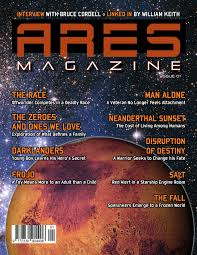
Ares Magazine Gerri LeenRejections never stop sucking. That’s the reality. But I think the trick is to have a lot of stories circulating (and be working on other things) and don’t obsess over things that are rejected—and get them right back out to a new market. And take crit with a grain of salt. If you hear the same thing more than once from different editors, then yes, it may be something that needs fixing. But to edit every time before you send out again: that way lies madness.

That said, it’s not always easy to just brush off the constant rejections. When it gets really bad—one month this year I got six rejections in one day—I often take a break from original stuff and write fanfiction (which is where I really learned to write). I just disappear into worlds I adore, get some immediate love back for the stories, and feel…energized. Sometimes I focus on poetry for a while. Not that it doesn’t get rejected, too, but the process for writing it is a lot easier for me and seems to use a slightly different part of my brain. Or sometimes I just take a break completely from writing. Binge-watch a show (you can always take something away whether it’s how they worked in a plot twist or a clever way of introducing something), watch movies, play games on my iPad, or just read. I’m not a “write every day no matter what” type of writer. I write when the muse either gives me scenes ahead or I get the feeling a story is imminent. I was once told I lack discipline since I won’t do the “butt in chair everyday” method, but I think I’ve done all right doing it my way.

Out of your published works so far, do you have a personal favorite piece?

Oh, man, that’s a hard one. My favorite is probably “Disruption of Destiny,” which appeared in the launch issue of Ares Magazine. It was actually prompted by a movie called The Safety of Objects. But I have a story that’s looking for a home called “One Way” that will give “Disruption of Destiny” a run for its money as my favorite once it gets published. It is a sci-fi story written in a bit of a reverse timeline. And the muse gave me the story backwards so I discovered the character the same way the reader will, with each new bit revealing that you really don’t understand what’s going on at all.

Huge thanks to Gerri for taking the time to answer my questions. Check out both of her author websites here and here as well as her Facebook and Twitter pages. 

Happy reading!

The Short Story: Packing Power Into Tiny Packages

Last week saw the release of my humorous sci-fi story, “Exchange Student,” at UK’s FICTION on the WEB. This was quite an auspicious occasion. “Exchange Student” was the first short story I ever submitted for publication. It also earned me my first rejection. In fact, my poor little three-eyed alien and her human date were rejected numerous times before finally finding a home. Fortunately, I’d been admiring FICTION on the WEB from afar for months, so it was a real honor to be accepted. No matter how many times you hear ‘No,’ I’ve found that ultimately, every story finds the right home.

Exchange Student

So why short stories? Why do I as an author choose to invest my time in pieces clocking in around 5,000 words or less rather than working on, say, a novel? I think this is a question a lot of non-writers ask (because let’s face it, most authors already understand the appeal of the short story form). I can’t speak for everyone, but I have so many reasons for loving short stories. For one, I’ve been a fan since I was a kid. My dad read me Poe, and my mother read me Bradbury, two of the authors best known for their pithy contributions to genre fiction.

From a writer’s standpoint, I sometimes struggle with brevity. On the surface, this would make novel writing a better choice for me, but the last thing I want to do is beleaguer readers with wordy books. In the year I’ve fully devoted myself to short stories, my ability to craft a whole world in just a few pages continues to require less and less words. Short stories teach you to pick your descriptions, dialogue, and plots very carefully.

But don’t take my word for it. Check out these awesome quotes from a wide breadth of authors who just happen to be short story devotees too.

Books

“A short story is confined to one mood, to which everything in the story pertains. Characters, setting, time, events, are all subject to the mood. And you can try more ephemeral, more fleeting things in a story – you can work more by suggestion – than in a novel. Less is resolved, more is suggested, perhaps.” – Eudora Welty

“The short story is still like the novel’s wayward younger brother, we know that it’s not respectable – but I think that can also add to the glory of it.” – Neil Gaiman

“I believe that the short story is as different a form from the novel as poetry is, and the best stories seem to me to be perhaps closer in spirit to poetry than to novels.” – Tobias Wolff

“A short story must have a single mood and every sentence must build towards it.” – Edgar Allan Poe

“Write a short story every week. It’s not possible to write 52 bad short stories in a row.” – Ray Bradbury

“The great thing about a short story is that it doesn’t have to trawl through someone’s whole life; it can come in glancingly from the side.” – Emma Donoghue

“A short story is a different thing all together – a short story is like a kiss in the dark from a stranger.” – Stephen King

“A good [short story] would take me out of myself and then stuff me back in, outsized, now, and uneasy with the fit.” – David Sedaris

Happy reading!

Lovely Dirges: An Interview with Jess Landry

For this week’s author spotlight, I am thrilled to introduce Jess Landry. Jess is a genre writer who pens both fiction and nonfiction. I came across her story in the Women in Horror Issue of The Sirens Call, and after reading the beautifully terrifying, “A Change of Season,” I knew I had to feature her on my site. Turns out she’s a Shirley Jackson fan and a major cat lover who currently wrangles two felines of her own. Serendipity or what?

A few icebreakers to start: when did you first decide to become a writer, and who are some of your favorite authors?

I wrote a lot as a kid and into my early teens, but then life happened and writing, unfortunately, took a backseat. It wasn’t until a few years ago that the time felt right to get back into the swing of things. Even when I wasn’t writing, I knew it was something I should be doing. I’ve always had that feeling; I’m sure a lot of writers can relate.

Clive Barker is my #1. I can’t get enough of everything he does, be it his writing or his paintings, I love it all! In the horror genre, I also really like Shirley Jackson, Stephen King, Ray Russell and Algernon Blackwood. In other genres, I like Chuck Palahniuk, Gillian Flynn, Kazuo Ishiguro and Colin McAdam.

Jess LandryI love your short story, “A Change of Season,” in the latest issue of The Sirens Call. Is the topic of childhood fears one that often inspires you, or was it unique to this story? Any crazy childhood fears of your own?

Thank you! Kids are so imaginative and innocent, I love using those characteristics in stories. And the more I write, the more it seems to be about kids and how they view the world around them. A lot of what I have on the go right now is about children in uncanny situations.

I wouldn’t necessarily call them “fears,” but I do have a lot of quirks from my childhood that are still around today. I can’t let my arms or legs hang over the bed when I sleep. I don’t like to keep mirrors in the bedroom. I actually suffer from hypnagogic hallucinations, which makes me sound like all sorts of crazy…but I’m not. I swear. Basically, I see things as I’m falling asleep. When I was little, I remember seeing a giant spider in the corner of my room. These days, it’s mostly my cat hanging off the ceiling fan! I don’t mind seeing things, probably because I’m used to it (and sometimes the hallucinations inspire story ideas), so really the only person who suffers is my poor husband. Minimum two times a week he has to wake up and tell me that the cat isn’t on the fan.

You write a regular column at Dirge Magazine. How did you get involved with the site, and what has been the most rewarding part of the experience?

I forget the specifics of how I found Dirge, but it was a great match right from the start. Jinx Strange, Dirge editor extraordinaire, really helped me find my voice when I first came on and told me to just give’r. He was completely open to my column idea, Cinema Obscura, where I write about horror movies from around the world. The best part about it all is that I have a lot of creative freedom to babble on about horror movies. It’s amazing.

In addition to your writing talents, you’re also a graphic designer. Does the horror genre ever collide with your day job, or do you fight to keep them separate?

Unfortunately, the two never collide. My day job consists of doing design work for trade magazines for the heavy construction and human resources industries. I would love to do more horror design work, but I also want to focus more time on writing and getting more pieces out there. If only there were more than 24 hours in a day, then I’d be set!

Sirens Call Issue 19Your bio says you have two cats. I myself also have two cats, and together, we quietly plot world domination. In your professional opinion as a cat owner, in which apocalyptic scenario do you feel cats would fare better: an invasion of giant mice or an attack from a million red laser dots?

Giant mice, for sure. Cats don’t give two shits about the size of the beast. If they see something moving, and if it looks like something they can eat, they’d be all over that in no time. I can picture the crimson skies, the crumbling buildings, the stench of smoke and rot in the air, and 50 house cats pouncing onto a giant mouse. Laser dots? No way. The cats would be in a frenzy, then they’d pass out from exhaustion.

On a side note, my fat, lazy house cats would not survive either apocalyptic scenario.

What projects are you currently working on?

Right now I’m working on my column at Dirge Magazine, coordinating posts and writing book reviews for Hellnotes.com, wrapping up a few short stories and writing my first novel. Sleep? Who needs sleep?

A huge thanks to Jess for being part of this week’s author spotlight. Check out her column at Dirge Magazine and follow her on Twitter.

Happy reading!

Funerals, Mourning, and “The Clawfoot Requiem”

This month, my short story, “The Clawfoot Requiem,” made its debut in the March issue of LampLight. The horror tale follows Sabrina, a woman mourning the suicide of her sister. But instead of the usual black garb and graveyard wreaths, she copes by building a shrine to the blood-filled bathtub where her sister died. Gruesome and wistful, all wrapped into one clawfooted package.

The Clawfoot Requiem

Being a horror author, death is a huge part of the job. Not every story I write features mortality at the forefront, but it often sneaks in one way or another. Everything from the threat of dying to coping with loss after the fact is fodder for genre writers.

For me, mourning rituals in particular have always held an especially macabre appeal. Growing up, it seemed like we were attending a family funeral every other month. I quickly learned to hate what I considered the barbaric custom of calling hours. Staring at the embalmed faces of deceased loved ones in coffins became such an abhorrent pastime that by age nine, I lodged a formal complaint with my parents, begging to be released from the funeral parlor circuit. Because they knew how important it was to me, they honored my request, and I didn’t attend another funeral for a full decade.

However, being a bizarrely curious child, my funerary fascination didn’t end there. I started researching why we mourn the way we do. In a truly morbid pre-internet montage, I amassed book after book, some with round-ups of mourning customs, some with Victorian death pictures that haunted me long after the book retired to a shelf. Yes, while other girls my age read teeny bopper magazines, I learned about death rituals. All in a day’s work for a girl who earned the nickname “Gwensday Addams” before entering the second grade.

Flash forward two decades later, and my research never ends. There’s always another custom to learn. Last year, on International Vulture Awareness Day, I went to the National Aviary in Pittsburgh. The Aviary’s all-day event spotlighted the crisis of Asian vultures that are perishing in mass numbers thanks to an anti-inflammatory drug administered to cows. This mass vulture die-off has affected everyone in the area, dramatically increasing the rate of rabies throughout India. It has also impacted groups like the Zoroastrians who can no longer complete a venerated tradition of placing their deceased on top of a dakhma, an elevated structure designed to draw in scavenger birds.

This is where mourning gets really interesting and nuanced. For the Zoroastrians, it’s horrifying when a vulture doesn’t arrive to eat Grandma. But to us Westerners, the notion of leaving anyone—even a complete stranger—out for carrion seekers is more than a little disturbing.

So while keeping a bathtub brimming with blood isn’t exactly in the textbooks as normal, who decides what is normal anyhow? From anthropological and sociological perspectives, it’s a synergy of time and place. Today’s mourning practices could look ghoulish a hundred years from now. By that rationale, my character Sabrina in “The Clawfoot Requiem” might just be a woman ahead of her time.

Has all this creepy talk piqued your interest in a scary story? Check out “The Clawfoot Requiem” and four other unnerving tales in the latest issue of LampLight. Horror lovers won’t be disappointed.

Happy reading!

Fairy Tales and Fantasy: The World of A. F. Stewart

I discovered the work of A. F. Stewart when I read her eerie story, “Voices” in the current Women in Horror issue of The Sirens Call. But the tale is far from her first outing. With dozens of books, both fiction and nonfiction, already on her resume, this Nova Scotia native brings a fresh perspective to fantasy, fairy tales, and yes, even horror. Plus, it turns out she’s an affirmed Bradbury fan. What more do you need to love this writer?

This week, Ms. Stewart was kind enough to answer a few of my questions about her illustrious writing career.

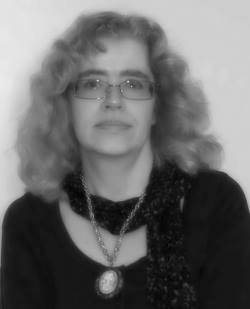
A. F. StewartA few icebreakers to start: when did you first decide to become a writer, and who are some of your favorite authors?

I’ve always been a writer of some sort, scribbling poems, stories, a bad attempt at a romance novel, but I only started pursuing it seriously with the aim to being published around 2007. That’s the year I tested the waters of independent publishing, and I never looked back.

As for my favourite authors, I have quite a few, but here’s a current top five list: Neil Gaiman, Guy Gavriel Kay, Ray Bradbury, Agatha Christie, and Jennifer Roberson.

Several of your works take influence from fairy tales. What was the first fairy tale you remember reading, and which one is your favorite?

It’s a bit hard to remember that far back into history, but I do know I had a very well worn book of Grimm’s Fairy Tales as a child, and one of my favourites from that book was Snow White and Rose Red. I liked the two plucky heroines whose kindness brought them good fortune. I’m also fond of The Six Swans, though as a child I thought the ending was sad; I always felt sorry for the poor brother that didn’t quite get turned back into human form.

You’re a diverse writer with many types of work, including poetry, fiction, and nonfiction. How is your process different for each (or do you approach all your writing in a similar way)?

Sirens Call Issue 19Both my fiction and non-fiction processes have similarities, as each develops from outside inspirations or topics that hold some interest for me. Of course, from there the two diverge, with my fiction incorporating fanciful elements such as dragons or fairies, and the non-fiction dealing more in facts and historical tidbits. The poetry on the other hand has a much more emotional and personal basis. I channel more of who I am, and what I feel, into my poems, as opposed to fiction or non-fiction.

If forced to choose, which part of the writing process is your favorite: developing point of view/voice, crafting dialogue, or establishing mood?

It would probably be dialogue. I find it generally easy and satisfying to write. I also enjoy crafting the voice of characters through dialogue, making them come alive so to speak.

Out of your published pieces so far, do you have a personal favorite?

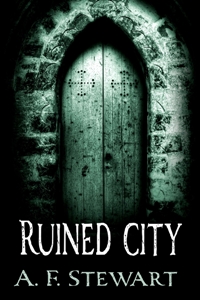
Ruined CityIf I had to choose, my preference would be for Ruined City. The format was a challenge, having twelve short stories interconnect to form a novella-like narrative, and I enjoyed the experience of writing the book. Also, I rather fell in love with the world I created, and plan to write more stories set in the Nine Kingdoms.

 What advice do you have for other writers out there? 

My advice is to learn the craft of writing—grammar, sentence structure, descriptions, dialogue—and keep learning, keep honing with each story, each book. Embrace the editing process, accept that you will face disappointment and rejection and love what you write.

Thanks to A. F. Stewart for being part of this week’s author spotlight. You can check out her blog, which features a variety of interviews and reviews, and you can learn even more about her here.

Happy reading!

In Dracula’s Defense: Breathing New Life Into the Undead

Vampires. Love ’em or hate ’em, they’re everywhere. And despite what the Twi-hards might tell you, there’s nothing new about the phenomenon. The truth is vampires have been a staple of literature for hundreds of years.

If you want to get all technical, you can go way back to the start of the horror genre to find the first true vampire story. During a few particularly fateful months in 1816 (AKA the Year Without a Summer), Lord Byron—weirdo extraordinaire and, er, creepy collector—invited a group of artistic friends to hang on his sprawling estate. Because what else do you do with your sprawling estate but show it off to your less wealthy pals? To pass the time, which was appropriately dark and stormy thanks to the summer’s oddball weather, the group told scary stories. It was during this time that none other than Ms. Mary Shelley created a little story called Frankenstein. Meanwhile, another guest named John William Polidori contributed the lesser known but still landmark tale, “The Vampyre.” And thus horror as we know it was born. Take-home message: the next time there’s bad weather on your vacation, take a note from the Byron Brigade, and invent a whole new genre. Easy as that.

Okay, so besides giving you a horror history lesson, what do vampires have to do with today’s blog? Well, for all their ubiquity, those beloved bloodsuckers are a blast to write about. And this little writer is not immune to their charms.

Of Blood and MenEarlier this month, the latest issue of After the Pause featured my vampire story, “Relationship Status.” It’s a lighthearted romp about a man debating how to deal with his divorce from his vampire wife. Spoiler alert: social media isn’t kind to him.

But “Relationship Status” wasn’t my first foray into the undead. That distinction belongs to “Of Blood and Men,” my Dust Bowl yarn that debuted in Mystery and Horror, LLC’s History and Horror, Oh My! last fall. And as you can guess from the title (and the nearby image which references its namesake’s original cover), this is an ode to the Joads. Yes, I just made a Steinbeck joke. A really corny one too. It’s my blog, and I can pun if I want to.

Besides the vampire angle, “Relationship Status” and “Of Blood and Men” are complete opposites. The former’s the closest I’ve come to romantic comedy; the latter’s a somber meditation on isolation and otherness. “Relationship Status” is firmly rooted in the real world if only the real world boasted exes with pointy teeth and fake Transylvania accents. Though it pays homage to real-life places and times—Oklahoma in the 1930s—“Of Blood and Men” posits an existence that’s dire for the living but ideal for the dead. From a writer’s (and reader’s) perspective, that’s the great thing about vampires: they’re completely malleable. Sunlight and garlic notwithstanding, no two vampires have to be alike.

Some say the sanguine trope is overdone and old. In fact, like epistolary horror, there are many publishers that shun the creatures of the night altogether. Send them a vampire story and earn an automatic rejection. That’s their opinion, and it’s absolutely as valid as mine (probably more valid if you’re a writer submitting to the big, scary publishing world). But what I’d like to add to the conversation is that anything can be reimagined. My two stories are neither the first nor the last to use the vampire myth to examine the human condition, and that’s what makes the Draculas and Angels and Count Orloks so enduring (and let’s face it, endearing too). In all their debonair youth and bottomless charms, vampires capture readers’ fascination unlike almost any other horror monster. Thus, it’s probably fitting that Polidori’s bloodsucker in “The Vampyre” was based on his host, Lord Byron. Nothing like a man once dubbed “mad, bad, and dangerous to know” to launch a genre legend.

Happy reading!

Childhood Terror: Interview with J.H. Moncrieff

Welcome to my second author spotlight of March! Today’s interview is with J.H. Moncrieff. She’s a versatile writer with a background in both fiction and journalism who’s also an editor and a publicist. Her new novel, “The Bear Who Wouldn’t Leave,” about a little boy and a teddy bear that’s more than it seems, will be released through Samhain Publishing in May.

Over the weekend, Ms. Moncrieff was kind enough to answer a few of my horror-loving questions.

A few icebreakers to start: when did you first decide to become a writer, and who are some of your favorite authors?

I decided I wanted to be a novelist when I was five years old. My first stories were a series of picture books about a family of fish who lived in terror of a bear who somehow stalked them under the ocean (probably because the only stencils I had left were of a fish and a bear). I wrote books throughout my youth and adolescence. I was convinced I was going to beat Gordon Korman’s record of getting published at fourteen, but sadly, I had no idea how to submit my work to a publisher when I was in elementary school. The will was definitely there, though.

Some of my favorite authors are Stephen King, Gillian Flynn, Nicholas Evans, Barbara Kingsolver, Arthur Conan Doyle, John Douglas, Ann Rule, and Elizabeth Berg.

In addition to your fiction, you’ve had an extensive career as a journalist. Did you always know you wanted to write fiction, and how has your background in journalism  dovetailed with the horror genre?

Even though I knew from a very young age that I wanted to be a novelist, I was raised in a practical family. I thought it would be a great idea to learn a writing trade that could pay the bills while I worked on getting a novel published, and that’s how I became a journalist. In college, I learned advertising, journalism, and public relations, along with television and radio broadcasting. I didn’t expect to like journalism as much as I did, but I took to it right away. I seem to have a gift for getting people to tell me their stories.

Most of my horror revolves around the evil that exists in people, so journalism gave me plenty of chilling examples. I’ll never forget the neighborhood that stayed awake all night to keep their homes from falling prey to an arsonist, or the mother whose baby was stolen from her. Most of the horror I read is true crime. Journalism also taught me how to be a full-time working writer, and to treat writing as a business.

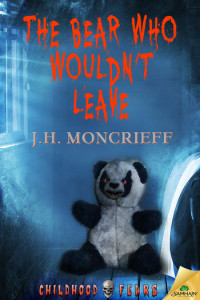
The Bear Who Wouldn't LeaveThe concept of an evil item that plagues a protagonist has roots way back in some of the original gothic fiction. What stories, if any, served as your inspiration for “The Bear Who Wouldn’t Leave”? And did you draw on any of your own childhood fears during the writing process?

I’ve always loved stories of cursed toys—I think they’re particularly disturbing because toys are supposed to bring children joy or comfort. When writing my book, I was remembering the “Talking Tina” episode of the old Twilight Zone series, and of course Stephen King’s “The Monkey,” but in the case of my story, you don’t know if the bear is truly evil, or if Josh’s actions dictate how the bear treats him.

When I was a kid, my dad gave me a stuffed panda that had been his when he was little. It was an ugly thing, very stiff, with a crazed snarl on its face. It gave me the creeps. I certainly had it in mind when I wrote “The Bear Who Wouldn’t Leave.”

What advice do you have for other writers out there?

Read a lot, write a lot, and submit your work. Submit, submit, submit. I’ve met so many talented writers who never send their work to anyone. And never give up. I’ve had some setbacks that stopped me from submitting my work for a long time, and I regret those lost years now. I’ve read posts from other writers saying that persistence and talent is not enough—you need luck too. And that may be true, but the more often you’re putting yourself out there, the greater your chances of “getting lucky,” so to speak.

I’ve been approached by quite a few people who would like to write a book but have never actually read books. I can’t overstate how important reading is if you want to be an author. Otherwise, it’s like saying you want to get in the NBA without ever playing a game of basketball.

Other than readying for the release of “The Bear Who Wouldn’t Leave,” what projects are you currently working on?

I’m working on a new twist on the sea monster story, and a series of horror novels set in ancient Egypt. I’m forever suffering from “too many ideas, not enough time.”

 ###

Thanks to Ms. Moncrieff for participating in this week’s author spotlight! You can find her at www.jhmoncrieff.com where she regularly posts about weird travel, unsolved mysteries, and other oddities.  “The Bear Who Wouldn’t Leave” is available now for preorder.

Happy reading!

Fear Monger: Interview with Lee Forman

For the first interview of March, allow me to introduce author Lee Forman. Like Brooke Warra and Scarlett Algee, I met Lee through Sanitarium Magazine where the four of us help editor Barry Skelhorn field new submissions. But that’s hardly Lee’s only role in horror. He is currently a contestant in the Fear Project, a competition in which thirteen horror authors have their mettle tested with a myriad of weekly writing challenges, knowing all too well that one by one, they’ll be eliminated until there’s only one horror writer left standing. I checked in with Lee to see how he’s holding up under all that authorial stress (spoiler alert: he’s keeping it together with aplomb).

Lee FormanObligatory icebreakers: when did you first decide to become a writer, and who are some of your favorite authors?

It all started with a blackout. I was living in a little cottage out in the middle of nowhere, and with no power and nothing to do I took a pen and paper and started writing. I’ve been doing it ever since. I grew up reading the Goosebumps books, then moved to Stephen King, and then started reading all kinds of literature. I always wanted to be a writer, but didn’t realize I could until that night during the power outage. I wrote a little bit in high school for the school’s creative writing magazine, and I wrote things here and there, but none of the stories ever worked out. It was during the blackout that I wrote my first horror story. And that’s when I realized that I was supposed to be writing horror.

Stephen King, Clive Barker, and John Saul are some of my favorite authors. They’ve brought me up on their stories and I’ve taken inspiration and learned from their work over the years. I try to incorporate the best of what they do into my own writing style, making it strong yet unique.

What made you want to get involved with the Fear Project, and what has been the most surprising aspect of competing so far?

When I first heard about David Wellington’s Fear Project I instantly wanted to be a part of it. The [concept] made it sound fun and interesting. I saw it as an opportunity to test my skills, see how I stand next to other authors in the genre, as well as meet and network with new people who share my love for horror literature.

What’s been most surprising to me so far in the competition is the sense of community and friendship that many of us have developed. Most of us have been communicating and wishing one another luck in the weeks since the Fear Project began. We all want to win, but we’re also happy to be part of such an awesome event, and when it’s all over I’m sure we’ll all keep in touch. The great thing about the Fear Project is that everyone gets something out of it, not just the winner.

You are on a tight schedule with the competition and have to create content very quickly. How do you keep yourself inspired and constantly writing?
 
In between challenges I do a lot of reading and thinking of story ideas to keep the creativity flowing. I also watch a lot of horror movies. They’ve always been a source of inspiration for me. The entry being due Sunday night doesn’t leave a lot of time to write and edit the best thing I can come up with. So when the challenge is posted after midnight on Thursdays I write out as many scenarios as I can that fit the challenge. After that I choose the best one and rewrite it until I can’t rewrite it anymore.

Sanitarium MagazineAll writers have trusted beta readers. Who are the people you trust to give you honest feedback?

I’m a member of two local writing critique groups. They’re my best and most honest source of feedback and they’re also some of my biggest supporters as an author. I always trust their advice and they’ve really done a lot to help me improve my craft. We’ve also recently started a critique group between the Sanitarium Magazine submission reviewers, who are a great group of talented writers. They give excellent feedback and advice and are an awesome group of people to work with.

Horror deals with a diverse number of fantastical topics. That said, are there any themes or threads that connect all your work? Are there any new concepts you’re excited to try?

Not all my work is connected but I tend to enjoy writing about creatures, supernatural beings, and experiments gone wrong. If you read something I’ve written, it most likely contains one of those elements. I also tend to incorporate a lot of things from reality into my work. It might be something as insignificant as an alarm clock I once owned, or it might be something that actually happened. Many of the places and settings I use are taken straight from the real world.

As far as new concepts go, I’ve been experimenting with writing different genres. I’ve been working on a little science fiction and writing some memoirs.

Out of your published stories so far, do you have a personal favorite piece?

“The Blackout” That’s still my favorite story. It’s the first horror story I wrote and I still enjoy its concept to this day. It’s the one that got me started as a serious author. It’s the one I would love to see hit the big screen as a movie someday.

Thanks so much to Lee for participating in this week’s author spotlight. Check out his latest entries at the Fear Project website or just see what’s he up to over at his personal site.

Happy reading!


Once Lost, Gone Forever: Going Back to School as a Writer

Over the weekend, my dark fantasy story, “Once Lost, Gone Forever” made its debut in Electric Spec’s 10th anniversary issue. In the last six months, I’ve been fortunate enough to have almost thirty stories accepted for publication. But out of all of them, this one probably taught me the most about the twists and turns from concept to publication.Once Lost, Gone Forever

Writing is a constantly changing beast. Some stories come together with few obstacles and find a literary home on the first try. Others take weeks or months to coalesce and then find themselves mired in slush pile after slush pile. As a writer, this can be both thrilling and exhausting, but above all, it’s a learning experience. So with that in mind, here are a few things I’ve learned from the adventure that was “Once Lost, Gone Forever”.

1. Writing coming of age stories can make you far too wistful (but it’s all worth it).

Though it’s weird to even write this, I’m thirty-one. That means being sixteen was officially fifteen years in the past, almost half my life ago. I’m not the kind to reminiscence very often, but when you’re penning a tale about adolescence, you almost can’t help but think about your own. That can make you crazy, nostalgic, angry, amused, bemused, and a whole lot of other emotions. But provided you can funnel at least a little of that into the finished piece, the struggle is not in vain.

2. Challenging (read: taboo) concepts aren’t for everyone.

Though it is primarily a coming of age story, “Once Lost, Gone Forever” is one of the most subversive pieces I’ve written. I don’t craft austere teenagers. My incarnations drink, carouse, have sex. Even though many adolescents do all of those things (in spades), writing about it is enough to put off some publishers. But that’s not all: in this piece, my two female leads–Inali and Melissa–also cross paths with numerous adult men who try to physically (and sexually) harm them. In submission guidelines, many publishers specify “no underage sex” and “nothing that victimizes women”, and while this is considerate on the surface, such guidelines don’t allow for a full exploration of themes and experiences. But I won’t go into that here. I’ll let you read S. G. Larner’s article that says basically everything I feel on the topic.

3. Don’t give up on your own work.

Because of how challenging the piece was, I honestly didn’t think it would ever see the light of day. The first couple places rejected it outright, and though I was disappointed, I wasn’t surprised. Because of that, I almost didn’t submit it to Electric Spec at all. The magazine only publishes five stories with each quarterly issue, so the exclusivity alone was daunting. But six weeks after submitting—six weeks filled with self-doubt over the piece–I received word that the story had passed into the magazine’s final round of consideration. That fact all by itself excited me. Even if it wasn’t selected, at least the editors enjoyed it enough for it to advance. Then, the day after my birthday, I received the acceptance. It was a hallmark moment of my career so far, vindication that all the boundary pushing in the story had been worth it.

4. Good editors are worth their weight in gold words (okay, they’re worth gold too, but words make better currency).

At this point in my fiction writing career, I’ve already worked with a slew of incredible editors. However, with Electric Spec, this was the first time I ever had a heavy edit on my work prior to publication. I had long been waiting to go through line-by-line with an editor, and it was an amazing process. I learned not to get so attached to anything, even titles (farewell original name, “Truth and Dare”!). As an author, I needed this experience, and I am better for it. Plus, it didn’t hurt that the Electric Spec staff knows what they’re doing. Lesley Smith is a fantastic editor, and I would recommend every speculative fiction writer to submit something to Electric Spec. That’s how great working with them was.

5. Sometimes, writing about your own writing process is laborious.

I’ve started and erased this very blog about three times. Because the process behind “Once Lost, Gone Forever” was such an intense one, my thoughts about it are scattered. Even when Electric Spec asked for a short piece (about two paragraphs) about the story, it took me a full week to pull something together (which you can read here if you’re so inclined). This made me realize how much I need this very blog to help me organize my thoughts on the writing experience. Because as authors, we’re constantly asked about how we come up with our ideas, so we better have something comprehensible to say about it.

6. Having a husband who does artwork is AWESOME.

I’ve always loved illustrations paired with horror fiction. Right now, I’m reading Hauntings: Tales of the Supernatural, an anthology that comes complete with drawings from none other than the late, great Edward Gorey. In my spare time, I also sometimes enjoy searching fan art related to Shirley Jackson and Ray Bradbury. You know, just because it’s fun. Having illustrations (like this blog’s main image) that represent each of my stories is basically a dream come true, one that almost sounds too good. Even though my husband and I have been together for a decade, I was almost bashful about even asking him if he’d be willing to help me create such images. It just seemed like such a massive, long-term undertaking. But in his patented laidback attitude, he did the proverbial “Shrug-and-Sure”. Now we work together, discussing what images and scenes best represent each of my stories and how to bring those images to fruition. Every brainstorming session is like the greatest montage ever. It also helps to make writing—which is quite a solitary profession by its nature—a little more collaborative, even if only in the “post-production” phase.

7. Missing friends makes for great inspiration.

While my husband was involved with this story via his artwork, he wasn’t the only person in my life that had a role in “Once Lost, Gone Forever”. The initial concept for the story came about the week after my best friend from high school left Ohio for a new life in Arizona. Returning to the wistfulness invoked in the first point, missing someone who played such a huge part in your life helps everything to come into clearer focus. Consequently, I became madly inspired to create something that would celebrate our aptly misspent youth. Because I for one cannot draw or paint or create any other form of art (and since I’m still a poor starving artist), the only gift I can really give anyone is with my writing.

So Barb: this one’s for you. Thanks for giving me so many great memories that you’re still inspiring me decades after we first met.


Now I turn this conversation back to all you authors out there: what’s the most important lessons you’ve learned about writing so far? I’d love to hear the myriad of experiences that have helped to shape your careers. After all, we’re all in this together.

Happy reading!

Cthulhu Calling: Interview with Scarlett R. Algee

For my fourth—and final—2015 spotlight for Women in Horror month, I would like to introduce author Scarlett R. Algee. This Renaissance woman is not only an amazing writer, but also a jewelry maker, a slush pile reader for Sanitarium Magazine, and, of course, a major devotee to Cthulhu. Could we adore this lady any more?

Earlier this month, Scarlett was kind enough to share some details on her artistic process as well as her insight into everything from writing and reading to steampunk and elder gods.

A couple icebreaker questions to start: when did you first realize you wanted to be a writer, and who are some of your favorite authors?

My first exposure to writing came when I was in first grade. My teacher taught spelling and handwriting by giving us a list of words and having us create little stories using those words. (I’m sure my mother still has those somewhere.) That was the beginning of learning to tell myself stories, complete with acted-out performances by Barbie and friends. It wasn’t until a few years later that I realized people actually got paid to write things down, but by then I was already hopelessly smitten by the process.

Favorite authors…oh gosh, I have to pick? Poe and Lovecraft, definitely; I return to those two time and time again. Rudyard Kipling, because I’ve always wanted to live in British India. Clark Ashton Smith, because he could write both beautifully lyrical fantasy and remarkably disturbing horror. Stephen King, whose book “On Writing” should be required reading for everyone. And Terry Pratchett, who taught me that a story can be uproariously funny and yet deeply, seriously moving.

Your writing has been published in two Cthulhu haiku books. What is your process when writing a Cthulhu haiku? (Side note: that might be the coolest interview question I ever get to ask anyone.)

How do I write a Cthulhu haiku (or any other kind of haiku)? Get an idea, brainstorm until I think up some phrases that sound good, and then beat them until they fit the meter :). A lot of people think haiku is an easy form of poetry to write, because the end result is so short. They’re wrong. It can be very frustrating trying to pare a line down to five or seven syllables.

Scarlett R. AlgeeIn addition to writing, you’re also an accomplished jewelry maker. How do you balance two vastly different art forms, and has inspiration from one ever overlapped with the other in unexpected ways?

Jewelry and writing: balance them by keeping them as far away from each other as possible! That’s easier than it sounds, because most of my jewelry pieces are created in an hour or less, while writing is an ongoing, daily, dead-of-night process. Another thing that helps with the balancing act is that once I create something, physical or written, it gets put away for a while, and I give myself time to switch gears. There hasn’t been any significant overlap yet–I’ve done a *little* steampunk writing, though horror is definitely where my heart lies–but I’m open to the possibility.

Are there any particular themes you return to again and again as an artist?

My jewelry is entirely steampunk, so there’s a constant revisitation of the concepts of progress, of technological advancement, of discovery. Clocks, compasses, and cogs: the measure of human achievement, but also the measure of human mortality.

With writing, it’s a bit more personal. I have a form of chronic lung disease which, over the years, has meant a lot of time in hospitals and, occasionally, in operating rooms. The themes I find myself coming back to, time and again, are medical: drugs, experimentation, surgery. l’ve dabbled in some pretty dark corners–vivisection, anesthesia awareness, medical zombification. The human body is a fascinating piece of work, especially with the peel off.

CthulhuIn what directions would you like to see your horror career go? More published short stories? Novels? A multimedia project incorporating both jewelry and fiction? All of the above?

For the foreseeable future, I’m aiming for more published short stories–I feel I’m a better “short” writer than a “long” writer, though I try to reach a little more each time, to eventually work up to a good “long” story. I have a few story ideas on file that may become novels, but my immediate goal is to get into an anthology or two this year.

What upcoming projects are you planning?

Oh, projects! I’ve just finished a novella (it’s a riff on that “medical zombification” idea, with some light steampunk elements), and that’s being proofread as we speak. I’ve also recently rediscovered two Lovecraftian short stories I wrote years ago, and they’re my current project; I’m polishing them up in hopes of getting them published. The next thing I have planned is a story that deals with the treatment of psychiatric patients in the early 20th century–the plot runs deeper than that, of course, but it’s requiring a *lot* of reading and research. And, last but not least, I’m tinkering with interactive fiction. The 2015 Interactive Fiction Competition opens on 1 July and I hope to have a serviceable game created by then. It will almost definitely involve horror.

Thanks again to Scarlett for participating in our Women in Horror Month spotlight. You can check out her jewelry work at her Etsy shop at copperwalkdesigns.etsy.com. As for her writing, be sure to visit her blog at sralgee.wordpress.com where she shares all the latest updates on her burgeoning fiction career. This is one writer who most definitely earns the Cthulhu seal of approval.

Happy reading, and enjoy the rest of Women in Horror Month!