Author Archives: gwendolynkiste

Poetry Favorites: Part Three of the HWA Poetry Showcase Roundtable

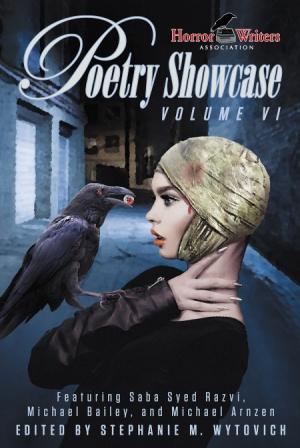
Welcome back for Part Three in our author roundtable series for December. This week, the poets of the HWA Poetry Showcase, Volume 6 are talking all about their love of horror poetry along with some of their favorite horror poets, both past and present!
What is it about horror poetry in particular that appeals to you as an author? Also, do you have a favorite horror poet or poem?

CURTIS M. LAWSON: I’ve only recently begun to explore horror poetry, but I played in black and death metal bands for years before pursuing writing, so some of my earliest notebook scrawlings were lyrics. There is a clear overlap between strong lyricism and poetry, so I guess it was only natural that I’d develop an interest in exploring dark verse.

I find that horror is extremely conducive to the kind of intense imagery and metaphor that poetry allows one to explore. Verse also allows me to explore interesting concepts and atmospheres that might not have enough “meat” to create a longer form narrative.

As for a favorite horror poem, I would say Annabel Lee, which is probably a dreadfully typical answer, but it’s true. It’s an incredibly powerful piece in word and meter.

PETE MESLING: Sometimes I like to think of horror as a mode, or mood, rather than a genre. Great literature that wouldn’t be labeled as horror is often filled with horror moments. Sykes’s murder of Nancy in Oliver Twist is a great example. That scene was written with the relish of a horror writer. To bring this idea back to poetry, Shakespeare is probably as good an example as any. Picking a favorite poet, in any genre, is as hard as picking a favorite short story writer or novelist, but Poe is certainly a contender (both for short stories and poetry), and The Raven is probably my favorite of his poems. It’s so dreadful and atmospheric, not to mention musical.
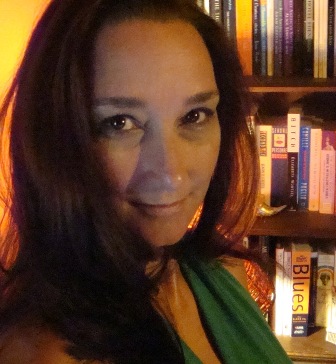
Carina BissettCARINA BISSETT: For me, horror in poetry, especially women’s poetry, is the horror present in everyday life. My favorite poet is Anne Sexton; her Transformations changed the way I view poetry, and her work in this series continues to shape the pieces I write today. More recently, I read Ada Limón’s Bright Dead Things, which was a finalist for the National Book Award. I keep circling back to the poems in this collection because they resonate with me. They offer a glimpse of mundane horror through a slanted lens. I love the sound of her phrases as they roll off the tongue. I love the way her words haunt the reader long after the book is closed. What poet doesn’t want that power? I certainly do.

ROBERT PAYNE CABEEN: I love the way horror poetry is so damn gluey. It sticks inside your head like a long remembered song lyric or ad jingle. When I was in high school, I’d gather a crowd of friends together, and we’d take over the local IHOP on Friday nights. I’d jump up on a table and recite poetry—Poe, Kipling, Coleridge. As much as I loved those poets, I felt the need to write my own poetry–and I did. Later, when I joined a rock band, I realized that a song is just a poem with music. Several poems in my collection, Fearworms, are actually song lyrics–as if there’s a difference. Like music and film, poetry has the element of time. It begs to be performed. I hope some of our readers become reciters.

MONICA S. KUEBLER: For me, it’s another way to explore the dark and unsettling – in a more lyrical and often more personal manner than I do in fiction. But please don’t make me pick favourites. It’s too hard!

MICHAEL ARNZEN: I write in all the modes except scripts, but poetry is my go-to for capturing a crazy idea that won’t otherwise work for fiction.  I always love unique approaches to the genre, and poetry seems to have the utmost flexibility in experimenting with old familiar tropes. I mean, a sonnet in iambic pentameter on the surface sounds the most rule-based form you could get, but writing a sonnet about a zombie eating a brain… well, that would be unique, you know?  I fuel my creative brain by reading everything, and I’ve always enjoyed the surprises lurking in the poetry of the pulp era and such. But as a poet, mostly I’m just playing around with ideas, and I tend to write poetry in common language and free verse, just lending it a cadence to the concepts that feels disturbing.  That’s all I’m after.
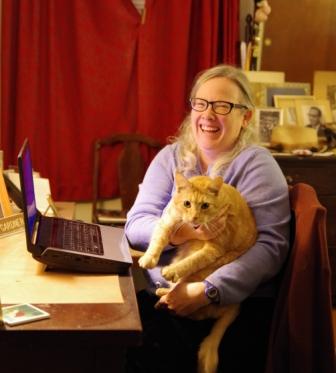
ADELE GARDNER: I love the compressed shiver!  The way a poem can haunt you–enchant you–refuse to leave you alone, with the power of a spell–or a demon.  My favorite dark poet?  Edgar Allan Poe, bar none.

RISSA MILLER: It would be wonderful to say there was a precise moment when I was curled in a shadowy corner of a library and stumbled into a rare volume that made me fall in love with horror poetry. Alas, that would be a big lie. I didn’t even realize I loved horror poetry – or that is was a genre – until about three years ago! Duh! I was at a conference called HallowRead and signed up for “The Pleasures of Horror Poetry” class taught by a local poet named J.A. Grier. How had I not realized that Poe wrote horror poems?! I live in Baltimore, after all, where the Raven casts a plumed shadow across our city.  So embarrassing! Of course I’ve loved the gothic and nightmarish all along, and simply didn’t have a label for it. My writing career had focused more on journalism and scripts, and until recently, my love for horror in all categories (film, fiction, poems, history, even autumn’s haunted houses) had simply been hobby. Since discovering that both stage plays and poetry can also fit into the horror category, I’ve been crafting them non-stop!

E.F. SCHRAEDER: As an author, the appeal to horror poetry in part centers on the openness- writing with no limits on possible worlds and virtually no taboos. As a reader, there are many qualities to adore about horror poetry, not least among them the range of voices, styles, and topics— there’s so much layered, complex feminist horror work happening now (across multiple forms) that it’s very exciting time to be a horror reader.  There’s a raw urgency to horror poetry that I appreciate, a striking attention to undercurrents and hidden possibilities, that sense of unearthing the unseen. Favorites are tricky (too many to list!) but one of my longtime favorite collections of horror poetry is Anne Sexton’s Transformations.

SUZANNE REYNOLDS-ALPERT: I also write short fiction, but poetry allows a greater range of expression that lends itself nicely to the horror genre. My favorite horror poem? The Raven.
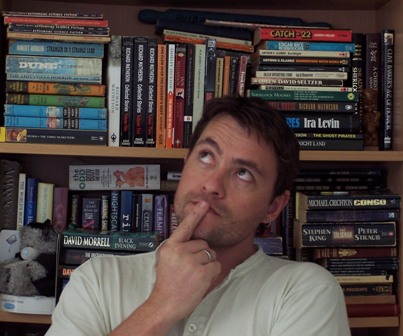
MARTY YOUNG: Sorry, I’m a real novice when it comes to poetry. My poetry, before now, has only ever been a very personal thing, written for me as a means of dealing with internal demons. I know a lot of poets but I’m ashamed to admit that I rarely read poetry. So I’m certainly looking forward to reading this anthology!

ROBERT CATINELLA: I subscribe to the school of thought any short work should invoke a singular emotion. Poetry is a crystallization of this, existing as an elegant scarcity of words. This spike drives into the human brain via the eye. Once there, the key parts unfold and draw on the victim’s imagination. What blossoms is personal yet timeless and infect the host so they are never the same again.

My favorite Horror poem is Night-Gaunts by H.P.Lovecraft. It is about a sleeper transported to a vast dream realm by faceless, flying creatures. I love how it gives the sense these objectively terrifying nightmare creatures are just beings like the rest of us. The vast world is shown as a nightmare but everything described sounds like it could be viewed with wonder if only for the individual’s relationship with the unknown.

NICOLE CUSHING: Horror poetry can evoke the most deliciously primal aspects of fear, because it often has the flavor of an occult chant. But, in my opinion, the best horror poetry balances this primal aspect with a touch of beauty (or at least, a touch of grandeur). The collision of these two forces is fascinating. It’s a fun energy to play with. As for a favorite poem, I can narrow it down to two:  Lord Byron’s “Darkness” and Poe’s “The Conqueror Worm”.

G.O. CLARK: I enjoy writing horror poetry, as it helps to exorcise my dark demons. That said, many of the poems have a humorous twist to them, which reflects my personality. Marge Simon and Bruce Boston are favorites when it comes to horror and SF poetry.
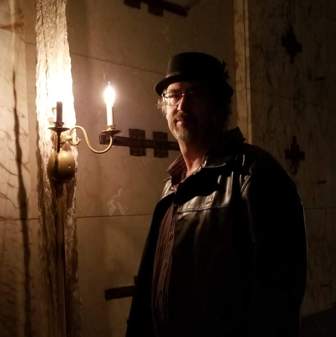
DAVID SANDNER: I wonder about that, actually. I consider myself a fiction writer, but I produce poetry, too. The poetry tends to demand to be written, and then to force my attention on matters of style and poetics in a way that breaks prose. I am able to contemplate and set out writing stories, but the poetry tends to follow inspiration. For my piece in the Showcase, once the first line popped in my head, I had to set to work planning and working on it, but the first thing, characteristic for me as a poet, was just something weird that seemed to imply a dream logic to its form if I could only work it out. Mr. Poe is my favorite practitioner of the form; “The Raven” my favorite poem. I think I’m not alone in this.

INGRID L. TAYLOR: I love the imagery of horror poetry, and the freedom to really explore dark aspects of the human psyche in ways that are moving and beautiful. I particularly like Linda D. Addison’s collection Consumed, Reduced to Beautiful Grey Ashes, and I find that I return to the poems in this book over and over for inspiration. The field is full of fantastic poets, including Stephanie M. Wytovich, Christina Sng, Donna Lynch, and many others whose works have informed and inspired me. They motivate me to always strive to become better with my poetry.

JOHN CLAUDE SMITH: Darkness of vision, that’s what works for me. Doesn’t have to be bloody or gross—though it can–but eeriness and, again, darkness of vision is key. As for a favorite poem, I was going to say something by Clark Ashton Smith would rank high as he’s one of my favorite writers, though with the mention of darkness above, I am reminded of Lord Byron’s brilliant apocalyptic poem, “Darkness.” Definitely my fave!

TRAVIS HEERMANN: I like horror in general, and poetry is just another means to express it. The reason horror poetry works so well, I think, is that poetry is concentrated language, a distillation of words that heightens emotion, and what is horror if not heightened emotion?

Ray Bradbury’s mastery of language never fails to astonish me, whether he’s writing outright poetry or just incredibly poetic prose.
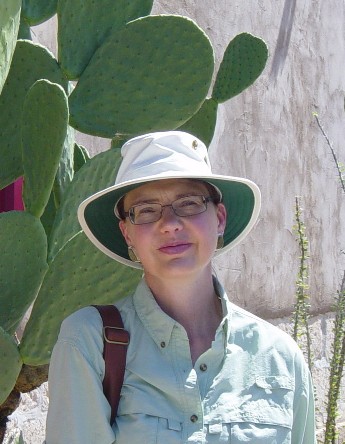
ANN K. SCHWADER: Favorite dark poet, probably Georg Trakl (in translation, sorry).  I love being part of the centuries-long tradition of caging fear in verse.

DONNA LYNCH: I was young enough that I only sort of understood ‘The Conquerer Worm’ but that was the first Poe piece I was drawn to. I didn’t get into other horror poetry until much later in life, but what really hooked me were poets who were not genre, but just wrote the occasional extremely dark piece. I saw it with Dorothy Parker, with Emily Dickinson, Charles Bukowski.

Later, I got into Nicole Blackman and Lydia Lunch, who were nothing BUT dark, but all of them wrote a very different kind of horror. It was emotional and personal and spotlighted the hell that people create every day. That really spoke to the little kid in me—haunted by both real experiences and by her own device.

Poetry is such a great medium. You’re forced to choose your words and phrases carefully, so as to make the biggest impact. There’s no room to pull punches.

LORI R. LOPEZ: Growing up, in addition to Mary Shelley and Bram Stoker and others, I became a fan of Edgar Allan Poe, primarily from movies based on his stories.  But one poem stood out, “The Raven”, along with “The Highwayman” by Alfred Noyes.  The stories they told!  The atmosphere!  I was also fascinated over ballads such as “Barbara Allen” and “Tom Dooley”.  Coleridge’s “Ancient Mariner”.  I’m a big Alice fan.  Lewis Carroll’s poetry and prose may be more humorous than dark but has moments of malice or madness, and I like to include humor in my horror.  Going way back, I must mention Doctor Seuss and The Grinch!

ANNA TABORSKA: In poetry every word counts, even more so than in other forms of writing. I enjoy the opportunity of creating an atmosphere of horror or a mini horror story within the discipline of poetry – choosing words sparingly and with extra care. Horror poetry also allows one to concentrate on getting across a particular feeling or atmosphere without the absolute necessity of plot, and this can be quite liberating. I realise I’ll score no points for originality here, but my favourite horror poem has to be THE RAVEN by Edgar Allan Poe. I am also very fond of what is in many ways the opposite of The Raven in terms of the kind of language used (chillingly understated as opposed to emotional and Gothic in tone): MY LAST DUCHESS by Robert Browning. I realise that rock lyrics aren’t generally considered to be poetry, but there are many heavy metal songs that would, to my mind, qualify as great horror poems.
EV KNIGHT: I love horror poetry because it takes something traditionally considered ugly and makes it beautiful. Like Caravaggio’s Judith Beheading Holofernes, you can truly appreciate the artist’s talent for capturing a scene, even if that scene itself is horrifying. You can write a grotesque sequence in a novel and make it work, but to take that same thing and put it to prose takes a specific talent not everyone has. Classically, my favorite horror poet is Poe, but right now, I am in love with Sara Tantlinger’s and Stephanie Wytovich’s work.

DAVID POWELL: The first poems I remember were the parodies from Alice in Wonderland.  I knew “Twinkle, Twinkle Little Star,” and realizing you could turn the language around like that was fun, but also a bit unsettling. I also grew up in Appalachia, and terrible things happen in those folk songs I learned. It was a short hop from “Long Black Veil” to Poe’s poems. Though not strictly horror, Allingham’s “The Fairies” pops into my head every time I hike in the woods.

MICHAEL BAILEY: Poetry is the shortest form of writing, simple, yet complex. Good poets can express more with a few words than some writers can convey with entire chapters, with entire books! Horror poetry, in particular (at least the stuff I enjoy), expresses the emotion I seek in all written work. Emotion is power. If I am not moved by a book, or by a story, or by a poem, then what’s the point? Linda D. Addison can move me with as little as three words, so I guess she’s a favorite.

GERRI LEEN: I like to go dark. I like a twist. And you can really experiment when it’s the shorter, looser form of a poem, especially free verse. Favorite horror poem? W.B. Yeats’s “The Second Coming.” To write like that…
NACHING T. KASSA: I love the imagery of horror poetry and the symbolism behind the verse. My favorite horror poet is Edgar Allan Poe and I love “The Raven.”

LISA MORTON: I’ll be the first to confess that I’m a much better prose writer than poet (!), but I love the challenge of condensing everything down to just a few words. I’m a big fan of the work of poet K. A. Opperman, since he often explores one of my favorite themes – Halloween (and in the interest of transparency – I provided the introduction to his forthcoming collection Past the Glad and Sunlit Season).

LEE MURRAY: Horror poetry is to horror fiction as Brussel sprouts are to the cabbage: equally layered and nuanced just more intense and immediate given they’re packaged in a single mouthful. (For the record, I love Brussel Sprouts!) It’s impossible to choose a favourite poet: I love so many, including those in this table of contents, but I’d love to draw readers’ attention to a mentee, New Zealand poet, Emma Shi, the author of Somewhere Else. While still in high school, Emma won our 2013 Young New Zealand Writers writing competition with a horror poem called this heart beats faster than normal. She later studied creative writing at Victoria University, going on to win the Poetry NZ Prize in 2017 with skipping dead insects across the ocean. As a poet, she is as humble as her work is startling. I expect her to one day make New Zealand Poet Laureate. Watch this space.

TRISHA J. WOOLRIDGE: The first time I distinctly remember feeling horrified by a poem was from a book of childhood verses; I came across “The Walrus and the Carpenter,” where, spoiler alert, whilst spewing a bunch of nonsense at each other, they decide to kill and eat an entire school of “child” oysters! Even as a kid, I saw how much truth was hidden in that nonsense, how people use nonsense to hide horrific acts. And while I also remember feeling physically ill after reading that poem and not being able to read for a day or two after, wanting to find more like that because it created such a real and potent feeling. That’s a bit divergent from the question… but the crux of it is that poetry, to me, is a vehicle of concentrated truth about the world. And the world has a lot of horror in it hidden by nonsense and fancy language—I like to turn that on its head and use fancy language and nonsense to shine a light on that truth.
STEPHANIE ELLIS: I write in a number of forms but I enjoy writing poetry when I can, something I have neglected for a while but now, particularly after my inclusion in this book, something which I intend to remedy. I have always loved words, and I love to paint images with these words, play with them until they create just that right hint of darkness, bring the fears crawling out of the shadows, make you shiver. I love the subtlety of poetry, the scope to simply hint, to be ambiguous, to play on a person’s emotions and fears. That such a small piece of work can have such a huge impact is amazing.

I have recently been reading the work of Alessandro Manzetti. I enjoyed his No Mercy collection and am currently reading The Place of Broken Things co-written with Linda D. Addison.

PETER ADAM SALOMON: Horror poetry is a place for courage, bravery, and exploring the absolute limits of imagination. There is a freedom in the ability to discover the shadows, the deeps, the breadth of the human experience and beyond. It is a safe space thanks to a rich and vibrant community that supports and encourages everyone, that welcomes everyone, that is everyone.

I have so many favorites I’d be sure to leave people out if I started listing them, but I am honored and thrilled to be included with all the brilliant poets in Volume VI of the Horror Poetry Showcase.

SARA TANTLINGER: Poetry is amazing at training yourself to create strong, poignant scenes and imagery with tight structure and without wasting words. Adding horror to the mix really appealed to me because it continually challenges me to try different themes, rhythms, and sensory descriptions in order to create something new every time. There are so many incredible horror poets and poems out there, but one of my biggest inspirations has been William Blake’s darker works. He had an incredible mind.

OWL GOINGBACK: I like that horror poetry can convey emotions, create chills, and provide lasting mental imagery with only a few words. I don’t have a favorite poem or poet, but do find myself rereading Poe’s work more often than other authors.

LISA LEPOVETSKY: As far as favorite contemporary horror poets are concerned, I’m a fan of Stephanie Wytovitch, Bruce Boston, Marge Simon and Mary Turzillo, among many others. There’s a lot of talent out there right now in the dark arts. I think the compression of poetry lends itself to darkness.
MARGE SIMON: Poetry affords a wonderful opportunity for expressing fear, anxiety, angst and remorse. The world is not a bowl of cherries.

DEBORAH L. DAVITT: Horror poetry appeals to me because you can get down to just that crux, that moment, in which the horror of the situation, of the person, becomes manifest. It’s that lightning flash that usually occurs at the climax of the novel or the short story, the epiphany moment for the character or audience (or both) that this is unsettling or wrong. Poetry in general lets you go for that brilliant burst of the flashbulb on the subject, but it’s particularly effective with dark materials, because in that moment of illumination, everything becomes so stark and clear. Or at least, I like to think it does.

COLLEEN ANDERSON: Horror poetry allows us to explore themes with beautiful and terrifying language. Poetry can condense a feeling, an image, a tale to its essence, like a distilled poison. My mind just goes there. When we explore the shadow side, without succumbing to it, we can balance ourselves better in the world so in a way, as horror poets we are shamans and witches realigning the world. Edgar Allan Poe is a classic poet who influences me. There are many great modern poets such as Christina Sng, Deborah Davitt, Linda Addison, and I do adore Sandra Kasturi’s poetry. Ursula LeGuin was another brilliant poet and the world is poorer for her absence. Really, any of the poets in the Rhysling anthology is a great indicator of the breadth and depth of good spec and often horror poetry.

That’s all for Part Three of our Poetry Showcase roundtable! Please stop by next week for the fourth and final part of our series as we find out what all these authors have in store for us next!

Happy reading!

For the Love of Horror: Part Two of the HWA Poetry Showcase Roundtable

Welcome back for Part Two of this month’s author roundtable series! Last week, we met the awesome poets of the HWA Poetry Showcase, Volume 6 and learned about their pieces for the anthology. This week, we’re discussing what drew them to horror in the first place.

So once again, let’s take it away!

How did you first become drawn to the horror genre? Was it a specific story or film that caught your attention, or the general feeling that horror inspires?

CURTIS M. LAWSON: I would credit either A Nightmare on Elm St. or John Carpenter’s adaptation of Christine for sparking my love of horror and dark art in general. It all began in the horror section of the video store as a kid.

PETE MESLING: I know I’m not the first to say this, and maybe you’ll get a similar answer from others in this round table, but it’s true: some of us are simply born with an attraction to the dark. I was writing horror stories in my dad’s legal pads when I was seven, and I remember being an elementary school student and feeling absolutely mesmerized by the artwork that always accompanied Halloween. Even the cheesiest bats, ghosts, haunted houses, and vampires sparked my imagination. By fifth or sixth grade I had discovered Poe and Orwell, and I grew up in the ’80s, so I was there for the explosion of that whole scene: Clive Barker, Robert McCammon, Stephen King—not to mention the horror films that were being churned out like canned tuna back then.

CARINA BISSETT: My roots in horror come from the fairy tales I devoured as a child. When I wasn’t buried under stacks of library books, I spent my time reading the classics in The Companion Library series (1963), which features 28 tales including The Wizard of Oz, Alice in Wonderland, and Arabian Nights. But my favorite of all was the double-sided volume containing Andersen’s Fairy Tales on one side and the Grimm Fairy Tales on the other. This one volume has been read so many times the binding has crumbled, the spine is cracked, and the only thing keeping it together is a large rubber band. Over the years, it was the blood-soaked originals that helped me to survive, just as they still help me process the world today.

ROBERT PAYNE CABEEN: The Universal horror movies were certainly my gateway to the genre, but when I discovered EC horror comics, when I was in art school, I was all in. Al  Feldstein was one of the most important horror writers of the 20th century. He wrote and edited those amazing comics–he even illustrated many stories and covers. I’ve heard Stephen King, George R.R. Martin, R.L. Stein, George Romero, and many others credit EC Comics as their earliest inspiration to write horror. I’m just another of Al’s mutant spawn. He was my friend and mentor. I was proud to dedicate my Bram Stoker Award to him in Providence.

MONICA S. KUEBLER: My mother used to watch Doctor Who on TV when I was very young. The theme music drew me in and the aliens and monsters glued me to the set. From there, I kept exploring and expanding my genre horizons.

MICHAEL ARNZEN: I think growing up in Amityville, NY, during the time when the DeFeo murders transpired (I saw the funeral coverage on the TV news as a child) and working in a store downtown when The Amityville Horror book was released made a real impact on me. But even more so, my father used to take me with him to the theater when I was a wee lad to see all those classic 70s golden age horror films because my mother wouldn’t go — Jaws, The Exorcist, The Omen… I remember them all vividly.  Sure, he’d cover my eyes during the gory and sexy parts… but that only made my imagination kick into overdrive. Probably too young to know any better, I started reading the novel tie-ins related to all these films and others I’d heard people talking about and the rest was history.  After I started reading Stephen King much later, I knew I was forever a horror fan, and started trying my hand at it myself.

ADELE GARDNER: I’ve loved spooky stories ever since I was a kid, even when they scared the pants off me.  I remember being terrified of two children’s books in particular: The Frightful Nobody (based on the song by Bonnie Sanders and Susan Green; illustrated by A. Jefferson) and What Was I Scared Of? (i.e., the Pale Green Pants, by Dr. Seuss).  While these books still give me the creeps, I never stopped wanting to read them…even when I had to call my dad in the middle of the night to hide The Frightful Nobody under the sofa cushions downstairs!

RISSA MILLER: As a little girl, I was sure I saw ghosts and other entities in the world around me, and often drew them or wrote about them. I still have many of the drawings and can sharply recall the beings that inspired them. As I got older, I fell in love with the vampires of The Lost Boys, as well as the early work of R.L. Stine, back before he even started Goosebumps! The thing is, many people recognize the fear factor in horror, but not the recognition of self. The monster or vampire or witch is frequently thought of as “other,” but to me, in my own life and work, I see the monster as just another piece of the experience of living. Trying to understand and embrace the monster in ourselves is why horror resonates.

E.F. SCHRAEDER: Hmm, 150 words! A combination of things drew me to horror, and I remember lugging around a pocket Poe for quite a while as a kid (I still have it, beautifully worn at the edges). Fueled by librarians, I was fed a steady diet of American gothic growing up, and I developed an abiding fondness for writers that looked at the underbelly of things, noticed the unobserved, or held a slightly weird POV. In terms of films, Hammer Horror and Roger Corman films were early favorites; by the time I encountered the sci-fi-horror thrill ride Ripley delivered in Alien, I was all in.

SUZANNE REYNOLDS-ALPERT: I’ve always been drawn to horror, but my “gateway drug” was scifi. Two of my favorite movies from childhood were Planet of the Apes and Alien.

MARTY YOUNG: I blame my dad! He worked in a video store when I was young and would bring home boxes filled with video tapes that needed checking for broken or crinkled tapes, that kind of forgotten thing! He loved horror and would let me sit with him and we’d ‘check’ the horror movies together. Then I met Freddy and discovered Fangoria, and I was hooked.

ROBERT CATINELLA: Every person knows disgust, unease, fear and have had moments of extreme emotion, so every creator has a history to pull from that is instantly relatable. This is double edged because anything created with less than full honestly will instantly be recognized as disingenuous. Horror is catharsis. Such primordial feelings in safety provide a release that can make someone feel alive.

A part of me wants to point to the works for Alfred Hitchcock as the main cultivating factor in my horror upbringing, but every time I think back, I always am faced with the gaunt and cackling face of the crypt keeper. My siblings and I would stay up late on Saturday night pretending to watch SNL, only to watch Tales from the Crypt on late night network television.

NICOLE CUSHING: I went to my first funeral (and touched a corpse for the first time) in 1979, when I was six years old. So I gravitated to spooky books and television shows because they seemed to acknowledge an aspect of life that ordinary children’s entertainment didn’t. Mr. Rogers never took a field trip to a funeral home, am I right? 

G.O. CLARK: My earliest exposure to horror was old movies on the TV. Dracula, The Wolfman, et al. Books followed later in life, like The Exorcist, Bram Stoker’s Dracula, Interview With The Vampire, and more. I read all kinds of books, whatever grabs my interest, more non-fiction at this point in my life.

DAVID SANDNER: Horror scares me. It works on me. I have become used to how it works and what to expect, and yet…I am not inured to it, and that fascinates me. I think it’s funny that we entertain ourselves by scaring ourselves. Sendak’s Where the Wild Things Are is the first horror story to have a lasting impact on me…the monsters have the solidity of their particular weirdnesses…they seem real, but the method used to subdue them—staring at them and commanding them to be still—is singularly unconvincing. The monsters are real and you have no defense. Terrifying! Loved it!

INGRID L. TAYLOR: I was raised on horror movies and books. When I was a kid, my mother worked long hours so I’d rent horror movies and watch them while I waited for her to come home. They were fun and thrilling for me, although there were times when I scared myself quite badly. I particularly liked The Exorcist, Alien, and Pet Sematary but I’d watch anything from the horror section. I read Poe and Hawthorne when I was quite young, and moved on to Stephen King and others. I think I gravitated to horror as a way of coping with the uncertainties and cruelties of life. Horror is not afraid to shine a light into those hidden areas of darkness, and to me, that made it the most real of genres. I believe that horror not only entertains, but also provides incisive social commentary by peeling back accepted norms to interrogate the values and beliefs that lie underneath.

JOHN CLAUDE SMITH: My parents were fans of horror and science fiction, so I was raised in an environment where the weird and dark were welcome. I distinctly remember seeing TV shows like the original Outer Limits and Night Gallery and how they left a big impression. This, along with the books my mother had dealing with the psychic sciences and UFO abduction and ghosts, well, my fascination for horror was fueled from the get-go. Add to this, when I was about 7-8 years old and my mother gave me a horror anthology that opened with a H.P. Lovecraft tale, one of his more fantastical ones—I believe it was one of the Silver Key tales—the ambience in that tale haunted me for quite a while. The power of words to take me there—I was hooked!

TRAVIS HEERMANN: I remember always being fascinated by it. I remember sitting straight up in my bed when I was four years old, head covered by my blanket, afraid to move or the werewolves would get me.

A few films from childhood stuck with me. I can remember being unable to sleep after some of them even if they were ostensibly comedies, in particular I happened to catch The Fearless Vampire Killers one night at a sleepover when I was maybe seven or eight, and that was the beginning of my horrified fascination with vampires, reinforced by catching the opening of one of the Hammer Dracula films on late-night TV, and being so horrified I shut it off and ran from the room.

I used to page through issues of Eerie, Creepy, Famous Monsters, Fangoria and Starlog at the drug store magazine rack, even though I could never bring myself to buy a copy. They were too expensive for what I could manage as a 10-12-year-old, and I think my parents would have had a conniption. Those magazines felt so grown-up and transgressive. I did have a fair stack of horror comics as a kid, though, like DC’s House of Mystery. That was a favorite.

ANN K. SCHWADER: When I was extremely young, I met up with Ray Bradbury’s “The Veldt.”  I’ve been attracted to the H / SF borderline ever since.

DONNA LYNCH: There’s no short answer for this, haha! I actually just wrote a very long essay about it for Speculative Chic. As a little kid I loved Poe, I loved scary stories, but I was terrified of horror movies. And I was convinced everything was haunted, me included. My first horror movie was Burnt Offerings, followed by Friday the 13th—which ruined me—but the first one that won me over was The Lost Boys.

I had some very dark experiences as a child so my relationship with horror was very complicated. In some ways, it still is. We’ve been together for a long time, probably before I really wanted to be. Maybe it’s Stockholm Syndrome, haha!

LORI R. LOPEZ: I would have to say yes to all of those.  I love creating monsters.  As a little girl, I was obsessed over a storybook with monsters, Where The Wild Things Are by Maurice Sendak, and Frankenstein movies.  By Fifth Grade, the Mary Shelley novel followed by Bram Stoker’s Dracula, plus the movie version and Nosferatu, and so many other classics of cinema since I was small:  The Birds, The Blob, The Mummy, The Wolfman . . . on and on.  I even won a scholastic award for a Werewolf play in Seventh Grade.  Richard Matheson’s work in film and television hooked me.  I was clearly drawn to Horror throughout my childhood.  That never went away.

ANNA TABORSKA: When I was little, I used to watch Hammer Horror films, which I loved. But it was George Romero’s NIGHT OF THE LIVING DEAD which made the greatest impact on me at the time and stayed with me. I started reading horror in primary school at age ten (Guy N. Smith) and continued throughout secondary school (Stephen King, James Herbert, Ramsey Campbell and the Pan Book of Horror anthologies). All of these served to reinforce and fuel my love of horror.

EV KNIGHT: When I was in sixth grade, I got my first library card (for a library outside of my school) and found a book called Pet Semetary by Stephen King. I lived on top of a hill above my grandparents’ farm house. My uncle and aunt lived across the drive from the big farm house. Dense woods bordered the field behind the house along the hill. It fit all of King’s setting descriptors and made the book so alive to me, that I swear I heard the wendigo every time I made that walk down to visit. That experience awakened my imagination and made even the mundane walk down a hill into an adrenaline-fueled adventure. I wanted more, and the more I read, the more I wanted to try my hand at writing scary stuff.

DAVID POWELL: I can’t remember not loving horror, but the first thing that scared the bejesus out of me was Invaders from Mars. I was eight years old, and the terror of not being able to trust the adults you depend on rocked me. And stayed with me. Horror’s power to make you look at the underside of everyday things is important to me.

MICHAEL BAILEY: In school, I hated reading, mostly because we dissected books until they were unenjoyable. It wasn’t until a friend of mine started bringing ‘inappropriate’ books to class, some author named Stephen King, that I realized books could be fun. These books were doorstops, and intimidating, but my older sister read this guy too, so I knew something was there. And then in eighth grade I had a teacher obsessed with Edgar Allan Poe, and we studied his work throughout the year. “The Tell-Tale Heart” taught me what could be done in as little as a few thousand words. Infatuated, I read everything by Poe, and eventually moved on to Bradbury (Fahrenheit 451 the only required book I ever loved) and finally King. I didn’t start writing until long after high school (other than nonfiction and poetry), then dabbled in college. Half my age ago, I wrote my first piece of fiction, a horror story. Now I have to convince myself not to write my own doorstops.

GERRI LEEN: I’m one of the last years of the Baby Boomers, and I think I fell for horror by watching the original Dark Shadows when I was a kid. Most of my friends wanted to marry Barnabas the vampire; I wanted to be Angelique the witch. Then later Night Gallery and Kolchak: The Night Stalker and the movie Trilogy of Terror kept my interest in horror strong—and my lights on at bedtime (that damn doll still gives me the creeps). Even the original Twilight Zone had quite a few horror episodes (I was addicted to the reruns).

NACHING T. KASSA: My dad introduced me to horror. He started showing me movies like King Kong, and Dracula (1931) when I was four. He also read me Edgar Allan Poe stories like “The Cask of Amontillado.” When I grew to be a teenager, we watched tons of Eighties horror together. I especially enjoyed A Nightmare on Elm Street and Stephen King’s Silver Bullet.

LISA MORTON: It’s something I’ve always loved. As a kid, my parents watched horror movies with me and my dad and I made the Aurora monster models together, so I was almost born into it, I think.

LEE MURRAY: In the same way that data regresses to the mean, I believe all writers, given enough time, will regress towards horror because it is in the darkness that we explore the things that really matter: things that hurt us, that scare us, and which define humanity.

TRISHA J. WOOLRIDGE: I believe I came to horror the way many people came to horror, or the Goth scene… I was mercilessly bullied at school, so I learned from a very young age the extent of evil that humans are capable of. I knew monsters were real; I saw them on the playground every day, in the lunch room, two desks over in a classroom. My family didn’t have a lot of money; books were the cheapest and most abundant entertainment. Between libraries and my mom’s love of yard sales, I was never without a whole world I could escape into that fit right into my hands! My favorite books were anything genre: science fiction, fantasy, and horror. I got metaphors; I could channel heroes and monsters in real life through books and take some control over them because they were in my head. Words were a tool for dealing with one’s greatest hopes and fears, and that was a bit of magic that sparked in my mind—another means of agency in a world that didn’t make sense.

STEPHANIE ELLIS: I’ve always preferred the darker side of films and fiction but it has never been about a specific work. I’m not one of those who avidly watches every horror film (I’m no good with slasher films) or reads every book, so when others quote their ‘pedigree’ and the age at which they started on this path, I always feel a fraud. For me, it’s very much the feeling horror inspires. The moment which makes the flesh crawl or you feel, during the twilight hours – which is my favourite time of day – there is something more to this world. I suppose you could say it’s the psychology of horror which draws me in.

PETER ADAM SALOMON: I’d written novels that hadn’t sold which were not horror. So, as I tried to figure out something new to write about twenty years ago, I re-read all my old poetry and realized that all the good poems were ‘dark.’ The more horror poetry I read, the more I realized I’d found my home. And then, when I started writing horror novels, those were the ones that sold. Growing up I read all the usual suspects, with a particular affinity for Poe, Eliot, and Coleridge and the dread their poetry always seemed to touch upon.

SARA TANTLINGER: I started reading the Goosebumps and Fear Street books around 4th grade, and I was just so drawn to these bizarre stories that were unlike what we were reading in classes. Later in middle school, I discovered Edgar Allan Poe and Stephen King. I was lured into the macabre beauty Poe created, and then the way Stephen King could create a horror story that both disturbed me yet tugged at my heartstrings. I knew I wanted to explore this world more.

OWL GOINGBACK: I was first drawn to the horror genre by a book I read when quite young, titled The Ghost of Dibble Hollow, about a farmhouse haunted by a spirit from the Revolutionary War. I’ve been a big fan of ghost stories and historic places ever since. Shortly after that I discovered Famous Monsters of Filmland magazine, and fell in love with all the classic monster movies and horror films. I’m still a big monster kid at heart.

LISA LEPOVETSKY: My interest in horror came from my parents’ fascination with the genre; my father read my brother and me stories from Poe and Serling and Matheson and Shirley Jackson when we were young.

MARGE SIMON: I was bedridden for long periods when I was child and I read for entertainment. I loved folklore, such as Baba Yaga, and myths and legends which have many shades of darkness, especially for a child’s fertile mind.

DEBORAH L. DAVITT: Horror is a genre that I dip in and out of like a stream. When it’s appropriate to a science fiction or fantasy story, when the going gets rough, horror elements enter. I write a lot of dark stuff, but only rarely do I go full horror—and when I do, it’s often psychological. (“Last Week I was Esther,” at Pseudopod is a good example of my brand of horror.) Authors that have inspired me include King and Barker, but also Tim Powers—where the horror comes from within, a byproduct of human existence and frailty.

COLLEEN ANDERSON: I’d say it was an accident. I was writing SF and fantasy and kept getting rejected with the editors saying, “we don’t do horror.” I thought I was just writing normal spec fic but I guess it was darker edged. Early horror movies, Vincent Price, Ray Bradbury and a tumultuous family life must have mixed into a strange stew. I like to look at the scary, twist its head and see what pops out. I sometimes stick characters into unpleasant sword of Damocles situations and see what happens.

That concludes Part Two of our Poetry Showcase roundtable! Please head back next week as we discuss our authors’ favorite horror poetry!

Happy reading!

Bite-Sized Horror: Part One of the HWA Poetry Showcase Roundtable

Welcome to this week’s brand-new author roundtable. For the entire month of December, I’m over the moon to be spotlighting the poets of the Horror Writers Association Poetry Showcase, Volume 6. There’s so much talent in this group, so I can’t wait to share their thoughts on the horror genre, literature in general, and their future plans as authors.

So let’s go ahead and let them take it away, shall we?

Congratulations to all of you for being part of this incredible table of contents for the HWA Poetry Showcase Volume 6. Please tell us a little about your piece in the anthology.

CURTIS M. LAWSON: Thank you! This is only the second poem I’ve had published, so it’s incredibly exciting to be included.  I keep having that impostor syndrome paranoia that someone’s going to find out I’m not a “real poet” and kick me out.

My piece, White Night and Black Stars, is a narrative poem about obsession with an ambiguous supernatural element. The most interesting thing I could point out about it would be the theme of atonality. In the last stanza I break away from the established rhyme scheme for a single line to highlight that concept.

PETE MESLING: Well, “A Return to Chaos” is pretty short, so saying too much might spoil the fun. But what I set out to do was draw a condensed picture of the end of the world. I like the incongruity of something as epic as the apocalypse being told very sparingly. And talk about not needing to reach for metaphor! I think the poem’s relationship to questions being raised in the times we’re living in is fairly obvious, kind of the way radioactive monster movies in the 1950s reflected a universal fear of nuclear holocaust. I hope it has that kind of resonance anyway.

CARINA BISSETT: My poem “Lepus antilocapra” includes my history of living in the Southwest for nearly two decades and combines it with issues of domestic violence. As a domestic violence survivor, I wanted to examine the truths behind the decision to finally leave a toxic relationship. In these situations, there is always a piece of you that gets left behind. Some of us lose more than others. The Sonoran Desert, with its cycle of life and death, seemed a perfect backdrop to strengthen the theme and imagery intertwined in this series of couplets.

ROBERT PAYNE CABEEN: Thanks for asking, Gwendolyn. I’m excited to be part of this stellar anthology. I never submitted in the past because most of my poems are so damn long–like Coleridge long. But since I did the cover art for this year’s Poetry Showcase, I wrote a short poem for a change. The cover illustrates SECRET, a tale of domestic violence and a woman’s brutal secret. She tells no one but a solitary crow her secret. The bird listens with patient attention and flies away. You’ll have to read the poem to find out what the crow does next.

MONICA S. KUEBLER: My poem “Conjuring Monsters” is one of those poems that has a bit of a dual meaning. On the surface, it’s about my fiction-writing process, but it also has a deeper current running through it, wherein I’m questioning the sort of people I draw into my life.

MICHAEL ARNZEN: This rarely happens, but “He Carves Wood” actually came to me in that hypnagogic morning state where you’re only half awake and don’t want to get out of bed yet. It wasn’t that I was dreaming about a woodworking murderer, per se, but that phrase that recurs throughout the poem — he carves wood…he carves wood — was chanting in my brain as some kind of inescapable line.  I was lucky enough to write this down when I finally did fall out of bed and crawl over to the computer, and I let the cadence just carry my mind as I wrote the first draft. I LOVE IT when that happens — when it all flows and feels like it isn’t writing at all. But then came the edits, of course, which, um, hammered and cut it into proper shape. It’s a creepy serial killer poem, but maybe it’s about poetry too, I don’t know. I was immensely pleased to learn it was chosen as one of the top poems to be “featured” in the book, too. The lesson? Trust your unconscious.

ADELE GARDNER: The varied inspirations for “Home Inspection” include encountering historical hair art for the first time at the Glenn H. Curtiss Museum in Hammondsport, New York (creepy and oddly beautiful and often sad); the fear that a particular bedroom in my house may be haunted, based on several nightmares; and the wish that there had been an opportunity to spend a night in my house before buying it, for mundane reasons (I might not have done so had I known how loud the road is; I’m a very light sleeper). Somehow all these things combined in the back of my mind when I wasn’t looking, to give me this chill.

RISSA MILLER: My poem in the anthology is The Temptress. It’s part of a larger collection where the Temptress is both a literal and figurative presence. Who doesn’t know temptation, after all? A temptress can be a real, living being, but also a feeling, an object, even a figment of our own mind. This poem introduces the idea that everyone experiences both need and temptation, and that sometimes, such alluring moments can be quite dark.

E.F. SCHRAEDER: Hi and thanks for inviting us. It’s amazing to be part of a project featuring so many great contributors to the genre. At its core, my piece, “Good Until The Last Drop,” is best summarized as a poem about despair and the real life horror of running out of options.

SUZANNE REYNOLDS-ALPERT: My poem, “It is Forever Stalking You,” is based on my experiences dealing with bouts of depression. I wrote it during my last episode and putting that horrific reality to paper was extremely cathartic.

MARTY YOUNG: I don’t often write poetry. Actually, I only write poetry when I’m going through tough times. I have a book at home filled with pieces I’ve written during various dark periods of my life. ‘Not Enough’ comes from that book. I went through a time where I just couldn’t write. I couldn’t face the page and had no ideas in my head. As I said in a story once, I wrote my head empty and it never filled again. So that poem was my frustration, and my way of seeing that there was something much deeper going on than just a lack of ideas.

ROBERT CATINELLA: I wrote Neighbors to highlight the contrast between the way people think about others versus how they think about the natural world which is always around them. We humans live in a funny position, connected to and defined by nature while also feeling independent from it. I chose the first and last stanzas deliberately for the emotional impact they convey. All the intermediate stanzas went through quite a bit of flux with the order changing up to the last minute and with three other complete ones being cut for flow reasons. More than that, I hoped to give my readers a childlike joy in trying to figure out what animal each stanza was describing.

NICOLE CUSHING: “The Art” is about a witch’s struggle to learn spells, and a writer’s struggle to develop her skills, and an eccentric’s struggle to accept her eccentricity. 

G.O. CLARK: My poem “Suitcase Tombstones” was based on a passage from the memoir, “Milking the Moon”, by Katherine Clark & Eugene Walter. Walter was staying in Parisian hotel after WWII, one with a rat problem in the attic where luggage left behind by Jewish tenants was stored. The hotel manager knew the tenants were never coming back, but left things as is for years, the rats gnawing on the suitcases et al. The poem is a simple snapshot from a very dark moment in history, the Holocaust going way beyond any fictional horror.

DAVID SANDNER: My poem, “A Killer Doesn’t Kill Because He has a Knife,” is a “first line” poem, with a weird sentence that got stuck in my head and pushed me to figure out what comes next. The full sentence is “A killer doesn’t kill because he has a knife/ but because he has a life to take.”  I liked the off-kilter rhyme between knife/life, and the way I sort of do and sort of don’t understand what it means. It seems to be advice, but who said you have to kill because you had a knife? The narrator is clearly off-kilter, too, and I followed up on that, looking for what other kinds of surprising advice the narrator had to share, building the poem off this mysterious first line that popped in my head. Where did the line come from? I don’t know.

INGRID L. TAYLOR: Thank you so much, Gwendolyn. I’m honored to be part of this collection. My poem “Possession” started out as a reflection on obsessive love in its various aspects. I imagined a woman who visited a coffee shop every day and became obsessed with the barista, and I started playing with images around that theme. The images that came forth were both sinister and sensual, and led me to think about possession as an expression of love that can be both destructive and cathartic—an ultimate surrender and metamorphosis. My notions of possession are informed by Judeo-Christian tradition, but also the Egyptian tradition of spirit possession called zar, which I learned about while living in Cairo some years ago. All of these elements influenced the final form of this poem.

JOHN CLAUDE SMITH: On occasion, the other arts besides writing—music, visual arts—often inspire the words to flow for me. My poem, “In the City of Dead Dreams,” was my response to the painting The Snow Queen Flies Through the Winter’s Night by Edward Dulac. The illustration depicts a rooftop view upon which the Snow Queen resides, yet because my initial observation came without the title, I saw her as a ghostly spirit. One who had died there, come to haunt the city. Combine this with a conversation with a fellow writer, and my poem was born.

TRAVIS HEERMANN: Mine is a poem called “The Depths Yawned Wide”, sonnet with a Lovecraftian theme.

ANN K. SCHWADER: “In Our Last Darkness” is one of my few syllabic form poems: 14, 10-syllable lines.  14 lines because sonnets are pretty much how I breathe.  The first line popped into my head months before I figured out what to do with it.

DONNA LYNCH: Thank you! I’ve always been a visual person, even when I write, so I see pieces as though they’re a movie still. With ‘Star’ I pictured a lovely living room belonging to someone I’d describe like Ed Gein, but with money and refined taste. A psychopathic patron of the arts.

LORI R. LOPEZ: Thank you, Gwendolyn.  It’s wonderful to be here, and to be part of another Poetry Showcase.  The T.O.C. for this volume is pretty fabulous!

I often tell stories with my verse.  My poem “Collection” travels deep under the surface to a shady sector ruled by an imperious male figure who demands his due.  This character embodies vileness and ego and corruption, an unpleasant presence at the depths of a tunnel.  For those who must face him, there is no turning back or aside before meeting his demand.  Until, that is, a very grim female arrives to collect at the same time as deliver.

ANNA TABORSKA: Hi Gwendolyn. Thank you for including me in your roundtable interview series! My piece, VICTIM, is inspired by the crime drama and true crime TV shows I watch. I have long considered the world a cruel and terrifying place, and I’ve tried to put that across in my poem.

EV KNIGHT: H.P. Lovecraft said the strongest kind of fear is fear of the unknown. My poem titled Nothing pays homage to that. What we do not see, cannot feel, cannot touch is terrifying because nothing could be anything. Nothing is always present, always lurking. Death is the ultimate nothing. Nothing leaves us to our imaginations; all possibilities are on the table.

DAVID POWELL: “Scylla’s Proposition” is about an impossible choice, about the consequences of making deals with monsters. Much is promised, but everything is lost if you refuse the deal. It’s actually a moment from a story which I haven’t finished yet, but Linda Addison (in her course at Horror University) advocated using poetry to get “unstuck” when writing prose. I’m a believer in that.

MICHAEL BAILEY: “Shades of Red” is as a direct result of a lockdown at our daughter’s middle school. We trust our schools to keep our children safe, but what happens when that trust is broken? Not long after the wildfires that raged through Sonoma County and took our home, and while still recovering, we received an automated call: “[ school name redacted ] is under lockdown. Plan accordingly to pick up your son and / or daughter at the front office starting at one o’clock.” Something like that. The time may be different, but it was middle-of-the-day and now a blur. The message was vague, and so we suspected an active shooter situation, or a bomb threat. With no way to contact either of our children, we dropped what we were doing and drove straight there. Numerous vehicles from the sheriff’s office were parked out front, and already a line of parents leading to the front office, everyone asking, “Are we even safe, standing here? Have you heard what’s happening?” One by one, students were escorted from their classrooms to the office; not even the children knew why, other than spreading rumors. Everyone expected gunshots. The next day we learned that a twelve- or thirteen-year-old had painted I’M GOING TO KILL EVERYONE on a wall in one of the boy’s restrooms (‘everyone’ spelled wrong). An empty threat, but enough to impact every child and parent and teacher at the school forever more.

GERRI LEEN: To tell much about “Terroir” would be to give a lot away, but I can talk about the birth of it. A Whisky Cast podcast discussion on terroir got me thinking of ways to play with the concept and I definitely saw it as a horror poem, not a story. I was really happy with the result and am so thrilled it made it into the showcase.

NACHING T. KASSA: My poem, “Silken Whispers, Crimson Blooms,” tells of an encounter between the narrator of the poem and Slit-Mouth Woman. The Urban Legend of Slit-Mouth Woman or Kuchisake-Onna is famous in Japan. It concerns a Samurai and his beautiful but unfaithful wife, Kuchisake. When the Samurai discovered his wife’s infidelity, he disfigured her by slitting the corners of her mouth. Then, he cut off her head.

Kuchisake-Onna became a Yurei, a nasty ghost. For hundreds of years, she’s haunted the streets of Japan. In these modern times, she often wears a surgical mask and when she confronts you on the street, she will ask if you think she’s beautiful. If you say no, she cuts off your head. If you say yes, she cuts your face to resemble her own. The only way to escape her is to distract her and run away. But, sometimes, that doesn’t even work.

LISA MORTON: Thanks, Gwendolyn! My poem “Meeting the Elemental” was inspired by my continuing research into ghost lore. Elementals are considered to be the most frightening spirits, so much so that many paranormal experts feel they represent something that was never human. I thought it would be interesting to explore encountering something that terrifying.

LEE MURRAY: Dear Christine is a deeply personal poem, inspired, dredged up by recent events. This time, I felt I had something to say.

TRISHA J. WOOLRIDGE: Thank you! My piece, “American Body Horror” comes from several years of fighting with doctors about my health—and the continued fight for me and most women. Especially women who are overweight. For years, I was told my crippling pain was “normal,” that I was lazy and not trying hard enough to lose weight or reach my “full potential.” Long story short, only in the past few years was I diagnosed with several issues, including ADHD, which all contribute to weight and all of the other symptoms that I was told would go away if I could just make my body meet the conventional standard of beauty. Come to find out, it’s been over 20 years of serious issues ignored because doctors couldn’t see beyond my being fat. And this is a regular, exhausting battle for women. It’s gruesome, cruel, and horrific… and with all the recent diagnoses and getting my hands on all the research I can, I finally found words to express that.

STEPHANIE ELLIS: Stringed Pearls came about as a result of my eldest daughter, Bethan, telling me about the Japanese forest known as Jukai (the Sea of Trees), where people go to commit suicide. I had never heard of it but watching footage of Azusa Hayano, patrolling the area, revealed so many tragic stories, it had quite an impact. As he walked, he would stop where discarded belongings remained, or talk to someone camping there to make sure they were ok (camping is not permitted, those he finds are usually the ones contemplating their deaths.). He would pass trees where frayed ropes hung down and goodbye notes were nailed to trees. The sheer volume of suicides made me feel as if something was calling these people to its branches, something enticing, something which saw their deaths as a thing of beauty and not to be denied. I gave the forest its voice.

PETER ADAM SALOMON: My poem, Conception, started with the thought ‘how are ghosts born?’ and went from there. I was trying something new, for me, with rhythm and atmosphere, and trying to rhyme without rhyming so the reader isn’t really sure where the rhymes are, if they’re even there. It felt as though that disjointed feeling worked for it even though that’s not typically my ‘voice.’

SARA TANTLINGER: Thank you so much, Gwendolyn! I am thrilled to be included in another HWA Poetry Showcase, especially alongside such wonderful talent. My piece is titled “Diaphanous”, and as the title suggests, it plays off the idea of something being delicate. In this case, it refers to a man who tries to grow and water a gossamer girl in his garden, only to have such translucent love go terribly wrong. I love when horror can take something beautiful and turn it dark and monstrous.

OWL GOINGBACK: My poem is titled “Dance Macabre,” and it’s about the relationship between a mortician and his deceased customer. I worked as a cemetery caretaker for eight years, and got up close and personal with thousands of dead bodies. I also became friends with a lot of funeral directors, and heard some insane stories about things that happen in a mortuary late at night. My poem was inspired by those stories.

MARGE SIMON: “The Exile” was originally inspired by a prompt given out by Nina Archangela for the Ladies of Horror Facebook blog. It was one of four images she chose from Pixabay. Mine was as described in the poem, and as I often do, I wrote several alternative versions. The final version that appears in the Showcase has both pathos and passion, relating to the Native American gods.

DEBORAH L. DAVITT: “Apotemnophilia” was born at the intersection of psychology (it’s a condition in which someone believes that a limb they possess doesn’t belong to them. Some people go so far as to amputate legs or arms.) and, well, X-Com games, in which critically-injured soldiers who suffer amputations become the heart of mech units. What, I wondered, would it be like to suffer that kind of psychological issue in a world in which that technology existed—and how would the combat veterans feel about such a volunteer?

COLLEEN ANDERSON: I wrote Stardust specifically for the Poetry Showcase. I don’t often write in couplets so I wanted to explore the form. As well, I don’t often write SF poetry so I challenged myself to SF Horror. What is our greatest fear? What is the terrifying side of space? And stardust, while it conjures David Bowie for me, it also is made of destructions—of planets, asteroids, meteors. This poems compares the beauty of space with the terror.

And that’s it for Part One of our author roundtable series for December! Head on back next week as we discuss our poets’ love of the horror genre!

Happy reading!

Literature for a Winter’s Eve: Submission Roundup for December 2019

Welcome back for this month’s Submission Roundup! There are many fantastic writing opportunities out there this December, so get those stories of yours ready and sent out into the world!

First, a disclaimer: I’m not a representative for any of these markets; I’m merely spreading the word. Please direct your questions to their respective editors. And now onward with this month’s Submission Roundup!

Submission Roundup

LampLight
Payment: .03/word ($150 max) for original fiction; .01/word for reprints
Length: up to 7,000 words
Deadline: December 15th, 2019 (or until the Submittable portal is filled)
What They Want: The editors are seeking dark, literary fiction of the weird, unsettling, and quiet horror variety.  
Find the details here.

Bloodshot Books
Payment: Royalty Split
Length: 25,000 to 125,000 words
Deadline: December 31st, 2019
What They Want: Open to novellas and novels in a wide variety of horror subgenres.
Find the details here.

The Fiends in the Furrows II: More Tales of Folk Horror
Payment: .04/word
Length: 4,000 to 8,000 words
Deadline: January 7th, 2020
What They Want: The follow-up to the highly successful The Fiends in the Furrows, the editors are seeking folk horror stories from around the world.
Find the details here.

Dark Stars: An Anthology
Payment: $20/flat
Length: 3,000 to 8,000 words
Deadline: January 15th, 2020
What They Want: For their forthcoming anthology, Death’s Head Press is seeking horror-sci-fi stories (think Alien and Event Horizon). 
Find the details here.

The New Gothic Review
Payment: $15/flat
Length: 2,000 to 7,500 words
Deadline: January 15th, 2020
What They Want: Original short stories that deal with the unknown, the dark, and the atmospheric. Eerie horror, weird fiction, fairy tales, and light science fiction are all welcome so long as the stories have Gothic elements.
Find the details here.

Once Upon a Hallowed Eve: An Anthology of Romantic Ghost Stories
Payment: $75/flat
Length: 7,000 to 15,000 words
Deadline: February 1st, 2020
What They Want: Open to romantic ghost stories set at or around Samhain, Halloween, Day of the Dead, or All Hallow’s Eve.  
Find the details here.

Midnight in the Pentagram
Payment: .06/word
Length: up to 6,000 words
Deadline: March 31st, 2020
What They Want: Silver Shamrock Publishing is seeking short fiction about the occult, possession, demons, and satanism in the vein of Rosemary’s Baby, The Exorcist, The Omen, and Creepshow among others.
Find the details here.

Happy submitting!

Fantastical Fun: Interview with Jamie Lackey

Welcome back for this week’s author interview! Today, I’m thrilled to spotlight author Jamie Lackey. She’s the author of Left-Hand Gods, Moving Forward: A Novella of Life After Zombies, and The Blood of Four Gods and Other Stories, as well as an accomplished editor.

Recently, Jamie and I discussed her inspiration as a speculative fiction author as well as her genre favorites and her writing plans for the future.

A couple icebreakers to start: when did you first decide to become a writer, and who are some of your favorite authors?

I’ve always wanted to be a writer–the first thing I remember writing is retelling of Disney’s The Little Mermaid when I was in elementary school, and I just never stopped. Though I did stop copying Disney movies. Eugie Foster, Peter S. Beagle, Octavia Butler, and Lois McMaster Bujold are some of my favorite authors.

You’ve written in the horror, science fiction, and fantasy genres. Do you remember your first experience with speculative fiction? What are a few of your personal favorite genre books or films?

I think the first speculative book I read was The Hobbit, in about third grade. The Last Unicorn is one of my favorites for both books and movies. I also really enjoyed both the book and movie of The Martian. I also really love pretty much every Pixar movie.

You’ve written a great deal of flash fiction, which I personally feel is one of the most unsung yet wonderful lengths of fiction. What is it about this particular length of stories that appeals to you?

I like how direct it is. There’s not a lot of time in flash fiction for red herrings or digressions that don’t really matter to the story. I’m a pretty impatient person by nature, so it always makes me happy when a story just gets on with it. I also like how quick it is to both read and write. As a writer, I really like finishing things, and flash fiction stories are about the easiest things to actually finish.

You’ve been a slush pile reader as well as an editor, both at Electric Velocipede and on the Triangulation anthology series. How has being on the other side of things changed your perspective of the writing process?

It helped me to understand that rejection really isn’t personal. It also helped me to see things that lots and lots of people do that don’t really work and try to avoid those things myself.

You’ve written a novel as well as over 150 short stories. How does your process differ between long versus short fiction?

Short fiction is sooo much easier for me. The process is essentially the same, but longer things are so much more work.

If forced to choose, which is your favorite part of the writing process: plotting an initial idea, working on a first draft, or polishing up an almost-finished piece?

I think the polishing up is my favorite step. That’s when I think about theme and that sort of big picture thing, and when the story really coalesces into what it’s going to be.

What projects are you currently working on?

I’m working on one novel–a Pride and Prejudice retelling where Mrs. Bennet trades Lizzie and Mary to a witch to make Lydia a boy.

I’m also working on a handful of short stories.
1. An epistolary story where the letters are from an artificial intelligence that can travel from one person to another by eye contact, and addressed to a girl whose mind it lived in for a few years.
2. A fantasy story where the emperor stole all the magic in the world and doles it out as he pleases.
3. A group of angels meeting up to make people’s days better in tiny ways.
4. A hollow earth story with feathered riding dinosaurs.

Big thanks to Jamie Lackey for being part of this week’s author interview series. Find her online at her website as well as Facebook and Twitter.

Happy reading!

Lyrical Curses: Interview with Candace Robinson

Welcome back for this week’s author interview! Today, I’m pleased to feature Candace Robinson. Candace is the author of numerous books including Clouded by Envy, Quinsey Wolfe’s Glass Vault, Lullaby of Flames, and Bacon Pie, among others. She also runs the popular blog, Literary Dust, which features author interviews and reviews.

Recently, Candace and I discussed her new book, Veiled By Desire, as well as her love of horror and her upcoming projects.

A couple icebreakers to start: when did you first decide to become a writer, and who are some of your favorite authors?

I first decided to become a writer senior year of high school when we had to do an assignment where we had to write down our thoughts for a certain length of time. Somehow my thoughts turned into the start of a story! But I didn’t actually write my first story until years later! Some of my favorite authors are Holly Black, Sarah J. Mass, Natalia Jaster, and Brenna Yovanoff!

Your new book, Veiled by Desire, is due out this month. What can you share about the process for this book? How long did it take you to write it, and what was the inspiration behind it?

This was actually the first idea I ever had for a book which dates back to 2003, but it literally took me forever to get the full story in my head. I ended up writing several other books before it finally came together. I even ended up writing Clouded By Envy first, which is a prequel of sorts. Anyway, I wrote the first draft within a month in September of 2018!

You’re a fan of horror, and your darkly fantastical work often reflects that love. How did you first fall in love with horror? Do you remember the first horror film you saw or horror book that you read, and do you have a current favorite?

I’ve been watching horror movies since I could pretty much walk, seriously. I’m not sure if my parents should have been letting me watch these movies, but they did lol! The first one I recall ever watching would have to be Nightmare on Elm Street which I still love today! My all time favorite horror movie is either May or The Bride of Frankenstein.

You live in Houston, Texas. How, if at all, do you find your hometown influencing your writing?

Well, I live in Deer Park, and for Quinsey Wolfe’s Glass Vault, I actually used the town as the setting for it. Actually, most of my books that take place in the real world are set around here!

All of your covers are so beautiful! What’s been the process behind the artwork for your different books?

I actually suck at designing covers, so this is actually all thanks to the wonderful cover designers! I really wish I could design and do stuff the way they can.

Out of your published work, do you have a personal favorite?

I’d have to say Lyrics & Curses. It technically doesn’t come out until November 2020, but it’s set in 1985, and I just love 80s stuff so much! Plus, those characters are my babies!

What projects are you working on now?

I just finished up a short story and am trying to revise another old manuscript, so hopefully I can make those readable!

Where can we find you online?

Website: http://authorcandacerobinson.wordpress.com

Blog: http://literarydust.wordpress.com

Twitter: http://twitter.com/literarydust

Instagram: https://www.instagram.com/literarydust/

Facebook: https://www.facebook.com/literarydust

Goodreads: https://www.goodreads.com/author/show/16541001.Candace_Robinson

Tremendous thanks to Candace Robinson for being this week’s featured author!

Happy reading!

Deep Water: Interview with Chad Lutzke

Welcome back for this week’s author interview. Today, I’m thrilled to spotlight Chad Lutzke. Chad is the author of numerous books including The Pale White, The Same Deep Water as You, Stirring the Sheets, and Out Behind the Barn with co-author John Boden.

Recently, Chad and I discussed the inspiration behind his recent novellas as well as his process as a writer and his future plans.

A couple icebreakers to start: when did you first decide to become a writer, and who are some of your favorite authors?

I didn’t really start taking writing seriously as something I’d like to make a career of until 2014. At the time, my favorite writers were the usual suspects: King, Koontz, McCammon, Barker, and Poe, but since then I’ve had a far greater appreciation for Ketchum and Lansdale.

Congratulations on the recent release of The Pale White! What was the inspiration behind the book?

Thank you. I wish I had something cool to give you, but the truth is I don’t really remember. Sometimes ideas just pop into my head. That was one of them.

I absolutely adore the cover for The Pale White. It’s so evocative and tells such a story on its own. Who is the artist, and how did the cover develop?

Thank you. Zach McCain did that cover. He also did Out Behind the Barn, The Same Deep Water as You and Halo of Flies. It was just something I envisioned. I drew a sketch of it and sent it to Zach along with very detailed instructions on how I want the girls to look, the house, the stained glass and even the hues. Zach is great at giving me exactly what I ask for.

Earlier this year, you also released The Same Deep Water as You. What was the inspiration and process behind this book? How did it differ from your process with The Pale White?

The Same Deep Water as You is about 98% nonfiction. It was my life in the year ’89/’90. I took the liberty of adding a few things, but for the most part its autobiographical and an experiment for me to write…my idea of dark romance that was basically just for me. Fortunately, people seem to connect with it. Because nearly all of it’s true, it came out very fast. I wrote it in 10 days in a notebook by hand. The Pale White took much longer. It was something I kept putting on the back burner.

Your work often falls in the novella category. What is it that draws you to this length of stories? Also, how is your approach different or similar when working on short stories versus longer fiction?

I like a small cast of characters in isolated incidents. I’m not into long, drawn-out characterization, going on for pages with character backgrounds, and I’m also not big on description. Mix those dislikes with my love for lean prose and you get a shorter book. Often times the short stories I write are nothing more than me starting with an intriguing opening sentence. Something that hooks me enough to keep writing, with the need to know where it’s going. Eventually things come together and the pieces fit. It sounds messier than it is. While I still pants all of my books, I usually have more of an idea on where it’s headed before I start one.

If forced to choose, which is your favorite part of the writing process: developing characters, establishing setting, or crafting dialogue?

Probably developing characters, particularly if I have no idea where things are headed. I love that spontaneity. It keeps me interested. Once I get a better idea of the character, I fill in the blanks later, but the most fun is getting there.

What projects are you currently working on?

I’m finishing up a crime noir book called The Neon Owl and slowly writing another book with John Boden. I’m also writing a book with Boden and Bob Ford, which is in the early developmental stages. I have another project I’m doing with another author, but it’s too early to spill the beans on that one yet.

Huge thanks to Chad Lutzke for being part of this week’s author interview series! Find him online at his website!

Happy reading!

Autumnal Fiction: Submission Roundup for November 2019

Welcome back for this month’s Submission Roundup! There are plenty of wonderful writing opportunities out there this month, so get those stories of yours polished up and sent out into the world!

First, a disclaimer: I’m not a representative for any of these markets; I’m merely spreading the word. Please direct your questions to their respective editors. And now onward with this month’s Submission Roundup!

Submission Roundup

Podcastle
Payment: .08/word for original fiction; $100/flat for reprints over 1,500 words; $20/flat for reprints under 1,500 words
Length: up to 6,000 words
Deadline: November 15th, 2019
What They Want: Open to original and reprint fantasy stories of all subgenres. 
Find the details here.

Enchanted Conversation
Payment: $10/flat
Length: 700 to 2,000 words (1,200 words are ideal)
Deadline: November 20th, 2019
What They Want: Enchanted Magazine is seeking fairy tales, folktales, and myths that can either be retellings of established stories or featuring original characters. This issue’s theme is Winter.
Find the details here.

Flame Tree Publishing’s Gothic Fantasy Short Stories
Payment: .08/word for original fiction; .06/word for reprints
Length: 2,000 to 4,000 words
Deadline: December 1st, 2019
What They Want: Flame Tree is seeking short stories for their popular Gothic Fantasy anthology series. The current themes are Bodies in the Library, which will include crime and mystery stories, and Footsteps in the Dark, which will feature horror and suspense fiction.
Find the details here.

The Fiends in the Furrows II: More Tales of Folk Horror
Payment: .04/word
Length: 4,000 to 8,000 words
Deadline: January 7th, 2020
What They Want: The follow-up to the highly successful The Fiends in the Furrows, the editors are seeking folk horror stories from around the world.
Find the details here.

The New Gothic Review
Payment: $15/flat
Length: 2,000 to 7,500 words
Deadline: January 15th, 2020
What They Want: Original short stories that deal with the unknown, the dark, and the atmospheric. Eerie horror, weird fiction, fairy tales, and light science fiction are all welcome so long as the stories have Gothic elements.
Find the details here.

Happy submitting!

My Upcoming Readings in the Pittsburgh Area

Happy October! This month has already been flying by, but that doesn’t mean there isn’t plenty of spooky fun left before Halloween! And if you’re looking for thrills and chills of the literary variety, I’m super thrilled to be doing two creepy horror events in the Pittsburgh region this month!

First up, I’ll be part of the Horror/Sci-Fi Panel this Saturday, October 19th at the Barnes and Noble in Monroeville. The panel starts at 7pm, and features authors Rick Claypool, Brandon Getz, C.M. Chakrabarti, and Jamie Lackey, along with yours truly. All the details are available on the Facebook event page here.

Then on Tuesday, October 29th, I’ll be joining Ronald J. Murray and Nelson W. Pyles at the Monongahela Area Library for Haunted Books, Wicked Words. I’ve never done a reading at a library before, and honestly, you can’t get a better literary setting than that, so I’m very excited to be heading out for this one. The event starts at 5:30pm, and you can find those full details right here!

I’m so ecstatic and honored to be part of both of these events. It will be a lot of fun seeing everyone there, so if you’re around the Pittsburgh area, head on out and hang out with us horror writers. I promise we’re not as scary as we look!

Happy reading!
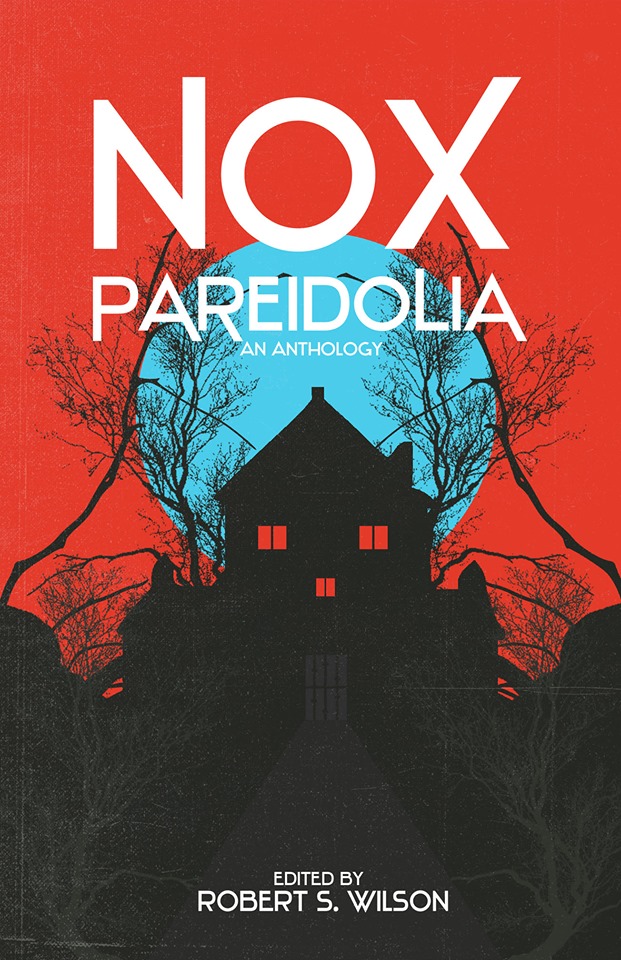
Table of Contents Reveal for NOX PAREIDOLIA from Nightscape Press!

So this week ushered in the big table of contents reveal for NOX PAREIDOLIA, the highly anticipated anthology from Nightscape Press, and to say that I’m thrilled about it is a massive understatement!

*cue banners and streamers and screams of joy*

Slated for an October 31st release, this is sure to be one of the very coolest anthologies of the year, and I’m completely elated that I get to be part of it! My story, “When the Nightingale Devours the Stars,” is all about birds, small towns, death cults, and outsiders fighting for their place in the world. It’s a story I’m so proud of, and I am positively overjoyed that it found such a wonderful home.

So without further adieu, let’s see that gorgeous TOC, shall we?

TABLE OF CONTENTS FOR NOX PAREIDOLIA
“Watch Me Burn With the Light of Ghosts” by Paul Jessup
“Immolation” by Kristi DeMeester
“Her Eyes Are Winter” by Christopher Ropes
“8X10” by Duane Pesice and Don Webb
“Bag and Baggage” by Greg Sisco
“The Dredger” by Matt Thompson
“Hello” by Michael Wehunt
“Gardening Activities for Couples” by Alvaro Zinos-Amaro
“Lies I Told Myself” by Lynne Jamneck
“The Unkindness” by Dino Parenti
“Merge Now” by Kurt Fawver
“when we were trespassers” by doungjai gam
“Rum Punch is Going Down” by Daniel Braum
“Unmoored” by Sean M. Thompson
“Just Beyond the Shore” by Elizabeth Beechwood
“The Schoolmaster” by David Peak
“The Past You Have, The Future You Deserve” by K.H. Vaughan
“Herr Sheintod” by LC von Hessen
“The Room Above” by Brian Evenson
“Sincerely Eden” by Amelia Gorman
“Wild Dogs” by Carrie Laben
“The Moody Rooms of Agatha Tate” by Wendy Nikel
“Salmon Run” by Andrew Kozma
“The Little Drawer of Chaos” by Annie Neugebauer
“When the Nightingale Devours the Stars” by Gwendolyn Kiste
“Far From Home” by Dan Coxon
“Birds” by Zin E. Rocklyn
“Strident Caller” by Laird Barron
“The Taste of Rot” by Steve Toase
“Venom” by S.P. Miskowski
“In the Vastness of the Sovereign Sky” by S.L. Edwards

As you can see from that list, this is a massive horror anthology, clocking in at over 300 pages. And look at all those names! From major award winners to fantastic up-and-comers, these are truly some of the very best short fiction authors of horror and the weird today, and I’m so very happy to be included among them.

As if these wonderfully weird words weren’t enough, every story in the book has an illustration to accompany it, and as always, the artwork from Luke Spooner is out-of-this-world beautiful. My lovely, creepy birds are featured above, but you can see all the art for NOX on social media by heading over here or here. And, you know, you could also go ahead and buy this supremely cool anthology and enjoy the art and the words for many weird years to come! It’s already available for pre-order on the Nightscape Press site as well as on Amazon.

As per the usual, you can expect lots more celebration of this anthology from my social media and blog in the weeks to come. Because really, what’s better than a horror anthology making its fearsome debut in the world on Samhain?

Happy reading, and happy spooky Halloween season!