Author Archives: gwendolynkiste

Books and Inspiration: Part 1 of Our June 2021 Author Roundtable

Welcome back! All this month, I’ll be spotlighting a brand-new roundtable featuring nine fantastic authors who have new books out this year! From short fiction collections to novels, and from horror and westerns to the witchy and the weird, we’ve got so much talent and such a wide array of books to spotlight!

So let’s take it away, shall we?

Congratulations to all of you on your new book releases! What can you share about your new book and the inspiration behind it?

GABY TRIANA: Thank you! My latest gothic horror novel, MOON CHILD, is The Shining meets The Craft. A young woman becomes the fifth member of a coven needing her help opening a spiritual portal inside an abandoned Florida hotel. The inspiration behind the story was more my own spiritual journey away from Catholicism which is characterized by Valentina.

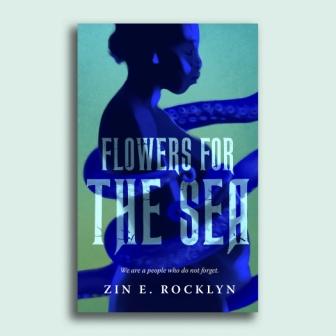
ZIN E. ROCKLYN: Thank you! FLOWERS FOR THE SEA is about a pregnant woman trapped on a boat with the last of humanity. It all started from a prompt and took off from there when I thought about the horror of pregnancy without the wild circumstances. Even “easy” pregnancies permanently change so much of your body and it bugs me out that people go through it.

EV KNIGHT: My new book is titled Children of Demeter. It is about a vanished cult from the 70’s who worshiped the Goddess Demeter. They lived on a commune and since their sudden disappearance, nothing has grown on the land. Sara Bissett, a sociologist trying to escape her own past, buys the place with the intent of writing a book about the cult. Strange things begin to happen making Sara question her sanity and the stories told about the cult by the people in town.

The inspiration came from an idea I was playing around with as I wanted to write a haunted house story. I wondered if the house could become a womb and those inside, rather than developing/evolving, would instead devolve/change into something less human. From there, the story just took off and “evolved” into its current iteration.

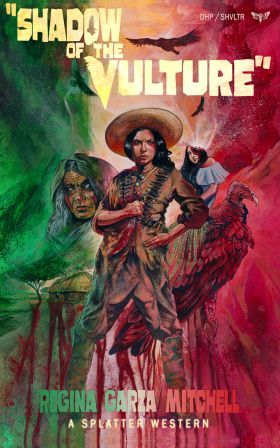
REGINA GARZA MITCHELL: Thank you! Shadow of the Vulture is number 9 in Deaths Head Press’s Splatter Western series. (The books are not related and can be read in any order.) My book takes place on the border of Texas and Mexico and is told from a Tejana perspective. The focus is primarily on women: a shape-changing witch, a soldier and her dead friend, a healer who wants to be a vulture, and a cantina owner. There’s a mix of knife fighting, gunfighting, and brujería. Juana, the ex-soldier is the main character. She is angry and ruthless and brutal about the way her world has been impacted by colonization. The story was inspired by stories I heard growing up, books I read on Chicana feminism, and books on Texas history written from Tejano and Mexican American perspectives.

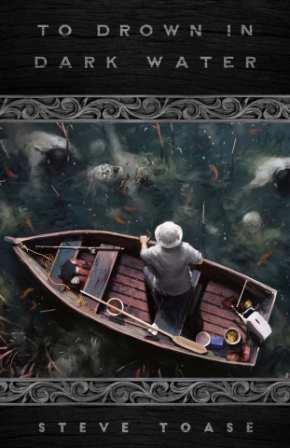
STEVE TOASE: As a collection there are many inspirations behind the stories, but some of the main themes are grief, loss and inevitability. Rather than the jump scare I tend to write a sense that the story is heading to an outcome and that feeling of helplessness (which I think is more horrifying) builds the terror in the story.

For specific stories I tend to draw on lots of different sources. These include family hobbies and day trips, as well as places we’ve visited. Folklore has always been a huge influence on my writing, so the myth of Baba Yaga found its way into The Jaws of Ouroboros, and traditional ideas about borders inspired Grenzen, a story set on the motorway between West Germany and West Berlin at the time of the Cold War.

EDEN ROYCE: Thank you so much! It feels like it’s taken forever, but it’s finally here!

Root Magic is a Southern Gothic novel set in 1963 in my home state of South Carolina. While it was written for a middle-grade age group, readers of various ages can enjoy this take of magic and mystery, haints and hags, all woven together with historical themes still relevant today; racism, school integration, police brutality, and a return to the practices of folk magic and herbalism.

I read and watch movies in my (ever dwindling) spare time and it has always been difficult to see rootwork and conjure magic portrayed on screen and in books as evil. Especially by people who don’t know the reasoning behind why these practices have such negative connotations.

It goes back to colonization where people were enslaved and brought from various countries on the African continent through the Transatlantic Slave Trade to what is now the United States. Enslavers wouldn’t allow these people to practice their religions or spiritual rituals under penalty of severe abuse, even death. Enslaved people were also not given medicines. So these disenfranchised people had to hide their prayers, ceremonies, their use of herbs and roots from those enslavers. And when you hide to do something, even something innocent, your actions are seen as wrong.

I wanted to do my part to show these traditional medicines and practices aren’t the evil many take them to be. So I wrote Root Magic to show rootwork in the manner it was always intended: a way to protect and heal the rootworker and those they loved.

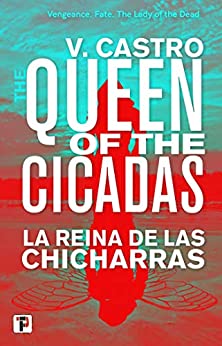
V. CASTRO: The book I would like to talk about is The Queen of The Cicadas from Flame Tree Press. When the reboot of Candyman was announced I thought of what a Latinx version would be like. Immediately my mind went to my great grandparents who were migrant workers. The experiences of Mexican Americans and Mexicans are not often told through our own voices and I wanted to do that. BUT HORROR.

I also want to mention it began as a novella and morphed into a novel after multiple rejections.

MARIA HASKINS: Six Dreams About the Train is my short story collection. It contains 21 stories, 2 of them previously unpublished, and I’m ridiculously excited that Trepidatio Publishing picked it up. I owe a big debt of gratitude to author Angela Slatter who encouraged, supported, and helped me get the collection together in 2020 when I was dealing with a lot of stuff in addition to the pandemic. It was a tough year, but working on that collection, and finishing the two unpublished stories for it, was one of the things that helped keep me going.

S.L. EDWARDS: Thank you! Well, The Death of An Author is a collection of weird fantasy and Cthulhu mythos. They are stories that I liked, but did not fit with the overall tone of my debut collection, Whiskey and Other Unusual Ghosts. The stories have a pulpier feel than the stories in Whiskey, skewing more towards Clark Ashton Smith than Edgar Allan Poe.

If I were to pitch it, I would say the book has sword and sorcery, weird westerns, vampires, dragons (lots of dragons) and overall feels on the whole more optimistic than “Whiskey” did. The characters fight back, more like action stars than terrified horror protagonists. You have gunslingers, pizza delivery drivers with combat training, hospice nurses, and even a telepathic shark monster.

The second half of the collection really focuses on what I call my “Congressman Marsh cycle,” which spun out of my political panic in 2016 and thereafter. Most of those stories will be original to this collection and were sort of responses to the news that I saw. They are, admittedly, much harder stories to read now and I do sort of expect some ridiculous one star reviews on Amazon motivated by some people who are unwilling to admit that they saw the same damn things we all saw. But I can’t do much to stop that.

How long did your new book take to write? Did anything happen along the way that changed the course of the book or its release?

GABY TRIANA: I wrote MOON CHILD across four months in 2020 between ghostwriting projects.

ZIN E. ROCKLYN: In total, I’d say the book took about two months to write, but spread over about two years, lol. I had a R&R (revise and resubmit) that took some time for me to find my way through, but I managed!

EV KNIGHT: The book took about three months to write and one to edit. I took a month-long break while writing it to write my novella Dead Eyes for Unnerving’s Rewind or Die series.

Covid, of course seemed to affect everything when it came to the publishing part, but also, there was a lot of political and civil unrest in this country for awhile and it just didn’t feel right to be publicizing my book when attention needed to be drawn to liberty and justice FOR ALL.

REGINA GARZA MITCHELL: It took me about a year and a half to write this fairly short novella. My day job is pretty demanding (and is actually a day/night/weekend job since I teach evenings and online), and part of that work involves research and writing. That doesn’t leave much time or space for other types of writing, so my fiction writing time is pretty limited. As I was writing, I was also working on a research project that influenced the trajectory of the book, so you’ll see some nods to Gloria Anzaldúa in the story. It took longer than expected for me to write the book, and I had to ask for an extension…and then COVID hit, and my writing time went out the window. So I submitted my book quite a while after the original deadline, but Jarod and Patrick at Death’s Head were incredibly kind about it and easy to work with.

STEVE TOASE: It’s taken a few years to get to the point where I felt happy pitching a short story collection. Basically, I wanted to have enough material to be able to make a choice rather than publish everything I’d ever written. The past few years have been good in terms of selling stories. I think the big development for me in terms of the book’s direction was having stories in Shadow and Tall Trees 8 and Weird Horror #1. This meant I was hitting that sweet spot for Undertow; getting the right note of weirdness and horror.

EDEN ROYCE: I wrote the first draft during National Novel Writing Month (NaNoWriMo). Root Magic didn’t start out life as a novel. I initially wrote it as a collection of short stories because the idea of writing long form fiction was so staggering to me I needed an abbreviated time – and apparently an international writing event – to push through and get the work completed. I’d written up my outline/notes beforehand and wrote furiously for a month. After that, I let the manuscript sit a while then wrote sections to connect the separate stories into a novel.

As far as things that happened along the way, I had a title change and had my release date pushed back from Fall 2020 to January 2021.

V. CASTRO: The first draft took me a few months to write. I’m a fast first drafter, but after multiple rejections it became clear I should expand the story to novel length.

Never get stuck on rejections because sometimes it is exactly what you or the story may need!

At the same time American Dirt was released so I had a lot to say about identity and hate. Many of my emotions are expressed in the book.

MARIA HASKINS: The collection includes stories from 2015 and onward. Putting it together in 2020 was a challenge for a lot of reasons, but it was also a project that felt doable for me. I had a really hard time working on brand new fiction because the year was such a dumpster fire, but going through my old stories and putting the finishing touches on the two new stories was less of a challenge. It was also interesting for me to look at my work as “a collection”. It made me feel a sense of pride and accomplishment as a writer that was sort of slipping away during that year.

S.L. EDWARDS: The book, ironically, was ready to go almost immediately after Whiskey and Other Unusual Ghosts. I think one thing we should talk about more, though, and I know this happens to other writers but I don’t see it being normalized is what you might call “the first book blues.” After Whiskey’s publication I was feeling much more confidant about my writing. Maybe in retrospect, overconfident. I’d like to think I wasn’t arrogant, but I had much bigger expectations than were justified.

Then, for reasons beyond anyone’s control, the publisher had to close and I was left in 2020 what felt like entirely alone. Something similar happened with The Death of An Author, in that there was an interested publisher, but the deal just didn’t get worked out. Again, no fault of anyone. But indie press does not make a lot of money for the most part.

So the release was delayed. New stories were added. A lot of new material was added, ironically some of it coming from out of my really dark moments in 2020. I was, for instance, one of the last passengers to come back from Bogotá on a commercial flight before the world shut down. I had only learned in one day that Colombia’s government planned to close the country and my airline did not notify me in advance that they had cancelled my flight. So, the day was just one of dread and panic I’d never really experienced before. It’s a very, very visceral and hard memory for me to this day. One day, I’d like to go back to Bogotá to get a bit of closure.

But this informed stories like “The Last Mayflies Out of Bogotá,” which will be original to the collection. 2020 also informed some of the rewrites of earlier stories which are included in the collection. It did not, ironically, inform my story “A Slower Way of Starving,” a story about two pizza delivery drivers in a town contained during the spread of a pandemic. That story was written for the now infamous pizza anthology, well before COVID. It was rejected, but now you all get to read it if you want to.

And that’s it for Part One in our month-long roundtable! Head on back next week as we discuss more about these authors’ fabulous new books!

Happy reading!
Fiction Fun in the Summertime Sun: Submission Roundup for June 2021

Welcome back for this month’s Submission Roundup! Plenty of great opportunities this month, plus three early warning calls that won’t be opening until later in the summer!

As always, a disclaimer: I’m not a representative for any of these markets; I’m merely spreading the word. Please direct your questions to their respective editors.

And with that, onward with this month’s Submission Roundup!

Submission Roundup

Field Notes from a Nightmare: An Anthology of Ecological Horror
Payment: .03/word
Length: 1,000 to 4,000 words
Deadline: June 30th, 2021
What They Want: This anthology from Dreadstone Press is seeking horror and dark weird fiction about environmental and ecological horrors.
Find the details here.

Baffling Magazine
Payment: .08/word
Length: up to 1,200 words
Deadline: June 15th, 2021
What They Want: Open to speculative queer fiction. Science fiction, fantasy, and horror are all welcome.
Find the details here.

HWA Horror Scholarships
Payment: Scholarship amounts vary
Deadline: August 1st, 2021
What They Want: Open to members of Horror Writers Association, there are currently multiple scholarships available, including for horror nonfiction, dark poetry, women in horror, and more.
Find the details here.

The Deadlands
Payment: .10/word for fiction; $100/flat for nonfiction; $50/flat for poetry
Length: up to 5,000 words for fiction; 1,000 to 4,000 words for nonfiction, up to three poems
Deadline: Ongoing for fiction and nonfiction; June 14th, 2021 for poetry
What They Want: This brand-new publication is currently seeking speculative fiction, nonfiction, and poetry that deals with themes of death.
Find the details here.

Eye to the Telescope
Payment: .03/word ($3 minimum; $25 maximum)
Length: up to three poems
Deadline: June 15th, 2021
What They Want: This issue’s theme is Indigenous Futurisms and is open to Indigenous writers around the world.
Find the details here.

Shadow Atlas: Dark Landscapes of the Americas
Payment: $250/flat for short fiction; $25/flat for poetry
Length: 2,500 to 3,000 words for fiction; up to 35 lines for poetry
Deadline: Open from June 21st to June 27th, 2021
What They Want: The editors are seeking dark tales set in South America that explore folklore linked to a particular location.
Find the details here.

And finally, a few early warnings for submission calls that don’t open until later in the summer!

The Cellar Door, Issue 1: Woodland Terrors
Payment: $25/flat
Length: 2,000 to 7,500 words
Deadline: Open from July 1st to July 15th, 2021
What They Want: Open to horror and thriller stories that take place in or near the woods.
Find the details here.

Kate Bush: An Anthology
Payment: $15/flat
Length: 1,500 to 4,000 words
Deadline: Open from July 13th to August 3rd, 2021
What They Want: Open to original weird or dark fiction inspired by the work of musician Kate Bush.
Find the details here.

Chromophobia
Payment: .01/word
Length: 1,500 to 6,000 words
Deadline: Open from August 1st to August 31st, 2021
What They Want: This new Strangehouse Books anthology edited by Sara Tantlinger is seeking horror stories inspired by color from female authors.
Find the details here.

Happy submitting!

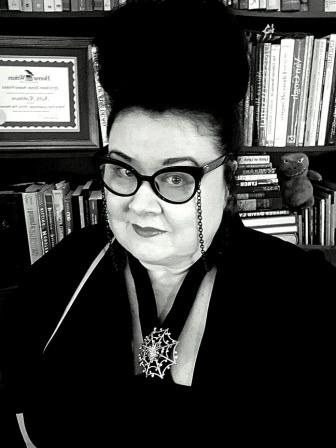
Horror Classic: Interview with Kelly Robinson

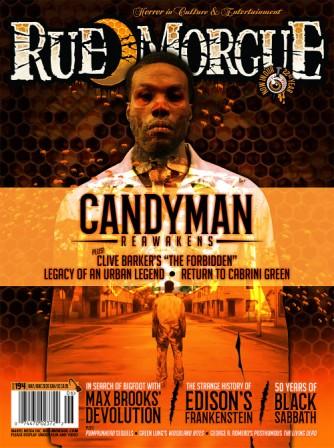
Welcome back! Today, I’m thrilled to spotlight author Kelly Robinson. Kelly is the Bram Stoker Award-nominated author of numerous non-fiction articles appearing in publications such as Scary Monsters and Rue Morgue, among others.

Recently, she and I discussed her inspiration as a writer, her love of silent film, her research process, as well as what she’s got planned next.

A couple icebreakers to start: when did you decide to become a writer, and who are some of your favorite authors?

In a way, I’ve always been a writer. I was reading at age 3, which almost seems freakish, so by the time I was in schooI, I’d already been reading a while. My kindergarten teacher used to have me read books to the class while she sneaked out for smoke breaks! I started writing soon after, writing stories, poems, and scripts for puppet shows that I would come up with and perform for the class. I was always obsessed with the Scholastic Books order forms, and I made up one of my own, making up titles of books my friends could “order,” and then making and drawing books by request for the titles they wanted. (One was called The Girl Who Snuck Into the Boy’s Bathroom.) I talked my teacher into letting me single-handedly make a school newspaper, which I duplicated on one of those old ditto machines with the smelly purple ink. It was called The Classroom Clammer, which had nothing to do with clams, but I guess I was going for “clamor.” It featured news stories like “Robbie is moving!” and “D.C. has a lot of cats!” So, when I say I’ve always written, I really mean it.

My taste in writing ranges from old comic books to classic literature, from the humor of P.G. Wodehouse to the bleak, noir worlds of Cornell Woolrich and Horace McCoy. I enjoy things that are difficult, like Russell Hoban’s Riddley Walker, which uses language that is almost like a code to be cracked. As far as favorites, I often cite Martin Amis, A.S. Byatt, Doris Lessing, Octavia Butler. My taste in horror skews weird. I like demented things like Jon Bassoff’s Corrosion, the weirdness of David Mitchell’s Slade House, or anything by Tony Burgess, who is some kind of a freak genius. But then, I’m just as happy reading ghost-y 19th century authors: J.S. Le Fanu, Théophile Gautier. My favorite short story is Joe R. Lansdale’s “Tight Little Stitches in a Dead Man’s Back.”

Oh, and I should mention non-fiction, since I’m a non-fiction writer. I love writers like Joan Didion whose essays are smart and provocative, with such beautiful prose. I’m in awe of horror writers/researchers like Gary Rhodes who do deep, deep research, turning up brand new information about very old things.

You’re a two-time Bram Stoker Award nominee for your excellent nonfiction articles. What draws you to writing horror nonfiction and in particular to writing about classic horror?

I’ve always been interested in the story behind the story. I think I’m just a question-asker by nature. For me, the thing itself isn’t enough. I want to know the origin of the thing, you know? And that curiosity extends to the books I read and the films I watch. Nothing happens in a vacuum, so even the oldest horror films were inspired by something. Today, horror films have the entire history of the genre to inspire them, but the further back you go, to say, the 1890s, those films had to draw from non-film sources. Some of them came from books, obviously, but also from stage plays, vaudeville acts, comic strips. Some short films were even inspired by popular catch phrases of the day.

As far as classic horror, I do like all kinds of horror, but I’m particularly drawn to silent film. I think that goes back to what I was saying about wanting to know what’s behind everything. I like seeing the horror film in its infancy, before it became so imitative. I particularly like writing about obscure or even lost silent films, because they are so far removed from the world of the internet. Some of the films I write about have barely any trace online, except for maybe an IMDB listing, which is often filled with inaccuracies. When I first started writing about the 1913 film The Werewolf, there were only a few references to it online. (Now there are many, the majority of which are sourced from my own work, whether credited or uncredited.)

Do you remember the first horror movie that really captured your imagination?

My parents weren’t particularly horror fans, so I didn’t get a lot of exposure to them at a young age. My brother and I surreptitiously watched Jaws on HBO and thought it was just the greatest. I remember seeing a thriller called Paper Man that had a scene where someone is crushed by an elevator and it haunted me for decades, until I recently rewatched it and found it is pretty silly. I was captured by horror lit long before film. I devoured books about witches, vampires, and mummies. My favorite books on those subjects were non-fiction, even back then. I had a children’s book on werewolves that contained Medieval woodcuts, and one on vampires that included that famous Vlad the Impaler woodcut of people on spikes. (They don’t make kids’ books like that anymore!) The fact that they were non-fiction books made me feel like vampires and werewolves were a real part of history. So, when I was much older and could choose movies for myself, I gravitated toward the subjects I’d always been drawn to.

What kind of resources do you seek out as you’re working on your nonfiction articles? At this point, do you have a specific research strategy, or do you find that every article requires its own approach?

Some of the films I write about, as I said, haven’t left a big trace. I liken it to detective work when I write about certain lost films. The best resources are movie magazines from the silent film era, and also historic newspaper articles. Finding reviews in small-town newspapers is like striking gold, because, while magazine pieces are cool, they’re puff pieces, and they often exaggerate the film’s appeal. Reviews give a much more realistic picture. I’m sort of a no-stone-unturned researcher, because you never know what source might lead to an interesting fact. When I was writing on Attack of the Mushroom People, I investigated the natural resources on the tiny Japanese island where some of the filming took place, and discovered that it is home to actual bioluminescent mushrooms—something I’ve never seen reported anywhere else.

Nonfiction is an area in every genre that often doesn’t get enough love. What advice do you have for other nonfiction horror writers out there who are looking to get started in the industry?

It’s funny that non-fiction is overlooked, when it’s the type of writing people encounter the most. You may not read a novel every day, but you probably look at news articles, click on some humor pieces, read some reviews. Those things don’t just appear out of the ether! It’s funny that novel writing tends to be so much more romanticized.

My best advice for starting out in non-fiction is to think about what you can bring to the table that’s new. What’s the point in writing yet another article about something that’s been covered over and over. That doesn’t mean you can’t write about well-tread subjects, but think about what you’re bringing that’s not been said before. Unearth a new fact. Tackle a film from a new angle. Make a comparison that others might not have thought of. Questions are also a good starting point for articles. If there’s something you’re wondering about, chances are good someone has wondered about it, too. Find out the answer, and tell everyone else.

While I’m sure it’s hard to pick just one or two, what are your favorite underappreciated classic horror films that you wish more people would see?

That’s a tricky question, because the term “classic” suggests a film has already stood the test of time. When I’m trying to hook people on silent horror, I always suggest The Unknown from 1927. It stars Lon Chaney as an armless circus performer who shoots guns and smokes cigarettes with his feet. It has so many bizarre twists that it is never dull for a second, and it’s easy to forget that there’s no dialogue. I’m also a fan of The Hands of Orlac from 1924, starring Conrad Veidt of Caligari fame. It kicked off the hands-with-a-mind-of-their-own trope, inspiring two remakes: Mad Love with Peter Lorre in 1935, and The Hands of Orlac with Christopher Lee in 1960.

In addition to your nonfiction, you also had a poem, “Caligari,” appear in last year’s HWA Poetry Showcase. What can you share about the inspiration for this piece?

I’m new-ish to poetry, which I hadn’t written much since childhood, but I’m very much enjoying it, as it allows me to play with words in a very precise way. I’m working on poems for all my favorite classic horror films, and The Cabinet of Dr. Caligari seemed like a good place to start, as the somnambulist character is so iconic. That was my starting point—the idea that Conrad Veidt’s face is so recognizable, so often reproduced in silent film books, but do people really understand what he’s about? And that he’s not the villain?

What are you working on next?

I am thrilled to have just signed a contract with 1984 Publishing to write a book on an absolutely insane cult film from the 1980s. I can’t announce the title just yet, but when I can, you will probably hear me yelling about it.

Where can we find you online?

You can find me on Twitter at @KellyRobinsonHQ, where I mostly crack lame jokes, and I’m always eager to have Patreon followers.

Huge thanks to Kelly Robinson for being this week’s featured author!

Happy reading!

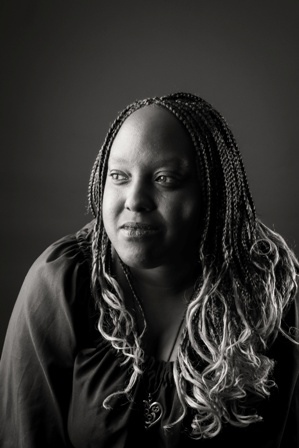
Slay: Interview with Nicole Givens Kurtz

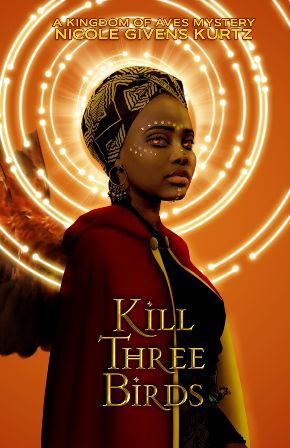
Welcome back! This week, I’m thrilled to spotlight author Nicole Givens Kurtz. Nicole is the author of numerous short stories and novels, including Kill Three Birds and A Theft Most Fowl, as well as the editor of the critically acclaimed anthology, SLAY: Stories of the Vampire Noire.

Recently, she and I discussed her inspiration as an author, the release of her fantastic anthology and new novel, as well as her favorite parts of the writing process.

A couple icebreakers to start: when did you decide to become a writer, and who are some of your favorite authors?

I realized I was a horror author after I wrote my first scary story in 10th grade. It involved a Thanksgiving dinner gone horribly wrong. I fell in love with the horror genre when I was 4. Where the Wild Things Are was the first horror book I read, and it remains one of my favorites to this day. I graduated to King in elementary school along with Poe and then to others later in life like Shirley Jackson, L.A. Banks, and Tananarive Due. . My favorite authors are Stephen King, Shirley Jackson, Octavia Butler, and Robert B. Parker.

Congratulations on all the success of your recent anthology, SLAY: Stories of the Vampire Noire. What can you share about your inspiration to create this anthology?

The inspiration for SLAY came about due to many conversations I have had with authors about the lack of Black vampire stories in the wake of L.A. Banks’s death. Sure, there have been other Black vampires, but they remained on the perimeter, in the background, window dressing. We wanted stories like Banks wrote, that centered Black people, Black vampires and Black slayers in the forefront. What would that look like now? So, the idea was born to seek out short stories for an anthology to answer that question and to fill the void.

Even more congratulations on the recent release of your new book, A Theft Most Fowl, which is earning rave reviews. What inspired your Kingdom of Aves series, and how was writing the second book in the series different than the first?

Around March 2020 when the United States was going through a lockdown, I wanted to write something fun. I wanted to write something for me. Something that I would like. I enjoy reading everything that I write but I wanted something lighter. If you think about my Cybil Lewis series it takes place in post-apocalyptic D.C. She is very pulpy noir-ish. Right, it’s kind of gritty and the same is true for my Minister Knights of Soul series, again it takes place on Veloris, an ice planet it is very dark and gritty. Sorcery, magic space opera-ish but it is still dark and gritty….I wanted something fun! And I wanted something fantastic and I wanted to like build a world and be more intentional about the world I was building. Thus the Kingdom of Aves was born. The second book draws its influence from heist stories unlike the first one that deals with a serial killer. It was different in its approach, its plot, and its mystery.

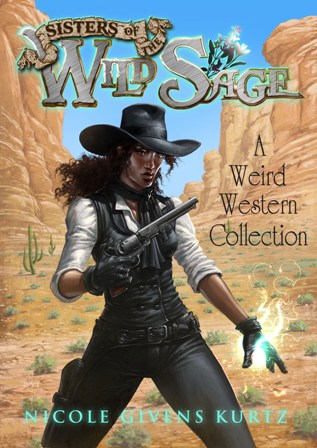
You’ve written in numerous genres, including horror, fantasy, and weird western. Do you have a particular favorite genre? Also, do you decide in advance what genre you want to write next, or do you allow the project to develop as you go along?

I always know before I start a story what genre it is going to be because I plan out the story, My favorite genre is mystery/horror writing, if I am honest. My next project is a 80s style slasher horror novella set just outside my hometown of Knoxville, Tennessee. The title is “Leave a Pretty Corpse.”

What’s the best writing advice you’ve ever heard?

The best writing advice I was ever given was to be patient with the story.

Which part of the writing process is your favorite: brainstorming new ideas, creating a first draft, or polishing an almost finished piece?

My favorite part is always the brainstorming. I love generating the idea and coming up with the story. That’s the exciting part! The labor comes when attempting to funnel that amazing idea onto paper and executing it. That’s the real work in writing.

What projects are you currently working on?

I am currently working on the horror novella, “Leave a Pretty Corpse,” and my on-going cyberpunk thriller, “Lucky Glow: A Fawn & Briscoe SF Mystery” for my Patrons at Patreon. I am also currently editing titles for Mocha Memoirs Press, as well. We recently released two new horror titles, L. Marie Wood’s “Telecommuting” and Stephen L Brayton’s “Night Shadows.”

Where can we find you online?
I am online at Twitter, @nicolegkurtz, at Facebook as facebook.com/NicoleGKurtz, at website http://www.nicolegivenskurtz.net, and at Patreon http://www.patreon.com/NicoleGKurtz

Tremendous thanks to Nicole Givens Kurtz for being this week’s featured author!

Happy reading!

My Schedule for StokerCon 2021

So tomorrow is the official kickoff for the fully online StokerCon!

*cue lots of streamers and confetti and celebration*

Needless to say, I’m super eager to see everyone, albeit virtually, and I’m also incredibly excited to be featured on five panels as well as an author reading! Eeeeeee!!!

So without further adieu, here are the places I’ll be haunting this weekend!

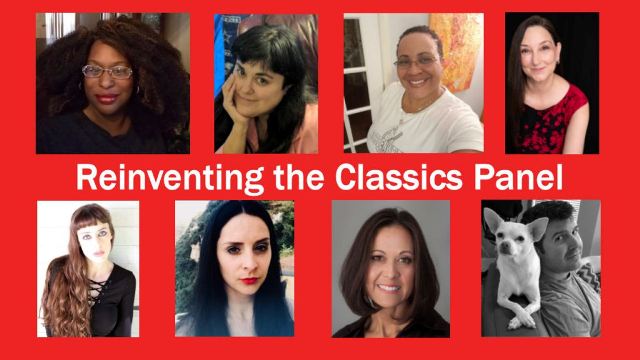
Reinventing the Classics: How Modern Horror Is Transforming the Tropes
I not only pitched this panel, but I also got to be the moderator for it! Alongside panelists Christa Carmen, L. Marie Wood, Gordon B. White, Naching Kassa, Lee Murray, Rhonda Garcia, and Carina Bissett, we talk all about our favorite classic horror monsters as well as how those monsters are being reinvented in the 21st century. (On Demand)

American Female Gothic
The fabulous Christa Carmen moderated this awesome discussion of Gothic literature and how it reflects the female experience. From haunted houses to haunted bodies, this panel covered a wide range of gothic horror, and I’ve been thinking about it ever since, which is always a good sign. So come and see what we all had to say about spooky settings and spooky women! (On Demand)

Steel City Horror
Our HWA Pittsburgh Chapter got together and recorded this wonderful panel that should help give everyone some insight into what makes Pittsburgh among the major horror capitals of the world. We talk all about the history of the genre in the Steel City as well as how the Rust Belt surroundings and local lore influence our love of horror. (On Demand)

Horror as a Fairy Tale
Moderated by the amazing Cynthia Pelayo, we discuss the horrifying side of fairy tales and how the genre is still using these original bedtime stories to this day. Hear all about our favorite fairy tales and why they still resonate, especially with women’s experience in the horror genre. (On Demand)

History of the Gothic: Horror Folklore
And if you’re really eager to catch me live, then you’re in luck! I’ll be a panelist alongside Alma Katsu, Lisa Kroger, Silvia Moreno-Garcia, Andy Davidson and moderator Kevin Wetmore. It’s such an excellent group of authors to be part of, so I can’t wait to hear what everyone’s got to say about horror folklore! (Saturday, 5/22 at 6pm)

Author Reading
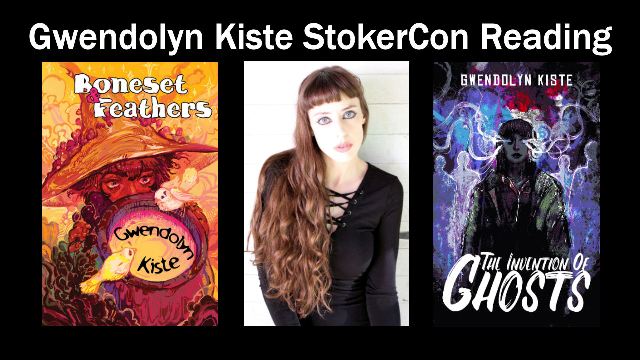
Finally, I’m also doing a reading of my fiction! I chose excerpts from both The Invention of Ghosts and Boneset & Feathers, so expect baleful spirits, broken friendships, broken birds, and lots of witches. So you know, the usual from me! (On Demand)

And if that wasn’t enough, the Bram Stoker Awards will be held virtually on Saturday night! I’m incredibly honored to be nominated for a Stoker in the Long Fiction category for my limited edition novelette, The Invention of Ghosts, from Nightscape Press. This is my fifth (!) Stoker nomination, and even typing that sentence seems surreal. I don’t actually know quite how that happened, but I’m forever humbled and grateful for it. Good luck to everyone on Saturday, and seriously, what a year for horror!

So that’s my schedule for the weekend! I’ll probably also be hanging around the virtual bars, so if you see me there, definitely say hello! It will be good to interact with everyone this weekend!

Happy reading, and happy StokerCon!

Macabre and Uncanny: Interview with Douglas Ford

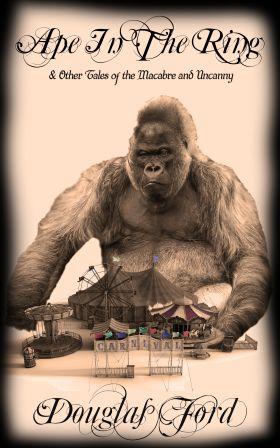
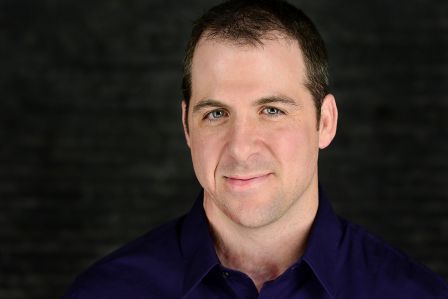
Welcome back! This week, I’m excited to spotlight author Douglas Ford. Douglas is the author of the collection, Ape in the Ring and Other Tales of the Macabre and Uncanny, as well as numerous works of short fiction.

Recently, Douglas and I discussed his new collection as well as his inspiration and favorite parts of the writing process.

A couple icebreakers to start: when did you decide to become a writer, and who are some of your favorite authors?

Thank you so much for this opportunity! I’ve pretty much always aspired to write, starting at a young age, like around seven or eight, when I put together a community newspaper in my parents’ garage. My friend and I wrote all the content, including a sports section where we talked about our t-ball team, and we went around and sold it to neighbors for pennies. I had a romantic idea about writing and being a reporter that probably came from Superman’s alter-ego, Clark Kent. I was the kind of kid who didn’t aspire to be Superman, but rather Clark Kent since he had such a cool job. Later, as a teenager, I would write short stories that imitated what I read in The Twilight Zone magazine and Isaac Asimov’s Science Fiction Magazine, all of which was pretty terrible. I still have my first rejection from Asimov’s that I received when I was around 17. I’d always wanted to write horror and speculative fiction, but my adult inspiration came when I read two short stories for the first time: “Where Are You Going, Where Have You Been” by Joyce Carol Oates and “A Good Man Is Hard to Find” by Flannery O’Connor. Those stories lit a fire in me, and so I would acknowledge them as favorite authors, along with Shirley Jackson, Charles Beaumont, and Brian Evenson. Short fiction is my life-blood, and I gravitate towards those authors, along with writers we don’t always associate with genre fiction, like Don DeLillo, Thomas Pynchon, Ralph Ellison, and Toni Morrison.

Congratulations on the recent release of your collection, Ape in the Ring and Other Tales of the Macabre and Uncanny. How did you choose the stories that appear in the book, and do you have a personal favorite?

Thanks! The stories in that collection come from work I’d published in the last decade, mostly in the small press, and the decision to include them simply came down to them being some of my favorite pieces. It’s hard to identify a favorite–when people read the collection, almost everyone mentions different ones as favorites, with “Wasps” probably mentioned most often. But if pressed, I’d probably say that the title story, “Ape in the Ring,” means the most to me since it’s the first story I wrote that is set in a fictional area of Florida called Vissaria County. It was also the first story I wrote where I felt like I found my voice, something I realized when I had the opportunity to read it out loud to audiences. It’s also weird and nasty, with questionable parental figures, a motif that I seem to come back to over and over again. That, and apes, though the titular “ape” in the story might be something else, but I want to avoid spoilers in case anyone wants to read it.

You also have a new book due out in the fall. What can you share about the inspiration behind it?

It’s a novel set in Vissaria County, which I just mentioned. I’m a proud horror nerd, and in some sense, that novel is essentially me free-basing on the genre elements I adore. I let myself have fun with the characters and the narrative, which as one early reader has pointed out, has a stronger than usual southern gothic vibe. It’s also a love-letter to the kind of Euro-cult horror films I love, with a character through which I paid homage to the late, great Jacinto Molina, who went by Paul Naschy in his films, many of which involve a recurring werewolf character. Likewise, this novel involves lycanthropy, witches, black masses, and lots of other fun stuff, even possibly a Skunk Ape, which is Florida’s version of Big Foot. It’s called Beasts of Visssaria County and will appear in late 2021 from D&T Publishing.

What draws you to the horror genre in particular? Do you remember the first horror movie you ever saw or horror story you read?

As a kid, I would grab every issue of Tomb of Dracula I was lucky enough to find, and at some point, someone gave me a kid’s version of Poe’s works, printed on really cheap paper with lurid illustrations. I was most drawn to its version of “The Fall of the House of Usher,” and that’s still my favorite Poe story. My parents let me stay up late to watch scary movies on the tube, and the one I remember seeing first was Son of Frankenstein. The best part was that my parents would wait until the movie was over and hide in the hallway when I stumbled to my bedroom. They would jump out of the shadows and scare the hell out of me, which definitely added something to the experience of watching the movie. I really love them for doing this. I can’t say for sure what draws me to the horror genre. Maybe I still crave that feeling of knowing something lurks in the shadows and I want to tease it out into the open so that it’ll reveal itself.

You currently reside in Florida. How, if at all, does your home state influence your writing?

A big part, certainly, since I have a good portion of my work set in Vissaria County. Aside from all the stuff about Florida Man, Florida is just strange and swampy. It’s a diverse state, not just in terms of people, but in land and history. With climate change and rising sea levels, there’s even a sense that it’s sinking, fueling the sense that we’re surrounded here by nature in forms that are both beautiful and terrifying. For me, it often generates the feeling of the sublime that Edmund Burke talked about and which is so important to horror and weird fiction.

If forced to choose, which is your favorite part of the writing process: crafting characters, writing dialogue, or establishing setting?

I was re-reading King’s Tommyknockers recently, and there’s a line about how creative people hear voices, and that’s me: I tend to start with characters who manifest themselves in the voices I’m hearing. Hence, I tend to start with characters and how they sound, how they talk, and from there, I learn about what they’re feeling and what they want. In the fiction I write that works best, it begins there, with the characters teaching me about themselves, and I try to listen.

What are you working on next?

I’m finishing up a novella for Madness Heart Press, another story about Vissaria County, this one a love story involving a couple with a pet leech. It’s called Little Lugosi: A Love Story. Where Beasts of Vissaria County has many hallmarks of the southern gothic, this one has folk horror qualities that I enjoyed playing with. I also recently finished a short story that fictionalizes the creation of Coral Castle, a strange, long-standing roadside attraction in South Florida. I’m pretty happy with how that one turned out, so hopefully it finds a home in a magazine or anthology.

Where can we find you online?

I can be found on Facebook as well as Instagram and Slasher. Give me a holler–or a howl!

Big thanks to Douglas Ford for being this week’s featured author!

Happy reading!

Dust and Light: Interview with Fred Venturini

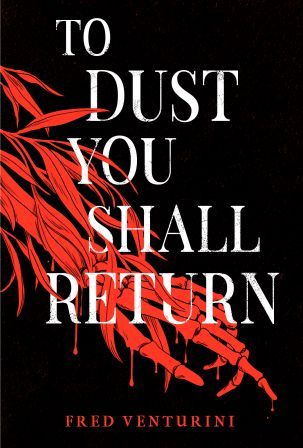
Welcome back! Today I’m excited to spotlight author Fred Venturini. Fred is the author of numerous books, including The Heart Does Not Grow Back, The Escape of Light, and his latest, To Dust You Shall Return.

Recently, Fred and I discussed his new book as well as his inspiration as an author.

When did you decide to become a writer, and who are some of your favorite authors?

I can’t remember making a conscious decision. I always wrote stories, and I’m not sure why. I remember playing an NES game, Dragon Warrior, and writing spin-off stories about the game on a legal pad.

My grandmother valued reading. We’d sit on her porch, and she would just read and read, I don’t know how she had the endurance to do it. Her rule was letting me read anything I wanted to, so I gravitated to the dark and weird stuff. I did my 4th-grade book report on CUJO.

So, it’s cliche, but I grew up with Stephen King, the man who launched a million novelists. I’m a Constant Reader. FIGHT CLUB blew me away, and I’ve been a raving Chuck Palahniuk fan ever since. I can’t read enough David Foster Wallace, especially his essays.

And there are just so many great authors right now, and I can’t read everything from everyone. Malerman, Tremblay, Stephen Graham Jones. Richard Thomas has a new collection I’m excited about. Gabino Iglesias talks the talk (his Twitter feed is a must for authors and readers alike), but man if he doesn’t turn a phrase with the best of them.

And you! Rust Maidens was legit.

Your new book, To Dust You Shall Return, is due out soon from Keylight Books. What can you share about the book? What was the inspiration for it, and how long did it take you to write it?

My wife writes in a journal. One night, she was jotting something down, looked at me, and said: “If I die, bury this with me. Don’t read it.”

Felt like an invitation to speculate, and eventually, the journal became a MacGuffin of sorts, and a way for a strong-willed female character to take control of tropes and cliches to her own ends.

I also wanted a way to toy with my favorite character archetype, the “reactivated badass” that has popped up in many different genres over the years like westerns (Unforgiven) and sci-fi (old Luke in The Last Jedi).

So, the book is most succinctly described the way Jed Ayres did and I’ve been ripping it off ever since: JOHN WICK MEETS THE WICKER MAN.

A revenge character past his prime shows up in a small town to investigate the death of his wife, and quickly learns this isn’t just any small town, it’s more like a Stephen King, Castle Rock small town ruled by cultists.

The heart of the story is the teen girl who grew up there, caught between two destructive forces, nurturing a dream to escape and lead a normal life.

If I may be dramatic and drop the tagline:

A man ruled by darkness. A town ruled by evil. Only one can survive.

What is it about the horror genre in particular that appeals to you?

I get asked this quite a bit, why horror appeals to me. Especially by my wife. I think I finally wrapped my head around an answer.

First, it’s fun. Horror movies are related to comedies: they’re audience films with a release of built tension. My most memorable moviegoing experiences were seeing films like SCREAM and the first chapter of IT with a date and a packed theater. Reading a Paul Tremblay book and then thinking of it when I have to cross the dark to get to the bathroom in the middle of the night? It’s just hard for any other genre to have a lasting effect on me like that.

Second, it’s healthy! Yes, healthy. King once said horror is a rehearsal for death. I think horror is a way to do “negative visualization” that the Stoics and Marcus Aurelius prescribed.

I think horror fans are a resilient bunch because when you’ve considered what it’s like to be stalked by a slasher, haunted by a ghost, or hunted by a serial killer, putting on a mask to go to Home Depot doesn’t seem so bad. Having a tough day at the office? Leatherface could be mounting you on a hook. Trouble in your relationship? Jack Torrence could be swinging his axe at you.

I’ll never forget being at the World Horror Convention as a panelist and getting to meet heavyweights like Joe Hill, Jack Ketchum, Peter Straub. Everyone was just so . . . nice? Polite, well-adjusted, generous, cool people.

At the artist level, writing horror is therapeutic, a release of negative emotions and tension. It also helps that it is the genre that can really get a reaction out of an audience. That’s why I’ve always compared horror to stand-up comedy: free therapy AND art that can be measured by audience reaction.

You’ve written both short and long fiction. Do you find that your approach varies depending on the length of the project?

I don’t prepare for short fiction writing. I just have a premise, and tackle it. A short story, you can rewrite it and open up new layers lots of times without taking up too much time. It’s like building a watch or crafting a joke.

A novel, I need to know where I’m headed. I don’t outline, but I need to know my characters, I need to know my big midpoint setpiece, I need a general ending in mind. A novel is like a 100,000 piece puzzle. First, you have to sort out all the pieces into little piles where you think they may fit. Then, start testing pieces. Oh, the feeling when they click!

If forced to choose, what is your favorite part of the writing process: writing dialogue, establishing setting, or crafting characters?

Dialogue, no question. I love writing cinematically. I love the first-person POV because it’s all dialogue, right? It’s all dialogue coming from a single character.

Dialogue can do the heavy lifting of crafting character. I like to think that what they DON’T say crafts the most character.

Dialogue can also establish a setting AND the character’s relationship to the setting in one go.

Dialogue is where I can slip humor into the darkest story.

Dialogue is also the one piece that skimmers don’t skip. Fast readers never skip over dialogue.

I just love dialogue. Most of my friends would say I like talking, but dialogue sounds more artistic.

What projects are you currently working on?

I have a backlog of ideas that I’m trying to execute as short stories. I haven’t written and submitted short fiction in a long time, and I think that would be a fun way to spend 2021.

As for a new book, I’m always working on my next long-form story, but in my head. I think walking and thinking is writing, and the time at the keyboard is just transcribing, sometimes.

Big thanks to Fred Venturini for being this week’s featured author. Find him online at Twitter and Facebook!

Happy reading!

Spring Inspiration: Submission Roundup for May 2021

Welcome back for May’s Submission Roundup! Plenty of excellent writing opportunities this month, so if you’ve got a story or poem seeking a home, perhaps one of these markets might be a great fit!

As always, a disclaimer: I’m not a representative for any of these markets; I’m merely spreading the word. Please direct your questions to their respective editors.

And with that, onward with this month’s Submission Roundup!

Submission Roundup

Mithila Review
Payment: $10/flat for poetry and fiction under 2,500 words; up to $50 for fiction between 4,000 to 8,000+ words
Length: Open to poetry, flash, and short fiction
Deadline: Ongoing
What They Want: Open to a wide range of fiction and poetry, including horror, science fiction, urban fantasy, and weird fiction.
Find the details here.

The Cemetery Gates Society
Payment: $50/flat
Length: 500 to 1,500 words
Deadline: May 7th, 2021
What They Want: Open to flash fiction inspired by true crime stories a la Unsolved Mysteries. This month’s flash fiction contest is judged by Sadie Hartmann.
Find the details here.

Gothic Horror Anthology 
Payment: .04/word
Length: 1,000 to 15,000 words
Deadline: May 15th, 2021
What They Want: Open to female-identifying authors, this anthology is seeking fresh takes on Gothic horror. Both fiction and poetry will be considered.
Find the details here.

Humans Are the Problem: A Monster’s Anthology
Payment: .06/word
Length: 1,000 to 5,000 words
Deadline: May 15th, 2021
What They Want: Open to stories about how monsters are adapting to 21st-century life while breathing new life into the monster trope and showing that humans are in fact the problem.
Find the details here.

Under Her Skin
Payment: $5/poem
Length: up to 50 lines
Deadline: May 30th, 2021
What They Want: Black Spot Books and their judges, Toni Miller and Lindy Ryan, are seeking body horror poetry for the inaugural Women in Horror Poetry Collection.
Find the details here.

Classic Monsters Unleashed
Payment: .08/word
Length: 1,000 to 5,000 words
Deadline: May 30th, 2021
What They Want: This anthology is seeking reinterpreted stories based on classic monsters, including stories told from the perspectives of secondary characters such as Van Helsing, Renfield, or the Bride of Frankenstein, among others.
Find the details here.

HWA Poetry Showcase
Payment: $5/flat
Length: up to 35 lines
Deadline: May 31st, 2021
What They Want: Open to HWA members only, the annual poetry showcase is seeking horror poetry of all subgenres. This year’s judges are Stephanie M. Wytovich, Sara Tantlinger, and Angela Yuriko Smith.
Find the details here.

Shadow Atlas: Dark Landscapes of the Americas
Payment: $250/flat for short fiction; $25/flat for poetry
Length: 2,500 to 3,000 words for fiction; up to 35 lines for poetry
Deadline: Open from June 21st to June 27th, 2021
What They Want: The editors are seeking dark tales set in South America that explore folklore linked to a particular location.
Find the details here.

Happy submitting!

Fiction for Springtime: Submission Roundup for April 2021

Welcome back for this month’s Submission Roundup! Lots of great opportunities, so if you’ve got a story searching for a home, one of these markets might be the perfect fit!

As always, a disclaimer: I’m not a representative for any of these publications; I’m merely spreading the word! Please direct your questions to their respective editors. And with that, onward with this month’s Submission Roundup!

Submission RoundupMithila Review
Payment: $10/flat for poetry and fiction under 2,500 words; up to $50 for fiction between 4,000 to 8,000+ words
Length: Open to poetry, flash, and short fiction
Deadline: Ongoing
What They Want: Open to a wide range of fiction and poetry, including horror, science fiction, urban fantasy, and weird fiction.
Find the details here.

Blood on Your Hands
Payment: up to $75
Length: 1,000 to 8,000 words
Deadline: April 15th, 2021
What They Want: Lethe Press is seeking previously published homoerotic vampire stories for their forthcoming anthology.
Find the details here.

Grey Matter Press
Payment: Advance and royalties on case-by-case basis
Length: Novella of 20,000 to 40,000 words; Novels of 60,000 to 100,000 words
Deadline: May 1st, 2021
What They Want: Grey Matter Press is currently seeking novellas and novels in the crime, thriller, and grimdark genres.
Find the details here.

Classic Monsters Unleashed
Payment: .08/word
Length: 1,000 to 5,000 words
Deadline: May 30th, 2021
What They Want: This anthology is seeking reinterpreted stories based on classic monsters, including stories told from the perspectives of secondary characters such as Van Helsing, Renfield, or the Bride of Frankenstein, among others.
Find the details here.

Under Her Skin
Payment: $5/poem
Length: up to 50 lines
Deadline: May 30th, 2021
What They Want: Black Spot Books and their judges, Toni Miller and Lindy Ryan, are seeking body horror poetry for the inaugural Women in Horror Poetry Collection.
Find the details here.

HWA Poetry Showcase
Payment: $5/flat
Length: up to 35 lines
Deadline: May 31st, 2021
What They Want: Open to HWA members only, the annual poetry showcase is seeking horror poetry of all subgenres. This year’s judges are Stephanie M. Wytovich, Sara Tantlinger, and Angela Yuriko Smith.
Find the details here.

Happy submitting!

Unfortunate Horror: Interview with Leo X. Robertson

Welcome back for this week’s author interview! Today, I’m excited to feature Leo X. Robertson. Leo is the author of the forthcoming Unfortunates and The Glow as well as numerous short stories.

Recently, Leo and I discussed his forthcoming books, his inspiration as an author, and his favorite part of the writing process.

A couple icebreakers to start: when did you decide to become a writer, and who are some of your favorite authors?

I started writing at 22 because I’d just finished my engineering bachelor degree and I finally had free time to learn about stuff other than humidity calculations and serpentine disinfection tanks. I started writing well by like 27, though this is probably disputable, haha!

Haruki Murakami got me into reading for pleasure at first. These days, Lionel Shriver, Melissa Broder and Curtis Sittenfeld are authors whose every new book I blindly preorder. I just can’t get enough disillusionment!

Your new collection, Unfortunates, is due out later this year from Unnerving. What can you share about the book? How many stories are included in the table of contents, and how did you select which stories to pick? 

It’s a collection of 8 horror stories and one novella, taken from my last five years of writing. Inside you’ll find a haunted performance artist, a few serial killers and at least thirty child ghosts. Several stories are previously published, but there’s as much unpublished material too. “Unfortunates” is the name of the title novella, but of course could apply to anyone in a horror story!

It’s a mix of my favourite stories and ones that found prestigious homes. I could’ve made an entire other book out of material I didn’t include. Though I wouldn’t make that book, because it wouldn’t be any good.

That gave me some confidence in the quality of this collection. For like a week.

Your next standalone book, The Glow, is due out in the fall. What was the inspiration behind it?

It’s a sci-fi novella based on two random story ideas I’d written down. One was a title, “The Cult of Plastic Island”—the other would spoil the ending!

To me, the story is about my own sister. Just like Lily, the protagonist of this book, I would easily risk my life attempting to retrieve my sister from a cult that lived on an island of plastic garbage. I hope that love translates to the reader—not like I would consciously know how to make that happen, but somehow through fiction it just does, right?

What is it about the horror genre in particular that appeals to you? Do you remember the first horror story you ever read or the first horror movie you ever saw?

As is true of all horror writers I’m sure, I use the genre to explore the things that scare me. And I find life absolutely terrifying for all sorts of reasons!

In my horror stories, there’s usually an aggressive tone, lots of hostile forces and manipulative people. It reflects my experience of life from horror’s perspective: it’s too much, too fast, and very loud.

I love connecting with readers because I know they can relate. I’d guess that’s why the horror community is the kindest and most encouraging.

My first horror memory is when my brother and sister rented “The Witches.” I was too young to see it, so I went outside with my dad and shone a torch through the window at them to scare them. I remember this because the mere suggestion that a scary movie had played on our TV scared me at that age. And rightly so! “The Witches” is messed up!

Later, I saw that “Tooms” episode of the X-Files and kept expecting to see glowing yellow eyes in every shadow for like a year!

You’ve written both short and long fiction. Do you find that your approach varies depending on the length of the project? Do you prefer writing short fiction or longer works?

Good question! My method is more or less the same—chaos, confusion, doubt etc—but if I have a longer thing with multiple character perspectives, after a general plotting, I will write it one strand at a time. I’ve found that it’s tougher to write a story like that from beginning to end in order. Switching character perspectives is like restarting your imagination over and over.

I like the satisfaction of creating something long, but I also enjoy the confidence of knowing every word has a purpose that I can only really get from short fiction. Unfortunates is about as confident as I can get that a book of mine is worth reading for that very reason.

If forced to choose, what is your favorite part of the writing process: crafting characters, plotting the story, or establishing setting?

I’d never thought of it before, but, characters!

I give all my characters some element of myself. They get into all sorts of messes and I think, “Oh it’s not a big deal, you can move past this”—when I almost never so readily tell myself the same thing. I like devising their internal monologues too, which usually consist of endless unanswerable questions—then I think, “They can’t answer that, no one can! So why do I always expect myself to know the answer?” I end up wanting to be more forgiving towards myself and others. I hope my fiction serves that purpose for others—not that I have any idea what it does.

What projects are you currently working on?

I just finished my second feature film, “Burnt Portraits”! It’s a horror film starring myself and actor Sam Crichton. Sam’s mum mentioned that the basement of her art studio looked like a great set for a horror film, so I wrote one and we went and made it there! It is such a good setting and I look forward to people assuming that we procured all the stuff there for our film, but I just wrote a film around what was in there. So many free props!!

I was thinking recently how literally anyone else, if offered the prospect of making a film with their best friend, would’ve created something fun and silly. But no, I made an extremely ambitious, very intense and harrowing film that questions why anyone bothers doing anything. Because that’s what I do. My only regret in finishing it is that I feel like I could’ve enjoyed the process more. That’s what I’ll do next time.

I’ll get back to rewriting a novel I’ve been working on for ages, hopefully finishing in time to make another film with Sam in the summer, time and COVID allowing. (Sam if you’re reading this, it will be a nicer script and easier, I promise!)

Where can we find you online?

I like getting added on Facebook! That’s usually how I find out what writers are up to and message them about appearing on my podcast:

https://www.facebook.com/leo.x.robertson

You can enjoy my Drag Race meme retweets on Twitter:

https://twitter.com/Leoxwrite

My blog is here:

Leoxrobertson.wordpress.com

I also encourage just about anyone to consider joining the Stavanger Filmmakers Club. I started it here in Norway so I could make stuff with people in person, but I frequently request international voiceover work, and you can appear as a character on a Skype/Zoom call from anywhere in the world, right?

https://stavangerfilmmakers.com/

I found my people! Everyone is so nice. A guy even made us this website just because he enjoys doing that?!

Big thanks to Leo X. Robertson for being this week’s featured author!

Happy reading!