Category Archives: Interviews

New Titles and Persistent Themes: Part One of Our October Author Interview Series

Welcome back, and welcome to part one of my October author roundtable series! I’m thrilled to be featuring eight fabulous authors, all of whom have brand-new books out this year that you should be reading!

So without any further delay, onward with this roundtable discussion!

Let’s start with the basics. Tell me about your latest release. What was the process like putting this book together, and what, if any, challenges did you run into along the way?

CALVIN DEMMER: My latest release is a flash fiction collection, The Sea Was a Fair Master, which contains twenty-three dark tales, ranging from science fiction, horror, fantasy, crime, to the weird. The process was pretty smooth. I’d say the hardest part for me was deciding on the order of the stories once I had picked which to collect. I wanted a certain flow to the book, and that took a little time to get right.

DOUNGJAI GAM: glass slipper dreams, shattered is my first collection of flash fiction and poetry. it was released by Apokrupha this past August. it took me about three years to put this collection together from when Jacob Haddon first approached me about it at AnthoCon 2015. there’s been plenty of challenges along the way, but thankfully none of those issues were in a professional sense…I just had a lot of personal things going on in that period and sometimes it got too tough to balance. Jacob is absolutely amazing to work with, and the key statement he made to me more than once was that he didn’t want my first book to be something I look back on in ten years and regret ever doing, and I have no regrets about it.
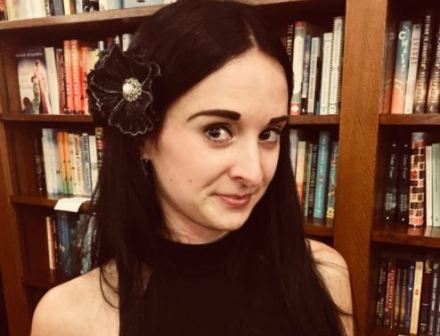
Christa CarmenCHRISTA CARMEN: The stories in Something Borrowed, Something Blood-Soaked were published in places like Fireside Fiction, DarkFuse Magazine (which unfortunately exists no more), Third Flatiron’s Strange Beasties anthology, Unnerving Magazine, Tales to Terrify, and Year’s Best Hardcore Horror Volume 2, to name a few. My publisher asked upfront that a certain percentage of the stories in collection submissions be reprints, so once I’d filled that quota, I added two stories that had been published by markets no longer in circulation, changed one story that had appeared on a podcast to the novella version I’d been hoping for a chance to unveil, and chose three brand new stories to tie everything together. I think readers can appreciate a collection that includes reprints, especially from magazines and anthologies they may have read previously, and hopefully enjoyed, as well as a handful of new tales that allows them to experience an author’s latest work.

If there were any challenges I ran into along the way, it was what order to place the stories in. The stories in Something Borrowed contain ghosts, apocalypse-inciting rains, witches, depraved serial killers, more ghosts, evil shadow creatures, zombies, haunted houses, long-preserved corpses, newly-opened mausoleums, sinister trains, and out-of-place staircases. My publisher felt that “Thirsty Creatures” had the best first line to open the book with (“The trees were fire and the sky was panicked birds and the horse was made of bone.”), but aside from that, ordering the collection was a study in balancing the types of horror stories (a ghost story on the heels of another ghost story, or my take on the babysitter urban legend sandwiched between two ghost stories?) with the themes represented within.

ANYA MARTIN: Sleeping with the Monster is my debut collection, and I’m grateful to Steve Berman of Lethe Press for his longstanding interest in and belief in my fiction. I was hesitant to put out a collection until I had a solid slate of stories with a certain degree of thematic unity. And conventional wisdom seems to be not to rush. These aren’t all my published stories but I feel like they represent a “generation” of my work.

I knew which stories I wanted to include from the start, so my biggest challenge was writing “Jehessimin,” the original novella that is also included. I developed carpal tunnel syndrome in the past year and that and other health issues and responsibilities contributed to it taking months longer than I expected. Fortunately Steve was a patient and understanding publisher. On the other hand, the additional time allowed the story to gel more organically and take some unexpected twists which I think/hope strengthened it. Also recently on the final stretch before the book’s release, my mother had a medical emergency so I haven’t been able to promote it as extensively as I meant to and had to cancel my con appearance at the HP Lovecraft Film Festival. I did get to do Daniel Braum’s Night Time Logic Reading Series with the fantastic Robert Levy at KGB Bar in Manhattan on Tuesday Sept. 25 and hope to attend World Fantasy Con 2018 Nov. 1-4 in Baltimore.

MICHAEL GRIFFIN: Assembling a second collection is very different. Putting together your first collection, you have to choose from everything you’ve ever written, and for most writers that means a lot more stories to select from, and most of the earliest ones will be left out. It’s a matter of figuring out where to start, and which of the less-mature work actually does fit with the more recent stories.

For the second book, it’s more about picking up where you left off with the first. Presumably by that time, your work has become more coherent and consistent, so while you have a smaller number of stories to choose from, there are probably not as many that aren’t up to the quality standard of the rest, or which should be excluded for not fitting with the feel of the others.

One thing that made the assembly of The Human Alchemy more complicated was the connection between several stories, with characters and settings and organizations cross-threaded between them, which meant I had to consider how those might work together to best advantage.

Another consideration is that readers (and consequently, publishers) want to see at least one unpublished “exclusive” story in a collection. While when assembling my first, I had quite a few unpublished stories available to choose from, but because for the past several years I’ve been publishing stories as fast as I could write them, this time I had to create something new. I reached a stage where the collection was ready to go, except first I had to write something new and hold it aside for the book. I could’ve done more than one new, exclusive story, but the book was already pretty long, so one was enough.
Lee FormanLEE FORMAN: My novella, Zero Perspective, published recently. Putting this book together was actually a surprise. My original intention for the story was just that—a short story. I didn’t set out to make it a book at first, but the story kept growing and ideas continued worming their way onto the page. As I grew an affinity for the characters I started experimenting with them to see what they would do. I didn’t know where the story would go or how it would end, but once it reached a certain length the idea of making it a book came to me. I’d been working on another project intended to be a novel, but wasn’t happy with how it came out and decided to re-write the entire thing. Since Zero Perspective was going so smoothly, I decided to focus my efforts on that and publish it first. One of the biggest challenges was trying to meet a set deadline. There was an opportunity to promote the book at a local event and I didn’t want to miss it. I dealt with lost packages three times while proofing the book and creating promotional materials. I met the deadline within only a few days.

LORI TITUS: This is a book that I’ve been waiting to write for a long time. Back when I first started writing The Marradith Ryder Series, I had an idea for another set of characters, existing in the same world. I wanted the characters to be older, harder, and a lot messier than the teenage heroine and her crew in Hunting in Closed Spaces.

In Soul Bonded, the main character is Natasha Taylor. She owns a small business, cares for an ailing mother, and between the two doesn’t have much time for a life of her own. She’s in a financial bind. There’s only two choices; take out a loan on her family home to save her business and possibly risk losing both, or close the store. Worse than that, her mother’s early onset Alzheimer’s has gotten to the point she may soon need to be put into a nursing home.

Natasha is a witch, and her family has had dealings with the supernatural. Particularly her deceased father, Ezekiel. He was a former priest who left the church but never stopped performing exorcisms.

Enter Henry Pollard, an enigmatic businessman with a proposition: give up part of her soul for a number of years, and work for a firm that deals in demon contracts. In return, her mother will be returned to health and her financial problems solved.

This novel is the beginning of a possible series. It’s really about the line between what we say we’ll do and how far we can bend the rules of our personal ethics. Natasha has to tread and sometimes cross the line of right and wrong to get what she needs and wants.

The biggest challenge to writing this book was scheduling. I had several other projects that were slated for completion first and a few other projects in progress when I started it. I’m happy that I was able to pull it off!
Gemma FilesGEMMA FILES: Well. I’m supposed to be writing a new novel—Nightcrawling, for ChiZine Publications—and I am, though it’s taking longer than I expected. Like Experimental Film, it draws on aspects of my own history, probably plumbing a much more traumatic time period, yet I’d somehow managed to convince myself it would be easier this time around! Anyhow, it’s not, so I’m taking a slight hiatus from banging my head against it to write a book of essays about horror culture instead, for CZP’s new nonfiction line (Dark Comforts, which starts by taking the usual non-horror fan question—ie, “Isn’t real life horrible enough for you?”—and answering it: “Yes, which is why I decompress by enjoying horror I can actually control.”)

That said, my “new book” right now would probably be Drawn Up From Deep Places, from Trepidatio, which is really a collection of older short fiction (much like the collection I have coming out at some point later on from Cemetery Dance, called Dark Is Better). It’s a sort of companion to my first Trepidatio collection, Spectral Evidence, which was published earlier this year. In both cases, the most challenging thing about putting the books together was going through all the stuff I’ve written since my first two collections (Kissing Carrion and The Worm in Every Heart, released almost twenty years ago) and seeing how it might go together. Luckily, there are stories in both books which share the same characters and make a sort of story cycle of their own if read in order.

In Spectral Evidence, those stories involve the Cornish Sisters and A-Cat Chatwin, two monster-killers (one half-monster) and a demon-descended holler witch who meet in jail, help each other escape then keep running into each other, but there’s only three of them and the rest of the stories—though equally chick-heavy—are about very different sets of oddballs operating within a dark urban paranormal contemporary universe like the one from my book We Will All Go Down Together. In Drawn Up From Deep Places, meanwhile, things are A) a bit more historical and B) a bit more dude-centric. The two story-cycles threaded throughout it either play around in the same Weird Western world from my Hexslinger series or involve two magician-pirates and a witch directly related to WWAGDT‘s Five-Family Coven. And…that’s the pitch, basically.

There’s a new collection of my poetry coming out soon too (Invocabulary, from Aqueduct Press), full of witchcraft, gods and monsters and monster-gods, because that is how I roll. So in other words, I’m reaping the rewards of my success, and it frankly rocks. My main challenge is thus the extremely first world problem of trying to meet too many deadlines because “too many” people I respect and want to work with want stuff from me. That and the eternal struggle against my own body (insomnia, peri-menopause, anxiety), my son’s recent transfer to high school, plus the general current flaming trash fire of global reality. Etc.

Most authors have certain ideas or concepts they return to over and over. What themes interest you most as a writer, and how do those themes play into your current book?
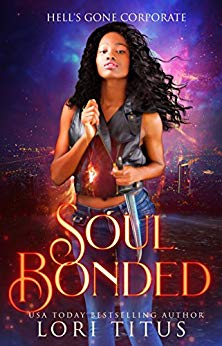
Soul BondedLORI TITUS: Family and loyalty are big themes in my writing and I return to both of those here. The way we act in the closest of our relationships really informs how we live our lives. I love playing with the consequences involved when love or familial ties are at stake.

LEE FORMAN: I tend to write a lot of creature stories and dark, emotive fiction. I find them thoroughly enjoyable to create. I grew up loving horror films with monsters and all things inhuman. They’ve been my favorite aspect of horror film and literature as long as I can remember. These themes worked great for Zero Perspective, as they allowed me to incorporate both concepts into the horror / sci-fi combination.

GEMMA FILES: “Monster pride” is a concept I come back to a lot: the idea that maybe the ways in which we’re broken and odd and freakish—the qualities that make us pariahs or monsters according to “normal” standards—are the very things which prepare us to not break when true monstrosity comes on the scene. I’m a big fan of characters like Mike Mignola’s Hellboy, for example, who knows he’s supposed to be the Great Beast of the Apocalypse but nevertheless says “screw THAT shit” and fights the same cosmic horrors he’s kin to instead, partially out of sheer perversity. My favourite gods have always been Loki and all the other tricksters, shape-shifters and thieves who can straddle several liminal spaces at once, powered as much by black humour as by any sort of thirst for revenge or victory. And while I’m capable of appreciating how difficult choosing to be good really is, it’s the scoundrels, villains and antiheroes who remain my very favourites. I’m interested in people who pay prices, who go through hell and come out changed (maybe for the better, maybe not), who make their own wounds into weapons.

Part of this probably comes out of having spent a good portion of my life thinking I was just inherently “bad” somehow, unfixable, weird, unable to bring myself up to code; giving birth to a boy with special needs sort of helped in that regard, especially once I realized that if people had been looking for autism in girls at all when I was the age he is now, I might have gotten an Asperger’s Syndrome diagnosis. But then again, part of this probably also just comes from being female, geeky, angry and neuroatypical. Of feeling like everything I encountered socially was a joke or an attack, a total chore, and just not realizing the reason it did was because I was probably channeling my social intelligence through a part of my brain usually meant for doing math problems.

So yeah, I have a lot of investment in the idea that people who think they aren’t good for much may eventually discover they’re meant for something special, or at least for something particular. Does it mean that everything bad or wrong they ever did is forgiven? Not necessarily. Does it mean they’re good and perfect now they’ve discovered their purpose in life? Depends on the purpose, I guess. But I do like finding ways for my characters to love at least other people, even if they can never entirely love themselves. And become proud of whatever monster they happen to be, too, if only because that IS what they are, after all. No other way around it.

DOUNGJAI GAM: for me, the themes I keep coming back to are fear, love, sorrow, revenge, being haunted, and their motivating factors. as I alluded to in the previous question, in the time period I was writing the pieces for my collection, there was a lot going on: in a fourteen month span, there were at least seven deaths that hit me hard (the worst one being my brother’s sudden death); I went through a separation and eventual divorce and then unexpectedly fell in love; there were a few hard lessons learned. I joked with my editor about having the book subtitled, “stories of love and death,” because that’s like 90% of the collection.
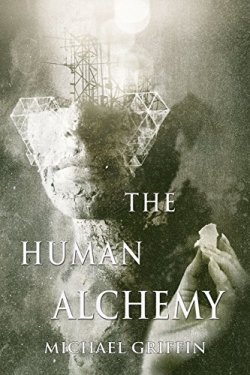
The Human AlchemyMICHAEL GRIFFIN: For me the themes I’ve returned to repeatedly have come about without my having intentionally tried to make them a particular focus. I’ve just kept circling around and around certain elements due to my own obsession or compulsion. People have pointed out that most of my stories have a major focus on relationships, often in a state of breakdown or disconnection, as well as feelings like frustrated desire. Many of my characters are creative people. Also certain geographic places have recurred in my work, especially the Portland area, the Oregon coast and Mt. Hood.

One aspect of place that really interests me is following a character who departs from their usual, comfortable place, their home, and goes to some new, different place, which shifts their equilibrium and makes every moment a new discovery, sometimes full of wonder, and other times bringing uncertainty or fear.

I only recently came to understand that I often follow this pattern where a main character leaves a place they’re familiar with and goes to a new, special place. In some cases, as in “The Smoke Lodge,” the place isn’t unfamiliar to the main character but it’s unfamiliar to the reader, and there’s one or more other characters who make the journey of discovery at the same time.

ANYA MARTIN: Definitely, yes, though those themes have evolved over my writing life. For this first collection, all the stories deal with relationships to some extent or another. Not all the stories have explicit “monsters,” vis-à-vis “Grass,” but I do find that “monstrous” behavior by humans and its impact on others can sometimes be explored more effectively through a lens other than realism. Otherwise, I can’t say I did this on purpose but almost all my protagonists are women, except a male dog and a gargoyle, and even in those two stories, there’s a central female character. I am sure I will write a male protagonist when that makes sense for a story, but there has been so much male point-of-view fiction that I don’t see any rush just to prove anything. Finally if the collection has a “theme song,” it would be “Illusions” by Frederick Hollander, sung by Marlene Dietrich in the film A Foreign Affair (1948). I wanted to quote its lyrics at the front of the book but it’s always complicated and can be expensive to get permissions. It’s easy to find on YouTube if you want to give it a listen.

CALVIN DEMMER: There are definitely certain themes I return to, but I also try and push myself to explore new things. At the moment, I do seem to focus on the evil humanity can do. Even when my stories have monsters or other dark cosmic happenings, I do tend to have characters that walk a fine line between good and evil. I’ve often explored how love can create some extreme scenarios, the loss of innocence, or how continuous struggling can lead people to do things that don’t seem to fit their character. The sea also played quite a role in my latest book, mainly because I think it has a certain mystique that is interesting to play with.

CHRISTA CARMEN: The themes that interest me to the point where I return to them over and over are society’s treatment of those suffering from substance abuse and mental health issues, the way individuals themselves react to struggling with these issues, persistent misogyny in the world today, the concept of redemption, or at least, of second chances, how humans deal with death and grief, and why men just don’t seem capable of trusting their girlfriends, wives, sisters, mothers, and mistresses, etcetera, when these women say that something is not right, or when they beg not to go into that isolated cabin in the woods. These themes play into my collection in that I try to approach them from disparate angles. The characters suffering from addiction in Something Borrowed, Something Blood-Soaked are numerous and varied. They are regretful ghosts, broken mothers, desperate young women, and reanimated Deadites.

It is important for me to tell the stories of characters who are struggling with or have struggled with addiction because I have been privy to so many of these stories in the real world. The people who want to vilify those suffering from addiction project the same story onto everyone: they are bad, lazy, selfish people who knew the risks when they first used drugs, did so anyway, and so deserve their lot in life. Sadly, many individuals tasked with helping those struggling with substance abuse also assign the same stories to the sufferers. But everyone’s path into addiction is different, as is their path out. What that means is that their stories are profoundly unique, and I’ve yet to hear a story that wasn’t worth sharing. This insight has led me to want to explore themes of addiction and recovery within my fiction, believing as I do, that those characters will have rich, interesting, albeit sometimes tragic lives to lead.

I’ve also found the idea of second chances worth exploring in my fiction because the concept of second chances in the real world is such a tricky one. Our society is based on a very unjust, nonsensical system of who is deserving of a second chance versus who is not. Ultimately, the reward of pursuing any theme that really speaks to you as a writer is in the journey itself, the exploration that takes place over the course of writing a story. I’m certain I will tackle the themes I’ve discussed here in other stories in the future, and who’s to say if that path will look anything like the one that led me to the pieces in Something Borrowed, Something Blood-Soaked?

So that’s part one in our interview series! Join us again next week as we discuss book covers and the future of horror and weird fiction!

Happy reading!
October Author Roundtable Series Coming Soon!

Happy October! For this wonderful month, wow, oh wow, do I have a treat for you! For the rest of October, I’ll be featuring a roundtable interview of eight fabulous authors, all of whom have new releases out this year!

Ever since I started doing the author roundtable series for Women in Horror Month, I’ve become very fond of the idea of the group interview. It’s a perfect way to highlight multiple authors at once while also keeping this blog lively with new content.  (And guess what? I’ll be doing the Women in Horror roundtable again in February, so if you like this format, you’ll have lots more where this came from!)

So without further adieu, here are the eight amazing authors who will be part of this month’s roundtable series!

Gemma FilesFormerly a film critic, journalist, screenwriter and teacher, Gemma Files has been an award-winning horror author since 1999. She has published two collections of short work (Kissing Carrion and The Worm in Every Heart), two chap-books of speculative poetry (Bent Under Night and Dust Radio), a Weird Western trilogy (the Hexslinger series—A Book of Tongues, A Rope of Thorns and A Tree of Bones), a story-cycle (We Will All Go Down Together: Stories of the Five-Family Coven) and a stand-alone novel (Experimental Film, which won the 2016 Shirley Jackson Award for Best Novel and the 2016 Sunburst award for Best Adult Novel). Most are available from ChiZine Publications. She has two new story collections from Trepidatio (Spectral Evidence and Drawn Up From Deep Places), one upcoming from Cemetery Dance (Dark Is Better), and a new poetry collection from Aqueduct Press (Invocabulary). Find her online at her blog.

Lori TitusLori Titus is a pet lover and cynic who is simultaneously a hopeless romantic. She lives in California and enjoys crafting dark little novels and stories that (hopefully) surprise and tantalize. In between writing sprints and coffee breaks you can find her on Twitter or Instagram as Loribeth215. Check out her latest on Amazon: https://www.amazon.com/Lori-Titus/e/B00450JMMI/.

Christa CarmenChrista Carmen’s work has been featured in myriad anthologies, ezines, and podcasts, including Unnerving Magazine, Fireside Fiction, Year’s Best Hardcore Horror Volume 2,  Outpost 28 Issues 2 & 3, Tales to Terrify, Lycan Valley Press Publications’ Dark Voices, Third Flatiron’s Strange Beasties, and Alban Lake’s Only the Lonely. Her debut collection, Something Borrowed, Something Blood-Soaked, is available now from Unnerving. Find her online at her website.

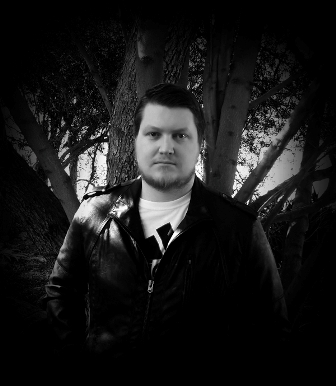
Calvin DemmerCalvin Demmer is a South African dark fiction author. His debut collection, The Sea Was a Fair Master, was released in June 2018. When not writing, he is intrigued by that which goes bump in the night and the sciences of our universe. You can find him online at www.calvindemmer.com or follow him on Twitter @CalvinDemmer.

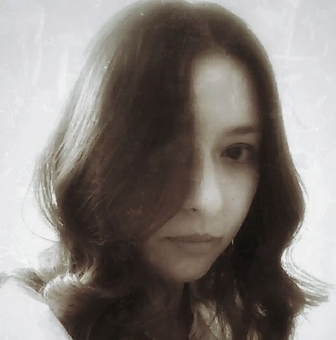
doungjai gamdoungjai gam is the author of  glass slipper dreams, shattered, a collection of flash fiction and poetry. her short fiction and poetry has appeared in LampLight, Distant Dying Ember, Now I Lay Me Down To Sleep, Wicked Haunted, Tough, and Lost Highways. born in Thailand, she currently resides in Connecticut with author Ed Kurtz and their cat Oona. Find her online at her author site.

Lee FormanLee Forman is a writer and editor, and journalist from the Hudson Valley, NY. His fascination with the macabre began in childhood, watching old movies and reading everything he could get his hands on. He’s a third-generation horror fanatic, starting with his grandfather who was a fan of the classic Hollywood Monsters. His work has been published in numerous magazines, anthologies, websites, and podcasts. He’s an editor for Sirens Call Publications and writes, edits, and is an administrator for the horror fiction website PenoftheDamned.com. He’s a regular contributor of non-fiction articles for Living Paranormal Magazine, and he often writes for two podcasts: The Lift and The Wicked Library. His debut novella, Zero Perspective is available from Amazon and other retailers, as well as a collection of short fiction titled Fragments of a Damned Mind. When he’s not crafting horrifying creatures and tales of terror, he spends his time playing guitar and writing music. For more information and a list of publications go to www.leeformanauthor.com

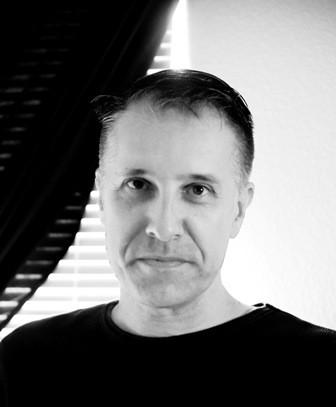
Michael GriffinMichael Griffin’s books include a novel, Hieroglyphs of Blood and Bone (Journalstone, 2017), short fiction collections The Lure of Devouring Light (Word Horde, 2016) and The Human Alchemy (Word Horde, 2018). His stories have appeared in magazines like Apex and Black Static, and the anthologies Looming Low, Eternal Frankenstein, The Children of Old Leech and the Shirley Jackson Award winner The Grimscribe’s Puppets. Find him online at his author site.

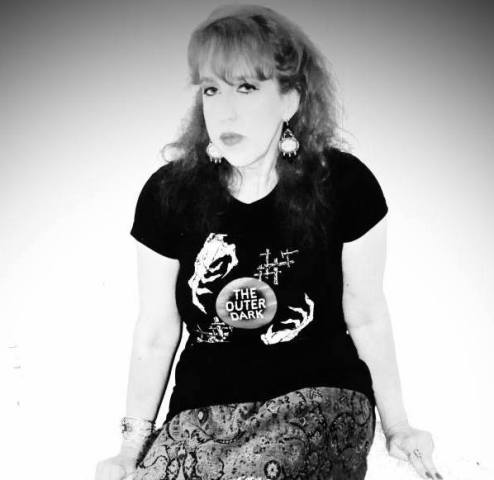
Anya MartinAnya Martin’s debut collection, Sleeping with the Monster, is coming autumn 2018 from Lethe Press. Her novella Grass, illustrated by Jeanne D’Angelo, was a Dim Shores limited edition chapbook, and her play Passage to the Dreamtime, illustrated by Kim Bo Jung, was published by Dunhams Manor Press. Her fiction has appeared in such anthologies and magazines as Tales from a Talking Board, Looming Low, Eternal Frankenstein, Cthulhu Fhtagn!, Giallo Fantastique, Cassilda’s Song, Xnoybis #2, Resonator: New Lovecraftian Tales From Beyond, Borderlands 6, Mantid and Womanthology: Heroic. She co-produces, with host Scott Nicolay, The Outer Dark podcast, featuring interviews with contemporary Weird fiction authors, on This Is Horror. Find her at www.anyamartin.com and on Twitter at @anya99.

So those are our incredible authors for this month! Check in again next week when the interview series officially commences!

Happy reading!

Sheet Music and Hysteria: Interview with Stephanie M. Wytovich

Welcome back! Today I’m super excited to spotlight author Stephanie M. Wytovich. Stephanie is the Bram Stoker Award-winning author of numerous poetry collections, including Sheet Music to My Acoustic Nightmare and Brothel. Her debut novel, The Eighth, was released in 2016 from Dark Regions Press, and her fiction has appeared in Gutted: Beautiful Horror Stories, Shadows Over Main Street, and The Best Horror of the Year, Volume 8, among other publications.

Recently, Stephanie and I discussed her evolution as a poet and fiction writer along with how witchcraft impacts her writing and what she has in store for the future.

A couple icebreakers to start: when did you first decide to become a writer, and who are some of your favorite authors?

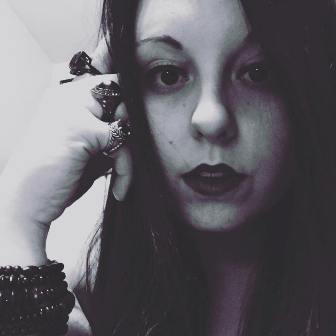
Stephanie M. WytovichI can’t remember a time when I didn’t associate myself with writing, but I think the first time I declared it to the world was in third grade during career day. Some of my favorite writers are: Caroline Kepnes, Josh Malerman, Paul Tremblay, Sylvia Plath, Shirley Jackson, Clive Barker, Neil Gaiman, Seanan McGuire, and Grady Hendrix, to name a few.

Your most recent poetry collection, Sheet Music to My Acoustic Nightmare, came out last year through Raw Dog Screaming Press. As you look back over the last five years, in which you’ve been published widely and become an award-winning author, do you feel like your style or your process has changed since publishing your first book, Hysteria: A Collection of Madness?

Oh, yes…drastically. While I still tend to use body horror, sex, and violence in my work, my voice has matured over the years and my structure, especially with poetry, has focused more on line and syntax rather than emotion and shock value as it did early on. I’ve also started to put more and more of myself in my work over the years, which was a goal of mine when I first decided that I wanted to pursue writing professionally.

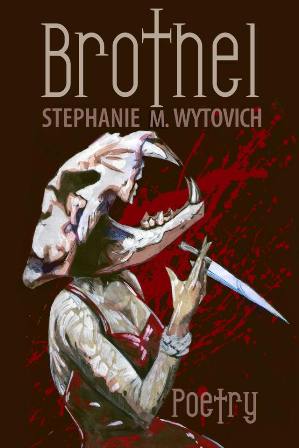
BrothelIn addition to your poetry, you’ve also written short fiction and a novel. How, if at all, does your approach to writing differ based on the medium and the length of the work?

I write poetry a lot faster than prose because in some ways, it feels more natural to me. Because of that, when I sit down to write short fiction, or a novel, I actually write each scene as a poem first to 1) keep me motivated and 2) to act as a sort of outline for the chapter. This keeps me organized and it also helps ground me in the story because if I think of it as this big, 300 + page story, I get overwhelmed and then start doubting my ability to finish the project. Poetry is usually my solution to most problems in life.

You recently had a short story appear in the Lana Del Rey and Sylvia Plath themed anthology, Tragedy Queens. How have Lana’s music and/or Sylvia’s poetry affected your own work?

It hasn’t been until recently (within the past three years or so) that I got into Lana Del Rey’s music, but Sylvia Plath and I go way, way back. I started reading her poetry in high school, and then I read The Bell Jar in undergrad, and now every so often, I’ll flip through some of her journals. What I love about both of these women is that they aren’t afraid of their darkness, and rather than run from it, they embrace it, channel it, and use it to their advantage. Plath showed me how to use myself as the subject for my work, how to look inside my memories and my pain and write poems about the human condition. Lana Del Rey’s music, on the other hand, helps me get in touch with the more animalistic sides of my personality, the parts that yearn and ache for something or someone to bear witness to the burning, the rebirth.

When I wrote my story for Tragedy Queens, “Because of Their Different Deaths,” I used themes of sisterhood, the occult, rebirth, and pain, all of which Lana Del Rey and Sylvia Plath write/wrote about.

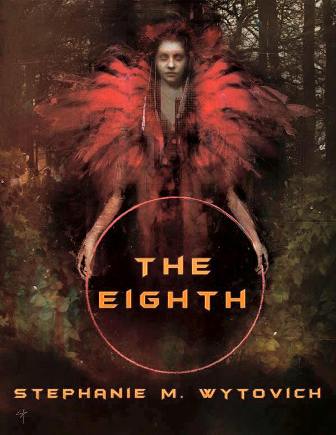
The EighthYou’re a practicing witch, and you often share tips and pictures of your projects and spells on social media and at your blog. How does your practice as a witch affect your fiction, and vice versa?

I’ve always viewed writing as prayer, even before I recognized or acknowledged that I did. For instance, I’ve been building altars since middle school, but they weren’t the stock photo image that probably comes to mind when you hear the word “altar.” For me, it was always my writing space. I would build it up to my mood and what was inspiring me, add rocks and crystals, leaves, pictures, and charms, and then when I felt that I needed to be recharged, I’d switch it up.

As I got older, I started to realize that my writing space (which now, is an entire room), is where I go to meditate, pray, create, and relax. I’m surrounded by flowers and candles, crystals and all my favorite stories, and this helps me get to a state where I feel comfortable and honest in my vulnerability. For me, getting in this mindset helps my writing to become raw and visceral while simultaneously allowing me to purge mental negativity and darkness. It’s a win-win for me and my fiction.

As though you’re not busy enough, you’re also a college professor. Can you share with us a few of your favorite stories you’ve assigned for your classes this semester? How has your reading list for students evolved over time?

This semester, I’m particularly excited to teach the gothic works of Bram Stoker (“Dracula’s Guest), John Polidori (“The Vampyre”) and Sheridan Le Fanu (Carmilla). Over the years, I’ve made it a personal goal to teach classic literature along with speculative fiction, so students can help to bridge the gap that seems to be ever-wedged between the two. For example, last week I taught D. H. Lawrence’s “The Rocking-Horse Winner” and had students compare and contrast it to “The Oval Lady” by Leonora Carrington. It was fun to watch them map out how two seemingly different stories essentially sent the same message in the end.

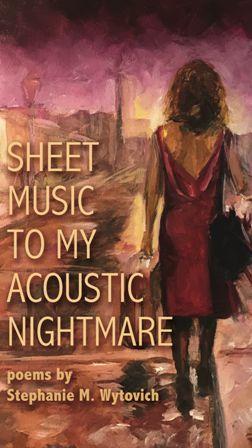
Sheet Music to My Acoustic NightmareOut of your published work, do you have a personal favorite?

It’s actually really hard for me to pick a favorite, because like most writers, I’m sure, each book was its own catharsis, its own journey. Hysteria was a stand out because I spent months writing in abandoned asylums and prisons, chasing down the trauma and pain that still lined its walls. Brothel was the book I always wanted to write, and the fact that it won the Stoker makes it even more special to me, but when it comes down to it, Sheet Music and The Eighth were both steps outside of my comfort zone, and the challenges they posed to me as a writer elevates them to my favorites. I’d never written a novel before, so finishing that project and then presenting it as my master’s thesis was a feeling unlike no other, and half of Sheet Music is a memoir, a confessional dirge from my time on the road, and I don’t think I’ve ever written anything more painfully charged than the pieces on those pages.

What projects are you currently working on?

I’m working on three separate projects at the moment and am hoping to have them all finished by the end of the year (fingers crossed!). The first is the audiobook for Sheet Music to My Acoustic Nightmare, and the second is a weird horror novelette titled The Dangers of Surviving a Slit Throat. Lastly, I’m finishing up an apocalyptic science fiction poetry collection titled The Apocalyptic Mannequin. It’s been a fun year trying new approaches with my writing and I’m excited to see what my readers think!

Tremendous thanks to Stephanie M. Wytovich for being part of this week’s author interview series! Find her online at Facebook, Twitter, Instagram, and on her blog.

Happy reading!

A Bewitching Wonder: Interview with Gaby Triana

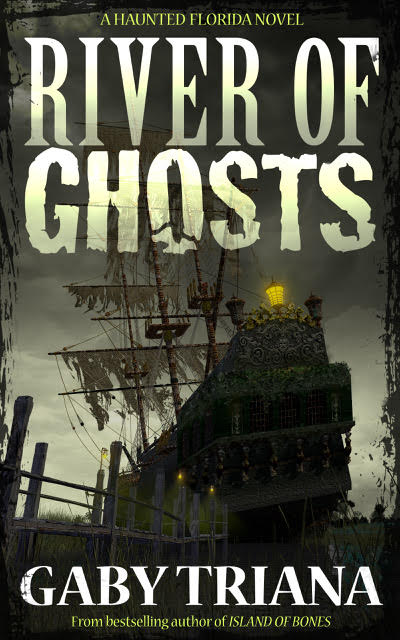
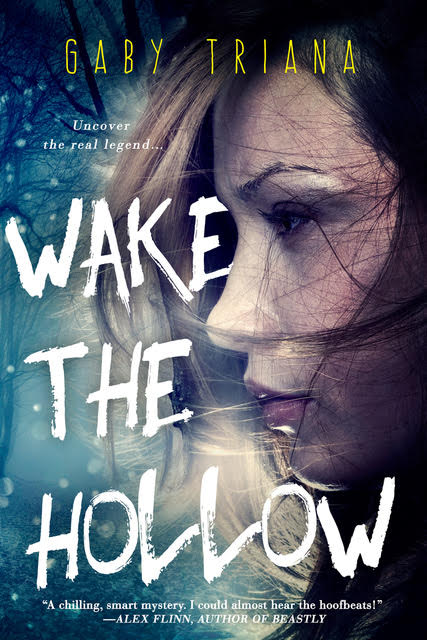
Welcome back! Today, it’s my great pleasure to feature Gaby Triana. Gaby is the award-winning author of numerous young adult and horror books including Wake the Hollow and River of Ghosts as well as the ghostwriter for several dozen more books.

Over the summer, Gaby and I discussed her transition from young adult to horror writing, as well as what she’s got planned next!

A couple icebreakers to start: when did you first decide to become a writer, and who are some of your favorite authors?

Gaby TrianaHi, Gwendolyn! I don’t think I ever decided to be a writer. I’ve been doing so since I was 5 when I wrote my mom a note telling her I was running away. I’ve always been dramatic that way. In 3rd grade, I wrote a short story called “Skeeter Creek,” and my teacher told me I’d be an author one day. Though I graduated with a master’s in Elementary Education but don’t teach anymore, I’ve always been writing. Full-time, since 2000. Some of my favorite authors are Anne Rice, Stephen King, Peter Straub, Lois Duncan, Deborah Harkness, and Shirley Jackson.

You have a new novel, River of Ghosts, due out soon. Can you tell us a little about the book as well as your Haunted Florida series?

River of Ghosts comes out 9/26. It’s the 2nd in my Haunted Florida series. The first was Island of Bones about a haunted resort in Key West, buried treasure, and family secrets. I wanted to write a collection of stories taking place in my part of the world. I’ve always love gothic, paranormal horror, but I couldn’t find many ghost novels taking place in Miami, the keys, or Everglades, so I set out to write them myself. There is so much here to draw from—Indian history, bloody battles, wives who killed themselves waiting for their seafaring men to return, romantic lighthouses, santería, pirates, you name it. South Florida is chock full of gothic inspiration.

River of Ghosts is about Avila Cypress, a Miccosukee woman who gives airboat rides to tourists in the Everglades. She’s asked by a TV production crew of a paranormal show to escort them out to an obscure haunted location with a murderous past. It’s a place she’s always been curious about, she’s dreamed about all her life, and knows is full of dark energy but she doesn’t want to go against her traditional Miccosukee traditions by dealing with the occult. Needless to say, she goes in secret, and things don’t go well.

River of GhostsWhat draws you to writing in the young adult genre? Do you feel that horror and YA pair particularly well together? 

The teen years are a breeding ground for drama and confrontation. They’re also the perfect years to figure out who you are, what you believe in, don’t believe in, and I love putting teens in stressful situations that help them determine who they are. My only book which combines a teen character and horror is WAKE THE HOLLOW, a re-imagining of The Legend of Sleepy Hollow where the main character is Latina and discovers some pretty well-hidden secrets about her family’s past. All with a spooky hometown setting taking place during the month of October, of course, because…Halloween. All my other novels are either contemporary YA (except for CAKESPELL which is romantic magical realism) or adult horror.

You run a very popular and active blog, The Witch Haunt, which blends witchcraft, writing, Halloween, and other horror influences. What inspired you to start the site? 

I’m new to the adult horror genre as a writer after spending 17 years in YA, which means new readership, new peers, new everything. Nobody knows who I am on this side of the fence, even though I’ve been a horror reader all my life and have been publishing for almost 20 years, so I figured this would be a great way to get to know others in the horror industry, while introducing myself to others, and also talking about things I love anyway—witchcraft, reiki, spells, haunted locations, and random things related to Halloween.

You’ve ghost-written over 40 novels. How does your approach differ between the writing you do under your own name and your ghost-writing projects? 

The writing I do for others is highly structured and organized. To sell my services, I often have to outline an entire story in order to show I’m ready, have it all planned out, and can start writing, so I’ll have these full outlines and summaries where everything’s thought out, which allows me to just jump in and start writing, and I usually lay a draft down very quickly (within 2-3 weeks for 55K words). With my own stories, I’ll plot out a few plot points—beginning, a couple middle plot points, and an ending—and that’s enough to get started, but I usually take a little longer. I have more freedom with my own stories, since they’re mine, whereas with ghostwriting, I usually stick to the client’s vision without much room for expanding or growing, whether or not I agree with it. They hired me to write, not consult, so I just give them what they want, unless they ask me for my opinion which does happen with several clients.

Wake the HollowYou’re a big fan of Halloween. You recently asked me on your blog about my favorite Halloween tradition, so now I get to ask you: what activities do you like to do every Halloween? Also, do you have a favorite Halloween memory or costume from over the years? 

I’ve always been the Halloween Queen in the family. My favorite tradition is throwing an annual Halloween party. In my 20s, this would involve putting on a big bash with my brother, and we’d invite all our friends. There’d be lots of adult debauchery but once I got married and had kids, the parties shifted to bobbing for apples, carving jack-o-lanterns, and themed parties like Nightmare Before Christmas, Stranger Things, or even Doctor Who. We also watch scary movies every Halloween as we pass out candy, or we might stand outside in costume scaring kids who come up to the door.

A favorite Halloween memory is being about 10 years old, trick-or-treating in my neighborhood. I’m from Miami, Florida where it’s hot, sweaty, and not very fall-like all year round, so being witchy little Gaby, I wanted the weather to be more autumnal. Well, that one year, I got my wish. The temperature dropped into the 60s, the leaves swished outside, the full moon was out, and for the first time ever, I got to experience that quintessential chilly Halloween night. I’ll never forget it.

Back to your fiction, out of your published work, do you have a personal favorite? 

I used to tell people that no, that would be like choosing between my children. But that was before WAKE THE HOLLOW came out. I’m particularly proud of this story, because it was an ambitious project that I like to think I pulled off, or knocked out of the park. My goal was to write a modern version of The Legend of Sleepy Hollow, making the traditional storyline the subplot and laying a brand new modern mystery on top as the main plotline. I also wanted to incorporate themes of family secrets, Cuban background (since my family is Cuban and I always like to work that in somehow), plus create a subplot involving a rumored relationship between Washington Irving (author of LOSH) and Mary Shelley after her husband, poet Percy Bysshe Shelley, died. The book got a kickass Kirkus review, lots of praise in School Library Journal and YA blogs, and to this day, is still my personal favorite.

What projects are you currently working on? 

Right now, I’m putting the final touches on River of Ghosts, then I’m finishing a ghostwriting project for a client, at which point I’ll be starting to write the 3rd book in my Haunted Florida series. After that, I have several ideas brainstormed that I want to explore. One is about killer cats, one is called Witchchild even though it hasn’t been written yet (it’s in my head), and another is about an old-style movie theater that’s trying to kill people. Always something ready to go!

Tremendous thanks to Gaby Triana for being part of this week’s author interview series. Find her online at her author site and her blog as well as on Facebook, Twitter, and Instagram!

Happy reading!

Film, Fiction, and Beyond: Interview with Marc Abbott

Welcome back! This week’s author interview is with the talented Marc Abbott. Marc is the author of A Gamble of Faith, The Hooky Party, and Etienne and the Stardust Express. He is also an acclaimed filmmaker and actor with his work appearing in numerous film festivals including the New Jersey Horror Con Film Festival and the Coney Island Film Festival.

Recently, Marc and I discussed his evolution as a writer, how his work in film and acting impact his fiction, and what his future writing plans include.

A couple icebreakers to start: when did you first decide to become a writer, and who are some of your favorite authors?

Marc AbbottI have always loved writing ever since I was young. I used to get into trouble in grade school because instead of paying attention in class, I was writing short stories in my notebook. But it wasn’t until I got to HS that I realized I wanted to do it as a profession. Being a movie buff, I just knew that what I wanted to do was write movies and TV shows. But I also liked to get immersed in novels and short stories. I was a big Stephen King and Clive Barker fan and I was always reading one of their books. Especially their anthologies. I was also a Peter Benchley fan as well. I loved how he could take us inside the head of the creatures he wrote about like Jaws and The Beast. After college, I began taking the craft more seriously and started writing with the intention to become published.
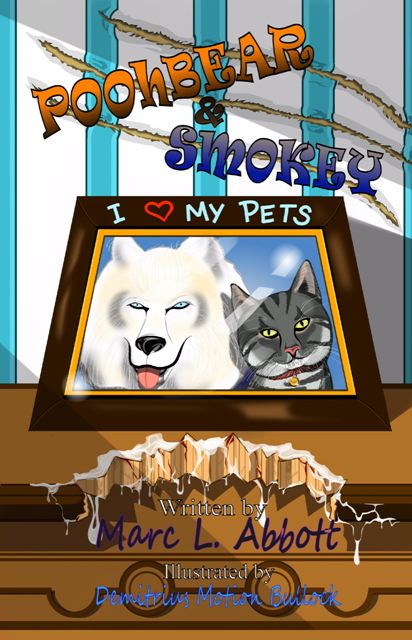
We met earlier this year at StokerCon when we shared a reading time slot. I absolutely loved your story, which featured a very feisty cat and dog fighting a creature that lived in the dark. Can you share a little bit about that story?

Poohbear and SmokeyAh, Poohbear and Smokey. Both animals are based off of pets I knew. Poohbear was my neighbor’s dog, Smokey was based off my cat, Hobbs, both of whom have passed on. The idea for this came to me several years ago when I noticed my cat would suddenly jump up and start meowing at nothing then give chase to whatever it was he saw around the house. There is always this talk about how animals can see into the spirit world and I thought “What if our pets, at night, were protecting us from forces beyond our sight. Is that why cats sit in doorways? Dogs sleep at the foot of the bed?” and so I designed this story where the pets fought off evil spirits. In the beginning I wasn’t sure what the enemy would be. But then I remembered growing up thinking something was living in my closet. Rather than make the enemy a spirit I chose an old fashion demon, not really the boogeyman but something equally dangerous. The relationship between the cat and dog was based on my aunt’s own pets who, before they passed, shared a very close bond with one another. Up to the point that when the dog passed, the cat mourned him and would sit in front of the dog house meowing. I used that for the basis that these two animals could communicate and watch one another’s back. And of course the fact that they team up to fight a monster that only a child can see and are chastised by the adults for being wild, that just added to flare and realness of how pets really are in our world.
You’ve written both novels and short stories. Do you prefer one length to another, or do both appeal to you more or less equally as an author? Also, do you consider one length of fiction more challenging than the other?

I love novel writing because I can get lost in the world I am creating and bond with my characters. I feel like I can take my time and let things grow. Short fiction I would say is more challenging. For one thing I tend to pour everything into a short story that I don’t have to. Reason being is that when people ask me questions about a short story and I give the back story answer they always say I should have put that in the story. Short Fiction is also more difficult to edit. I never know what to take out. I do enjoy the fact that with a short story I can get to the punch quicker but it does present a greater challenge.

You’re a fiction writer, a filmmaker, and a playwright. How is your approach to writing similar or different across mediums?

I approach the majority of my work through dialogue first. I like to get into the mind and mouth of my characters early because it’s a perfect way to define them. That being said, when it comes to novel writing, much of my work has started out as a screenplay first. I write the dialogue and actions of the characters first then go back and fill in the rest of the story. Since I don’t have to concentrate as hard on backgrounds, world building and that sort of thing in my scripts and screenplays, I can stick to the same format of writing across the board. Once I go back to fill everything in, that’s when things become different because in a book, I have to give the reader the information so that they can visualize it in their minds. On stage and screen, it’s all right there for them to see. You don’t need to use your imagination there unless it’s a scene that you don’t show but allow the audience to create the scenario in their minds.

Just to add to your illustrious resume, you’re also an actor! Do you feel that performing in front of the camera has helped you with doing live readings as an author? Also, do you feel like being an actor and becoming familiar with the inner workings of dialogue has helped you craft dialogue in your fiction?

Absolutely. Live readings are performances. When acting I’m interpreting a story someone else has written. But when I read, I’m telling a story I am very close to. I know how the characters sound, how they behave and I get a kick out of being able to voice them. For me, I often talk out sequences in my books. I will literally get up and act out the sequences alone if I get stuck. Having been on stage and screen, I kind of know from a directing standpoint how to direct myself when I do that. So it helps to act it out sometimes because then I get to understand my characters better and know which way I want to go with a story. Dialogue, for me, is one of the most important parts of any story. So when I read my work at events, I like to get into those characters and give different voices so people aren’t just hearing me talk, they’re in the story with the characters and feel for them.

If forced to choose, which part of the writing process is your favorite: drafting new ideas, writing a first draft, or polishing an almost finished piece?

Etienne and the Stardust ExpressHands down it’s writing the first draft. Finishing a first draft always feels so good. I often treat myself with coffee and a slice of cheesecake when I’m done. Something about fleshing out all the ideas and making it whole is gratifying. Polishing is always a daunting task. I don’t enjoy it as much. It seems to take so much longer and after awhile I start to get tired of dealing with the same characters so I have to walk away from it, which takes up more time. Drafting new ideas, always fun but not as gratifying.

What are you working on now?

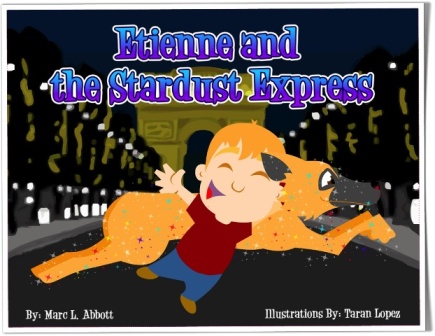
Right now I’m working on an anthology with a fellow writer, Steven Van Patten. I don’t want to get into the logistics of it but it’s a horror anthology with a twist. And most recently, I launched a children’s book called Etienne and the Stardust Express.

Out of your published work, do you have a personal favorite?

The Dead Syndicate, which is out of print at the moment, was my personal favorite. I spent several years working on that book with a sequel in mind so it was the one most near and dear to my heart.

Where can we find you online?

You can find me at my website www.whoismarclabbott.com and follow me on Facebook Who Is Marc L Abbott?

Tremendous thanks to Marc Abbott for being part of this week’s author interview series!

Happy reading!

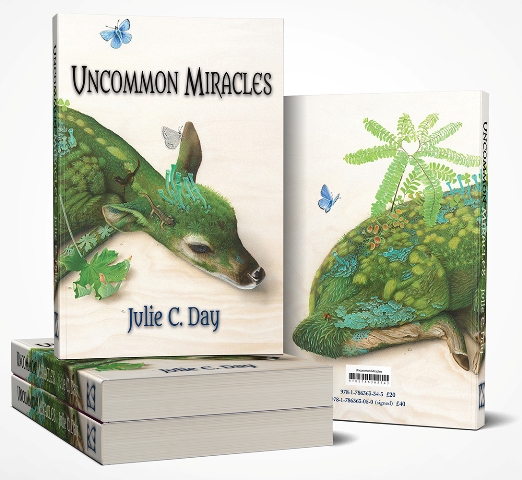
An Uncommon Talent: Interview with Julie C. Day

Welcome back! Today, I’m thrilled to feature author Julie C. Day! Her fiction has appeared in Black Static, Interzone, and Electric Velocipede, among other outlets.

Recently, she and I discussed her inspiration as a writer, her favorite fabulism authors, and how she put together her forthcoming collection, Uncommon Miracles.

What first inspired you to become a writer? Also, do you remember the first speculative fiction story you ever read?

Julie C. DayI was one of those dreamy kids, always half immersed in some personal storyline. Sometimes those imaginary worlds were based on something I’d read or seen on TV. Sometimes who the hell knows, even then it got weird… I also spent many days on my own little projects. For example, one summer I created a moon base out of papier-mâché, thought through the social structure of the community, and drew an associated map. In the end I wasn’t so much inspired to be a writer as looking for a way to share my internal life with the world.

Almost from the beginning I read a ton of speculative fiction, along with other types of fiction, nonfiction, and even the occasional pamphlet. I was one of those young obsessive readers. But oh my God, the first story to punch me in the gut? It was definitely Ray Bradbury’s “The Veldt.” In 4th grade I was part of something called the Great Book Series. We kids were tasked with reading a short story a week and then discussing it. “The Veldt” was this crazy emotional truth disguised as fiction. That story is steeped in dysfunctional families, suppressed rage, technology and violence. It was the most darkly psychological piece I’d read. It tripped all my neural synapses.

Your collection, Uncommon Miracles, is forthcoming from PS Publishing. Please tell us a little about your process in putting together Uncommon Miracles. How did you choose the stories to include, and what can you reveal about the work that’s brand new to the collection?

Unbelievably, the collection is actually available for pre-order. The signing sheets have been signed. The cover has been paid for. At this point there is no going back on my selection process…To be honest, the choice part was so damn basic. It’s sort of embarrassing. I looked at each piece, took my internal emotional temperature—did it still resonate—and then decided if the writing quality, to my mind, was strong enough. It was all incredibly subjective. There are more stories that I likely could or should have included, but if I waffled I immediately tossed it on the No pile. After looking over the eighteen that I’d selected the thread that connected them was pretty obvious: the miracle of finding a moment of peace or a moment of cloud-tinged grace in an ugly world.

My poor characters. It’s all unsettled shades of gray. And the four stories that are original to the collection are no exception. One of them “Mourning Food: Recipes Included” is just begging to be extended beyond the four recipes I wrote. I’d love to create a sort of Julie-death-recipe version of Edward Gorey’s Gashlycrumb Tinies. You have no idea how much that idea tickles my fancy!

Your fiction often incorporates elements of fabulism. Who are some of your favorite fabulist authors and/or some of your favorite fabulist works?

Leena Krohn’s Tainaron: Mail from Another City is an amazing piece of fiction. It’s written as a series of letters describing the narrator’s experience in their new home, a city of insects called Tainaron. It’s evocative and incredibly surreal. The city Krohn creates relies on the true behaviors of various insects, termites, bees and etc. and then extends that factual information to create the wild and rich tapestry of subcultures that make up Tainaron.

Ann Leckie’s Ancillary Justice blew me away, not because it checked all the space opera boxes but because the multi-bodied AI perspective took me somewhere new. It was a genius conceit and for me felt like fictional extension of the psychological concept of part selves or subpersonalities. For me that makes the work both fabulist and science fictional.

N. K. Jemsin’s The Broken Earth trilogy was the only trilogy I have ever read back to back. It was painful and exciting and one fast read. The trilogy involves an intensely original geologically-based society, alien life, ruins, an apocalyptic event, and a non-Eurocentric world that somehow mirrors the race and ethnicity issues of our own time. How could I not love it? Jemsin is one of the most impressive contemporary writers in genre. Success hasn’t led her to do more of the same. It’s led her to stretch her writing even farther. Her work just keeps getting richer.

Looking over this list so far, I definitely cheated a bit. They wouldn’t all necessarily be classified as clearly fabulist. But they are all works that definitely resonate with me. Which I guess is my way of saying I’m just going to keep cheating!

The Only Ones by Carola Dibbell is an amazingly well written and immersive near-future dystopia. It’s not YA. It’s not full of predictable characters. It’s not full of sentences that have that rubbed clean of personality. Two Dollar Radio is one of those small presses that is publishing both literary and genre and just about everything else and it is all fantastic.

Everyone talks about the Jeff Vandermeer’s Southern Reach Trilogy, which is absolutely fantastic, but his novel Finch has that wondrous mix of surreal, scientific, and noir, all bundled together in a line-level stylistic package. China Miéville’s The City and the City grabbed me and dragged me along for much the same reasons.

Perhaps I could list just a few more? Small Beer Press publishes a ton of work I adore. A couple of absolute stand outs are Nathan Ballingrud’s collection North American Lake Monsters and Mary Rickert’s collection You Have Never Been Here. And then there are the classic novels… Shirley Jackson’s We Have Always Lived in the Castle. Philip K. Dick’s The Three Stigmata of Palmer Eldrich. Now I really will stop!!!

Uncommon MiraclesWhat themes are your favorite to explore in your writing? Conversely, what ideas are you eager to explore further in your future work?

I find myself returning to certain themes almost accidentally: religion, the unreliable nature of reality, grief, loss, memory and the nature of self. In general, I write dark, weird, surreal pieces that play with genre tropes and literary techniques and that often use scientific facts as a metaphoric lens on the human condition. Or to put it another way, what I live for in my writing is to surprise myself. If I knew what I would be up to, the part of me that actually writes the words would sprint in the opposite direction. Surprise parties can feel like a let down, but surprising creative ideas? They are the stuff that makes the world worth turning.

You’ve been in the writing world for a number of years now, and you’ve been published in some of the biggest speculative fiction outlets, including Interzone and Black Static. What advice do you have for writers who are in the earliest stages of their careers? In particular, what do you wish you’d known when you were just starting?

It’s funny. I’ve been publishing for six years, which for some people seems relatively recently, but for others seems a decent amount of time. I do feel like I’m in a very different place from those first few sales or even those first few completed stories.

Writing is a deceptive term and a deceptive discipline. The truth is it is rewriting, mountains of rewriting. And there is no formula for how to approach it. There are a vast array of approaches writers, successful interesting amazing writers, use. There is no “secret true way.” Don’t let anyone straightjacket you. I spent too many years not feeling worthy and not feeling like I was approaching my creative work “correctly.” Fuck that. It held me back. Don’t let it do the same for you.

And truly don’t worry if you end up taking a lot of seemingly unnecessary tangents: writing scenes you don’t use, trying all the POVs in a single piece, learning about interactive fiction. The key is to immerse yourself in a particular piece of writing until it feels like you’ve gotten the essential “thing” right. Those imperfections? Those technical scars? Sure learn what you can, gather feedback from others, but remember you may not be able to smooth them away and still write the story you feel you need to write. That’s okay. True fact: nothing is ever perfect, but if you are very lucky, it is uniquely yours.

And like all advice, if mine doesn’t feel right for you, please, please, please, don’t take it.

Out of your published stories, do you have a personal favorite?

Can I go for the short answer just this once? No. I’m in love with every story I’m actively working on. For me that’s just the nature of the beast. The ones I’ve written all contain something I care about. Like children and pets, it feels somehow disloyal to single out just one!

What upcoming projects are you working on?

As well as the death recipe book idea that is definitely still percolating, I also have significant pieces of a mosaic novel called Ash that I want to move forward. I’m hoping the fall will give me the space to spend some real time on it. My novella “The Rampant” is currently out on submission. It’s dark and weird and intense and very much me. At 125 pages it also just manages to squeeze into the novella category. I’m also in the midst of writing a tabletop RPG game for Evil Hat’s Fate World series called Divided Lights. I think it’ll come out next year but I’m not sure exactly when. I’ve also been spending some time on short stories, which is lovely. I have far too many partials waiting for my attention.

Where can we find you online?

I love this question. No introspection required!
I’m all over the place. I’m on Twitter and Instagram @thisjulieday. You can also find me on my blog http://stillwingingit.com/.

If you’d rather not deal with streams of information, you can sign up for my very occasional—I cross-my-fingers-promise—newsletter, which is a gentle way to find out what the heck I’m up to.

And then there’s Pinterest and Goodreads. (Thankfully virtual me seems to manage things just fine while I’m sleeping and otherwise distracted by my physical life.) My Pinterest account includes a board full of images I used as inspiration while writing the stories in the collection. And I’m also on Goodreads both as an author and as a reader. Phew! List complete.

Thank you so much for this interview! I don’t often get the chance to talk directly about all this stuff. It’s been a real treat.

Huge thanks back to Julie C. Day for being part of this week’s author interview series!

Happy reading!

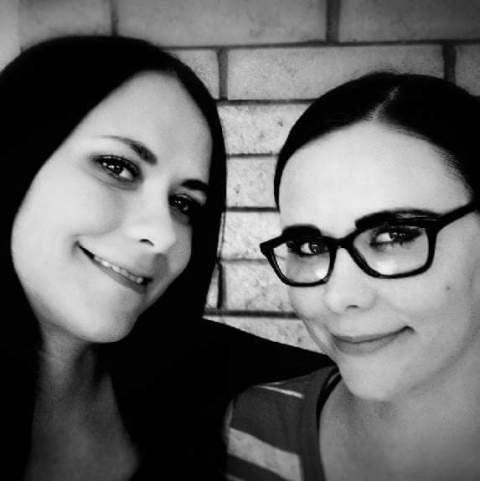
The Sisters of Slaughter: Interview with Michelle Garza and Melissa Lason

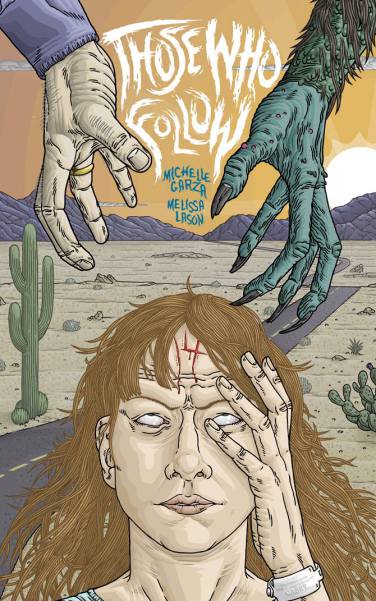
Welcome back! This week, I’m thrilled to feature the incredibly talented duo, Michelle Garza and Melissa Lason! The aptly-named “Sisters of Slaughter” are the Bram Stoker Award-nominated authors of Mayan Blue, Kingdom of Teeth, and Those Who Follow along with numerous short stories.

Recently, we discussed the twins’ love of horror, their inspirations as authors, as well as how they write together and what they’re working on next!

A couple icebreakers to start: when did the two of you first decide to become writers, and who are some of your favorite authors?

Sisters of SlaughterWe decided to become writers after listening to our older brother read to us. He always read all the Goosebumps books which were some of our favorites because we have always loved monsters and Halloween. We also felt the pull to become storytellers from our father who liked to tell ghost stories around the campfire when we were on family vacation in the woods. Some of our favorite writers as children were R.L. Stine, Roald Dahl, Shel Silverstein, and Alvin Schwartz but as we grew we latched onto Mary Shelley, Anne Rice, Ursula K. LeGuin, Clive Barker, R.A. Salvatore and Stephen King. We still greatly enjoy reading a mixture of genres and among our favorite books are The Dark Tower, Dragonlance, Forgotten Realms, Pet Semetary, among many others.
What first drew you to horror? Do you remember the first horror film or horror story you read? Also, did you both come to love the genre at the same time, or was one of you a fan before the other?

We were first drawn to horror because of our mother. She is a big horror fan and let us watch all the old universal movies with her and stuff like Hocus Pocus and Ernest Scared Stupid. As we got older we were allowed to see classics like the Texas Chainsaw Massacre movies and Just Before Dawn and The Thing. We have always gravitated towards monsters and spooky things, it’s kinda like some kids become obsessed with astronauts or pirates. For us it was werewolves and witches that became our heroes. Also, living in Arizona, the fall is a time when you feel like you’re coming back to life after hiding from the summer heat. The nights felt cool and brisk and getting to dress up in homemade costumes and celebrate felt so magical. October has always been our favorite month of the year even surpassing December and Christmas time.

Because the two of you write together, I have to ask: what’s your writing process like? Do you work in-person, over the phone, or online to collaborate? Do you find that you often want to go in different directions with a story and have to figure out how to compromise, or are you mostly in sync with one another’s working style?

Those Who FollowWe have been writing together for a long time just for fun so it has become a ritual for us to get together a few times a week or if it’s really busy we talk over the phone. We zero in on a project we want to work on from the lists of stories we keep around at all times. We always write an outline for the story, unless it’s a spontaneous short story that leaks out on occasion. We divide the writing by chapters and get to work and then we sit together and read it all out loud to make sure it all jives and is going in the direction we envisioned. Once it’s complete we send it off into the wild and await our acceptance or rejection. If it’s accepted we go over any edits or changes requested and Michelle handles those. We think so much alike that we work very well together and there usually aren’t any arguments over the plot and such.
Your debut novel, Mayan Blue, came out in 2016 and earned a Bram Stoker Award nomination. How did the idea for that book come about, and what was the most surprising—or even most rewarding—part of writing a novel?

Mayan Blue was an idea that Melissa came up with after watching a television show about American mysteries and some believe that the Mayan people migrated up into the southern states of America. She wasn’t sure how it would work but I (Michelle) suggested adding some dark mythological twists to it and it worked out really well. To see it nominated for a Bram Stoker Award was like some kind of crazy dream. The most rewarding part of it all was having people we looked up to like Brain Keene read it and praise it. We are so happy everyday just to be able to share our imaginations with people. It makes us feel very special.

Is there a specific part of the writing process you consider your favorite, or alternatively, that you consider particularly challenging?

Our favorite part of writing is creating story ideas and following them until completion. The part we don’t like so much is the editing process, haha.

What do you think the future of horror has in store? What would you personally like to see more of or less of in the genre?

We truly believe we are going to see Horror start to thrive again and people won’t be so apprehensive about admitting that they enjoy reading it. For too long there has been a stigma shrouding horror that is being stripped away by writers like Paul Tremblay, Josh Malerman, S.P. Miskowski, Victor LaValle and Jessica McHugh. They’re taking the genre to a whole new level. They use words like weapons to fight the nonbelievers and we love that. We also like to see the women in the genre banding together to kick ass, women have always been some of the most talented and brutal writers in the genre, but our voices are growing louder by the day and we’re really starting to show people what we can do, what we’ve always been doing but weren’t taken seriously. We will shake the foundations of the genre and form it into something beautiful and deadly with our pens. It’s really exciting.

Out of your published work, do you have a personal favorite?

We don’t really have a favorite child (story) but Those Who Follow is a story that is dear to us because it involves twin sisters.

What projects are you currently working on?

We are currently finishing up Silverwood: The Door with Brian Keene, Richard Chizmar and Stephen Kozeniewski. It’s being published by Serialbox which has been dubbed the HBO of reading. It’s serialized fiction sold in episodes and also includes audio along with the digital version. It will be out in October and we’re super excited about it. After that we will be working on a novel and short story collection.

Where can we find you online?

If you want to follow along in our shenanigans we are on Facebook at www.facebook.com/sistersofhorror and on twitter at SistersofSlaughter@fiendbooks

Huge thanks to Michelle Garza and Melissa Lason for being part of this week’s author interview series!

Happy reading!

A Man and His Dogs: Interview with John Linwood Grant

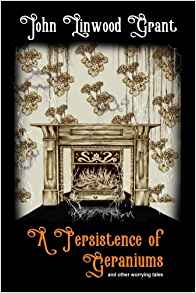
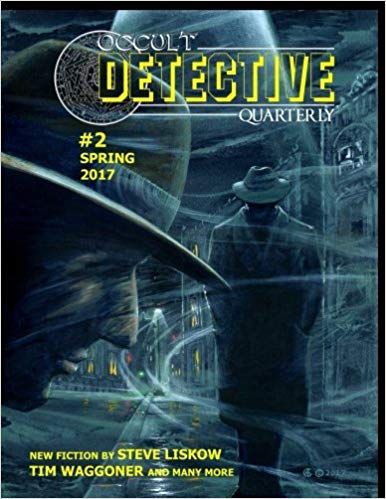
Welcome back! Today’s interview is with the awesome John Linwood Grant! John is the editor at Occult Detective Quarterly, the webmaster for Greydogtales, and the author of numerous works of fiction, including his collection, The Persistence of Geraniums and Other Worrying Tales.

Recently, John and I discussed his editing work, his inspiration for his site, Greydogtales, and how he put together his collection.

A couple icebreakers to start: when did you first decide to become a writer, and who are some of your favorite authors?

John Linwood GrantI normally try not to break ice, because I can’t swim, but if you must… it’s a story of two halves. When I was in my late twenties, I began a long process of constructing really complex novels, based on everything from Mayan mythology to medieval Islamic tolerance. This was not a great idea. I was the only one who understood what I was doing, and what I was doing did not bode well. Only one, out of the four or five novels I drafted, appeared worth pushing. And that one was deemed by a big UK publisher to be excellent but unmarketable. As in, the commissioning editor really liked it; the Marketing Department said No.

I didn’t have a lot of spare time, so I shelved most of that stuff and worked in ‘normal’ jobs for thirty years. Trying another novel seemed like too much hard work. Then someone persuaded me that short stories and novellas might be a more productive route. I sold the first story immediately, at the age of 58. Then a novella, ‘Study in Grey’, was taken up straight away, and almost every other short I wrote sold, in fact. Go figure, I believe people say.

My favourite authors? Too hard. The poetry of Edith Sitwell, the wry works of Jerome K Jerome. Saki. Roger Zelazny and Samuel Delany; Daphne Du Maurier and C J Cherryh. I find Chinua Achebe’s books fascinating. David Sedaris, to be more up to date. I ought to spare contemporaries in the weird field, because there’s always an incestuous longing to cite authors who you like both as writers and as people. The trilogy of collections which I read more than once last year was composed of Bartlett, Padgett and Kiste (surely that should be ‘Kistett?), closely followed by a marvellous quartet of tales by J Malcolm Stewart. Purely because they offered things that resonated with me, not because there weren’t other fine works around. This year, who knows?

You are an editor at the ever-awesome Occult Detective Quarterly. How does your editing work differ from (or overlap with) your work as a writer?

Occult Detective QuarterlyI’m not a natural editor. I’m slow and compassionate. Editors should be crisp and savage. As a writer first, I go through agonies seeing what people wanted to express in their story, and how they missed the mark. I get submissions that I would rewrite entirely just to get over a genuinely original idea that someone’s come up with, and not quite got there. I should never be allowed to edit anything. Occasionally I get to commission and edit something wonderful, for ODQ or an anthology project, and that makes up for it. Sort of. Editing pays even worse than writing, generally, and ODQ is one of those projects that earns me precisely nothing.

The other curious aspect of being an editor is that you have to bring out the other writer. It’s tempting to see how you yourself might push a story up a notch, but it’s not your story. So you have to encourage them to up their game, without being an interfering ass-hole. Sometimes it works, sometimes it doesn’t. Did I tell you that I shouldn’t be an editor?

Your website, Grey Dog Tales, is a wonderful combination of book reviews, interviews, and posts about lurchers. What made you decide to start the site, and what has been the most enjoyable (or heck, even the least enjoyable) part of running it?

Greydogtales (yep, all one word, but no one ever bothers about it) is an utter nightmare which absorbs far too much time. It was pointed out to me when I Re-Emerged that I should have An Author Site. The name comes from our late grey lurcher, Jade, a rescue who was quite mad but we loved her deeply.

In practice, I got bored covering my own stuff in the first fortnight. So I decided to lose the plot and fill greydogtales with whatever occurred to me. Within a month I wrote the first ‘Lurchers for Beginners’, about the hounds themselves, which pretty much went viral. After that we spent a month on William Hope Hodgson, a major influence. And then we had some artists on, including the magnificent Sebastian Cabrol from Argentina, who became a friend and has contributed works of genius to Occult Detective Quarterly. So it turned out that it was more fun to feature other authors and artists, and do what we call signposting. If we see something cool, we signpost it. We regularly cover things like unusual late Victorian writers, folk horror and black SFF. Because they’re cool. We also try to notify people about interesting small press publications as they come up, and run the occasional opinion piece by others.

The most enjoyable part is writing long features now and then about mad subjects for no apparent reason. Like my three part piece on the true origins of the ghoul or ghul, going right back to Mesopotamian mythology, which turned out to be hugely popular. Closely followed by the fact that weird fiction/art people will give us awesome interviews, and we would have loads more of them if I had the time to follow up and get the damned things completed. The queue is scary. The least enjoyable part is that queue. We are so waaaay behind.

Your story, “The Horse Road,” which appeared in Lackington’s, was a striking and haunting tale. What was the inspiration for this particular piece?

Thanks. My usual approach is to conceive of characters who have lives and emotions outside of, and regardless of, my writing. Then I look at recording what might happen next, almost cinematographically. ‘The Horse Road’ is one of the results. It’s the pure core of a series I write called ‘Sandra’s First Pony’. Those stories are deliberately ludicrous blends of folk horror, Enid Blyton and H P Lovecraft. This one was different, totally serious, and is simply about a girl and her pony, gifted with mutual inter-dependence and accepting that fact. It’s partly inspired by the Yorkshire I know, the bleak moors and the potential threat of a liminal world.

On the other hand, it’s Mr Bubbles. I receive more comments on that slightly psychotic pony than I do on most of my characters, and maybe that’s because he’s a fixed point, when we have no idea where to place our trust. He is what we want, what Sandra (his constant companion) wants. Living with a powerful, somewhat mad equine who stamps on things can solve a lot of problems. He’s the antithesis of mealy-mouthed, vacillating and untrustworthy politicians.

Last year saw the release of your collection, A Persistence of Geraniums and Other Worrying Tales. What inspired you to put together this collection, and how did you decide on the final table of contents? Additionally, were there any surprises along the way as you were compiling, editing, and promoting the book?

A Persistence of Geraniums‘Geraniums’ is, in many ways, a taster. More than half of my work concerns the theme I call ‘Tales of the Last Edwardian’. This spans from the 1880s to the present day. So it seemed like a good idea to make a start somewhere. Every story in it is connected, but sometimes the connections are incredibly loose. The difficulty was in deciding about the inclusion of Mr Dry. In the end, half of the collection is about him. I write a re-imagined but faithful and dark late Victorian/Edwardian world, and if anyone spans that period, it’s the Deptford Assassin. I was delighted when one kind reviewer recognised that he was neither hero, anti-hero nor psychopath, but something else – a human being who happens to think and work differently from us.

This meant that ‘Geraniums’ was two collections in one – some of it supernatural, some of it about madness and murder. If I’d had the time, I might have added more stories about Dr Alice Urquhart, my alienist, and her attempts to separate insanity and the paranormal. I did at the last minute decide to include ‘Grey Dog’, a sort of deconstruction of the classic occult detective Carnacki the Ghost Finder. As with ‘Horse Road’ it’s not a pastiche or parody, but a completely serious reverie on life and the presence of death.

Ideally, the collection would also have included Mamma Lucy, but again, time. The ornery 1920s black hoodoo-woman is a natural extension of what comes before, and of terrible events in the early twentieth century. She embodies a different way of facing inhumanity, but she’ll have to wait.

Do you have any writing rituals, such as writing to music or writing at a specific time of day?

Not a one. I write near the back door, so I can let the dogs in and out, and that’s about it.

Out of your published fiction, do you have a personal favorite?

‘Grey Dog’ certainly. ‘Messages’, from the Cthulhusattva anthology, my challenge to classic Lovecraftian tropes, which involves a mother and daughter who have made choices. Strange, yet fully informed, choices. They represent a way of being which is understandably human, and also incomprehensible – or I hope they do. Though I particularly enjoyed one reader’s dismissal of them as ‘the good guys’, after they had driven people to insanity, been satisfied with the extermination of an entire civilisation, and if allowed to continue, would seek the extinction of all life in the Universe. ‘Good’ is a relative term, I suppose.

And I have a fondness for ‘The Jessamine Garden’, which was in the Lambda-award winning anthology ‘His Seed’. It was pointed out to me afterwards that it relates directly to Hawthorne’s ‘Rappacini’s Daughter’ – a connection I’d missed at the time, as I’d actually been contemplating how many of the plants in our own garden were toxic. I wondered if someone might find a purpose in that, beyond simply poisoning everyone who annoyed them.

What projects are you currently working?

I’m almost finished with my new novel ‘The Assassin’s Coin’. It’s an accident, a chance suggestion by writer and artist Alan M Clark. He noticed an aside in ‘Geraniums’, and wondered if I might take it further. So I did, and started risking long fiction again. It concerns a brash young psychic with an unreliable gift, Catherine Weatherhead, and her unwilling entanglement with Edwin Dry, the Deptford Assassin.

Barring the occasional presence of Mr Dry, the book is almost completely about the women of the 1880s. It’s also a dismissal of Jack the Ripper, a negation of the importance of a pathetic, disturbed individual who killed women unable to defend themselves. There have been many men like that before him, and many after, sadly. I’ve no time for the mythologising about him, and ‘The Assassin’s Coin’ will tell you what I think. Alan is writing a complementary novel called ‘The Prostitute’s Price’, and the plan is to issue them separately at first, but later as a single volume of interlaced chapters. I think we should go the whole hog and print alternative words from each book, just to see if any passages still made sense.

Otherwise, I’ve recently completed a novelette which is a sequel to (and complete rewriting of) Arthur Conan Doyle’s ‘The Musgrave Ritual’; ODQ Presents, an anthology of longer supernatural fiction by some cool folk; a weird novelette of sculpture and artists in the 1970s, and the anthology ‘Hell’s Empire’, the Prince of Darkness versus Victorian Britain. An anthology for which I’ve had some truly surprising submissions, subtle, complex and moving. I’m a touch excited about it.

I also have about seven short stories under construction, but that’s how I pay for dog food. The chicken carcasses must flow…

Where can we find you online?

Greydogtales.com, usually updated once a week or more. And I’m on Facebook a lot, and post much nonsense there. It’s a scribble-pad for what’s going on with me (or the pups).

Big thanks to John Linwood Grant for being part of this week’s author interview series!

Happy reading!

The Unlanguage of the Weird: Interview with Michael Cisco

Welcome back! This week, I’m pleased to spotlight the fantastic Michael Cisco. Michael is the author of The Divinity Student, The Tyrant, Celebrant, and MEMBER, among numerous other books and short stories.

Recently, Michael and I discussed his latest book, Unlanguage, as well as how he defines weird fiction and what projects he’s working on next.

What first inspired you to become a writer? What is it about speculative fiction or the uncanny that led you to genre writing in particular?

Being a writer never seemed like a decision. I wanted to write from a very early age. When I was a boy, I remember being struck by the idea that, while the people, places, and events in the books I loved weren’t real, the writers were. I couldn’t be those people, do those things, or go to those places, but I could write my own.

I grew up reading fantasy, science fiction, and horror. What I think interested me about all of them was the kind of relationship of wonder they established between the world and the reader. My version of The Hobbit came with maps printed on the end papers. I was eight, and I was astonished at the creativity, almost the arrogance, of inventing maps of imaginary places. To create entire languages for these places struck me as an audacious thing. So then I realized this would be “allowed.”

Horror was always important to me, mainly because I had my fair share of fear and that perverse tendency to use the imagination to trump up greater fears for myself, but also because horror was about re-enchanting the world around me, however darkly. If, for example, I’m told that one of those boring suburban houses over there is haunted, then they suddenly become interesting.

I knew I wanted to write as imaginatively as possible, and I felt a condescending disdain for realism that I hope I’ve outgrown now. I knew I wanted to write that kind of fiction, but at the same time my vanity wouldn’t allow me to do anything in the usual way. So I went about writing genre fiction almost deliberately incorrectly, to see if I could create something new.

Your new novel, Unlanguage, just debuted from Eraserhead Press. What can you share about your process for this book? What was your initial inspiration, and how long did it take to develop into the final version? Also, any surprises in the writing process along the way?

Gahan Wilson created a little comic about someone visiting an unnamed, weird foreign country; he’s studying a handbook of useful phrases to learn, and they include “Please come up to my room, as I have been clubbed and am bleeding profusely” and “I think those people over there are lepers.”

I was studying a language textbook that included a series of linked readings connected to each lesson. In one reading, we’re on board a ship. A man goes wild and starts trying to chop the bottom out of the boat with an axe. Pursued by the sailors, he leaps overboard. The main character of these readings asks the captain if he intends to let this man drown in the ocean. The captain replies, “He was a bad man and he’ll die a bad death.” And I thought — this? This is what the writers of this book thought was a representative and appropriate introduction to their language? I enjoyed the story, don’t get me wrong, but it got me thinking.

Since my Tolkien days I’d been haunted by the idea of inventing a language, but this has been done already, and by far better qualified people. Coming up with vocables and arbitrarily assigning them meanings didn’t sing to me, but I have always been mystified and intrigued by other languages and the possibilities for expression that come out in the unlanguage, the non-place between two languages in translation.

So I came up with the idea of an ominous language textbook with linked readings connecting across different grammatical explanations.

UNLANGUAGE took roughly two years to write, which is about typical for me. I spend a year banking ideas, and a year writing them up.

Your work is often classified under the weird fiction label. But weird fiction itself often defies easy definition, with writers and editors having different ideas about what encapsulates the weird. So in that vein, what is weird fiction to you?

This is something I’m currently struggling to do in a critical monograph. I don’t think that weird is the opposite of normal, but that the two are inseparable. My go to example here is the beginning of David Lynch’s film, Blue Velvet. The discovery of a severed, greenish ear in the grass is set alongside a montage of exaggeratedly ordinary images invoking small town Americana. I don’t think it’s enough to say that you can’t have the strangeness of the one without the normalness of the other, because the normalness becomes strange and the strange becomes normal in that movie.

If a story is nothing but weird events, then it ceases to be weird, weirdly enough, because it has turned into something like fantasy. For me, the weird is about the normal, simply by not taking the normal for granted. It’s like the seduction of the ordinary.

Throughout your career, you’ve written a lot of both short fiction and longer works. Do you find your style or approach differs depending on the length of the project? Do you have a preference for short fiction versus longer forms? Also, has this preference changed at all over the course of your writing career?

I much prefer longer forms, and always have. I gather ideas and heap them up with the intention of shoving them all into one thing, instead of breaking each one out into a separate thing. Writing short stories usually entails an adjustment to this approach.

Writing novels, I still start at the beginning and write through to the end, but over time I’ve gotten better at roving around inside the manuscript. I am still experimenting with different approaches to writing short fiction; I have no one set approach there.

In addition to your own fiction, you’ve also written nonfiction, you’ve done translations, and you teach. Do you find that these various elements of your work often impact your fiction?

They all connect. My nonfiction grows out of the preoccupations I have in my own writing. My translations don’t necessarily have much bearing on what I write, except in the broader sense that I draw ideas from the interaction of languages. I have tried writing passages in other languages and then translated them into English, to see if I could add a certain kind of disoriented feeling to the “normal” English flavor. Teaching means encountering all sorts of different people and learning from them; it has made me a much quicker and more ruthless editor of my own work.

What projects are you currently working on?

I have a new novel that is nearly done, called PEST; the theoretical part of my academic book on weird fiction is done, and I’m now doing some case studies to see how well it holds up in application.

Where can we find you online?

Here’s my blog: https://michaelcisco.blogspot.com/

And I tweet.

Big thanks to Michael Cisco for being part of this week’s author interview series!

Happy reading!

Gloom and Heirlooms: Interview with Theresa Braun

Welcome back! This week’s featured author is the talented Theresa Braun. Theresa and I connected last year when we were both part of Unnerving’s Hardened Hearts anthology, and since then, it’s been so much fun to get to know Theresa and her awesome body of work!

Recently, she and I discussed her inspiration as a horror writer, her favorite Women in Horror, as well as her writing rituals and future plans as an author!

What first drew you to horror, and who are some of your favorite authors in the genre?

Theresa BraunWell, I’ve been a bit of a Goth since as far as I can remember. My closet is almost entirely black, with a sprinkling of shades of gray and a bit of red. Also, I’ve always liked reading dark, creepy fiction and watching scary movies. There’s something fascinating about the shadow side of life. Maybe it’s partly the adrenaline high that goes along with dangerous things, like the supernatural or evil people. The element that’s beyond our control is also part of that. So, I suppose the subject matter and the psychological aspect of horror really inspire me.

Some of my favorite horror authors: Stephen King is one, and Edgar Allan Poe is another. I also love lots of classic writers such as Mary Shelley, Bram Stoker, and Robert Louis Stevenson. I’m also really into what Hulu is doing with Margaret Atwood’s The Handmaid’s Tale. The adaptation is a gripping reminder how relevant that novel still is today. There are many contemporary authors in my TBR pile, which is something I’m working on—reading more current writers. There’s so much to read, so little time…

You’ve written short fiction as well as longer works like Groom and Doom. Do you find your approach differs depending on the length of the story? Do you plot out a piece in advance, or do you allow a story to evolve as you write?

Writing short stories allows you to experiment with various characters and settings, while writing a novel requires that you stick to the same set of characters and situation for a longer haul. Both have their positives and negatives. The publishing process is also quite different when it comes to short stories. You’ve got to do your homework, and more often. However, one of the most exhilarating things about being in a publication with other writers is the added bonus of networking. Connecting with other writers and with editors is important for countless reasons. For example, in addition to knowing you aren’t alone in the face of rejection, lots of times another author will tell you of a submission call you hadn’t heard of or they might recommend that your style fits a certain magazine. It’s a lot of fun to build up writing credentials, while also getting to know new people in the writing community. Often, I’ve bonded with others who have also been in the same collection. (*ahem, Hardened Hearts is just one example*). I’ve really enjoyed that.

As far as hunkering down with a novel? To be honest, I’ve been avoiding that for awhile. It’s possible to get lost in the creative and editing process. When you hit a wall, it can feel insurmountable. I’m forcing myself to face that beast right now with Fountain Dead, which will come out later thanks to Unnerving Magazine. I have a rough outline of markers I want to hit, and pray daily that the new ideas/scenes that I’m working on are leading me in the right direction. Right now I have a white board where I jot down things to keep adding, or new ideas that pop into my mind. So, to some degree things are evolving as I write. I’m hoping the more I force myself to do it, the easier it will be. People who don’t write don’t necessarily understand how much love, sweat, and tears go into a finished product. Some days it’s a creative high, and other days it’s a waking nightmare. As I write more novel length books, I hope there will be more creative high, less waking nightmare.

Your story, “Heirloom,” which appeared in last year’s anthology, Hardened Hearts, has been very well-received. What can you share about your process for this particular story?

Hardened HeartsWe have to write what we know, right? I decided to focus on a few ideas that I’m passionate about. “Heirloom” contains several of those elements. Past lives and how they might affect our present existence is something I think a lot about. And then there’s also the idea that we are constantly evolving and often change to fit the circumstances and dynamics around us. On top of that is this interconnectedness we have with others. I wanted to explore those things, as well as the complexities of empowerment. What does it mean to have power in a given situation, or over another person? With all the talk of gender inequality and the #metoo movement, I thought a lot about who has the upper hand and why. And, does that trump other qualities such as emotional intelligence or empathy? That’s what I set up for my main character, who’s a therapist. Enter a magic mirror (because the supernatural is always fun) that sends her into the past. Add a difficult client who not only threatens her in present day, but also has a role in the past. How does it all play out? Well, that’s the story. A fun fact is that I worked for a few years on this one. Several drafts and several transformations later, and presto…

Do you have any writing rituals? For example, do you write every day? Do you write with music or without? Is there a certain time of day when you prefer to write?

If I can travel, that’s my ideal environment. I like to completely detach from the world as I know it. My whole body and soul get into a different mode. I love to sit at a café in an exotic location or in a hotel overlooking a place I’ve never been. When I’m not traveling, I prefer to write in my bedroom. I pile up lots of pillows and my cats are snuggling nearby. I drink buckets of yerba mate tea or decaf coffee. I can really get into the zone in that comfortable space. Depending on my mood, I’ll play some music, or not. The type of music also changes. Sometimes I’ll put on some M83, and other times it’ll be Marilyn Manson or Nine Inch Nails. By nature I’m a night owl, but my day job forces me to be up around 5:00 a.m., so I have to sort of make it work whenever I can find the time to write.

Daily writing is a fantastic practice, but I can’t say that I stick to it consistently. Life just sometimes gets in the way. So, I switch to editing mode or reading mode, if I’m not writing. Ideally, I would love to write for a minimum of an hour every day. However, when I’m really on a roll, I tend to write for about five hours at a time, sometimes more. It makes me a little delirious, but it’s a wonderful feeling to have been able to spend a chunk of time on a project.

At my blog, I believe that Women in Horror Month should last all year long. So in that vein, as a woman in horror yourself, do you have any favorite female horror authors writing today that you’d like to signal boost?

Oh, dear. I won’t be able to do this list justice, as there are so many female horror writers that deserve praise. Off the top of my head, here’s a list of some who should be read: Kelly Link, Lisa Mannetti, Nicole Cushing, Gemma Files, Helen Oyeyemi, Tananarive Due, Gillian Flynn, J.H. Moncrieff, Christa Carmen, Somer Canon, Catherine Cavendish, Amy Grech, Larissa Glasser, Lee Murray, Patricia Davis, Renee Miller, S.P. Miskowski, Jac Jemc, (someone named Gwendolyn Kiste), and on and on. Seriously, there are so many more worth mentioning. There’s no shortage of talent out there.

Out of your published work, do you have a personal favorite?

Isn’t that like asking a mom who her favorite kid is? I’m pretty attached to “Heirloom” for a number of reasons. The layers of the story and the message are pretty important to me. And, you either love or hate something you’ve spent so much time on. I’m also pretty fond of my vampire story “Dying for an Invitation” inspired by a trip to Transylvania. But, I’m really hoping that Fountain Dead ends up being one of my overall favorites. It’s partly a coming of age tale based on a haunted house I lived in with my family up in Winona, Minnesota. I think that being a teenager in itself is scary enough, but this kid has to navigate paranormal activity that threatens his family. It’s up to him to grow up fast and figure it all out before someone gets killed, literally. There are several threads of social judgments and expectations he wrestles with along the way, including gender identity issues and racism. I’m pretty excited about the project and am really throwing myself into it at the moment.

Where would you like to see your writing career in five years?

I’d really like to see some other novels come to fruition by then, as ambitious as that sounds. My constant goal is to find a way where I can write more consistently for longer periods of time. That schedule change would require a shift in the day job situation, however. Although teaching can be extremely rewarding, it makes the writing process an uphill battle. The ultimate fantasy is to write full-time and be able to pay the bills, but there are so many talented writers struggling to get to that very same place. Although I think there is enough success to be had by all, I think it’s harder and harder to make that reality come true. But that’s a whole rabbit hole of a discussion in itself.

Where can we find you online?

I practically live on Twitter at @tbraun_author. My website is undergoing a makeover, but that’s www.theresabraun.com. I’m also on Goodreads and Amazon…

Big thanks to Theresa Braun for being this week’s featured author!

Happy reading!