Two years ago this month, I sent out my first ever short story submission. It was rejected. It was a kind rejection, but still a rejection. However, the very next submission was accepted, and thus began what has been a reasonably successful career so far. Seriously, I can’t complain. I’m not one of those “critical darling” writers, but I do actually have fans beyond just my parents and husband, which is pretty cool!
So in honor of the two year anniversary of my short fiction career, here are 10 lessons I’ve learned as a new writer.
Rejection is sometimes the only constant in your career.
This might be the hardest lesson to learn, but if you want any sort of longevity in the publishing industry, it’s probably the most important. No matter how far you get as a writer, you’ll keeping hearing the word, NO. A lot. But just keep in mind that even stories that make it into top tier journals have often been kicked back to the author once or twice (or even ten times). A rejection from one publisher only means that it’s time to find another. It’s that simple, and it’s that difficult.
There’s a lot of conflicting advice out there.
On this blog, I sometimes create “writer advice” posts (kind of like this one!), but I never expect every single reader to take my word like some newfound gospel. What has worked for my career might work for yours, or it might not. As you sift through the countless blogs and social media posts about writing, you—and you alone—have to learn what’s best for your career. Decide what you want from your writing, and go from there. Also, realize that what you want now might not be what you’ll want in six months to a year, so be willing to continually review your goals and update accordingly. Nobody can make these decisions for your career except you. Don’t let the noise of other people’s opinions stop you from going after what you desire out of this crazy life as an author.
Learn the basics of promotion (and apply those principles liberally).
Just writing great stories is sadly not enough to build a career. Sure, it’s a necessary ingredient, but without some promotion on your end to get your name out there, you’ll always be fighting an uphill battle for recognition. So what do you need to know? Well, here are the bare bones principles about promotion: If you want to get serious about your career, start an author website. Maybe start a blog. Update both regularly. Consider attending writing conferences, and find places to do book readings to promote your latest releases. Also, maintain a presence on social media, and try not to be a jerk, which leads to our next lesson…
The publishing industry is insanely small.
In publishing, everybody knows everybody knows everybody. You will come across the same editors, writers, and publishers in your genre again and again, and rest assured, they all know each other. Sometimes, that means literally “they go to conferences and have drinks at the bar” kind of knowing each other, or sometimes, it just means that they network online. Either way, writers and editors talk. It’s human nature. If you’re acting like an entitled fool online, people will take notice, and this is a time when all publicity is not necessarily good publicity. So just be respectful to your fellow writers and publishing comrades. It’s the right thing to do anyhow.
Most editors are cool people…
I’ve worked with editors who run the gamut from beginners at startup magazines to bestselling anthologists. One thing is pretty standard across the board: almost all of them are terrific, and they care just as much as you do about putting the best version of your work out there. Listen to their feedback, and also, feel free to engage in conversation with them about any edits, especially if you’re confused or feel strongly about something. Again, don’t be a jerk, but most editors are open to working with authors. It is part of their job description, after all.
… but learn to avoid the ones that aren’t.
I’ve worked with around 100 or so editors so far in my writing career. Almost all of them are people I’d be willing to work with again in the future. Almost all. Simply put, there are editors out there whose working styles just don’t jive with my own. If you find an editor that doesn’t work well with your style, it’s a really easy fix: don’t submit to that publication again. You don’t need to write an angry follow-up email. You don’t need to bad mouth them in a blog post (do you see how I made no suggestion whatsoever about the identities of these not-jiving-with-Gwendolyn editors?). Just avoid them. And fortunately, there won’t be many of these editors anyhow, so the problem will more or less solve itself.
Learn the publishing lingo.
There are plenty of terms you’ll come across in your writing travels, but here are a few to get you started. Standard manuscript format means formatting your submissions like this. A slush pile is the term for a magazine’s queue of unsolicited submissions (meaning you’re simply responding to an open call and the editor didn’t request your work in particular). Multiple submissions means sending more than one story to the same market at any given time. Simultaneous submissions means submitting the same story to more than one market at a time. The important thing is to know the terms, research unfamiliar ones, and be sure to follow the guidelines for the individual publication. If you don’t, the editors will likely remember who you are, and they’ll be less inclined to accept your work in the future. Again, as mentioned above, the publishing industry is small. Don’t give someone a reason to hold a grudge.
If you can, work a slush pile.
There are plenty of magazines out there that are always looking for first readers to help wade through the proverbial slush pile. If you can spare a few hours a week, even just for six months or so, working a slush pile can be one of the most eye-opening experiences for up-and-coming writers. You get a real sense of what makes a good story work from opening to closing lines, and it will also help you understand what sinks a story in the first couple paragraphs. Work the slush, pay attention to what you’re reading, and you’ll become a better writer. It’s almost a guarantee.
Overnight success is a myth (mostly).
Success is earned, not readily distributed. You’ll have to work for this writing vocation, and you’ll have to work hard. That’s the truth of it. And yes, there are a few writers out there who get accolades for just about everything they write, even in the early stages of their careers. Is it ridiculous to say I would prefer not to be one of them? That if this got too easy, I’d get bored? In fact, as silly as it sounds, I fancy myself a warrior writer, with my career trajectory along the lines of Joseph Campbell’s monomyth (Refusal of the Call! Belly of the Whale! Road of Trials!). That means the setbacks define me just as much as the successes, and all of them make me a better author. So please savor the journey. When you look back on your career at the end of your life, you’ll realize these moments were the ones that really counted.
Find like-minded writer friends.
We started with the important lesson of rejection. Let’s finish with another important lesson, albeit a more positive one: the power of networking and commiseration in the publishing industry. Namely, making friends. It seems simple and a little obvious, but sometimes just knowing that there are people out there who are in your corner and who understand what you’re going through (rejection! extensive edits! creative blocks!) is enough to get you through the day. Also, if you think that all writers are your competition, then you might be approaching this from the wrong perspective. Sure, there are only so many slots in major magazines and anthologies per year, but that’s for the editors to decide. Discovering other writers in your genre will help you find people willing to assist you with your gnarly first drafts and to commiserate when the going gets tough. And out of all the things in the world, you can’t put a price on that.
And here’s where I’ll give a shout-out to a few of my writer friends who have helped me stay (mostly) sane through these last two years: Scarlett R. Algee, Brooke Warra, Miracle Austin, Lee Forman, Gerri Leen, Lori Titus, Brandon Getz, Nathan Hystad, and Matt Andrew (and a whole slew of others). There are days I’m not sure I could have survived this industry if it wasn’t for your support, so THANK YOU THANK YOU THANK YOU.
What lessons have you learned as a writer? Let me know in the comments below!
Happy reading!
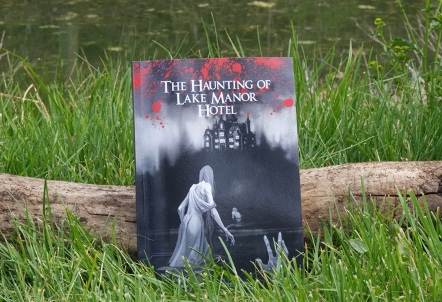 Working on The Haunting of Lake Manor Hotel has been an incredible experience. This project unites me with authors Scarlett R. Algee and Brooke Warra, both of whom I met through our publication and eventual work as slush pile readers at Sanitarium Magazine. And of course, the three of us also worked together on A Shadow of Autumn last fall, so in my mind, that makes us family. This is also the first time I’ve worked directly with author and editor Nathan Hystad. Nathan and I have been crossing paths for the last couple years, since we were both featured in Whispers from the Past: Fright and Fear way back in September 2014. So when he asked me to be involved in his first project as an editor, I most definitely jumped at the opportunity.