Category Archives: Fiction

Slaughter in Dreamland: Interview with Sara Tantlinger

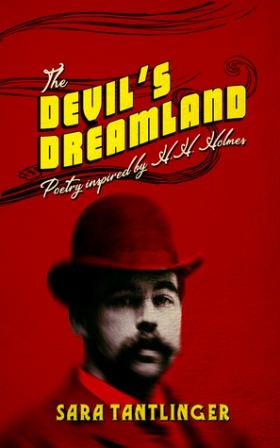
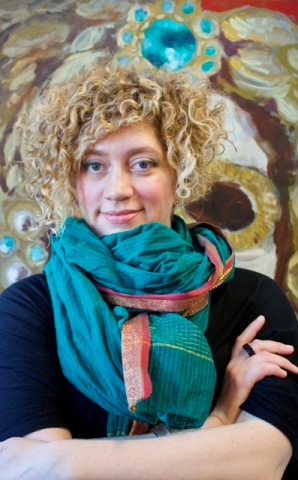
Welcome back for my final interview of 2018! And what a delightful interview it is! I am positively thrilled to spotlight author Sara Tantlinger. Sara is the author of the poetry collections Love for Slaughter and The Devil’s Dreamland: Poetry Inspired by H.H. Holmes, as well as several short stories.

Recently, Sara and I discussed her favorite authors, her inspiration as a poet, and her future plans as a writer!

A couple icebreakers to start: when did you first decide to become a writer, and who are some of your favorite authors?

Sara TantlingerI had been interested in writing since I was a kid, but I didn’t get serious about it until halfway through my undergraduate career. I dropped my education major and instead focused on English literature and creative writing at Seton Hill University (SHU). I stayed at SHU for my MFA in Writing Popular Fiction and am so glad I made that choice.

Edgar Allan Poe was my first poetry love, but some other writers who have really influenced and inspired me are William Blake, J.K. Rowling, Catherynne Valente, Sierra DeMulder, Richard Siken, Gillian Flynn, Caroline Kepnes, and Clive Barker.

First off, congratulations of the success of your poetry collection, Love for Slaughter! What was the inspiration for putting together the book, and how did you select which pieces to include?

Thank you! It’s so cool to still see the book receiving good attention after having been out for over a year. Love for Slaughter was inspired by the whole concept of folie à deux, which sometimes gets referred to as “madness shared by two.” I was fascinated by the idea of how something as pure as love could actually be twisted and mutilated into bloody, morbid poems. I was also inspired by the darkest parts of love and how such a powerful sentiment could lead people into madness over obsession or lust.

Horror and romance are the genres that tend to elicit the most visceral reactions from people since they really are the genres of emotion. Horror and romance writers have to overcome a lot of stereotypes from both readers and from writers in other genres, so I was excited to mesh the extremes of both concepts together in Love for Slaughter and have dubbed it a “horrormance” collection.

I ended up writing way more pieces than I needed to include for the collection, so when I went to finalize it all, which took a few tries, I mostly looked to cut pieces that seemed too similar or that just weren’t as powerful to me as others. I hate the idea of quantity over quality, and I think it’s wise to be aware of how many pieces you’re putting into a collection and how long it’s going to be since reading poetry is a different experience than reading prose.

You are currently accepting submissions as editor for the Not All Monsters anthology. What inspired you to get into the editing side of the industry, and what are you looking for in terms of submissions?

Yes! I am insanely excited about this anthology, and I cannot believe we have over 100 submissions already with more rolling in daily. This project is especially close to my heart since we’re seeking out women writers, so being able to actively do something that promotes women in horror means the world.

I also genuinely love editing. I have a few different jobs rights now, but if I ever get the chance to make a full-time career out of editing, I’d do it in a heartbeat. Having the opportunity to help other writers through edits and revision and assisting in strengthening their manuscripts is really fulfilling. I get to do what I love while watching writers succeed.

For Not All Monsters, I am looking for polished prose with character-driven stories that convey powerful messages. I love poetic prose and anything gothic and macabre. I want to see women kicking ass and refusing to be victims. Women are so strong, and it is important fiction reflects that, especially in horror. For any ladies thinking of submitting, definitely check out the theme and full guidelines here:

https://roosterrepublicpress.com/2018/09/17/strangehouse-books-seeks-women-writers-for-horror-anthology-not-all-monsters/

You write both fiction and poetry. How is your process different (or similar) depending on the medium?

The Devil's DreamlandThat’s a great question. Every time I think I have my writing process figured out, it seems to change. For poetry, the writing tends to come much easier and more organic for me. I’m much better at translating a powerful emotion or event into a poem than I am at prose. Sometimes it helps to write a poem from the point of view of my characters and then use that to help flesh out exposition.

Short stories have long been the bane of my existence, but I started to sell some this year and it’s really motivated me to keep writing more and to continue crafting a short story into something memorable. Outlining has become my best resource for fiction recently. I used to be way more of a pantser, but outlining and becoming more organized has been slowly saving me as I work on future projects.

Like me, you’re from Pennsylvania! Do you find the landscapes or overall feel of the Keystone State sneaking its way into your work, or do you try your best to get as far away from the state as you can when writing?

Oh yes, the landscape and scenery often creep into my work, especially since I live in the woods in the middle of nowhere. The setting is so prime for horror inspiration – old woods, big farmlands, abandoned places, weird animal noises in the middle of the night…I love it! After visiting the abandoned turnpike and tunnel near Breezewood a few years ago, I loved it so much that I set my thesis novel for graduate school around that area but in a much darker world.

In the future, I definitely hope to play with different settings, but Pennsylvania really has some fantastic inspiration. Every town here feels a little different, and there’s so much to explore and then plot into stories. I visited the destroyed Kinzua Bridge in PA earlier this year, and it gave me some twisted story ideas that I’m excited to play with.

As a female horror writer, what are your hopes for the future of the genre? What do you think is going well, and where would you like to see change?

My biggest hope is to see the continuous rise of women in horror fiction, films, and more. Recently I have seen open calls looking for women in horror, and other editors really doing their best to encourage women in the genre to submit their work. The Ladies of Horror Fiction website/social media that recently came about is an amazing resource, and it’s fantastic to see all they are doing to help promote women.

I think it’s a good time to be a woman in horror right now, not that there still isn’t work to be done. Horror has long been dominated by men, so I hope to see more diversity in anthologies because I still see collections that are nearly all men with maybe one token woman in the contents, if any women at all, so that’s something I certainly hope to see shift to be more diverse as we continue celebrating women in horror.

What projects are you currently working on?

My next poetry collection, The Devil’s Dreamland: Poetry Inspired by H.H. Holmes, will be out with Strangehouse Books very soon! (Gwendolyn’s note: since this interview, the collection has been released, and it’s amazing!)

Currently, I am sending around my thesis novel from graduate school and a poetry collection that actually isn’t horror, so they are both floating in market space.

My WIPs right now include a weird novella that’s taking me in some strange directions, and a historical horror/dark fantasy novel inspired by Ranavalona I of Madagascar, who sometimes gets cited as one of the most murderous women in history. I am having a blast with the research for this one.

Tremendous thanks to Sara Tantlinger for being this week’s featured interviewee! Find her online at her author website as well as on Twitter and Instagram.

Happy reading!

End of Year Fiction: Submission Roundup for December 2018

Welcome back! 2018 is almost in the rearview mirror, but we’ve still got one final Submission Roundup for the year! Lots of very cool calls, so if you’ve got a story looking for a home, then consider sending it the way of one of these markets.

A quick reminder first: As always, I’m not a representative for any of these markets, so if you have any questions, please send them to the respective editors!

And now onward with this month’s Submission Roundup!

Submission Roundup

Curse the Darkness
Payment: $75/flat (GBD)
Length: 3,000 to 10,000 words
Deadline: December 31st, 2019
What They Want: Open to short fiction that explores the theme of darkness.
Find the details here.

Vex Me No More
Payment: .02/word for original fiction; $25/flat for reprints
Length:  up to 5,000 words
Deadline: December 31st, 2019
What They Want: The editor is seeking horror fiction about witches.
Find the details here.

Year’s Best Hardcore Horror
Payment: .01/word ($60/max)
Length: up to 6,000 words
Deadline: December 31st, 2019
What They Want: Reprints of stories with hardcore or extreme horror that were published in 2018.
Find the details here.

Allegory
Payment: $15/flat
Length: No exact word count, but between 500 to 5,000 words preferred
Deadline: December 31st, 2019
What They Want: Open to science fiction, fantasy, and horror stories as well as quirky fiction.
Find the details here.

Happy submitting!

Cosmic Monsters: Interview with Victoria Dalpe

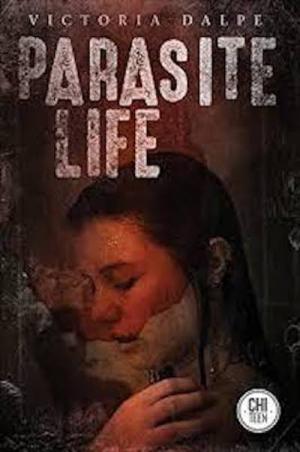
Today, I’m thrilled to feature author Victoria Dalpe. Victoria is the author of the novel, Parasite Life, as well as numerous short stories. I was fortunate enough to meet Victoria at Readercon this past summer, and she’s as fabulous a writer as she is in person.

Recently, she and I discussed her inspiration as an author, her hometown of Providence, as well as her future plans.

A couple icebreakers to start: when did you first decide to become a writer, and who are some of your favorite authors?

Victoria DalpeI’ve been writing and telling myself stories for as long as I’ve been around frankly. As a total bookworm, I’ve just always loved the storytelling either as the reader or the writer. I didn’t start seriously writing, with the intent of it being read and/or published until I moved back to Rhode Island from NYC. I was doing a career change, as I’d gone to art school and majored in painting and film studies, then I’d worked in NYC museums. I wanted to be more creative in my day to day. When we left the city and decided to do the house and kids thing, I decided to seriously try my hand at writing again. That was about 7 years ago and 1 published novel and about 15 short stories in collections later.

Favorite authors is always a tough question, like a favorite movie, or song etc. I’m a monster person and frankly, rarely read stuff that doesn’t have the inhuman in it. Some all-time formative favorites: Anne Rice, Poe, Lovecraft, Poppy Z. Brite, Tanya Huff, Tananarive Due, Barker, Daphne Du Maurier, Nancy A. Collins. I’m a die-hard splatterpunk fan, so Skipp and Spector for sure. I’m an unabashed fan of urban fantasy, which I fully embrace, and so Kelly Armstrong, early Laurell K. Hamilton, Carrie Vaughn, Ilona Andrews. I’m also a big New Adult/ Fantasy Reader so Laini Taylor is def on top of my list there. I love good characters, monsters, a love story, anti-heroes and a hearty dose of grue and horror. And so many super interesting and talented writers are coming down the pike lately, Nadia Bulkin’s She Said Destroy was excellent, for example.

Your YA novel, Parasite Life, was released earlier this year from ChiZine. What can you share about the behind-the-scenes of writing this novel? How long did it take you to complete? Were there any surprises along the way?

I wrote it over the course of a year, it was a little story I think I’d had living in my head for ages. I’d been reading a ton of YA around that time and found myself, time and time again, getting angry at the books I was reading. I found the relationships not only problematic in these books but also a little bit dangerous, considering the age of the readers and that they are being sold as romantic (and not toxic or even abusive). So I wanted to explore the more unsavory aspects of being in a relationship with a vampire, which is as toxic and unbalanced a pair you could conceive of. I think the challenge as I was writing it was keeping it YA, but also wanting to stay true to the story I wanted to tell.

Then off it went to a slush pile at ChiZIne Publications, a favorite publisher of mine, and remarkably they picked it up. A few years later and here we are.

You are also an accomplished writer of short fiction. What was your inspiration behind “The Wife,” which appeared recently in Tragedy Queens from Clash Books?

As a monster lover, I am often drawn to the stranger critters. I’d read in some monster book about a lady monster out of Asia who flew around on her hair, terrorized people, had a huge hole in her neck etc. BUT if you caught it and stuffed all the hair in a hole you could marry one. I found this story absolutely fascinating because who would want to take some crazy flying lady home? Would she be a good wife? And my story answers that question.

Parasite LifeYou reside in Providence, the cosmic horror capital of the world. How, if at all, does your hometown affect your work?

A ton! I definitely think there is something in the water in New England, in general, that makes it ripe for horror. Perhaps it’s the history, as one of the oldest parts of the country, perhaps it’s the long dark winters and long oppressive summers. But whatever it is, there is a certain something that permeates the land and its people. I’m a huge Lovecraft fan, and have been published in two Lovecraft Anthologies as well as co-editing the 2019 Necronomicon Anthology with the fabulous and talented Justin Steele. I love weird fiction and the directions it has been going in the last few years, and the critical attention it’s getting. Providence just has a vibe to it, that something is just a little bit off, that is quite inspiring.

In addition to your writing, you’re also an actress and producer. How does your process differ when you’re working on film versus fiction? Conversely, how is your approach the same?

Well, the actress part is solely because I was around! My husband needed some sucker to do a body cast and so I got the part. For being a big personality, I’m actually a pretty terrible actress, never been comfortable being vulnerable on stage or screen- too stiff. My husband is a filmmaker as are a cluster of our friends, so I’ve been lucky enough to help with all sorts of projects. The thing about a film is that it is entirely collaborative, every person is a cog in the machine. Writing is often the entire opposite creative process, the writer sets the scene, fill in the players, the sets etc. Film you need to assemble a team that can help get the vision off the paper and onto the screen.

If forced to choose, what’s your favorite part of the writing process: crafting setting, developing characters, or writing dialogue?

That is a tough question! Honestly, I think my favorite part is starting something. I love the beginning of a story when it can go anywhere and the limits are basically your imagination. I also love finishing a project! There is something so satisfying about wrapping something up, even if it’s just the first draft.

What projects are you currently working on?

I’m editing a collection of my short stories currently as well as my second novel. On top of that, starting to read through the submissions for the Necronomicon 2019, think it’s going to be awesome and a fun challenge to be an editor.

Huge thanks to Victoria for being part of this week’s author interview series. Finder her online at her blog and Amazon page as well as on Twitter and Facebook!

Happy reading!

Darkness and Entropy: Interview with Brian Fatah Steele

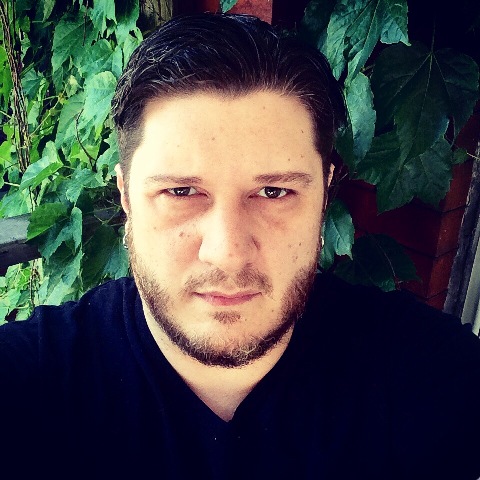
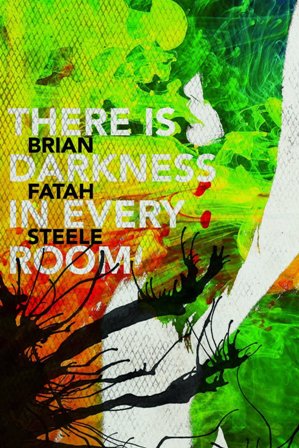
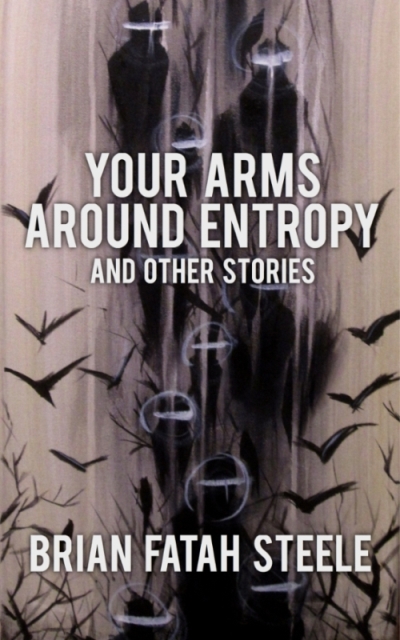
Welcome back! Today, I’m thrilled to spotlight author Brian Fatah Steele. Brian is the author of Your Arms Around Entropy and Other Stories, and There Is Darkness in Every Room as well as numerous short stories.

Recently, Brian and I discussed his inspiration as an author, his work as an interviewer, and his writing plans for the future.

A couple icebreakers to start: when did you first decide to become a writer, and who are some of your favorite authors?

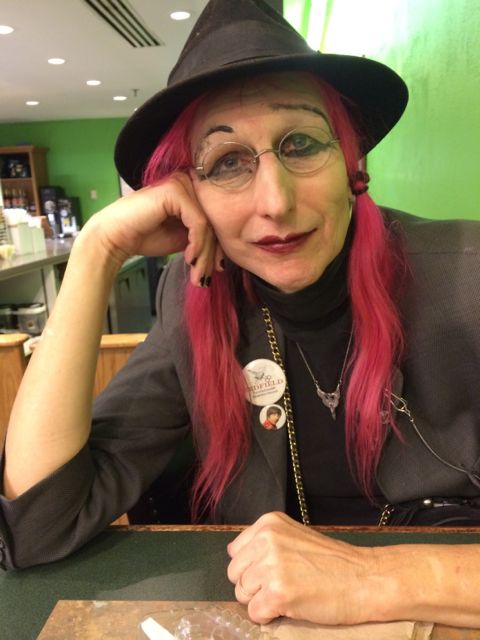
Brian Fatah SteeleIn the mid-nineties I started going to Kent State University for Fine Arts. I wanted to be an illustrator, possibly work on comic books, but I dropped out after my junior year. I had become very disillusioned with visual arts, but I realized when I still worked with it, I was constructing stories in my head to go along with the illustrations. Both my parents were educators and I had been raised on a steady diet of books growing up, so I decided to try writing as a creative outlet. All I had backing me was about 25 years of reading fiction and one high school creative writing class I had enjoyed immensely. To my surprise, I found myself far more fulfilled by writing than I ever had by visual arts. Now cresting into my 40-ies, I absolutely identify as a writer who simply dabbles in art.

My big three influences are Clive Barker, Brian Lumley, and Warren Ellis. I read The Books of Blood far too young, and it made me want to write outside of traditional horror tropes. Lumley taught me that I could throw whatever I wanted into a story and not be confined. Ellis showed me that you could have a message amidst all the brutality. I love a mix of authors – Edward Lee, Neil Gaiman, Anne Rice, James Rollins, Grant Morrison, S.M. Peters, Douglas Preston & Lincoln Child, Mary SanGiovanni, Laird Barron, Nate Southard, John McCallum Swain, Michelle Garza & Melissa Lason, John Claude Smith, Christopher Moore, H.P. Lovecraft, and too many more to name.

Congrats on the recent release of your collection, Your Arms Around Entropy and Other Stories. What can you share about your process while writing this book?

This book came together after about five years of submitting short stories to anthologies. I realized most of them had a cosmic horror theme, or in some cases, were a straight-up Lovecraft homage. After penning the title story, I felt it was ready to share. Some lean more cosmic than other, but all the tales I feel have a certain nihilistic vibe to them. I’m not necessarily a pessimistic person, but hopelessness translates great in horror, and I’m especially interested when we would find it abhorrent and vast.

You write short stories as well as novels and novellas. How does your approach differ (or stay the same) depending on length?

I’m very much a plotter. I’ll think about a story for days up to months before I ever type out a single word. Even then, everything gets a summary first. All characters get names, I know my locations, the movements, even some of the dialogue. A short story will simply get written out, the word count whatever it ends up being. It’ll get edited afterwards for a variety of things.

I’ve got my novel/novella system down now, one that works best for me. Lots of short chapters, usually shifting POV. My chapters are usually around 1000 words, and I outline a novel to be between 50 to 60 chapters. The goal is to get at least one chapter done a day. Sometimes I get two chapters done, sometimes I don’t get any. Regardless, this works for me. All my novels tend to have ensemble casts as opposed to focusing on one main protagonist, so this also benefits my style. Sure the story sometimes veers off from the outline a bit here and there, but never too much.

What first drew you to the horror genre? Do you remember the first horror movie you saw or story you read?

There Is Darkness in Every RoomWe have a Carnegie Public Library in my home town of East Liverpool, and when I was very young they had this series of book in the children’s section that I gravitated to. Hardbound books that fictionalized the old Universal horror movies – Bela Lugosi’s Dracula, Boris Karloff’s Frankenstein, Lon Chaney Jr’s Wolfman, etc. There must have been twenty of these things, and I checked them out regularly. I was probably only like seven.

I believe the first adult horror movie I saw was the original Halloween. Maybe it was The Fog. I recall seeing both around the same time. Either way, John Carpenter terrified me as a child. Today, he’s my favorite director. And I’m pretty sure the first adult horror I read were those original Books of Blood I snagged. I still have them, and I think they might be the original American printing. They say 1986 inside, so if I bought them even a year later, my dumb ass read them at 10 years old. That explains a lot.

You are currently residing in my beloved birth state of Ohio. I, for one, think that the Ohio landscapes—rusted-out factories, unending fields of wheat and corn, creepy little small-town neighborhoods—are absolutely rife with horror possibilities. How does living in the Buckeye State impact you as a storyteller?

I absolutely agree! I feel like “Rust-Belt Gothic” needs to be explored more. I dive into the concept of the “Creepy Farmhouse” in my novel There is Darkness in Every Room, and in a story within Your Arms Around Entropy. I explore the idea of the “Dying Town” also in my latest collection as well as it being a central theme in an upcoming novel. Ohio has blistering hot summers and withering cold winters, we are a political swing state, and we have Amish communities only a stone’s throw from metropolitan cities. There’s abject poverty and a rising drug epidemic, yet you’ll trip on a college campus if you’re not paying attention. I’m Bipolar so I can say this – Ohio is Bipolar as fuck.

It’s actually hard not to set more of my stories in Ohio, because I honestly believe the setting here is so malleable and ripe for use. That said, I don’t want to be that guy.

In addition to your fiction writing, you also run the 7Q Interview series on your site. What made you decide to become an interviewer?

Your Arms Around EntropyIt seemed to me authors were only getting interviews when they had books coming out, and even then, it appeared to be the same authors all the time. I can’t really blame these sites, most of them have day jobs, plus they’re also doing reviews and juggling additional articles. It occurred to me that if I did an interview series, the same interview every week, I could feature a great deal more authors, some who might be falling through the cracks. Some who hadn’t been interviewed before, or who maybe don’t get two books a year out, so their presence has faded a bit. That’s not to say I don’t want to interview authors with a new book out, or bigger names, but I can feature everybody when that’s all I focus on.

What projects are you currently working on?

My next novel Bleed Away the Sky will come out from Bloodshot Books in early 2019. It’s a sort of Cosmic Horror/Urban Fantasy piece. I have another novel, similar in style, making its rounds to publishers now. Currently I’m working on what I’m calling a character-driven-splatterpunk-novel-with-supernatural-elements.

Big thanks to Brian Fatah Steele for being part of this week’s author interview series! Find him online at Twitter, Amazon, and Goodreads!

Happy reading!

In This Goth We Trust: Interview with Chelsea Goodwin

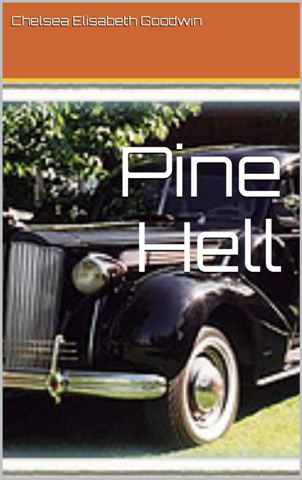
Welcome back! Today I’m thrilled to feature the incredible Chelsea Goodwin! Chelsea is the author of the novel, Pine Hell, as well as the radio host for the fabulous program, In Goth We Trust.

Recently, Chelsea and I talked about her favorite authors, her love of the Gothic, and her favorite songs as a pianist.

A couple icebreakers to start: when did you first decide to become a writer, and who are some of your favorite authors?

Chelsea GoodwinI wanted to be a writer ever since I read Nancy Drew. I love pulp formulas and love to use them in my own work like Pine Hell (available on Amazon Kindle) by spoofing, queering and subverting them.

My favourite authors include some mainstream authors like Patricia Cornwell and Dan Brown, but aside from that, the books I revisit the most are Frankenstein by Mary Shelly, Bram Stoker’s Dracula, The Picture of Dorian Gray, anybody from the old Alfred Hitchcock anthologies, Anne Rice, Stephen King, Joyce Carol Oates, anybody that’s been anthologised by Ellen Datlow, and anything that ever appeared in Weird Tales magazine. Neil Gaiman is of course God as any follower of the Lucifer tv series knows.

As you already know, I’m a huge fan of your radio show, In Goth We Trust. What was the inspiration for starting the show, and how has the program evolved over time?

At the time we started in 2011 I was running a bookstore on Main Street in Pine Hill (which was the setting for Pine Hell only in an alternate universe where my cat is my chauffeur) and a woman tried to persuade me to buy an underwriter’s spot on WIOX. Instead I pitched the idea of In Goth We Trust, a radio show dedicated to all things Goth including Goth music and fashion, Gothic literature, Gothic horror movies, etc. Of all the interviews I’ve done, the one of which I am proudest was with John Astin. We debuted on Hallowe’en night 2011.

I’ve been a fan of Gothic horror in the form of the old Universal and Hammer movies from childhood, as well as Dark Shadows. Perhaps my biggest influences were The Addams Family which I saw first run when I was four years old and The Munsters. I was privileged to meet both John Astin and Al Lewis. In the eighties I was friends with Miriam Linna of the Cramps and was a huge fan of horror rock. However, I also have this other weird side that loves weird fiction and Gothic horror from the late eighteenth century to the present day, with a distinct fondness for Victorian Gothic and Art Deco settings You know of my love of Lovecraft and the school of Weird Cosmic Horror fiction he spawned, by love of dark gaslight fantasy and of course the wonderfully modern baroque stuff that you write.

I wanted to combine these interests with the type of free form radio that was done in the early FM days and on seventies and early eighties college radio. I am particularly proud of my interviews, because I model myself after people like Dick Cavett and Mike Davis who seriously know how to conduct an interview in an adult manner and who realise that the goal is to showcase the artist one is interviewing rather than one’s self.

Music is also very important to me. I’d like to think that I’ve been an important part of a revival of interest in the mad genius Screamin’ Lord Sutch for example.

In one of our past interviews on In Goth We Trust, you discussed how every region has its own form of the Gothic, be it the lonely North York Moors of England or the haunted steel mills of the Rust Belt. I absolutely loved this idea so much, and I even mentioned you and this theory in a recent article about sub-genres of Gothic fiction. In your opinion, what is it about the Gothic that lends to its perennial appeal?

This is a fascinating and multi-faceted question. It forces one to think about what one means by “Goth” or the “Gothic.” I believe that it implies romanticism, an artistic expression of the human soul to the mysteries of love, sex, death and the unanswered questions that we all face. I believe the essence of Goth culture is a bunch of teens getting stoned in a graveyard, or a cornfield, or out in the woods and telling each other stories, some of which are humourous and some of which are intended to freak each other out. I’m describing a scene from my own life in what I call “trailer park New Jersey” with its farms being replaced by strip malls, its junk yards full of antique cars and very little for kids to do except hang out in the woods and wild places like the Pagans of old. I’ve had this conversation with our mutual friend Doug Wynne. Ours was a generation of rural Americans that found our own blend of heavy metal music, dabblings with the occult, discovering love and sex and romance and the writings of Lovecraft all at about the same time. Add to that we all grew up on Dark Shadows and Dr. Shock’s Mad Theatre or similar entertainment, and had all seen things in old houses or out in the woods and fields that we couldn’t completely explain to ourselves. I think it’s all of that combined with a search for beauty and the beginnings of a mature aesthetic sense.

In addition to your writing and radio hosting, you’ve also run a bookstore. How did your own tastes as a book lover play into what titles you stocked?

I sell all manner of books online, but my vision for my brick and mortar store is to combine selling fantasy, horror and science fiction books with an emphasis on weird fiction and Gothic literature with a good listening space where I and others can play my beautiful 1910 Steinway upright grand. I also read Tarot for private clients in the space.

Pine HellI recently learned that you’re also an accomplished pianist! How long have you been playing? Can you share a few of your personal favorite pieces that you love to play?

I was privileged to take piano lessons when I was a kid from ages 5 to 18. One of my teachers was Harry Lee of the Fred Waring orchestra (one of the last and corniest of the big bands). Along the way I developed a preference for ragtime, early jazz, and what is called the American popular songbook (Cole Porter, Johnny Mercer, Rogers and Hart). I am fascinated by the history of American musical theatre and the role of nonwhite and lgbt people and of course Jews in creating a uniquely American culture. I love the decayed Gothic decadence of old school glamour fallen to haunted house status. I believe that my queer, trans identity and my love of the dark, gothic side of camp are at the heart of my musical performance.

I love to play Bach’s Toccata and Fugue in D minor and Funeral March of a Marionette for their use by Vincent Price and Hitchcock respectively. I always open with the theme songs to The Addams Family and The Munsters. Recently I always also do dark, gothic versions of Sugar, Sugar and Jingle, Jangle both from the 1960’s The Archies tv show and both hauntingly re-imagined for Riverdale, which is, in my opinion the best written show on television these days for the way it subverts and reveals the underlying horror that permeates the America that Riverdale and the Archie comics universe have always represented. My feelings about Sabrina are best illustrated by the fact that I live with a huge black cat named Salem.

What books are in your to-be-read pile?

At the moment Love in Vein, an anthology of Vampire erotica edited by Poppy Z. Brite and Wild Nights! by Joyce Carol Oates are on top of the pile. I’m currently reading one of Cornwell’s Scarpetta novels. I am waiting for your latest to arrive so I can savour it, of course.

Do you have any upcoming appearances planned for 2019?

On Oct 24 I will be performing in The Freaky Mutant Weirdo Variety Show at Roxy and Duke’s Road House in Dunellen, Nj. I’m on the bill with A Halo Called Fred which is wonderful.

What projects are you currently working on?

I’m working on some music, and starting to outline another novella in my Lady Sylvia Dorchester and Dr. Drusilla Styles series.

Tremendous thanks to Chelsea Goodwin for being part of this week’s author interview series! Find her online at her Facebook page and at the In Goth We Trust page!

Happy reading!

RELEASE DAY: The Rust Maidens is now available!

So. It’s here. My debut novel, The Rust Maidens, has officially made its way into the world!

*twirls and twirls and twirls in endless circles*

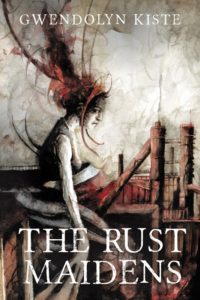
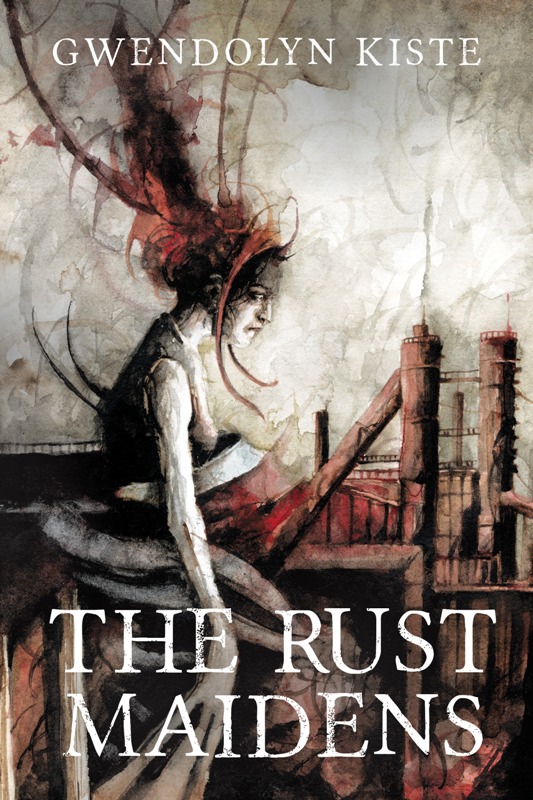
First off, I want to share the gorgeous Daniele Serra cover art again. Because it is seriously just so beautiful, and I’m still in awe of it. Behold…

The Rust Maidens

*twirls again in circles*

It goes without saying, but tremendous thanks to Trepidatio Publishing for bringing this book to life. As often happens with novels, The Rust Maidens went through a couple iterations before at last arriving in its final stage of metamorphosis, and I’m so grateful to have been able to learn so much about the process of writing and editing a novel with Trepidatio. It’s been a wild ride for sure, and one I’m so thrilled to have taken.

So I guess I should probably put up links to where you can find this alleged book, right? Okay, here goes…

The Rust Maidens at Amazon

The Rust Maidens at JournalStone

In case you haven’t gotten enough of The Rust Maidens yet (and I hope you haven’t because I won’t be keeping very quiet about it), I’ve got a number of interviews coming up over the next few weeks, so stay tuned. Obviously, I’ll be my usual loquacious self and be yelling from every mountaintop about the novel.

In the meantime, happy reading, and thank you for the support!

Thankful for Literature: Submission Roundup for November 2018

Welcome back for this month’s Submission Roundup! There are so many awesome calls in the coming weeks, so hopefully if you have a story or poem looking for a home, one of these markets might be a good place to send it!

First, the usual disclaimer: I am not a representative for any of these publications. If you have any questions, please direct them to the respective editors.

Now onward to this month’s Submission Roundup!

Submission Roundup

Not All Monsters anthology
Payment: .01/word
Length: 2,000 to 8,000 words
Deadline: Ongoing until filled
What They Want: Character-driven and beautifully written grotesque stories about the monsters in women’s lives. Open to all female-identifying writers.
Find the details here.

LampLight Magazine
Payment: .03/word ($150 max) for original fiction; .01/word for reprints
Length: up to 7,000 words
Deadline: November 15th, 2018
What They Want: Open to quiet literary horror stories.
Find the details here.

Paper Butterfly
Payment: $10/flat (CAD)
Length: up to 1,000 words
Deadline: November 30th, 2018
What They Want: Open to flash fiction of a variety of genres.
Find the details here.

Moonlight: A Queer Werewolf Anthology
Payment: .07/word (CAD) for fiction; $10 (CAD) per page for comic script; $50 (CAD) per page for comic art
Length: 1,000 to 2,000 words preferred, though stories up to 3,250 words will be accepted
Deadline: November 30th, 2018
What They Want: Open to queer werewolf stories of all genres (horror, sci-fi, fantasy, etc.). The editors are also accepting comic pitches.
Find the details here.

Liminality
Payment: $10/flat per poem
Length: No specified line limits
Deadline: November 30th, 2018
What They Want: Open to hard-to-define speculative fiction poetry
Find the details here.

Hidden Things: Stories of Crime and Horror
Payment: .06/word (contingent on Indiegogo campaign)
Length: 3,000 to 5,000 words
Deadline: December 15th, 2018
What They Want: Editors doungjai gam and Ed Kurtz are seeking stories that blend horror and crime fiction.
Find the details here.

Happy submitting!

Recommended Reading and What’s Next: Part Five of Our October Author Interview Series

Welcome back for the final installment in our October author interview series! Today, we discuss what books our eight fabulous authors are reading as well as what they’ve got planned next!

So let’s take it away!

What books are currently in your to-be-read pile? Likewise, what book has been your favorite read of 2018, and what forthcoming books are you looking most forward to reading?

LORI TITUS: I have a pretty thick list! I’m always reading something but I still don’t get to read as many as I like. Lately I’m doing two at a time with one of those being on audio.

I’m looking forward to reading Blood Communion by Anne Rice when it comes out this fall. I really enjoyed All Systems Red by Martha Wells.

I think my favorite book so far this year is probably a tie between two novels: Days of Blood and Starlight by Laini Taylor and Children of Blood and Bone by Tomi Adeyemi.

CALVIN DEMMER: To-read next: James S. A. Corey’s Leviathan Wakes and Nick Bostrom’s Superintelligence: Paths, Dangers, Strategies (non-fiction).

I’m slow when it comes to reading novels at the moment, so my favorite novel I read this year would be Jeff VanderMeer’s Borne (published in 2017). For a novella, I’d go with Philip Fracassi’s Shiloh, which was a very original and fantastic story set during the Civil War. I’ve recently read Christa Carmen’s collection, Something Borrowed, Something Blood-soaked, which I enjoyed. I liked how she had supernatural horrors and real-life battles, such as substance abuse and mental health issues.

Well, your debut novel, The Rust Maidens, is a book I am looking forward to. I read the synopsis and couldn’t resist pre-ordering it.

ANYA MARTIN: Unfortunately I haven’t read as many novels this year as I would have liked to because I’ve had so many other things on my plate, including my own writing, and my carpal tunnel made it hard to hold up a book during flare-ups, even, perhaps ironically triggered some of those flare-ups. I’m old school and still prefer actual books to a tablet. One way I addressed these limitations was large graphic novels which I could spread open on a table, bed, or my lap. It actually came out in 2017 but I was absolutely blown away by My Favorite Thing is Monsters by Emil Ferris! Also the graphic novel adaptation of Octavia Butler’s powerful SF/horror novel Kindred by Damian Duffy and John Jennings

Both Michael Griffin’s and Orrin Grey’s new collections from Word Horde are top of my to-read pile, along with John Claude Smith’s Occasional Beasts: Tales from Omnium Gatherum and Damien Angelica Walters’ Cry Your Way Home, which came out at the beginning of 2018 from Apex, and I tragically haven’t gotten to yet. Plus The Future is Female, the new Library of America anthology of classic SF stories by women edited by Lisa Yaszek, Georgia Tech Professor of Science Fiction Studies, who also edited the kickass Sisters of Tomorrow anthology (2016). As for upcoming, I simply can’t wait for Craig Laurance Gidney’s novel A Spectral Hue, set for June 2019 from Word Horde!

DOUNGJAI GAM: what’s not in my TBR pile is more like it…I typically had about 5-6 books going at a time, but my reading habits have slowed considerably in the last couple of years and I need to fix that. currently it’s Buried in Blue Clay by LL Soares, Hannahwhere by John M McIlveen, and a reread of Jack Ketchum’s Peaceable Kingdom. My favorite reads so far this year (none of which were released in 2018):The Fisherman by John Langan, Haven by Tom Deady, and Husk by Rachel Autumn Deering. I’m really looking forward to Bracken MacLeod’s next collection White Knight and Other Pawns as well as pestilent by Rachel Autumn Deering and Matt Hayward.

MICHAEL GRIFFIN: My favorite read of the year was You by Caroline Kepnes, just because it’s so fun, crazy and over the top, with such a compelling narrative voice. It’s not weird fiction and not even really horror either, but I think of it as something like American Psycho for the social media age. I also enjoyed the sequel, Hidden Bodies, though not quite as much as You.

My favorite 2018 read “in genre” would be Corpsepaint by David Peak, a really cool pagan black metal novel published by Word Horde. I hope a lot of people will check this out.

The to-be-read pile is stacked higher than ever, because I’ve spent so much time this year reading crime novels and thrillers. One of those, Laird Barron’s Blood Standard, proves weird authors can write really great crime books! Next up, I’m looking forward to Darkest Hours by Mike Thorn, Things We Lost in the Fire by Mariana Enriquez, Bones Are Made to Be Broken by Paul Michael Anderson and We Are All Completely Beside Ourselves by Karen Joy Fowler. Of course there are always more things landing in the pile and this intended reading order is subject to constant shuffling.

LEE FORMAN: My to be read pile is always growing, never getting smaller. But I’m currently reading The Road by Cormac McCarthy. After that I plan to read The Hitchhiker’s Guide to the Galaxy series, then on to Sleepwalk by John Saul. I’d have to say my favorite read this year has been Still Dark by D.W. Gillespie. I’m really looking forward to reading Neverwhere by Neil Gaiman.

CHRISTA CARMEN: One of the books I’m most looking forward to reading is The Rust Maidens, by the lovely and infinitely talented facilitator of this interview. I’m a huge fan of your short stories and the Pretty Marys novella, and S.J. Budd’s early review of the novel has me that much more excited to get my hands on it, rust and all. Others anticipated releases include Stephanie M. Wytovich’s The Dangers of Surviving a Slit Throat, and Stephen King’s Elevation.

I don’t know if I can narrow down my favorite book of 2018 to a single reading experience, so I’ll list several: Bring Me Back, by B.A. Paris, Florida, by Lauren Groff, The Death of Mrs. Westaway, by Ruth Ware, and The Hunger, by Alma Katsu. My current TBR pile consists of Unbury Carol, by Josh Malerman, The Boy at the Keyhole, by Stephen Giles, Foe, by Iain Reid, and Bad Man, by Dathan Auerbach.

GEMMA FILES: My to-read pile is (I shit you not) two full bookcases’ worth and still growing. I used to read faster, or so I can only assume—I can certainly knock out a John Connolly Charlie Parker mystery in two hours or less even now, but then, he’s special to me (The Woman in the Woods is his latest, and it’s excellent, as ever). Most recently, I finally got hold of a copy of Victor LaValle’s The Ballad of Black Tom and read it all the way through (incredible, from top to tail), then re-read Margaret Irwin’s slim, odd little out-of-print book Still She Wished For Company, which reminds me strikingly of the work of another quietly brilliant historical/weird female writer who most people don’t know about, Marjorie Bowen. It’s about time travel, sort of…time bending, at any rate, crossed with 18th-century rakery and haute magie, plus a really creepy incest-vibe brother/sister relationship, but because it’s seen through the eyes of two people who barely know what’s going on, almost all of it lives in the liminal, between-spaces of the narrative.

But David Peak’s Corpsepaint is probably still my favourite of what I’ve read so far this year: bleak, cold and cosmically horrifying as an explosion at a factory that makes Hieronymous Bosch prints scored to whatever black metal band you find rawest. Next on the list: probably Hitler’s Monsters: A Supernatural History of the Third Reich by Eric Kurlander, a series of essays about Nazi “border science,” and The Penguin Book of Witches (ed. Katherine Hoew), which excerpts accounts of witch-trials from 1582 to 1813.  

What’s next for you?

LORI TITUS: More books! I have more short fiction, but also plans for one or two novels next year. A sci fi, a fantasy, and more horror, of course.

CALVIN DEMMER: I have quite a few different projects at various stages of completion. It’s hard to say which I think will see the light next. I’ve been going back to work on some of my Dark Celebrations short stories. Also, I have been slowly looking to put out a collection of short stories, and I am working on my first novella. Lastly, I do have a couple of short stories that will be coming out in magazines and anthologies in the near future.

DOUNGJAI GAM: There’s stuff in the works but nothing that’s coming out anytime soon—a couple of anthology submissions I’m working on, a few short stories that have been begging for attention too. I have plans for a novella and what I think may end up being a novel as well. I’m a very slow writer who gets easily distracted, but I’m really hoping to strike a solid balance soon so that I can get more work out there. I also have three readings coming up in October and November that I’m excited about.

MICHAEL GRIFFIN: First I’ve got to finish one novel, then go back and finish a second that I set aside to work on this one, then go even further back and finish “Armageddon House,” the half-done novella I mentioned that’s been simmering on the back burner for almost a year.

At some point, between these things, I’d like to create a new short story or two. This focus on longer works is fine, but since I have no new work coming out for such a long time, it’s tempting to imagine the world might forget I exist! I know from past experience there’s no pacing these things. Sometimes I have five stories published in three months, then nothing for almost a year.

LEE FORMAN: What I’d love to do next is finish my full-length novel. Now that I’ve got a book or two on the shelf I’d love nothing more than to add a few more. It’s probably going to take some time with all the other projects I have going on, but that’s my main goal—to continue publishing long fiction at least on a somewhat regular basis.

CHRISTA CARMEN: As for forthcoming projects, I’m only a few short stories away (stories that are already in the works) from having enough material to put together a second collection. The tone of this one would be a bit different from Something Borrowed, Something Blood-Soaked, but some of the same themes would abide.

Still, I won’t pursue another collection until I’ve finished the novel I’m working on. I was surprised by how much additional work came with the release of Something Borrowed…, and so I’ve been beating myself up regarding the last few things I wanted to tinker with on this new book, Coming Down Fast. Now that the collection has been released, I’m going to use that relentless self-flogging for actual good, and finish it.

Besides Coming Down Fast and the new collection, there’s another novel I have in the works, about a thirty-something year old woman who writes a blog about the pharmaceutical industry and ends up pursuing acupuncture as a personal infertility treatment, with monstrous results, entitled 13 Sessions.

Staying busy sustains my passion for this crazy thing I love to do. When I first started writing, I kept a folder with me at all times containing a printout of a WIP short story, or several novel chapters. I printed out a quote from Stephen King and pasted it across the front: “Talent is cheaper than table salt. What separates the talented individual from the successful one is a lot of hard work.” As silly as it may seem, it reminded me that the only thing I actually have control over is not whether I get published or if readers like my stories, but how hard I work. I don’t use the folder anymore, but the quote is engrained in my mind, and I like that I can use it to hold myself to a certain standard of productivity. When seeing through longer projects, it’s imperative that I feel satisfied with at least the amount of words on the page, if nothing else.

GEMMA FILES: Write a story, send it in. Finish that next damn book. Keep on keeping on.

Thank you again to my eight featured authors for being part of this month’s roundtable interview series! One more time, let’s look at all of their awesome new books, available now!

Something Borrowed, Something Blood-SoakedSomething Borrowed, Something Blood-Soaked by Christa Carmen

In her debut collection, Christa Carmen combines horror, charm, humor, and social critique to shape thirteen haunting, harrowing narratives of women struggling with both otherworldly and real-world problems. From grief, substance abuse, and mental health disorders, to a post-apocalyptic exodus, a seemingly sinister babysitter with unusual motivations, and a group of pesky ex-boyfriends who won’t stay dead, Something Borrowed, Something Blood-Soaked is a compelling exploration of horrors both supernatural and psychological, and an undeniable affirmation of Carmen’s flair for short fiction.


Soul BondedSoul Bonded by Lori Titus

My soul is in hock, a mystical layaway.
I haven’t sold my soul to the devil, but the deal I made is close enough. I have to work for a demon for the next seven years. If I do my job well enough, my contract is void after that time, and I get the part of my soul back that he took away. Unless he decides I’m more valuable to him than that. I’ve come across worse odds.

The Human AlchemyThe Human Alchemy by Michael Griffin

Heralded as one of the leading voices in contemporary weird fiction, Michael Griffin returns with his second collection, The Human Alchemy. Here you will find eleven magnificent tales of the strange and sublime, the familiar and the disquieting, where dreamlike beauty and breathtaking horror intertwine. Featuring an introduction by S.P. Miskowski.

glass slipper dreams, shatteredglass slipper dreams, shattered by doungjai gam

from glass slipper dreams, shattered: Like a stupid girl with glass slipper dreams, I did everything you wanted with the hopes that one day, you would love me back.

glass slipper dreams, shattered the debut collection from doungjai gam is filled with loss, sorrow, revenge and remorse.

gam delivers devastating punches in this collection of short-shorts, taking our breath away with a turn of a phrase, a dark play on words; every syllable paints unexpected shadows in our imagination.

Sleeping with the MonsterSleeping with the Monster by Anya Martin

Twelve women. Twelve horrors disguised as love. In Anya Martin’s new collection of horror tales: a teenage girl faces the consequences of wishing her dog could live forever; a romantic college student wakes a gargoyle in Paris; and a lonely woman finds her house infested with insects. History’s darker depths are delved as an American jazz singer confronts her lover who has committed terrible war crimes as he descends into madness in post-WW2 Germany; and a couple experiences H.P. Lovecraft’s Resonator machine via found footage from the Velvet Underground. In the publisher’s favorite tale: Actress Elsa Lanchester reveals the true story of Bride of Frankenstein involving the preserved brain of Karl Marx’s daughter in 1923 London. With this book Martin joins the ranks of daring woman delving into the dark fantastical.

The Sea Was a Fair MasterThe Sea Was a Fair Master by Calvin Demmer

The world’s fate lies with a comatose young girl; an android wants to remember a human she once knew under Martian skies; men at sea learn that the ocean is a realm far different from land, where an unforgiving god rules; a school security guard discovers extreme English class; and a man understands what the behemoth beneath the sea commands of him.
The Sea Was a Fair Master is a collection of 23 stories, riding the currents of fantasy, science fiction, crime, and horror. There are tales of murder, death, loss, revenge, greed, and hate. There are also tales of hope, survival, and love.
For the sea was a fair master.

Lee FormanZero Perspective by Lee A. Forman

Lost in the depths of space and time, swallowed by something unknown to humanity, a derelict ship is adrift in an alternate reality. John and his crew board the vessel, the Esometa, on a rescue mission. The ship’s been lost for two weeks with no explanation. When they discover its occupants dead and decaying, a mind-bending journey begins. The Esometa takes them down a path filled with horrid creatures and bizarre events from which there may be no return…

Drawn Up from Deep Places by Gemma Files

Drawn Up from Deep PlacesIn her second collection from Trepidatio Publishing, award-winning author Gemma Files takes her readers on journeys out beyond safe borders—from the trackless depths of the sea, to the empty desert frontiers of the Weird West, even to the edges of cracks between worlds. Here, in these narrow spaces between the known and the unknown, behind the paper-thin curtains of reality, lurk monsters both human and ancient: selkies and avenging revenants, voodoo priestesses and pirate sorcerers, ghosts and vampires, and the most famous murderer of all time. But however strange the things found in these deep places, what draws them up, and calls them back, are forces the human heart knows all too well: grief and vengeance, rage and loss . . . and, most terrible of all, love.

Published over the past fifteen years—some only available online until now—these fantasies of the darkest kind showcase the breadth and scope of Gemma Files’s imagination, seamlessly blending styles, genres, themes, and atmospheres into a dark and thrilling voice like nothing else in fiction today. Newcomers and old friends both are invited to join her in these journeys . . . if they dare to look upon what has been—DRAWN UP FROM DEEP PLACES

Happy reading!


Advice, Genre, & Original Stories: Part Four in Our October Author Interview Series

Welcome back for part four in our October author interview series! Today, I’m still talking one-on-one with my eight featured authors, as we cover some very cool topics, including short fiction, genres, and advice for new writers.

So let’s go!

Lori, as the title hints, your new book, Soul Bonded, deals with souls and deals with demons. The synopsis of the book is so wonderful, at once familiar yet filled with new possibilities. As a writer, how do you work with familiar concepts while making them entirely your own?

LORI TITUS: I think as writers we fight against the familiar. In some ways that can be a mistake. There are universal themes that just work, that we’re attracted to. I always look for how an idea can be made a bit different, from a new angle. Little bits of my experience or the lives of people I know work their way in too.

Sycorax's DaughtersTaking a detour into short fiction for a moment, I absolutely love your story, “Asunder,” that appeared last year in Sycorax’s Daughters. Can you tell us a little about that particular piece? Also, do you have any new short fiction coming out soon?

LORI TITUS: Thank you! I really enjoyed writing Asunder. I was working on a romance series for another author at the time and was itching to write something paranormal. Asunder is about a college student who recognizes the strength of her own abilities a little too late. The main character is so sure that she can use magic as a solution for what’s wrong between her and her boyfriend. It’s one of those cautionary tales; be careful what you wish for.

Speaking of short fiction, I have a couple new pieces coming out, one on September 4th. The story is a romance (nothing weird in this one) called Hierarchy. It’s part of Without Limits: A BWWM Collection of Passion and Desire.

I currently have a new novella called The Culling out; it’s another story in The Marradith Ryder Series.

A new story called Primal Thoughts which will appear in a collection called Alpha’s Call. That one will also go up for preorder in early September. It’s a paranormal romance between a woman and a shifter.

Lee, in the past, most of your work has stayed primarily within the horror genre. Zero Perspective, however, veers into science fiction and shades of the weird. Did that happen naturally as the story developed, or was blending genres something that you set out to do very deliberately?  

Lee FormanLEE FORMAN: Zero Perspective having elements of science fiction was intentional. I wanted to write something that explored sci-fi but retained that horror edge I love to write. The weird fiction aspect of the book came naturally as the story developed. That wasn’t expected. As it went on I kept thinking up stranger and more unusual circumstances for the characters to face. When I got to the end, the bizarre influence had already taken hold and forced its way heavily into the story.

Michael, the novelette, “The Only Way Out is Down,” is original to your collection. What made you want to include this piece as the only unpublished work in the book, and what was the inspiration behind this particular story? 

MICHAEL GRIFFIN: Originally I had something else in mind as the original for the collection, a story called “Armageddon House” about four people living in a deep, many-leveled bunker full of decades-old supplies and rooms for hundreds of people, with the four disagreeing about whether they’d always been there, or had just arrived recently, and what the reasons for it all were. The problem was that the story expanded to the point where it was pretty clearly going to be a novella, and much too long to put in the book. I had to set it aside.

Then I decided I really needed something new and short and simple, so I designed a very straightforward and streamlined idea, the kind of thing that couldn’t become complicated and complex-ified, and grow too long. I wrote it just after selling a house I’d been living in for about twelve years, and although the house was in good shape and sold pretty quickly, there are always a few anxiety-causing issues that come up in the process of getting a house ready to sell. It brought to mind a particularly modern, suburban kind of terror in which your life, which from the outside appears regular and organized and comfortable, might have various different levels of disintegration or rot going on, hidden from view. It’s a story about that kind of bourgeois paranoia, not only homeowner insecurity or fear of financial disaster, but more interestingly, the way our internal fears and subliminal insecurities can manifest in the physical world around us.

I suppose also some readers have suggested I rely too much on nature settings, or troubled creative types as characters, and I liked the idea of writing a story set in an entirely mundane suburban development, with the only characters a fairly generic married couple, and seeing if I could make the narrative feel rich and extraordinary rather than mundane or generic.

doungjai gamDoungjai, many of the stories in your collection could be described as prose poetry. What is it that inspires you to blend fiction and poetical language, and do you feel that horror and dark fantasy are particularly suited for prose poetry? Also, do you have a favorite poet? 

DOUNGJAI GAM: you know, it’s funny…I didn’t set out to write prose poetry, and yet here we are. when I was much younger I wrote a lot of poetry, stuff that will hopefully never see the light of day, haha. a lot of the pieces in the collection, especially the really short ones, got their inspiration from song lyrics. to me, well-written song lyrics can stand toe to toe with poetry written by a college professor—look at Bob Dylan’s work. I don’t get every piece of poetry I’ve ever read, and I don’t know that I have to; if a particular poem speaks to someone, like really reaches out and grabs their soul, it’s done its job. but if someone else doesn’t understand it but can appreciate it and maybe find a snippet of beauty in there, that’s fine too. I read all my WIPs out loud—I look for rhythms and cadence. I like a little bit of alliteration. it does feel like horror and dark fantasy would be natural bedmates for prose poetry…there’s a special kind of magic in the language that you might not necessarily see in other genres. my favorite poet is Linda Addison. her collection consumed, reduced to beautiful grey ashes really spoke to me. if you haven’t read Linda yet, you need to fix that!

Christa and Calvin: your books both serve as your debut collections, and they were each released through Unnerving. With editor Eddie Generous at the helm, Unnerving has become a fast-rising small press over the last year—and one of my own personal favorites. What made you choose Unnerving as your publisher, and what was the process like working with Eddie (knowing, of course, that he might very well read these answers!)? 

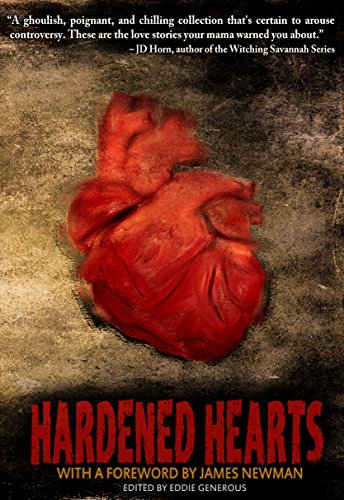
Calvin DemmerCALVIN DEMMER: I had a good experience working with Unnerving. My story “What is Love?” was published in their first anthology, Hardened Hearts, so I kind of knew what to expect when working with the editor. Every editor at a publication has a unique personality and different approach, or certain things they tend to focus on. I had read quite a few of Unnerving’s previous releases and could see the standards aimed for. I also felt like the publisher might be open to something a little different, which a flash fiction collection is, and I am glad I made the decision.

CHRISTA CARMEN: At the end of 2017, I placed my short story, “Red Room,” with Unnerving after stumbling across the magazine on Duotrope. The experience of being a part of that issue, which included stories by Stephen S. Power, John C. Foster, David Busboom, Gary Buller, Jake Marley, K.P. Kulski, Sara Codair, and Aaron J. Housholder, as well as your feature, Gwendolyn, “No Happily Ever After Here: Death and Dismay in Fairy Tales,” was a fantastic one, so when I saw the call for novel, novella, and collection submissions a few months later, I knew I wanted to put something together. Eddie Generous is such a beast of an avid reader, consuming mainstream and indie horror fiction with inhuman consistency. He listened to the Tales to Terrify podcast episode that featured the short story version of the “Liquid Handcuffs” novella in my collection, and according to the Jiffy-pop and Horror blogcast he recorded with you for episode #001, this was a driving factor in him wanting to publish Something Borrowed, Something Blood-Soaked. This, of course, tickles me pink as the pig on the haunting, hypnotizing cover he designed. Eddie’s work ethic is contagious, and it is an honor to be among his 2018 catalogue of authors.

I also worked with frequent Unnerving editor Erin Sweet Al-Mehairi, via Hook of a Book Media, and thanks to Erin, Something Borrowed, Something Blood-Soaked got into the hands of a great many reviewers I otherwise wouldn’t have reached. Erin also facilitated interview and guest post opportunities, and is generally awesome, supportive, and hardworking. She has become a dear friend of mine over the last six months, and I’d highly recommend Erin and Oh, for the HOOK of a BOOK! to anyone looking to get the word out about a new release.

Anya, “Jehessimin” is a previously unpublished piece in your collection. Can you share a little about the process and inspiration behind it?

ANYA MARTIN: I originally planned to do an original story and a different original novella, because so many people recommended doing a novella for a collection. However when I thought more about what I wanted to write, it seemed like those really were “next generation” works and not thematically consistent. Then last fall I was in an accident that totaled my rental car. Miraculously I walked away with only a slight air bag burn on my left thumb. There were a lot of weird things about the accident, including the fact that I was sure I hit a welding truck that stopped suddenly but there was literally nothing in front of me—an open stretch of dark highway. I’ll spare the details but I didn’t find out for two months that I really did hit a truck that left the scene. I also lost a special jewelry bag—folks, always get everything out of a rental car after an accident because the tow company may not let you back into the car since it’s not yours! I didn’t put all of the actual weirdness into the intro of “Jehessimin,” but it provided the seed.

Meanwhile I wanted to do a story that confronted head-on that feeling of not belonging that many young women have—i.e. maybe you’re a changeling. With the exception of actual adoptees, these fantasies of other parents are of course utterly fictional, vis-à-vis the following story “Black Stone Roses and Granite Gazanias” where the female protagonist has a similar thought and the gargoyle bluntly just tells her “no.” In a sense that story and “Jehessimin” are two sides of an old, old idea I had in my early twenties. The “Tiger Girl” segment comes from an edited fragment I wrote back then. I don’t want to spoiler too much, but as I worked with it more, seemingly endlessly, “Jehessimin” took some unexpected turns. The original concept might have been a bit more romantic though still in a dark way, but by the time I finished it, I hope I pushed myself enough that it morphed into a story where the young woman makes “interesting” non-male-centric decisions. Some readers may label it as more dark fantasy than Weird, but I strived to layer in Weirdness and discomfort, as well as re-reading a lot of C.L. Moore and Angela Carter as its literary “mothers.” I’m interested in finding out what readers think as this is also one of my few stories where the end leaves it open for a sequel, or rather a three-novella cycle.

Gemma, your writing career is an incredible one. You’ve been widely published and award winning, your fiction has been produced for television, and your novel, Experimental Film, has just been included on NPR’s list of 100 Favorite Horror Stories. I, of course, want to ask what your secret is (while naturally hoping that it involves copious amounts of dark magic and blood sacrifice), but I’ll ask this instead: what advice do you have for those of us who are new or still relatively new to the industry? How do you recommend navigating the usual publishing industry pitfalls, and what has made this career one that you love and have wanted to stay with, even through the inevitable challenges?

GEMMA FILES: Okay, so: first off, to hear my career summed up that way still amazes me, because from my perspective, I’m still just hammering away at a computer in my underwear and scribbling down strange stuff that happens to come into my head when I’m listening to music or watching movies. I mean, the computer used to be an iMac and now it’s MacBook, and I used to listen to a SONY Walkman/Discman, then an iPod, while now it’s an iPhone…basically, though, same old same old. I’m being rewarded for having kept going, more than anything else. Maybe that’s Canadian of me to say, but I really do feel like it’s true.

So that would be my first piece of advice: keep going. Don’t stop for anything or anybody. Don’t believe people if they try to dissuade you from practicing “that little hobby of yours.” Write for yourself, and trust that there is someone else out there—possibly many other someone elses—who are waiting to read your stories, most probably because A) they want stories in which they recognize some element of themselves and B) they are looking for a voice which echoes the one they hear deep inside themselves. Find the way in which you differ, and write from that, trusting that other people differ in the same way. This is another thing I’ve learnt from my own “autism journey”; my son and I may be at supposedly opposite ends of the spectrum (hyper-verbal versus hypo-verbal, etc.), but we’re still more alike than we are different, and that spectrum itself is part of a far larger spectrum which embraces all human behaviour, both neurotypical and neuroatypical. Nothing human is completely alien to any human being, no matter how much we want to pretend otherwise.

Which brings me to my second piece of advice, which is to always (at least initially) treat other writers, editors and publishers as potential kin or comrades rather than as competition—treat them the way you’d like to be treated, in other words. Act professionally on the general assumption that they will as well, then wait to see if that turns out to be true before making further judgements. That said, if somebody shows you who they are, believe them.

My third piece of advice is to not worry about things being perfect, especially in the first draft, or you’ll strangle your own stuff unborn. Douglas Clegg calls his initial draft the “puke draft,” which fits, but while you can fix bad writing, you can’t fix no writing. That’s what I tell my students. Get one good paragraph and stick it in a frame, then watch it develop a skeleton, muscles, flesh. Then go over it as many times as you want, but at some point, you have to let it go—throw it out into the world to garner sales or feedback. Other people can tell you the things you’re too close to see, so don’t be shy and don’t take it personally: write, rewrite, resend, repeat. See what happens. Stamina counts for so much more than blazing talent in the long run, and I should know.

And that’s pretty much all the advice I have, I guess, except to say that all writing begins in pastiche, so don’t be embarrassed: embrace the things that make you you, just make sure you also have a wide spectrum of influences and use at least a bit of your own reality to ground it, turning the subjective into the universal. Then keep writing until you can recognize your own voice, and cut away everything that doesn’t sound like that.

And that’s our post for today! Head on back next week for our final installment in the interview series, as these eight fine authors discuss their current reading lists and what projects they’re working on next!

Happy reading!

The Power of a Writer’s Process: Part Three of Our October Author Interview Series

Welcome back! October is winding down, but we’ve still got more from our eight amazing authors in this month’s interview series! In fact, this week will see not one, but two posts as today and tomorrow, I’m talking to our featured authors more one-on-one to really dig deep into their process, inspirations, and advice for other writers out there.

So let’s take it away!

Lori, you’re a prolific author with so many books already in your bibliography. How do you keep yourself motivated to write? Have your habits as a writer changed at all over the years?

Lori TitusLORI TITUS: I always have a story that I want to write. My challenge has been keeping my attention on just one of the books I have planned. When it comes to my own work (rather than ghostwriter material) I allow myself to stop and start certain novels. I usually have at least one “back burner” book which simmers while I work on something else.

Oddly enough, my writing habits have changed greatly in some ways while staying the same in other aspects. When I first got published, I was still working my day job. Since I only had nights and weekends to dedicate to my work, my goal was to complete one full-length novel a year; any short fiction I produced was extra.

I’ve been a full time author now for almost four years, and it’s allowed me to do a lot more work. I still enjoy writing at night (and the best writing jags are when I can write from midnight until four in the morning).

Lee, Zero Perspective is your debut novella. What inspired you to want to expand your bibliography into longer fiction right now, and how was this process different from (or similar to) writing short fiction?

LEE FORMAN: I’ve wanted to write longer fiction as long as I can remember. My first attempt at writing was a novel. But I realized I needed to build my skills and get my name out there before attempting the feat of writing a book. My foray into long fiction came quite suddenly and unexpectedly. I realized the intended short story of Zero Perspective could be a full-length piece, so I worked hard to finish the book, as it had been a goal of mine for a long time. The process for this particular book was similar to short fiction in the sense that it began as such. The pacing and style of the book are also similar to short fiction, as there isn’t much back story on the characters or the world they’re in. It starts with four people in a normal situation and from there, dives non-stop deeper into stranger and stranger places. The way the story flows and keeps going, it reads like short fiction, but has the ‘meat’ of a book.

Anya, you’ve built up an illustrious body of work over the last few years. What made now the right time to put together a collection? How did you choose which stories to include in the table of contents? Were there any that almost made the cut but weren’t ultimately included in the book?

Anya MartinANYA MARTIN: People have been asking me when I’d do a collection for a couple of years. Once I reached a reasonable word count, I developed the line-up. I considered another offer, but a delightful lunch at DragonCon with Steve Berman of Lethe Press convinced me that he had a real understanding and faith in my work. Lethe also has a proven track record with debut collections by women spec-lit authors which I hate to say still may need an extra promotional push. Per my first answer, I selected most of the stories I’ve published between 2015-2017 and I pretty much knew the table of contents from the start. I saved “Weegee, Weegee, Tell Me Do” (Tales from the Talking Board) for a future collection because I saw it as having some similarities to “The Un-Bride,” being also set in the early 1920s. I left out “The Toe” (Feet, Dunhams Manor, 2014) because it’s more gory horror than the rest. And “The Courage of the Lion Tamer,” my Daybreak story is readily available online, plus thematically, as an optimistic near-future science fiction story, it totally didn’t fit.

Doungjai, glass slipper dreams, shattered is your debut collection. The book is filled with powerful pieces that find influence in part from fairy tales, both in imagery like with the title and also in form with the way that you write about female characters being forced to confront almost mythical darkness in the world. What is it that draws you to these classic tales? Do you remember the first fairy tale or folktale you ever read or saw, and do you have a personal favorite?  

DOUNGJAI GAM: I grew up on a steady diet of Disney movies, fairy tales, and goofy 80s sitcoms. I think what drew me to all of this as a kid were the happy endings, and in a way that’s what also drove me away—life is not a fairy tale nor a 30-minute sitcom where your problems get solved around the 24 minute mark. I still draw inspiration from them, but don’t expect a prince on a white horse coming in to save you. we also had two sets of encyclopedias in the house, and I loved retreating into those (along with a beat-up, out of date, falling apart world atlas that I still have) when I needed to escape reality, and through them I discovered mythologies and far off lands that still fascinate me to this day. I don’t know that I have a favorite fairy tale, but the one that sticks with me the most is the one about the woman who wore a ribbon around her neck…I had a book of fairy (or cautionary) tales when I was a kid, and the drawing of the woman’s head on the floor with the ribbon nearby…I can still see it clear as day in my mind.

Michael, The Human Alchemy is your second collection. How does it differ from The Lure of Devouring Light, and conversely, what overlap do you see between the two books? How do you feel you’ve changed as a writer over the last few years? 

Michael GriffinMICHAEL GRIFFIN: At first I was mostly focused on the overlap, and saw more similarities than differences. It’s true that many stories in one book could be slotted into the other book and would feel like they belong.

In the first book, I designed the two novellas, “Far From Streets“ and ”The Black Vein Runs Deep,“ to mirror one another, but otherwise each story stood completely on its own. I believe The Human Alchemy has greater focus and consistency, and more of the stories feed off one another, or have thematic connections or even more specific links.

As a writer, my confidence has grown and my focus has shifted toward longer narratives. Three or four years ago I thought of myself as a short story writer who enjoyed dabbling in novellas and might enjoy taking a crack at a novel. Now I’d say that although I still enjoy the short story and don’t intend to ever stop writing them, I really feel I’ve hit my natural, comfortable stride when I’m working on something longer. It just feels right to me. Partly it’s that I naturally like to get into the mind of the character, and watch as they change in their perceptions and transform in how they interact with the world, and that takes time.

Another big reason is that I get so deep into building characters and sets and props and really designing the whole world of the story, and this is just something I have to do in order to see that world and feel it clearly enough to inhabit it like a true reality. The amount of work required to build a world and a set of characters and names and places is not really that much less for a short story than for a novella or novel. I believe that’s part of what makes me a very slow short story writer, and a little less slow as a writer of novellas, and actually fairly quick as a writer of novels. I can lay the words down on paper pretty fast once I get going. It’s just a matter of getting my world designed, getting to know my characters, outlining the plot or the beats of the story. For this reason I feel like the longer narrative ends up working better for me, and I spend less time trying to cram all my ideas into a space too small for them to fit.

Calvin, your collection is composed primarily of flash fiction. What draws you to writing such compact stories? Do you feel that horror in particular is well suited for flash fiction? 

CALVIN DEMMER: I enjoy the challenge. With flash fiction it becomes a fun battle to get the prose as tight as possible. You do have a word count limit after all, and it becomes interesting when deciding what to cut, what to show/tell, while still trying to create a purposeful pace and rhythm to the story. Also, some stories have twists, while others follow a different resolution. I first started writing flash fiction to experiment with different genres, which is why the collection flirts with so many of them even though most of the tales tend to have a dark pulse. I first got the idea for a collection after reading Maria Haskins’ Dark Flash, so I am grateful she planted the seed in my head.

And I definitely feel horror works well in flash fiction. While it may be difficult to have the build up of a longer work, you do have the opportunity to unnerve the reader, or hit him them hard if you have a clear vision and right flow to the story.

Christa, one thing that struck me most about your collection was how well you can toggle between strikingly beautiful language and visceral, disturbing details. As you’re writing, in particular in early drafts, is there a specific way you work to balance such juxtaposing details, or do you simply allow the prose to flow as you create and let the specific piece dictate the balance of details?  

Christa CarmenCHRISTA CARMEN: First, thank you! I would have to say that I let the prose flow as I’m ironing out the structure of a story, and allow that specific piece to dictate the balance of details. Sometimes a first draft comes from a more straightforward place, where the goal of getting down the narrative is key, as opposed to being driven by the language, and the imagery that language is evoking. Sometimes a story changes significantly from start to finish in terms of that balance, and occasionally, like with my short story, “Lady of the Flies,” it can change more than once.

Last October, I visited Scary Acres in Hope, Rhode Island, tiptoeing through their haunted corn maze and shrieking with laughter along their wagon ride’s bumpy path. The visit was the catalyst for the creation of Priscila Teasdale after generating the question, what if a haunted house worker’s life had been a series of unfortunate events, and what if she leaned a bit too heavily on her haunted house persona in order to cope? The answer? Why, she’d become the Lady of the Flies, of course.

But Priscila took on a life of her own over the course of writing this story. The original concept saw her very much as a Leatherface-esque character: yes, she’d likely had a rough go of it, but her actions were meant to terrify and even alienate readers. When Priscila came onto the scene, I wanted it to be the equivalent of a chainsaw revving too close for comfort. Yet she became something so much more than that, a real flesh-and-blood person whom I felt had no other options but to reclaim her sense of self by lashing out at those who strove to strip this from her.

There are several image-driven as opposed to narrative-driven pieces in Something Borrowed, Something Blood-Soaked, and in the case of “Thirsty Creatures,” I can tell you exactly why this was the case. Over a year ago now, a post was making the rounds on Facebook that featured the work of Polish painter Zdzisław Beksiński, who had specialized in ‘dystopian surrealism’ over the course of his life. A writer friend of mine tagged me in the post, challenging me to pick my favorite image and write a story about it. There were dozens of images that appealed to me, but the one of a young, wind-whipped girl astride a skeleton horse with trees that appear to be on fire in the background spoke to me most directly, and “Thirsty Creatures” was the result.

Gemma, Anya, and Christa: you’ve all utilized aspects of cinema very effectively in your work. For you personally, what is the draw of the world of film when writing, and how do you feel that incorporating cinematic influences affects readers?

ANYA MARTIN: Why, thank you, Gwendolyn. Thanks to my dad, I grew up watching lots of movies, especially horror but also a variety of genres and serious drama and foreign films. Some of my favorite “day job” work as a journalist has been film criticism and interviews with filmmakers. I think it’s almost impossible as a contemporary writer not to be influenced to some degree by cinema, and if you want to engage readers with short attention spans, you have an upper hand if you can write visually.

“Resonator, Superstar,” “The Un-Bride,” and “Sensoria” engage film directly. I don’t think I could have written “Resonator, Superstar” if I had not been fortunate enough to have the opportunity to attend a “live” reenactment of Andy Warhol’s Exploding Plastic Inevitable (EPI), which was part of Andy Ditzler’s Film Love avant garde series in Atlanta, though alas “sans” an actual The Velvet Underground performance. In “Sensoria,” I tried to evoke the kind of lush and brutal visuals consistent with Dario Argento’s cinema. In “The Un-Bride,” Elsa Lanchester is the narrator and some of the foundational material comes directly from her autobiography which also helped me mirror her voice. However, I also tried to match key scenes in “Bride of Frankenstein,” especially the opening sequence with Mary Shelley, her husband Percy and Lord Byron but instead Elsa, her husband Charles Laughton and director James Whale. So in sum, I watched movies to get those parallels between text and screen right, not only because of course, film buffs of these works would hold me accountable but I also really enjoyed the challenge of re-assembling cinematic elements into the prose medium.

Gemma FilesGEMMA FILES: In film, perspective is everything. The very construction of a camera means that you’re always thinking about framing: what angle and why, what’s inside the frame, what’s outside it. There’s a solidity to film that’s completely illusory, and a kineticism to film that comes from playing with speeding up and slowing down time through editing. I enjoy using film terms to get across shifts in action and understanding: swish-pan, slo-mo, step-printing, iris fade, smash cut to black. I’m not sure if my readers totally get what I’m seeing in my head, but I hope they do, and maybe it’ll make them look up the terms and realize that the visual shorthand we’re all educated to recognize by watching movies and TV probably exists inside them as well—that maybe they’ve been using them without knowing for longer than they think. I also really love how film, especially experimental film, allows us to layer input from several tracks at once over each other, sort of the same way a graphic novel layers sound, action, diegetic and ambient sound, dialogue, thoughts, etcetera over a series of still frames. Film also not only allows but forces you to cut straight from one thing to another, skipping all the boring stuff in between as long as you make sure your reader can figure out the most obvious way we must’ve gotten from here to there: less muss and fuss, less waste. I love all that.

CHRISTA CARMEN: Various aspects of cinema have played more of a role in my work than I would have initially conceded to. I’m often motivated by tone, atmosphere, and imagery, and much of my fiction is influenced by the imagery within a horror film in general, or by the imagery utilized by a specific producer or director. I’ve found it quite rewarding to ride that influence to the point of a story’s resolution, and see what I end up with. I was working on a short story this past week, and the rough draft was somewhat drab and flat. I spent Sunday morning with an endless cup of English Breakfast and Dario Argento’s 1977 masterpiece, Suspiria on the television, and when I returned to the piece later that afternoon, it was suddenly infused with life, color, even sound (a feat in and of itself, seeing as my protagonist is mute).

A different example of this from a piece of my published short fiction would be “The Girl Who Loved Bruce Campbell.” For this story, I took the question of how would I react if my house was broken into, and answered it with a Bruce Campbell/Evil Dead-inspired fantasy sequence that ultimately became no fantasy at all, but the basis for a gleeful, bloody spoof of the more outrageous moments in the Evil Dead franchise. As far as how incorporating cinematic influences affects readers, it’s worth stating that “The Girl Who Loved Bruce Campbell” is my most reprinted work, published in Corner Bar Magazine, Year’s Best Hardcore Horror Volume 2, Something Borrowed, Something Blood-Soaked, and Horror Hill/Chilling Tales for Dark Nights of The Simply Scary Podcast Network.

While I don’t feel that film plays anywhere near the role that literature does in my writing, the draw of the world of film when writing is strong. There have been a great many references and/or homages to horror films included in my work, and I will likely continue to pull from film for inspiration and new ideas.

And that’s it for part three! Stop back tomorrow for the fourth part in our October Author Interview Series! And just in case you missed it, be sure to check out parts one and two of this interview series!

Happy reading!