Welcome back! Today, I’m thrilled to share part two in our roundtable featuring Seton Hill University’s female horror students. As I mentioned in Part One earlier this week, all of these writers are part of the Writing Popular Fiction program at the university, and they’re some of the most promising up-and-coming authors you’ll find in the genre.
So once again, I’ll let them take it away!
This year’s theme for Women in Horror Month is Horror and Resilience. Do you have a favorite resilient female character in horror?
JENNIFER VILLALOBOS: A female character who has always stayed with me is Carrie White from Stephen King’s Carrie. Carrie endures relentless bullying at school and suffocating religious abuse at home from her fanatical mother. I think many of us can relate to the cruelty of the high school experience. Along with the isolation, there’s the realization that we may never truly fit in, yet most of us have a support system somewhere; Carrie does not. What I think makes Carrie so compelling is not just her suffering but her breaking point. She’s pushed beyond what anyone should have to bear until she finally claims her power. But it’s only claimed in a way that destroys those who hurt her and herself. For me, she’s a reminder that resilience has its limits because, frankly, there’s only so much shit we should have to put up with. I just wish that Carrie had survived in the end.
BETHANY NEAL: I think Grace in Ready or Not is the epitome of resilience. She’s thrown into a murderous game with a family (that she was about to marry into!) full of psychopaths, and she doesn’t hesitate or give up on surviving. For her, survival is the only option. That’s admirable…and a little funny.
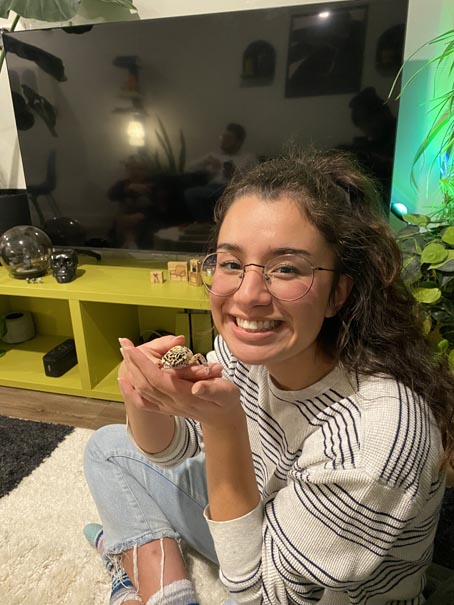 JEMMA K. DRAPER: My favorite resilient female character in horror is Rosemary from Rosemary’s Baby. I have always loved the complicated resolution to her story. For all its angst, Rosemary is a character who made the best of her situation, willing to smile in the face of the literal devil.
BUFFY NESBITT: It’d be remiss to talk about resilience without mentioning my nickname’s namesake, Buffy Summers of Buffy the Vampire Slayer. My dad showed me the series as a kid to introduce me to what a strong, modern woman could look like. It kind of worked; I definitely didn’t get physically tough, but I’ve used lessons from the series in some of the roughest patches of my life. Buffy hit a lot of stereotypes of nineties girls–she was fashionable, wore heels and makeup, liked her pretty bad boys in leather jackets–but she never failed to kick ass and save the day, no matter what she was going through, and damn, did she go through a lot. And she was written with great nuance, more than many of other female leads on TV at the time. She did fail sometimes; she made mistakes, had regrets, and even was held back by them sometimes, though her friends were always there to carry her through. The series is definitely a relic of its time (and I won’t speak kindly now of Joss Whedon) but it was formative for me in many ways!
ALEX BELANGER: This may be a hot take, because I know a lot of people do not like this genre of revenge movies, sometimes they do feel exploitative, but I would say that the female character that stands out to me the most, even years after watching the movie, is Mary Mason from American Mary, due to the lengths to which she is willing to go to, to rise above a rigged system which protected her abuser. She finds an alternative (though illegal) career that leverages her underappreciated skills and knowledge and empowers herself—making good money and demanding respect— as an underground bodymod surgeon. She then uses her power to avenge herself against the man who abused her when she was at her most vulnerable. To the very end (spoiler) she fights to maintain her reclaimed autonomy, performing surgery on herself, while bleeding to death, as the cops rush in to arrest her. It’s a very moving closing scene, and I feel Mary’s story is one of the most visceral depictions of the female struggle that I’ve seen within the horror genre. She is without a doubt in my mind a feminist icon.
GRACE MCKAY: I adore Deena Johnson in the Fear Street Trilogy. While the movies themselves were exciting, the reason I was invested was because of Deena as a character. As a queer woman myself, it was refreshing to see a queer lead fight to save the woman she loves—a tale we have seen countless times from a heterosexual perspective. Despite the seemingly endless obstacles Deena faces, she remains relentless and focused on her goal to save Sam from the witch’s curse. As the leader of the group in this series, Deena shows resilience in how fast she jumps back into action following tragedy. She is messy and imperfect, which, to me, makes her feel more human. If she made all the right choices, the story wouldn’t be as interesting. I hope to see more characters like her in horror going forward. Women deserve complicated and resilient heroines.
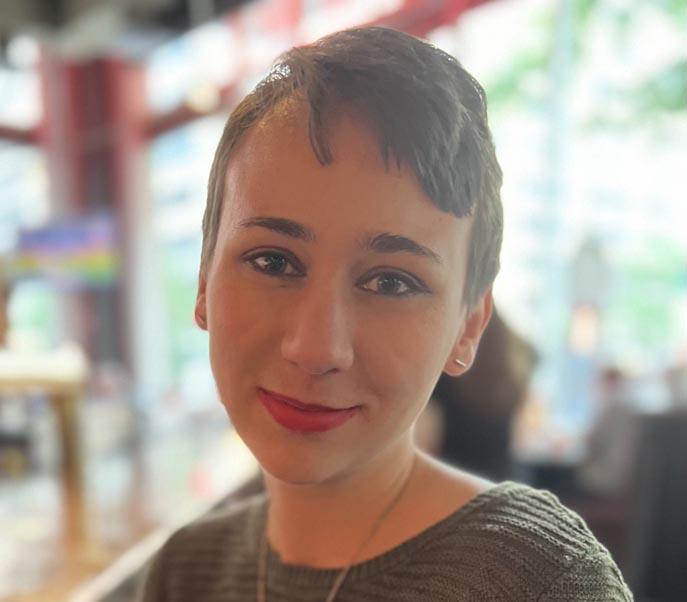 A.N. MILLER: It’s so hard to narrow down to a particular character given that horror has so many resilient female characters, but if I had to choose just one, I’d say Denver from Beloved by Toni Morrison. Her growth from a sheltered agoraphobe to a strong woman dealing with impossible circumstances in an unforgiving environment is a perfect foil to Sethe’s downward spiral, culminating in her rallying the community to save her mother and home at the climax of the novel. Denver’s journey is both moving and deeply satisfying.
ZOE FALK: My favorite resilient female character in the horror genre is Selene from the Underworld series. Though the franchise is not considered horrific by critics, Selene’s intelligence and determination make her a fabulous protagonist. For me, she’s on the same level as Sarah Connor and Laurie Strode
KARI J. WOLFE: There are two that I will mention:
Ellen Ripley of Alien and, sure, the second movie too. She’s intelligent and she keeps her head while dealing with an indestructible xenomorph.
The Biologist/Ghost Bird of The Southern Reach Series. She stays steady and collected while everyone else starts to go to pieces.
TERI HAWK: If I had to choose the female character that stands out the most for me, it would be Ripley from the Alien films. Ellen Ripley was originally written as male, but when they decided they wanted a female lead, the writers didn’t rewrite the script. They just replaced “he” with “she” and left the rest as-is. And so, we have Sigourney Weaver’s Ellen Ripley, a strong female protagonist portrayed the same way a strong male protagonist would have been. I think this is striking for me personally as a retired member of the Navy. They talk about resilience a lot in the military. And, while the official materials never singled out women, it was not uncommon to hear mutterings about how much less resilient women were than men. How women shouldn’t be going on deployments because they supposedly couldn’t handle it like men could. That kind of thinking infuriated me. So, seeing Ripley on the screen, going through hell while being just as tough as the next guy, meant a lot to me.
VICTORIA HUGHES: Though usually considered to be a psychological thriller, The Collector by John Fowles features a woman named Miranda who is held captive by an obsessive man named Frederick Clegg. I won’t say much more on the plot of the novel, as it is one I think everyone should read, but throughout the book it becomes clear that Miranda is certainly deserving of the term “resilient.” Kim White from Full Brutal was also resilient, though in a very different way. I won’t spoil this book either, but she just… kept going.
What are your hopes for the future of women in horror? Likewise, what are your hopes for your own future in the genre?
JENNIFER VILLALOBOS: For one, I’m thrilled to see so many more women writing in horror. It feels like we’re seeing more characters with real agency, women who make proactive choices and fight patriarchal norms rather than being beaten down by them. I also love the growing intersectionality in the genre, with more BIPOC and LGBTQ+ authors becoming true standouts. I say that as an older straight white lady, but I love it. I love seeing new perspectives, new fears, and new forms of resilience represented. Horror has always been about more than just instilling fear. For me, it’s a way to say something about society, about how the very things we are taught to fear often hold us back. It’s a space to fight injustice and challenge the powers that be, all while creating cool monsters and letting our imaginations go wild. For myself, I hope to keep writing, get published, and be part of the community and the conversation.
BETHANY NEAL: I hope the future of horror embraces female rage. For so long, in basically every other genre, female rage has been deemed “unlikeable” and “unsellable”. I think horror is primed to embrace that coming of rage moment in female-driven horror stories.
As a female writer filled with pent up rage (who isn’t?!), I hope my future holds an outlet to share my writing not only for entertainment, but to also offer a rage release. Working on a Bloody Mary retelling has been quite cathartic for me. Hopefully, I can share that experience with readers when that novel is published.
JEMMA K. DRAPER: My hope for the future of women in horror is to have more women in horror. Of the women that write in the horror genre, few seem to make it to a bookshelf in a Barnes & Noble, so we simply need more of them. My hope for my own future is to be the author of a book that made someone a new fan of horror. I want to bring someone from perusing the horror section to being a devout follower of the genre.
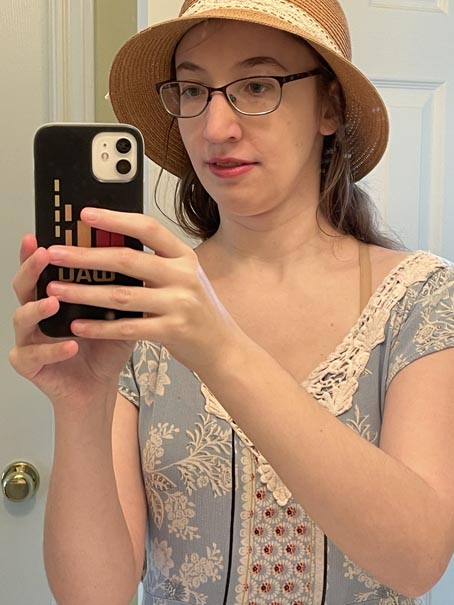 BUFFY NESBITT: Women have always been a driving force in horror, even if their contributions have been overlooked or ignored! And womanhood/girlhood/the entire concept of gender in a socioculturally enforced binary system are themes that are horrific in real life as well as in fiction. Margaret Atwood’s The Handmaid’s Tale is, in so many ways, a horror story. Oddly, I don’t consider myself a woman so much as the rest of the world does–if anything, I’m a dedicated femme, and I’ll commit to a joke before I ever commit to a gender–which comes with its own fascinating elements of horror that plague my life and the lives of many nonbinary queer individuals in the modern world. The relationship between me and my body is a complicated mess of codependent loathing, and that’s before ever bringing chronic disability into it. I guess it shouldn’t surprise anyone that body horror is one of my favorite subgenres. Still, horror is all about challenging the status quo, recontextualizing the world around us, and exploring fears, and there are few people better poised in the world’s societies today than minorities (even if women are ~50% of the population… there’s horror in that, as well).
ALEX BELANGER: I would love to see more women writing horror, directing horror, and starring in it. I would also like to see more diversity in terms of the women telling the stories, how they’re told, and how the women in these stories are portrayed. I would say that I still often struggle to identify with female characters in the mainstream, as someone who does not identify with gendered expectations or stereotypes, so I’d like to see more female characters that challenge the mainstream’s idea of what a woman can be. As for myself, I hope that my work too, someday contributes to making more readers feel seen within the horror genre.
GRACE MCKAY: A lot of the horror I was exposed to while growing up used women and other minorities as objects to drive the story forward. Although we are seeing a shift, there is still much work to be done. I hope that the presence of women in horror will grow as we continue to expand and innovate the genre, providing fresh ways to shock and horrify readers from a new perspective. We deserve to have our voices heard. As for my future in the genre, I expect I will return to horror often. It has provided me with a place to process and work through my anxieties in a way no other genre has. I would like to write more short horror stories to sharpen my craft and build upon what I learned while writing my first novel.
A.N. MILLER: Women are marginalized across the arts in general, but horror definitely has a reputation for being more of a “boy’s club” with its dearth of slashers chasing scantily clad women and scream queens. My hope is that horror will continue to evolve past the cliches of ‘70s and ‘80s franchises to better represent the lived experience of women from all backgrounds, particularly women of color and the queer community. The world is a scary place, and being able to exorcise some of the anxieties and fears of modern life through fiction can make it easier to face them. My hopes are to publish my most recent novel in the next one to two years and find a home for some of the short stories rattling around my hard drive. Long term, I’d love to be able to quit my day-job and write full-time.
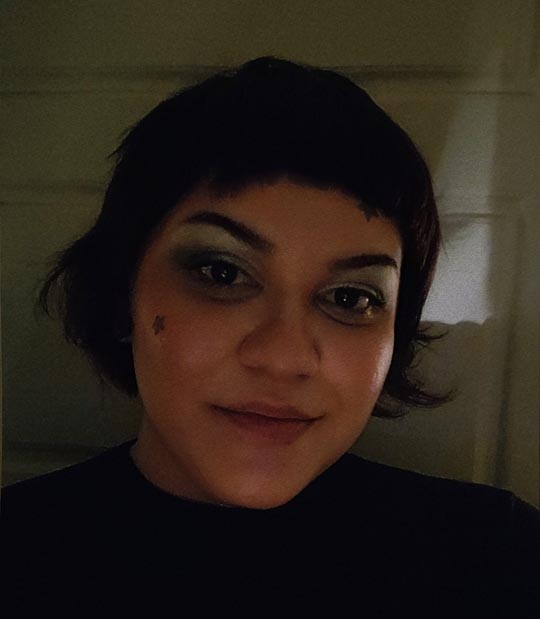 ZOE FALK: I predict women taking over horror in the future, and I cannot be more excited. I encourage women to give the genre a try. I never thought my work would be considered dark fantasy, but the more I kept writing, the more my work felt alive. There is beauty in horror, and anyone can create from it. They need only a pen and paper.
KARI J. WOLFE: I think the more women authors there are, the more changes we’re going to see in how women are seen in horror. Personally, I would like to see more women whose bodies age and whose stories don’t just evaporate because of it. Our culture tends to sidelines women after youth — I don’t want my horror to do that.
I would like to see more actual women in horror, rather than final girls. There is something to be said about a middle-aged housewife who mocks the demon in her attic by playing it Hank Williams Sr. albums all day, right? Right?!
I want a world where the girls who weren’t chosen are still powerful.
My own future is in writing these types of stories.
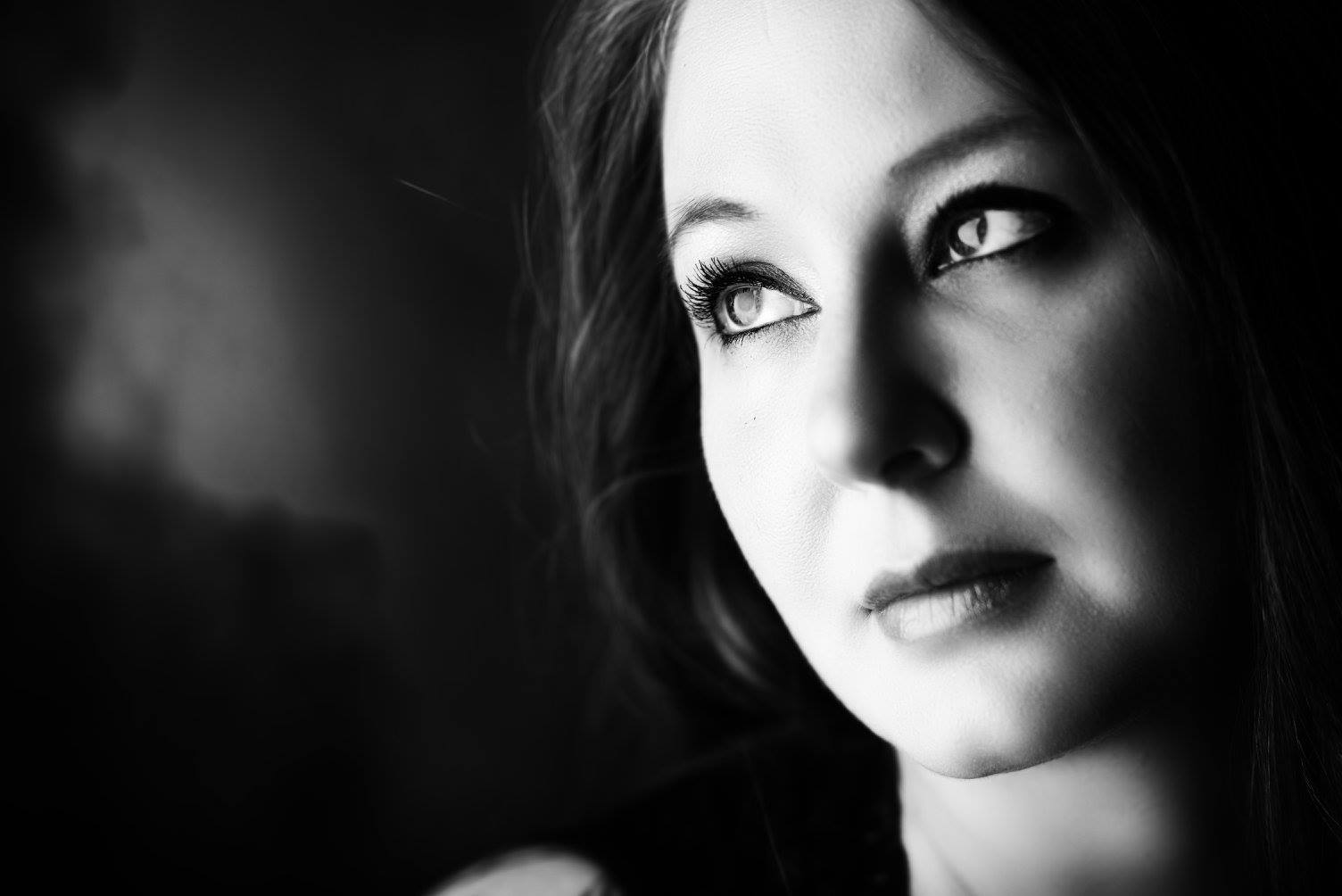 TERI HAWK: I think it’s very interesting that women are one of the most underrepresented groups in horror writers, running around 45% lower than in literature overall. Yet female protagonists account for nearly half of protagonists in horror. I’d love to see more women telling their own stories. When people write from a place of experience, telling their own lived horror, they can paint it in a way that paves the way for universal understanding. An example that comes to mind is the recent film Nightbitch based on the novel by Rachel Yoder. I remember an abundance of talk around the film festivals when it was released, from men being made deeply uncomfortable to women feeling like they were seeing a part of themselves on the screen that society always made them feel the need to hide away. But what stood out the most for me was hearing men express that the film provided them insight into their partners’ lives like never before. I’d love to see more women telling stories like that, and I hope my work does the same for someone else someday.
VICTORIA HUGHES: In the future, I hope to read more from women in Splatterpunk and extreme horror. I think a few new, ambitious voices could absolutely dominate in those subgenres. And while there is already such great stuff written by women in the “transgressive” side of horror fiction, I firmly believe there is great potential for more, so hopefully (and very likely) in the future we’ll get more of that. In a similar vein, I think it would be great to be one of those authors. That is the dream, anyway, but for the near future, I hope to start getting some of my short stories published before I publish my debut novel in the next couple of years.
Thank you so much to the Seton Hill MFA students for being part of this roundtable! Be sure to keep an eye out for their work in the years to come!
Happy reading!