Category Archives: Book Promotion

Nostalgia and Reprints: The Story Behind “All the Hippies Are Dying”

While this blog space is never exactly quiet (Author Interviews! Submission Roundups! Writing Tips!), it has been a little while since I’ve shared anything about my recent publications. So let’s remedy that before July slips away from us! I’m so thrilled that last month saw the release of my magic realism tale, “All the Hippies Are Dying,” at The Wild Hunt. This strange story about a mother obsessed with her youthful foray at Woodstock and the daughter who tries and fails to bring her mother into modern day is a little bit dark, a little bit magical, and perhaps more than a little bit wistful. It’s also among my favorite stories I’ve ever written, so that always makes a story release even more exciting!

First off, it’s worth noting this isn’t the debut of “All the Hippies Are Dying.” The story was originally released last year in the first issue of The Gateway Review. My experience there with editor Joe Baumann was a fabulous one, and he supported “Hippies” so much that he even nominated it for a Write Well Award through the Silver Pen Writers Association. How nifty is that?

Since I do love this story so much, it’s been great to see how it’s found a second life at The Wild Hunt. And it was quite fortuitous circumstances that led to the publication. In the spring, The Wild Hunt editor Ariell Cacciola reached out to me after reading my Shimmer story, “All the Red Apples Have Withered to Gray,” and asked if I would be interested in contributing to her new magazine. One visit to the site, and I loved the aesthetic of The Wild Hunt so much that I knew I had to be involved. I sent Ariell “All the Hippies Are Dying” and I was so incredibly pleased when she and her fellow editor enjoyed it enough to add it to the other beautiful tales in their archives. So far, “Hippies” has received some nice reviews (huge thanks to Morgan Crooks for including it as a top June story pick on Ancient Logic), and it’s beyond thrilling to find the story is resonating with readers.

“All the Hippies Are Dying” is an oddly personal tale, one that highlights my love of turntables and vinyl and 1960s music. In a way, I’ve been carrying this story with me since I was fifteen years old and started researching Woodstock in books at the public library. That’s when I first fell in love with the bands from that era—The Mamas and the Papas, Jefferson Airplane, Janis Joplin, Jimi Hendrix, and Crosby, Stills, and Nash, among many others. In those well-spent days of youth, I was a little like the matriarch in “Hippies,” just hanging around a spinning turntable and absorbing every note of the music. Thus, it was both cathartic and slightly bittersweet to finally translate some of those feelings into a cohesive story.

“Hippies” also gave me a chance to explore the world of magic realism. I’ve been a huge fan of magic realism fiction for years, and this was one of my first interpretations of the genre. I definitely hope to return soon to this fresh and lovely brand of fantasy in my short fiction. In the meantime, an early sketch of a new novel I’m writing will blend a healthy dose of horror with magic realism, and though it’s too early to tell for sure how this new project will turn out, I’m certainly hopeful that it might become something both strangely beautiful and beautifully strange.

So if you’re so inclined, head on over to The Wild Hunt, and take in the nostalgia of “All the Hippies Are Dying.” The free love of Woodstock awaits you!

Happy reading!

10 Awesome Websites that Will Make You a Better Writer

The business of writing is tough. With rejection the name of the game and a deluge of information (and misinformation) out there, it can be difficult to know where to begin. A few years ago when I started, I had no idea what I was doing or how to get there. There was a lot of stumbling in the dark (and heck, there’s still plenty of stumbling), but most days at least, I feel like I have a general idea of where I’m going, and that’s thanks to some incredible resources that are available online to anyone and everyone who wants to utilize them.

So for your scrivener pleasure, here are ten awesome websites that have helped me in my journey as a writer. Among you more experienced authors, all these sites might look familiar, and that’s great! It means you’re way ahead of the curve! But for those of you just starting out or simply looking to take your career in new directions, one or more of these sites might be exactly what your writing career needs at the moment.

So whether it’s teaching you the specifics of plotting a novel or helping you to streamline your submission process, these sites will help to make you a better (and more inspired) writer. And who doesn’t want that?

If you’re working on a novel and need help with plotting…

Helping Writers Become Authors features an array of posts about structuring scenes, stories, and character arcs as well as common writing mistakes that—let’s face it—all of us make occasionally. Blogger K.M. Weiland breaks down novels and demystifies many aspects of storytelling that vex us most as writers. And one of the best things about her site is that even if your story is already in good shape, her tips will help to make it even better, meaning that you can use her advice at any point in your plotting process or at any level in your writing career. After all, the best advice is the kind that just keeps on giving.

If you’re eager to become the next best young adult novelist…

Better Novel Project will guide your way. With fantastic outlines and adorable illustrations, this award-winning site examines the most popular YA books and offers advice on how to apply the general principles to your own work. And I know what some of you readers might be thinking: But I don’t want to write YA fiction! No problem. Blogger Christine Frazier offers regular tips on writing that could still improve your plotting and character development as well as provide some valuable insight into what makes a bestselling book. And admit it: we all want to be bestsellers some day, don’t we?

If you’re seeking somewhere that will help you find markets and track your submissions…

Duotrope is an easy-to-use and fairly affordable resource that offers a searchable database of over 5,000 short and long fiction and poetry markets. Additionally, the site offers a personal submissions tracker as well as statistics on each market, including length of time for response, and percentage of acceptances versus rejections. This is the one site on this list that I use every single day, and my life as an author is far easier for it.

If you’re seeking somewhere that will help you find fiction markets and track your submissions, but you can’t afford a subscription fee…

The (Submission) Grinder is a nice alternative to Duotrope. Although I will always be a little partial to Duotrope—I discovered it first, and the platform design is a little more to my preference—The (Submission) Grinder is truly so similar that you might do a double-take between the two sites. And since the world doesn’t call us starving artists for nothing, having a site where you can find markets and track submissions for free can definitely be a big help.

If you’re seeking markets for your science fiction and fantasy short stories…

Ralan is the place to go. A staple of the speculative fiction scene, the website is so informative that it’s almost overwhelming. Over the many years of its existence, Ralan has been nominated for awards and features no “exposure only” markets, which means every market listed will pay you, some of them quite handsomely, if you submit and the editors accept your work. Way back in the long ago days of 2014, I found my very first markets on Ralan, so it will always have a special place in my little writer heart.

If you write horror and other dark fiction…

The Horror Tree will inspire your macabre soul. With tons of submission calls as well as a blog filled with great tips from working writers, this site will keep you entertained and always poised for that next submission. The Horror Tree was also the first submission site I discovered after Ralan, and one that has helped me locate numerous markets that later went on to accept my work. Good stuff for us creepy writers!

If you still can’t get enough horror and dark fiction…

Dark Markets is another fabulous website that features a variety of horror, dark fantasy, and weird fiction markets where you can send your work. With an easy-to-navigate design and a constantly updated list of publications, there is always something new to discover. (As a side note, I need to give major props to both The Horror Tree and Dark Markets for being two of the venues where I often find submission calls to share on my monthly Submission Roundup. Did I mention I seriously love these sites?)

If you’ve finished your novel and are ready to seek out representation…

AgentQuery.com will guide you through the process. With a customizable search, you can discover dozens of agents seeking books in your genre, and just to make the process even simpler, AgentQuery.com will also link you directly to the agency’s site. It doesn’t get much easier than this. A perfect place to start on your road to representation.

If you like online workshops and columns written by working authors…

LitReactor has got you covered. With cool classes and equally cool blogs from some of the best writers working today, there is always something on LitReactor that will not only entertain you but will also help guide your way through this capricious industry. Even a casual visit to the site can turn into a trip down the proverbial rabbit hole. There’s just so much to check out. Consider yourself warned.

If you’re looking for a one-stop shop for your writing career…

Writer’s Digest is the gold standard, a total oldie but a total goodie. From workshops and tutorials to blogs with tips on writing and submitting to agents, there are few sites that can point you down the path on how to become a successful author as well as Writer’s Digest. The name isn’t synonymous with literary advice for nothing.

Did I miss your favorite writing site? Let me know in the comments below!

Happy reading!
Nightlight Horror: 5 Terrifying Tales of Childhood

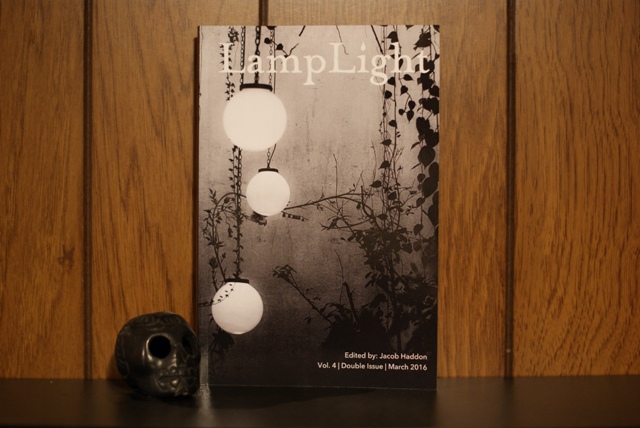
Big publication news! Last month, my horror story, “Find Me, Mommy,” appeared in the gorgeous double issue of LampLight. As always, the LampLight cover art is amazing, and with awesome stories by fellow writers including JS Breukelaar, Tim Deal, Gene O’Neill, and more, this issue is a perfectly glorious tome.

LampLight Double IssueThis marks my second appearance in LampLight—after my body horror tale, “The Clawfoot Requiem,” debuted in the March issue last year—and needless to say, it is such a tremendous honor. LampLight is one of the very coolest horror fiction publications out there, and I’ve been a huge fan for years, so to work with editor Jacob Haddon for a second time is just too awesome. I’m so thrilled “Find Me, Mommy,” which is one of my darker tales, found a fantastic home.

A flash piece clocking in at just under 1,000 words, “Find Me, Mommy” follows a mother whose little girl Emma Jo plays hide-and-seek. However, Emma Jo is so good at the game that she can slip into the shadowy places of the world nobody else can see. In that darkness, there’s something waiting for Emma Jo, and soon, her mother must find a way to bring her daughter back again or lose her forever.

So you know. Normal childhood stuff.

Speaking of childhood… For me, there is little scarier than the uncertainty of these so-called formative years. No matter what the truisms try to tell us about youth being a wondrous time of innocence and joy, let’s face it: being a kid is terrifying. Heck, being an adult is pretty scary too, but still, nothing can compare to the dread of childhood. There’s this big world out there and a far bigger universe, and you’re just so small, and because of that, everybody’s constantly steamrolling you, all in the name of protecting you. If that’s not ready-made for horror, then nothing is.

Starting when I was a young tyke myself—I was around eight years old when I began actively seeking out horror fiction—I’ve discovered a few particularly terrifying stories about childhood that got lodged under my skin and stayed there. So in honor of the release of “Find Me, Mommy,” here are my favorite tales of childhood terror, the ones that always give me goosebumps. *shudders*

“The Professor’s Teddy Bear” by Theodore Sturgeon
Theodore Sturgeon was a master at mind-bending fiction, and nowhere is that prowess as unabashedly on display as in this gloriously odd yarn about a little boy and his parasitic monster teddy bear. “The Professor’s Teddy Bear” is almost difficult to explain, in particular if you want to describe something and not sound like an outright crazy person. Time shifts, a child laughs, and a teddy bear quaffs blood like wine. All this and more! Seriously. Find this tale. Read it. Even if you’ve already read it, read it again. This is weird fiction at its most unabashedly brilliant.
Pick up a copy of “The Professor’s Teddy Bear” here.

“Graveyard Shift” by Richard Matheson
There are very few stories that I can pinpoint as the genesis of my life as a horror writer, but Richard Matheson’s sucker-punching “Graveyard Shift” is one of those life-changing works. I could pontificate about this tale over and over (and to be honest, I kind of already have), but it bears repeating here. This is also a rather appropriate tale to reread in May. After all, Mother’s Day was less than a week ago, and if you think your mother was bad, then check out the matriarch in this tale, who would, um, to say the least never earn any awards for her parenting skills.
Pick up a copy of “Graveyard Shift” here.

“The Boogeyman” by Stephen King
“Children of the Corn” might be the obvious pick from the King oeuvre, but in my mind, nothing beats “The Boogeyman” when it comes to creepy children stories. It’s always cool to see an author take something as familiar—and arguably even hackneyed—as the Boogeyman and make it decidedly their own. That’s what King does here, and the result is a story that is tragic and haunting and everything a good horror story should be.
Pick up a copy of “The Boogeyman” here.

“The Small Assassin” by Ray Bradbury
There are evil children, and then there are dyed-in-the-womb evil children. Bradbury takes diabolical kids to the max with this tale of a mother who knows something’s very wrong with her newborn son—and a newborn ready to unravel his family’s life at every creeping turn. Not one for the faint of heart, and a story that nobody but Bradbury could write. I read it as part of The October Country, which is my all-time favorite single author collection of horror stories. But in whatever book you locate “The Small Assassin”—it’s also available in Dark Carnival and The Stories of Ray Bradbury—just find it and read it. There’s nothing quite like it.
Pick up a copy of “The Small Assassin” here.

“The Scritch” by Brooke Warra
This story marks a first on my blog. “The Scritch” has yet to make its official debut in the world, but I was fortunate enough to read an early draft of Brooke Warra’s forthcoming tale of childhood loss and terror. You might think this is a strange choice since it’s not available, or heck, outright nepotism since I know Brooke personally (we worked together on A Shadow of Autumn after all). But I promise you “The Scritch” is on this list because I can’t get it out of my mind. This is the type of story that lingers, brimming around the edges of your waking hours and seeping into your nightmares. The tale follows a little girl who lost her sister down a well and will stop at nothing to pull her—or something else—out again. As soon as I finished reading it, I could think only one thing: wow, I wish I’d written that story. And in my authorial world, there is no higher compliment.
Keep up with Brooke’s Facebook author page here.

Happy reading!

A Ride Into the Deep: The Story Behind “Horseshoe”

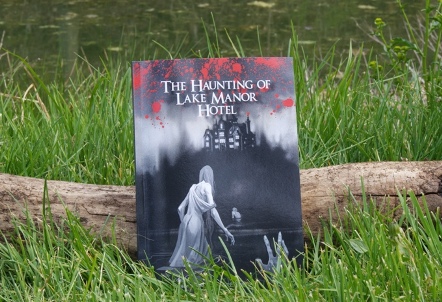
Earlier this month, my horror story, “Horseshoe,” made its debut in The Haunting of Lake Manor Hotel! This anthology, which features thirteen up-and-coming speculative fiction writers, is the first title released from Woodbridge Press, and I’m so thrilled and honored to be part of it! The Haunting of Lake Manor HotelWorking on The Haunting of Lake Manor Hotel has been an incredible experience. This project unites me with authors Scarlett R. Algee and Brooke Warra, both of whom I met through our publication and eventual work as slush pile readers at Sanitarium Magazine. And of course, the three of us also worked together on A Shadow of Autumn last fall, so in my mind, that makes us family. This is also the first time I’ve worked directly with author and editor Nathan Hystad. Nathan and I have been crossing paths for the last couple years, since we were both featured in Whispers from the Past: Fright and Fear way back in September 2014. So when he asked me to be involved in his first project as an editor, I most definitely jumped at the opportunity.

My story, “Horseshoe,” started simply enough with the image of the horseshoe driveway. That was how Nathan described the entrance of the hotel in the shared world information all the authors received as we embarked on the project, and the image immediately caught my interest. There’s a bit of irony for me that the specter of horses looms large over my life—I live in a rural county in Pennsylvania that has been described as having more horses than people, and even the property where my husband and I live is a former horse farm, with fences and troughs and all the other horse abode trimmings. However, truth be told, I myself have only been on horseback once or twice. So I used these phantom-like horses to craft a tale about a tormented jockey who is trying to come to terms with her father’s death while coping with the very real ghosts that haunt her and Lake Manor Hotel.

The twelve other stories in The Haunting of Lake Manor Hotel all take different aspects of the property and make the ethereal qualities their own. So if strange and apparitional locales intrigue you as much as they intrigue me, then Lake Manor Hotel might be a perfect stopover on your reading list. Just be sure to lock the door and leave on the light.

Happy reading!

Fractured & Macabre: 5 Fantastically Re-imagined Fairy Tales

Earlier this week, my dark fantasy story, “All the Red Apples Have Withered to Gray,” went live on the Shimmer website. That means it’s available for free to anyone and everyone, so head on over there and check it out!

This story—and its publication in Shimmer, which has long been one of my very favorite speculative fiction markets—is a huge moment for me and my writing career, so suffice it to say, this publication has been one worth celebrating here in my writer world. (I also want to give a shout-out to Scarlett R. Algee for being my beta reader on this story. There would be much less celebrating if it wasn’t for her and all her invaluable advice.)

“All the Red Apples” is a fairy tale inversion, one that takes the poison apple of Snow White and extrapolates it into a world—and a bewitched orchard—of its own. So in honor of me Snoopy-dancing over my Shimmer story, let’s take a look at some great fairy tale retellings that inspire me in my writing. Happily ever after not required.

“Tooth, Tongue, and Claw” by Damien Angelica Walters
An update on Beauty and the Beast, this story is brutal and unrelenting—expect no tender Byronic beast here—but even after her craven family and the unforgiving monster rob her of everything she’s ever known, our heroine never gives up. That sense of perseverance imbues this gorgeously horrific tale with just enough glimmers of hope to get the reader through the darkness (and believe me, there is some serious darkness in this one). As part of the inaugural volume of Nightscript, “Tooth, Tongue, and Claw” is one of many beautiful strange stories, so check out the whole anthology. Just be sure to leave the lights on.
Pick up a copy of “Tooth, Tongue, and Claw” here.

“So Sharp That Blood Must Flow” by Sunny Moraine
Forget the mermaid soul dissolving into sea foam. This unflinching retelling of The Little Mermaid elevates our jilted heroine above the usual lovesick victim into a full-on revenge-oriented warrior. However, that description doesn’t come anywhere close to encapsulating the nuances of this story. Rendered in the kind of flawless prose only Sunny Moraine can write, “So Sharp That Blood Must Flow” explores broader themes of feminine agency and the refusal to bow to tradition. This isn’t Disney’s Little Mermaid—heck, it’s not the bleak Hans Christian Andersen original, either—and that’s exactly how it should be.
Read “So Sharp That Blood Must Flow” for free here.

“The Fairy Godmother” by Kim Neville
Is it too meta to include another Shimmer story in this post about my Shimmer story? Maybe, but “The Fairy Godmother” from Shimmer #17 is too good to exclude. We all know about the proverbial Fairy Godmother who materializes and does right by a woebegone heroine, but what about the godmother herself? What’s the story of her life look like? This sweet tale from Kim Neville answers just that question. This entire issue from Shimmer is an absolute beauty with other memorable stories from Silvia Moreno-Garcia, Kristi DeMeester, and A.C. Wise, among others, so it’s definitely worth a read.
Pick up a copy of “The Fairy Godmother” here, or listen to the author read her story here.

“Snow Waiting” by Shannon Connor Winward
I went back and forth about including this one, not because it doesn’t deserve the honor (it’s one of my all-time favorite poems), but because I’ve already sang the praises of “Snow Waiting” many times in the past. Honestly, readers of my blog and Facebook page are probably tired of hearing me pontificate about this piece, but hey, you love what you love. And there’s so much to admire in this poem—the seamless character building, the rich language, the entirely new take on Snow White. It’s a beautiful and tragic retelling that uses the seemingly mundane aspects of adolescence and elevates them to archetypal. If you haven’t already taken my advice, then check out “Snow Waiting” today. In fact, even if you have read it once (or a dozen times), it’s worth another look. This poem is simply that good.
Read “Snow Waiting” for free here.

“The Company of Wolves” by Angela Carter
In some ways, this is the story that started it all for me. Until I was in college, I’d never come across any stories that so vastly re-imagined the world of fairy tales like this psychosexual ode to Red Riding Hood. Angela Carter was the scribe of countless fairy tale inversions, all of them fantastic in their own right, but “The Company of Wolves” will always remain my favorite. Also, don’t let the film of the same name fool you. The original story is the version you want. Nothing like a boldly dark and bloody retelling to get the heart rate up, and that is one strange order Angela Carter could always fill.
Pick up a copy of “The Company of Wolves” here.

Happy reading!

Beginner’s Luck: 10 Lessons I’ve Learned as a New Writer

Two years ago this month, I sent out my first ever short story submission. It was rejected. It was a kind rejection, but still a rejection. However, the very next submission was accepted, and thus began what has been a reasonably successful career so far. Seriously, I can’t complain. I’m not one of those “critical darling” writers, but I do actually have fans beyond just my parents and husband, which is pretty cool!

So in honor of the two year anniversary of my short fiction career, here are 10 lessons I’ve learned as a new writer.

Rejection is sometimes the only constant in your career.
This might be the hardest lesson to learn, but if you want any sort of longevity in the publishing industry, it’s probably the most important. No matter how far you get as a writer, you’ll keeping hearing the word, NO. A lot. But just keep in mind that even stories that make it into top tier journals have often been kicked back to the author once or twice (or even ten times). A rejection from one publisher only means that it’s time to find another. It’s that simple, and it’s that difficult.

There’s a lot of conflicting advice out there.
On this blog, I sometimes create “writer advice” posts (kind of like this one!), but I never expect every single reader to take my word like some newfound gospel. What has worked for my career might work for yours, or it might not. As you sift through the countless blogs and social media posts about writing, you—and you alone—have to learn what’s best for your career. Decide what you want from your writing, and go from there. Also, realize that what you want now might not be what you’ll want in six months to a year, so be willing to continually review your goals and update accordingly. Nobody can make these decisions for your career except you. Don’t let the noise of other people’s opinions stop you from going after what you desire out of this crazy life as an author.

Learn the basics of promotion (and apply those principles liberally).
Just writing great stories is sadly not enough to build a career. Sure, it’s a necessary ingredient, but without some promotion on your end to get your name out there, you’ll always be fighting an uphill battle for recognition. So what do you need to know? Well, here are the bare bones principles about promotion: If you want to get serious about your career, start an author website. Maybe start a blog. Update both regularly. Consider attending writing conferences, and find places to do book readings to promote your latest releases. Also, maintain a presence on social media, and try not to be a jerk, which leads to our next lesson…

The publishing industry is insanely small.
In publishing, everybody knows everybody knows everybody. You will come across the same editors, writers, and publishers in your genre again and again, and rest assured, they all know each other. Sometimes, that means literally “they go to conferences and have drinks at the bar” kind of knowing each other, or sometimes, it just means that they network online. Either way, writers and editors talk. It’s human nature. If you’re acting like an entitled fool online, people will take notice, and this is a time when all publicity is not necessarily good publicity. So just be respectful to your fellow writers and publishing comrades. It’s the right thing to do anyhow.

Most editors are cool people…
I’ve worked with editors who run the gamut from beginners at startup magazines to bestselling anthologists. One thing is pretty standard across the board: almost all of them are terrific, and they care just as much as you do about putting the best version of your work out there. Listen to their feedback, and also, feel free to engage in conversation with them about any edits, especially if you’re confused or feel strongly about something. Again, don’t be a jerk, but most editors are open to working with authors. It is part of their job description, after all.

… but learn to avoid the ones that aren’t.
I’ve worked with around 100 or so editors so far in my writing career. Almost all of them are people I’d be willing to work with again in the future. Almost all. Simply put, there are editors out there whose working styles just don’t jive with my own. If you find an editor that doesn’t work well with your style, it’s a really easy fix: don’t submit to that publication again. You don’t need to write an angry follow-up email. You don’t need to bad mouth them in a blog post (do you see how I made no suggestion whatsoever about the identities of these not-jiving-with-Gwendolyn editors?). Just avoid them. And fortunately, there won’t be many of these editors anyhow, so the problem will more or less solve itself.

Learn the publishing lingo.
There are plenty of terms you’ll come across in your writing travels, but here are a few to get you started. Standard manuscript format means formatting your submissions like this. A slush pile is the term for a magazine’s queue of unsolicited submissions (meaning you’re simply responding to an open call and the editor didn’t request your work in particular). Multiple submissions means sending more than one story to the same market at any given time. Simultaneous submissions means submitting the same story to more than one market at a time. The important thing is to know the terms, research unfamiliar ones, and be sure to follow the guidelines for the individual publication. If you don’t, the editors will likely remember who you are, and they’ll be less inclined to accept your work in the future. Again, as mentioned above, the publishing industry is small. Don’t give someone a reason to hold a grudge.

If you can, work a slush pile.
There are plenty of magazines out there that are always looking for first readers to help wade through the proverbial slush pile. If you can spare a few hours a week, even just for six months or so, working a slush pile can be one of the most eye-opening experiences for up-and-coming writers. You get a real sense of what makes a good story work from opening to closing lines, and it will also help you understand what sinks a story in the first couple paragraphs. Work the slush, pay attention to what you’re reading, and you’ll become a better writer. It’s almost a guarantee.

Overnight success is a myth (mostly).
Success is earned, not readily distributed. You’ll have to work for this writing vocation, and you’ll have to work hard. That’s the truth of it. And yes, there are a few writers out there who get accolades for just about everything they write, even in the early stages of their careers. Is it ridiculous to say I would prefer not to be one of them? That if this got too easy, I’d get bored? In fact, as silly as it sounds, I fancy myself a warrior writer, with my career trajectory along the lines of Joseph Campbell’s monomyth (Refusal of the Call! Belly of the Whale! Road of Trials!). That means the setbacks define me just as much as the successes, and all of them make me a better author. So please savor the journey. When you look back on your career at the end of your life, you’ll realize these moments were the ones that really counted.

Find like-minded writer friends.
We started with the important lesson of rejection. Let’s finish with another important lesson, albeit a more positive one: the power of networking and commiseration in the publishing industry. Namely, making friends. It seems simple and a little obvious, but sometimes just knowing that there are people out there who are in your corner and who understand what you’re going through (rejection! extensive edits! creative blocks!) is enough to get you through the day. Also, if you think that all writers are your competition, then you might be approaching this from the wrong perspective. Sure, there are only so many slots in major magazines and anthologies per year, but that’s for the editors to decide. Discovering other writers in your genre will help you find people willing to assist you with your gnarly first drafts and to commiserate when the going gets tough. And out of all the things in the world, you can’t put a price on that.

And here’s where I’ll give a shout-out to a few of my writer friends who have helped me stay (mostly) sane through these last two years: Scarlett R. Algee, Brooke Warra, Miracle Austin, Lee Forman, Gerri Leen, Lori Titus, Brandon Getz, Nathan Hystad, and Matt Andrew (and a whole slew of others). There are days I’m not sure I could have survived this industry if it wasn’t for your support, so THANK YOU THANK YOU THANK YOU.

What lessons have you learned as a writer? Let me know in the comments below!

Happy reading!