Category Archives: Interviews

Fairy Tales and Fantasy: The World of A. F. Stewart

I discovered the work of A. F. Stewart when I read her eerie story, “Voices” in the current Women in Horror issue of The Sirens Call. But the tale is far from her first outing. With dozens of books, both fiction and nonfiction, already on her resume, this Nova Scotia native brings a fresh perspective to fantasy, fairy tales, and yes, even horror. Plus, it turns out she’s an affirmed Bradbury fan. What more do you need to love this writer?

This week, Ms. Stewart was kind enough to answer a few of my questions about her illustrious writing career.
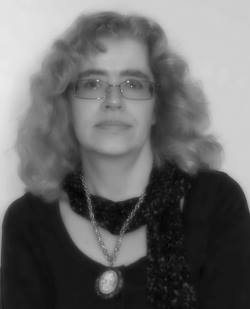
A. F. StewartA few icebreakers to start: when did you first decide to become a writer, and who are some of your favorite authors?

I’ve always been a writer of some sort, scribbling poems, stories, a bad attempt at a romance novel, but I only started pursuing it seriously with the aim to being published around 2007. That’s the year I tested the waters of independent publishing, and I never looked back.

As for my favourite authors, I have quite a few, but here’s a current top five list: Neil Gaiman, Guy Gavriel Kay, Ray Bradbury, Agatha Christie, and Jennifer Roberson.

Several of your works take influence from fairy tales. What was the first fairy tale you remember reading, and which one is your favorite?

It’s a bit hard to remember that far back into history, but I do know I had a very well worn book of Grimm’s Fairy Tales as a child, and one of my favourites from that book was Snow White and Rose Red. I liked the two plucky heroines whose kindness brought them good fortune. I’m also fond of The Six Swans, though as a child I thought the ending was sad; I always felt sorry for the poor brother that didn’t quite get turned back into human form.

You’re a diverse writer with many types of work, including poetry, fiction, and nonfiction. How is your process different for each (or do you approach all your writing in a similar way)?
Sirens Call Issue 19Both my fiction and non-fiction processes have similarities, as each develops from outside inspirations or topics that hold some interest for me. Of course, from there the two diverge, with my fiction incorporating fanciful elements such as dragons or fairies, and the non-fiction dealing more in facts and historical tidbits. The poetry on the other hand has a much more emotional and personal basis. I channel more of who I am, and what I feel, into my poems, as opposed to fiction or non-fiction.

If forced to choose, which part of the writing process is your favorite: developing point of view/voice, crafting dialogue, or establishing mood?

It would probably be dialogue. I find it generally easy and satisfying to write. I also enjoy crafting the voice of characters through dialogue, making them come alive so to speak.

Out of your published pieces so far, do you have a personal favorite?
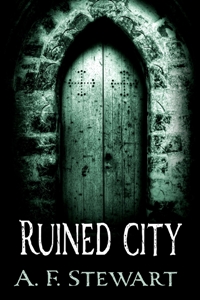
Ruined CityIf I had to choose, my preference would be for Ruined City. The format was a challenge, having twelve short stories interconnect to form a novella-like narrative, and I enjoyed the experience of writing the book. Also, I rather fell in love with the world I created, and plan to write more stories set in the Nine Kingdoms.

 What advice do you have for other writers out there? 

My advice is to learn the craft of writing—grammar, sentence structure, descriptions, dialogue—and keep learning, keep honing with each story, each book. Embrace the editing process, accept that you will face disappointment and rejection and love what you write.

Thanks to A. F. Stewart for being part of this week’s author spotlight. You can check out her blog, which features a variety of interviews and reviews, and you can learn even more about her here.

Happy reading!
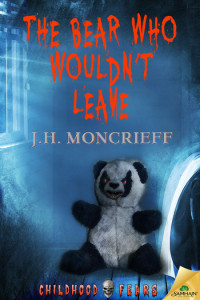
Childhood Terror: Interview with J.H. Moncrieff

Welcome to my second author spotlight of March! Today’s interview is with J.H. Moncrieff. She’s a versatile writer with a background in both fiction and journalism who’s also an editor and a publicist. Her new novel, “The Bear Who Wouldn’t Leave,” about a little boy and a teddy bear that’s more than it seems, will be released through Samhain Publishing in May.

Over the weekend, Ms. Moncrieff was kind enough to answer a few of my horror-loving questions.

A few icebreakers to start: when did you first decide to become a writer, and who are some of your favorite authors?

I decided I wanted to be a novelist when I was five years old. My first stories were a series of picture books about a family of fish who lived in terror of a bear who somehow stalked them under the ocean (probably because the only stencils I had left were of a fish and a bear). I wrote books throughout my youth and adolescence. I was convinced I was going to beat Gordon Korman’s record of getting published at fourteen, but sadly, I had no idea how to submit my work to a publisher when I was in elementary school. The will was definitely there, though.

Some of my favorite authors are Stephen King, Gillian Flynn, Nicholas Evans, Barbara Kingsolver, Arthur Conan Doyle, John Douglas, Ann Rule, and Elizabeth Berg.

In addition to your fiction, you’ve had an extensive career as a journalist. Did you always know you wanted to write fiction, and how has your background in journalism  dovetailed with the horror genre?

Even though I knew from a very young age that I wanted to be a novelist, I was raised in a practical family. I thought it would be a great idea to learn a writing trade that could pay the bills while I worked on getting a novel published, and that’s how I became a journalist. In college, I learned advertising, journalism, and public relations, along with television and radio broadcasting. I didn’t expect to like journalism as much as I did, but I took to it right away. I seem to have a gift for getting people to tell me their stories.

Most of my horror revolves around the evil that exists in people, so journalism gave me plenty of chilling examples. I’ll never forget the neighborhood that stayed awake all night to keep their homes from falling prey to an arsonist, or the mother whose baby was stolen from her. Most of the horror I read is true crime. Journalism also taught me how to be a full-time working writer, and to treat writing as a business.

The Bear Who Wouldn't LeaveThe concept of an evil item that plagues a protagonist has roots way back in some of the original gothic fiction. What stories, if any, served as your inspiration for “The Bear Who Wouldn’t Leave”? And did you draw on any of your own childhood fears during the writing process?

I’ve always loved stories of cursed toys—I think they’re particularly disturbing because toys are supposed to bring children joy or comfort. When writing my book, I was remembering the “Talking Tina” episode of the old Twilight Zone series, and of course Stephen King’s “The Monkey,” but in the case of my story, you don’t know if the bear is truly evil, or if Josh’s actions dictate how the bear treats him.

When I was a kid, my dad gave me a stuffed panda that had been his when he was little. It was an ugly thing, very stiff, with a crazed snarl on its face. It gave me the creeps. I certainly had it in mind when I wrote “The Bear Who Wouldn’t Leave.”

What advice do you have for other writers out there?

Read a lot, write a lot, and submit your work. Submit, submit, submit. I’ve met so many talented writers who never send their work to anyone. And never give up. I’ve had some setbacks that stopped me from submitting my work for a long time, and I regret those lost years now. I’ve read posts from other writers saying that persistence and talent is not enough—you need luck too. And that may be true, but the more often you’re putting yourself out there, the greater your chances of “getting lucky,” so to speak.

I’ve been approached by quite a few people who would like to write a book but have never actually read books. I can’t overstate how important reading is if you want to be an author. Otherwise, it’s like saying you want to get in the NBA without ever playing a game of basketball.

Other than readying for the release of “The Bear Who Wouldn’t Leave,” what projects are you currently working on?

I’m working on a new twist on the sea monster story, and a series of horror novels set in ancient Egypt. I’m forever suffering from “too many ideas, not enough time.”

 ###

Thanks to Ms. Moncrieff for participating in this week’s author spotlight! You can find her at www.jhmoncrieff.com where she regularly posts about weird travel, unsolved mysteries, and other oddities.  “The Bear Who Wouldn’t Leave” is available now for preorder.

Happy reading!

Fear Monger: Interview with Lee Forman

For the first interview of March, allow me to introduce author Lee Forman. Like Brooke Warra and Scarlett Algee, I met Lee through Sanitarium Magazine where the four of us help editor Barry Skelhorn field new submissions. But that’s hardly Lee’s only role in horror. He is currently a contestant in the Fear Project, a competition in which thirteen horror authors have their mettle tested with a myriad of weekly writing challenges, knowing all too well that one by one, they’ll be eliminated until there’s only one horror writer left standing. I checked in with Lee to see how he’s holding up under all that authorial stress (spoiler alert: he’s keeping it together with aplomb).

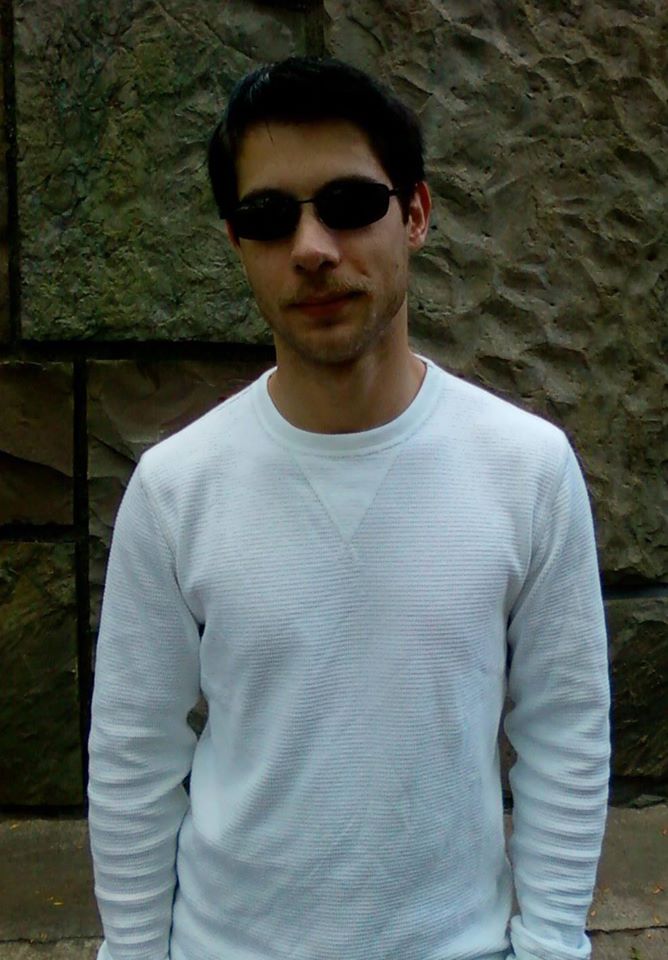
Lee FormanObligatory icebreakers: when did you first decide to become a writer, and who are some of your favorite authors?

It all started with a blackout. I was living in a little cottage out in the middle of nowhere, and with no power and nothing to do I took a pen and paper and started writing. I’ve been doing it ever since. I grew up reading the Goosebumps books, then moved to Stephen King, and then started reading all kinds of literature. I always wanted to be a writer, but didn’t realize I could until that night during the power outage. I wrote a little bit in high school for the school’s creative writing magazine, and I wrote things here and there, but none of the stories ever worked out. It was during the blackout that I wrote my first horror story. And that’s when I realized that I was supposed to be writing horror.

Stephen King, Clive Barker, and John Saul are some of my favorite authors. They’ve brought me up on their stories and I’ve taken inspiration and learned from their work over the years. I try to incorporate the best of what they do into my own writing style, making it strong yet unique.

What made you want to get involved with the Fear Project, and what has been the most surprising aspect of competing so far?

When I first heard about David Wellington’s Fear Project I instantly wanted to be a part of it. The [concept] made it sound fun and interesting. I saw it as an opportunity to test my skills, see how I stand next to other authors in the genre, as well as meet and network with new people who share my love for horror literature.

What’s been most surprising to me so far in the competition is the sense of community and friendship that many of us have developed. Most of us have been communicating and wishing one another luck in the weeks since the Fear Project began. We all want to win, but we’re also happy to be part of such an awesome event, and when it’s all over I’m sure we’ll all keep in touch. The great thing about the Fear Project is that everyone gets something out of it, not just the winner.

You are on a tight schedule with the competition and have to create content very quickly. How do you keep yourself inspired and constantly writing?
 
In between challenges I do a lot of reading and thinking of story ideas to keep the creativity flowing. I also watch a lot of horror movies. They’ve always been a source of inspiration for me. The entry being due Sunday night doesn’t leave a lot of time to write and edit the best thing I can come up with. So when the challenge is posted after midnight on Thursdays I write out as many scenarios as I can that fit the challenge. After that I choose the best one and rewrite it until I can’t rewrite it anymore.

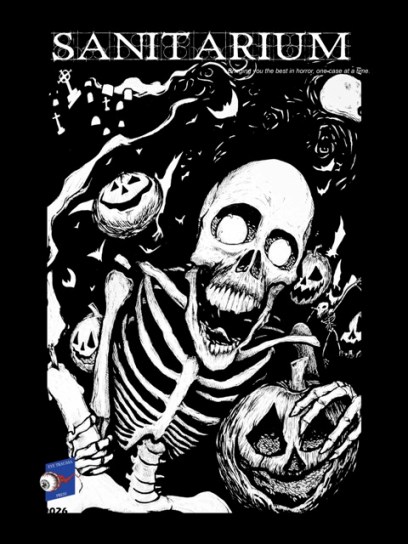
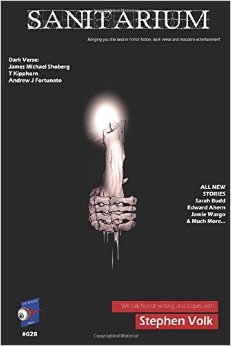
Sanitarium MagazineAll writers have trusted beta readers. Who are the people you trust to give you honest feedback?

I’m a member of two local writing critique groups. They’re my best and most honest source of feedback and they’re also some of my biggest supporters as an author. I always trust their advice and they’ve really done a lot to help me improve my craft. We’ve also recently started a critique group between the Sanitarium Magazine submission reviewers, who are a great group of talented writers. They give excellent feedback and advice and are an awesome group of people to work with.

Horror deals with a diverse number of fantastical topics. That said, are there any themes or threads that connect all your work? Are there any new concepts you’re excited to try?

Not all my work is connected but I tend to enjoy writing about creatures, supernatural beings, and experiments gone wrong. If you read something I’ve written, it most likely contains one of those elements. I also tend to incorporate a lot of things from reality into my work. It might be something as insignificant as an alarm clock I once owned, or it might be something that actually happened. Many of the places and settings I use are taken straight from the real world.

As far as new concepts go, I’ve been experimenting with writing different genres. I’ve been working on a little science fiction and writing some memoirs.

Out of your published stories so far, do you have a personal favorite piece?

“The Blackout” That’s still my favorite story. It’s the first horror story I wrote and I still enjoy its concept to this day. It’s the one that got me started as a serious author. It’s the one I would love to see hit the big screen as a movie someday.

Thanks so much to Lee for participating in this week’s author spotlight. Check out his latest entries at the Fear Project website or just see what’s he up to over at his personal site.

Happy reading!


Cthulhu Calling: Interview with Scarlett R. Algee

For my fourth—and final—2015 spotlight for Women in Horror month, I would like to introduce author Scarlett R. Algee. This Renaissance woman is not only an amazing writer, but also a jewelry maker, a slush pile reader for Sanitarium Magazine, and, of course, a major devotee to Cthulhu. Could we adore this lady any more?

Earlier this month, Scarlett was kind enough to share some details on her artistic process as well as her insight into everything from writing and reading to steampunk and elder gods.

A couple icebreaker questions to start: when did you first realize you wanted to be a writer, and who are some of your favorite authors?

My first exposure to writing came when I was in first grade. My teacher taught spelling and handwriting by giving us a list of words and having us create little stories using those words. (I’m sure my mother still has those somewhere.) That was the beginning of learning to tell myself stories, complete with acted-out performances by Barbie and friends. It wasn’t until a few years later that I realized people actually got paid to write things down, but by then I was already hopelessly smitten by the process.

Favorite authors…oh gosh, I have to pick? Poe and Lovecraft, definitely; I return to those two time and time again. Rudyard Kipling, because I’ve always wanted to live in British India. Clark Ashton Smith, because he could write both beautifully lyrical fantasy and remarkably disturbing horror. Stephen King, whose book “On Writing” should be required reading for everyone. And Terry Pratchett, who taught me that a story can be uproariously funny and yet deeply, seriously moving.

Your writing has been published in two Cthulhu haiku books. What is your process when writing a Cthulhu haiku? (Side note: that might be the coolest interview question I ever get to ask anyone.)

How do I write a Cthulhu haiku (or any other kind of haiku)? Get an idea, brainstorm until I think up some phrases that sound good, and then beat them until they fit the meter :). A lot of people think haiku is an easy form of poetry to write, because the end result is so short. They’re wrong. It can be very frustrating trying to pare a line down to five or seven syllables.

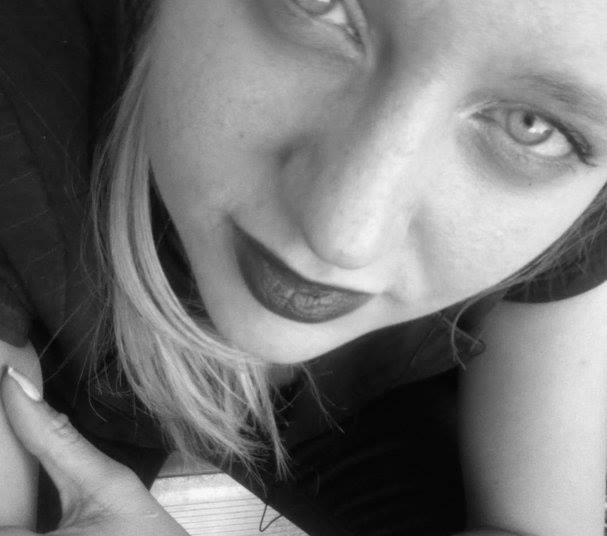
Scarlett R. AlgeeIn addition to writing, you’re also an accomplished jewelry maker. How do you balance two vastly different art forms, and has inspiration from one ever overlapped with the other in unexpected ways?

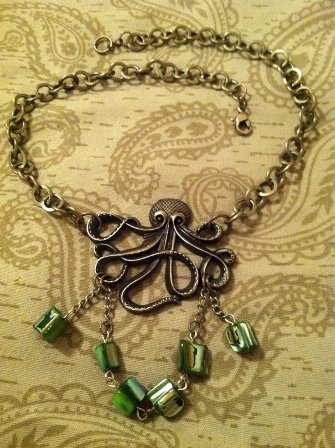
Jewelry and writing: balance them by keeping them as far away from each other as possible! That’s easier than it sounds, because most of my jewelry pieces are created in an hour or less, while writing is an ongoing, daily, dead-of-night process. Another thing that helps with the balancing act is that once I create something, physical or written, it gets put away for a while, and I give myself time to switch gears. There hasn’t been any significant overlap yet–I’ve done a *little* steampunk writing, though horror is definitely where my heart lies–but I’m open to the possibility.

Are there any particular themes you return to again and again as an artist?

My jewelry is entirely steampunk, so there’s a constant revisitation of the concepts of progress, of technological advancement, of discovery. Clocks, compasses, and cogs: the measure of human achievement, but also the measure of human mortality.

With writing, it’s a bit more personal. I have a form of chronic lung disease which, over the years, has meant a lot of time in hospitals and, occasionally, in operating rooms. The themes I find myself coming back to, time and again, are medical: drugs, experimentation, surgery. l’ve dabbled in some pretty dark corners–vivisection, anesthesia awareness, medical zombification. The human body is a fascinating piece of work, especially with the peel off.

CthulhuIn what directions would you like to see your horror career go? More published short stories? Novels? A multimedia project incorporating both jewelry and fiction? All of the above?

For the foreseeable future, I’m aiming for more published short stories–I feel I’m a better “short” writer than a “long” writer, though I try to reach a little more each time, to eventually work up to a good “long” story. I have a few story ideas on file that may become novels, but my immediate goal is to get into an anthology or two this year.

What upcoming projects are you planning?

Oh, projects! I’ve just finished a novella (it’s a riff on that “medical zombification” idea, with some light steampunk elements), and that’s being proofread as we speak. I’ve also recently rediscovered two Lovecraftian short stories I wrote years ago, and they’re my current project; I’m polishing them up in hopes of getting them published. The next thing I have planned is a story that deals with the treatment of psychiatric patients in the early 20th century–the plot runs deeper than that, of course, but it’s requiring a *lot* of reading and research. And, last but not least, I’m tinkering with interactive fiction. The 2015 Interactive Fiction Competition opens on 1 July and I hope to have a serviceable game created by then. It will almost definitely involve horror.

Thanks again to Scarlett for participating in our Women in Horror Month spotlight. You can check out her jewelry work at her Etsy shop at copperwalkdesigns.etsy.com. As for her writing, be sure to visit her blog at sralgee.wordpress.com where she shares all the latest updates on her burgeoning fiction career. This is one writer who most definitely earns the Cthulhu seal of approval.

Happy reading, and enjoy the rest of Women in Horror Month!

Sanitarium Siren: Interview with Brooke Warra

As part three of my Women in Horror Month author spotlight, I present to you the one-of-a-kind Brooke Warra.

I met Brooke through the Sanitarium Magazine Faculty forum. After we were both published in the magazine, she and I joined a group of “doctors” who help editor Barry Skelhorn field incoming submissions. Since meeting Brooke, I have been repeatedly impressed with her professionalism and dedication to her craft as well as her wit and down-to-earth nature. Consequently, I decided I just had to feature her on my site. She was kind enough to oblige and answer a few of my questions.

Okay, some icebreakers: when did you first realize you wanted to be a writer, and who are your favorite authors?

I don’t ever remember not wanting to be a writer. My parents often joke they should have gotten a typewriter tattooed on my forearm at birth. I remember writing ghost stories for my friends in elementary school- my parents fielded a couple calls from concerned mothers about that–ha! It’s so hard for me to pick my favorite authors! The easy answer is Stephen King, and I have read every book he has out, including his non-fiction. I spend a lot of time re-reading my favorites from childhood–R.L. Stine, Shel Silverstein, and a giant collection of Scandinavian fairy tales. I think the influence of these stories shows quite a bit in my writing.

You recently posted on your author page about working at a daycare. Since children have been the inspiration for some seriously creepy stories, does your proximity to a large group of kids ever inform your horror writing?

Brooke WarraKids are a great inspiration for my writing. They live in this world that is completely new to them, everything is a mystery and magic still exists. You tell them the dollar under their pillow is from the Tooth Fairy and they just accept that as a fact. I think a lot of my stories are like that. When I am storytelling, I’m asking you to let me suspend your reality for a bit and let me lead the way through the deep, dark forest. Childhood in general is a huge inspiration in the way I tell a horror story but make no mistake, my stories are definitely not for kids!

Fiction writing can be a very diverse trade, especially when dealing with fantastic topics like horror. Are there any themes or threads that connect all your work?

I’m really fascinated with my Finnish heritage and like to include little clues about that in my stories. I love writing with mild undertones of fairy tales. Also, I was born with birth defects and raised in a small fishing village in Washington State where I was the only kid with a physical disability in the entire school. So, my monsters always have a connection to their humanity. I create monsters because I have a deep affection and understanding for them.

Out of your published stories so far, do you have a personal favorite piece?

SanitariumOf my published pieces, I’d have to say “Sleepyhead” (published in the December issue of Under The Bed Magazine) is my favorite. When I was growing up, I used to listen to old loggers telling stories about horrific on the job accidents, really gory stuff. That, coupled with the scenery of my hometown, the dark woods, the swamps, the stories we told each other as kids about the things that lived in those swamps, the cruelty of children, all came together in that story. I also love the readers’ reactions to the ending, every time.

In what directions would you like to see your horror career go? More published short stories? Novels? Nonfiction? All of the above?

Definitely more published short stories! That has always been my first love. But of course, I have a writer’s ego and I think there is a novel lurking in my brain as we speak. I’ve actually outlined one! A talented friend of mine is working on a youtube project (think of the days when kids sat around the radio in the living room to listen to dramas complete with actors and sound effects) that I’d really love to be a part of. That’s still in its infancy, right now.

What projects are you currently working on?

Right now I have several projects going. I’m working at getting a blog up and running. My main goal over the next year is to finish a collection of short horror pieces–but in that collection there will be several stories that are all tied together, sort of like a novella hidden inside the book of short stories.

Big thanks to Brooke Warra for answering all my macabre questions. Be sure to check out her Facebook author page where she posts everything from writing advice to creepy, cool pictures. And of course, stay tuned for the upcoming issues of Sanitarium Magazine where Brooke, myself, and a whole host of other talented writers help field the inmates!

Until then, happy reading, and happy Women in Horror Month!

Interview with Author Kristin Roahrig

As the second installment of my Women in Horror author spotlight, I once again had some help from editor Sarah Glenn. She introduced me to the versatile Kristin Roahrig.

Ms. Roahrig’s latest story, “Sputter from the Flames,” appears in Mystery and Horror, LLC’s newly released History and Mystery, Oh My! Based in ancient Rome, Roahrig’s tale follows a woman searching for answers in the death of her niece. Was it indeed a suicide by wolf’s bane? Or was there something–or someone–else to blame? The beautiful setting belies a truly timeless quest for the truth after the loss of a loved one.

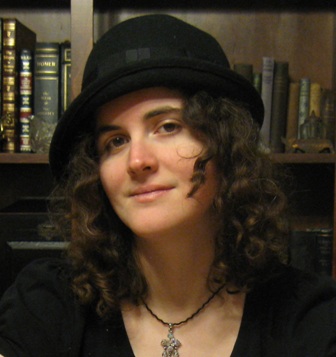
Kristin RoahrigIn addition to History and Mystery, Oh My!, Kristin Roahrig’s poetry and short stories have appeared in various publications, including The Horror Zine and Indiana Horror Review. She is also the author of several plays. A current resident of Indiana, Ms. Roahrig is most definitely a horror and mystery writer to keep your eye on.

Sarah shared this interview she recently did with Kristin as the two discussed writing and upcoming projects.

When did you know you wanted to become a writer?

As long as I knew how to write I’ve always written, whether it was  plays, poems, or stories. I never considered writing as a possible profession, it was only something I enjoyed.  It wasn’t until I was in my early twenties that I realized that I would actually like to be a writer and be a part of that field.

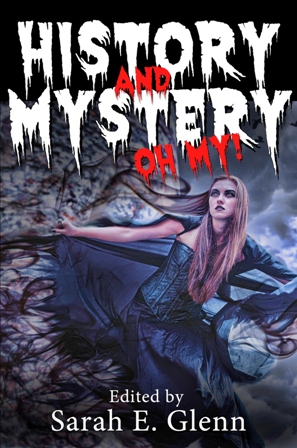
History and Mystery, Oh My!You write mysteries. Does your inspiration begin with the crime, the detective, the setting, or some other place?

My inspirations can be found in all sorts of places, sometimes they have even come from footnotes in nonfiction books. For the story “Sputter From the Flames”, the first concept I had for the story was the setting and time period.

What are you working on now?

I am currently working on a young adult novel that takes place during the Salem Witch Trials. The novel was originally inspired by an ancestor’s involvement with the trials through the jury.

You can read Ms. Roahrig’s story, “Sputter from the Flames,” along with nineteen other mysterious tales in History and Mystery, Oh My! The book is available now at Amazon and Smashwords.

Interview with Author Rosalind Barden

If you haven’t already caught my other recent articles, then I am quite excited to inform you that February is Women in Horror Month. This auspicious occasion is a perfect opportunity to discover new female horror writers.

So for my dose of great fiction, I turned to Sarah Glenn from Mystery and Horror, LLC. She and her partner Gwen Mayo (another Gwen! serendipitous, right?) have just released History and Mystery, Oh My!  This is the companion piece to History and Horror, Oh My!, and both anthologies focus on historical genre fiction.

Sarah shared with me an interview she recently did with Rosalind Barden, which appears below.

Rosalind BardenBut first off, who is Rosalind Barden? A very successful writer, that’s who! Her stories have appeared in numerous anthologies, webzines, and competitions, including Shriekfest Film Festival. Also a talented artist, she wrote and illustrated the children’s book, TV Monster. Prolific and diverse, Barden’s darkly humorous novel, American Witch, is available now at Amazon. She currently resides in Los Angeles, California.

So on to the interview!

How did you come up with the idea for your story in History and Mystery, Oh My?

I’ve always been drawn to Los Angeles’ Bunker Hill, though it was only later that I learned its sad history. The place is like a vanished dream. I would have loved living there. “The Monkey’s Ghost” grew out of my haunted feelings about what has been forever lost.  But not to worry–the story still has plenty of funny bits!

What are you working on now?

I’m tinkering with drabbles, short stories of exactly 100 words.  This January 13, Specklit.com posted my drabble, “The Human Dynamo Theory,” and will post my “Flight of the Guinea Pig” on February 16.  Specklit.com posts a drabble every other day.  I enjoy seeing how other writers craft full blown stories of only 100 words.  It’s fascinating.  And coming up is my short story– much longer than 100 words–“The Demon of City Hall” in Mystery and Horror, LLC’s anthology, “Strangely Funny 2 1/2.”  I love writing satire, and this story is a city hall full of satire!

Okay, so you’re an author. What do you enjoy reading?

History and Mystery, Oh My!I have so many favorites and I am always reading.  Short stories are the perfect bedtime “treat” for me, and Mystery and Horror, LLC provides plenty of satisfying short story anthologies for my noshing.  I am a P.G. Wodehouse fan and enjoy his humorous mystery short stories in “Wodehouse on Crime.”  I read book-length stories too, fiction, non-fiction–whatever catches my curiosity.  Most recently, when I was in Santa Fe, I picked up “The Harvey Girls,” and learned about the adventurous young women who worked out West in the Harvey House railroad hotels.  Sounds like my kind of job!  The Harvey Houses are another vanished world, like Bunker Hill, so I suppose my dreamy thoughts pull me toward the hopelessly gone.  (Still waiting for Vaudeville’s return!)   Fortunately, Santa Fe’s beautiful La Fonda is a surviving Harvey House.  I endured the bout of freezing weather during my visit, snug by the lobby’s fireplace, wineglass at the ready, writing away, while the friendly staff made sure I stayed comfy.  Can’t get better than that!

You can read Ms. Barden’s story, “The Monkey’s Ghost,” along with nineteen other mysterious tales in History and Mystery, Oh My!  The book is available now at Amazon and Smashwords.