Category Archives: Interviews

Eclectic Artistry: Interview with Miracle Austin

Welcome back to this week’s author spotlight series! Today I’m thrilled to present the immensely talented Miracle Austin! Miracle has been published in numerous fantasy and horror magazines, and she’s currently branching out into young adult fiction. Through the course of our varied interview, it was an absolute joy learning about her creative process and where she plans to go from here as an author.

A few icebreakers to start: when did you first decide to become a writer, and who are some of your favorite authors?
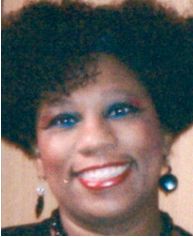
Miracle AustinI’ve been writing since junior high and first hearing Drive by The Cars. I wrote mostly little poems, inspired by the music that I listened to.

In my teens, I eventually wrote a short story about a 13 year-old boy, Jobie, spending his summer with his best friend, kissing a girl for the first time, and coping with his untimely death. It was called My Last Summer. I’m sure I misplaced it or threw it away years ago. I do still think of Jobie, the character, from time to time. May reinvent him one day….

I wrote off and on throughout my teen, early adult, and mid adult years, but always had pauses in life. I must confess that I’m a late bloomer to the publishing writing world.

Honestly, it took a very dark event to occur in my life that propelled me into the writing world, full-speed, where I now consider myself a constant writer. Writing is now my therapeutic playground in many ways.

It’s something how darkness can lead to light and my light was rediscovering my passion of writing…

My favorite authors: Alvin Schwartz, David Lubar, Edgar Allan Poe, Neil Gaiman, Langston Hughes, The Brothers Grimm, William Shakespeare, Shirley Jackson, Stephen King, R.L. Stine, Charlain Harris, Maya Angelou, Gwendolyn Brooks, Virginia Hamilton, Rachel Caine, and so many others….These authors inspire me because of the various levels of horror, intrigue, and magic they express in their writings…

You often write in the horror genre. What initially drew you to horror, and do you have any recommendations for other authors interested in delving into the darker recesses of fiction?

I now consider myself a YA/NA Cross-Genre author. I enjoy horror/suspense genres, but not limited to. I must confess that a horror/suspense AM radio station podcast my mom and I used to listen to years ago and two movies, Squirm and Carrie have been my biggest influences to write in the horror/suspense genres.
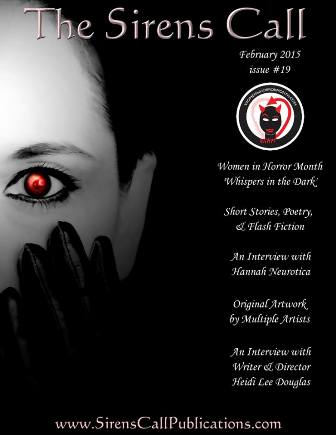
Sirens Call Issue 19I believe that if someone wishes to delve into the horror-writing world, then by all means do so. Never allow anyone to say that it’s impossible( Remember I’m Possible!) or you cannot do it because you can. Just have to believe in yourself and some positive energy. Allow yourself to not only read horror works, but diverse works because you never know when your next “Oh, yeah, that’s it…The Big Idea!!!” will find you. Keep your mind open and allow all sorts of ideas to fly in freely, keep the ones you want and tuck the other ones away for future assessment…

I love your website. It’s a great combination of your published work as well as lists of your favorite stories, authors, films, and music. What are you currently watching/reading/listening to, and how is it affecting your creative process?

Wow, thank you for your lovely comments about my website, Gwendolyn. Means a lot.

Just finished watching the first season of The Strain on Hulu. I’m so glad that I didn’t let it pass me by because it is one of the best horror/suspense series I’ve watched in awhile. Great story and characters! Cannot wait for season two, which starts next week. If you like vampires and amazing new twists, then you will not be disappointed. I highly recommend. Sure the series rocks. Will be placing on my reading list soon.

I’m watching The Secret Life of the American Teenager now on Netflix. Love it and the world of teens. It has five seasons and several episodes, so it will keep me busy for a bit. I watch an episode or two each day, when breaking from writing/organizing my thoughts and all.

I listen to all types of music when I write. I’m now currently listening to a mix and the song playing as I complete your interview is “I could never take the place of your man” by cutie-pie, Jordan Knight, originally with New Kids on the Block.

I’m currently reading two books by two author good buddettes, The Countess (a series) by Holly Hudspeth and Midnight Outbreak by Brandy Corona. They both rock!! Check these ladies out on Amazon and their websites!

Movies, music, and reading all impact my writing all the time. It gives me future ideas and allows my writing to flow…
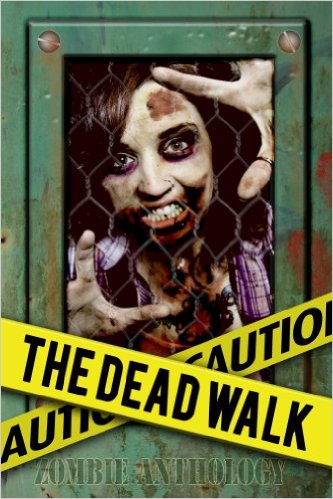
The Dead WalkOut of your published pieces so far, do you have a personal favorite?

“The Meat Lover’s Special” (found in Luna’s Children: Full Moon Mayhem) and “The Study Break” (found in The Dead Walk).

What projects are you currently working on?

I’m in the process of my first collection of short stories to be published within the next few months, I pray. It’s called Boundless and a very eclectic collection of diverse themes of horror/suspense, betrayal, love, fantasy, and more. It’s one where the reader can really open her/his mind up to anything being possible, I mean anything…

I’m currently working on my first stand-alone novel with supernatural and comedic elements called Lonestar UnOrdinary Girl.

I’m also working on a novelette called The Doll, tentative title, about a little tale involving a mean teen girl, outcast teens, and a little witchcraft. Gotta Be careful what you wish for sometimes…

Where would you like your writing career to be in five years?

I pray to be writing full-time and hopefully a few novels on my bookshelf with more to come…

Big thanks to Miracle Austin for being part of this week’s author series! You can find her on her website as well as on Facebook and Twitter. Also, keep your eye out for her short story collection coming soon from Bathory Gate Press!

Happy Reading!
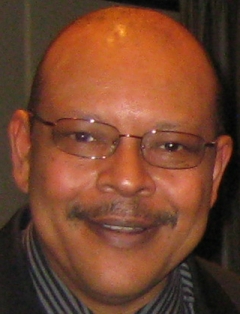
Bard Guard: Interview with Quintin Peterson

After a two-month summer hiatus, today marks the return of my author interview series! This week’s writer, Quintin Peterson, specializes in crime fiction and thrillers. He’s been featured in the Washington Post and Shakespeare Magazine among other prestigious publications. Between projects, Quintin was kind enough to share a little about his own creative process as well as what it’s like to guard some of the most famous works of literature.

A few icebreakers to start: when did you first decide to become a writer, and who are some of your favorite authors?

Quintin PetersonA few of my favorite authors are James Baldwin, Octavia Butler, Richard Wright, Tananarive Due, Chester Himes, Laura Lippman, George Pelecanos, James Patterson, Nelson DeMille, James Grady, and Lee Child.

I’ve been writing most of my life. In high school, I won the National Council of English Teachers Award for my essay, “Notes of a Wayward Native Son.”

You’ve led a fascinating life that includes not only your fiction and poetry writing but also a long tenure in law enforcement. How did you balance two vastly different professional paths, and were you ever surprised at how the two could sometimes overlap?

It’s quite a juggling act, but working odd hours helps. On the police department I worked shifts like 3:00 pm – 11:00 pm, 11:00 pm – 7:00 am, 6:00 pm – 2:30 am, 8:00 pm – 4:30 am. As a rule, I wrote for two hours before I went to work and for two hours after I got home from work…which I continue to do to this day. (I work 3:00 pm – 11:00 pm, Tuesday – Saturday at the Folger Library.) As a police officer, the kinds of stories I wrote changed. Before joining the police department, I wrote science fiction and horror, and plays similar to Lorraine Hansberry’s A Raisin in the Sun. As a police officer, I began to write crime fiction. I am now known for my “hard-boiled police procedurals”.

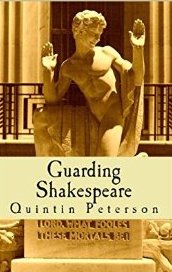
Guarding ShakespeareYour novella, Guarding Shakespeare, follows a protagonist who gets harangued into breaking into the Folger Shakespeare Memorial Library where many Shakespeare works are housed. What is your favorite Shakespeare play, and what made you want to write about the library?

My favorite Shakespeare play is Othello. I retired from the Metropolitan Police Department, D.C., after more than 28 years of public service on April 23, 2010 and started working at the Folger Shakespeare Memorial Library’s Department of Safety and Security on December 14, 2010. Shortly thereafter I learned that April 23rd is Shakespeare’s birthday. Other coincidences that struck were, 1) I was sworn in as a D.C. police officer on December 14, 1981 and issued badge number 2807, and 2) the badge number I was issued as a Folger Shakespeare Library Special Police Officer is 28. As a crime fiction author, the story of a heist job at the Folger Library occurred to me very quickly. Othello was playing at the Folger Theatre as I penned Guarding Shakespeare, so that is what is playing as the heist job ensues behind the scenes…

You’ve been a writer for decades, and your output has most certainly been prodigious. What advice do you have for new writers on how to get their work out there?

Aspiring fiction authors should first pick the genre they are most interested in, read a lot of work in that genre, and write a lot. Enter contests in that genre and surf the Net for anthologies in that genre seeking submissions.

Anyone who has been in the business for as long as you have has certainly faced rejection, both from editors and readers. How do you cope with the constant struggle of being an artist?

I’ve been rejected a number of times, but everything I’ve written that was rejected is now in print. Acceptance is subjective. The trick is to find out when a story has been rejected because it is rotten or just was not an editor’s cup of tea. You may never know which, really. You just have to actively pursue the study of the craft and keep at it. Find employment in another field to pay the bills and keep plugging away.

ExplosionsOut of your published pieces so far, do you have a personal favorite?

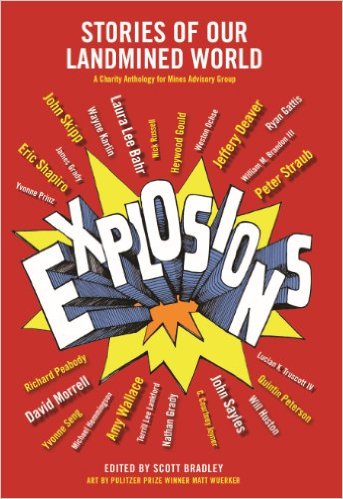
My favorite novel is Guarding Shakespeare, because it is lighter than my other work; more fun. My favorite short story is “Broken Doll,” because it features my new character Private Eye Luther Kane, who debuted in “Damaged Goods,” which is featured in the star-studded Mines Advisory Group (MAG) charity anthology, Explosions: Stories of Our Landmined World, edited by Scott Bradley. All of the proceeds from the sale of Explosions are being donated to MAG.

In what directions would you like to take your writing in the future?

Aside from continuing to write crime fiction, I’d like to return to horror and science fiction, which I did with “Hope to Die,” featured in the British horror magazine, Sanitarium. Also, I’d like to feature Private Eye Luther Kane in a graphic novel. I’d also like to see Guarding Shakespeare produced as a film. The Pitch: The Maltese Falcon meets The Da Vinci Code.

Big thanks to Quintin Peterson for being part of this week’s author spotlight! You can find out more about his work at his Amazon author page and his online gallery of artwork.

Happy reading!

Strange Musings: Interview with Giovanni Valentino

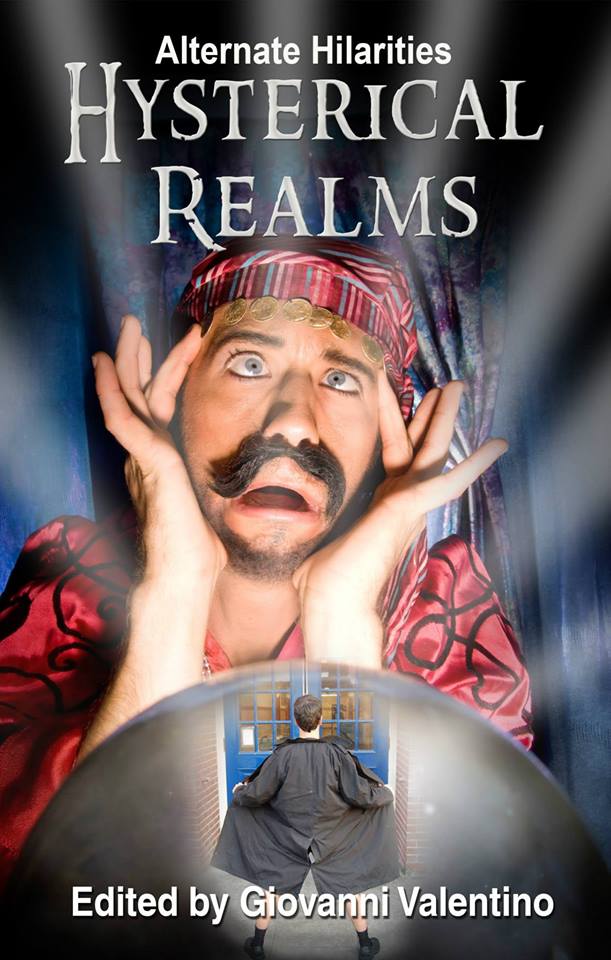
Last week, I wrote about my short story, “Lemonade Séance.” This week, I would like to introduce the editor of the Hysterical Realms anthology, Giovanni Valentino. Giovanni is the founder of Strange Musings Press, which produces a series that spotlights humorous speculative fiction. Between fielding submissions for his latest anthology, Weirder Science, he was kind enough to answer a few questions about what it’s like to balance roles as an editor and a writer and how he got into this crazy literary world in the first place.

A few icebreakers to start: when did you first decide to become a writer?

I guess I’ve always wanted to be a writer but I was held back by my dyslexia. It’s hard to get your vision down on the page when you can’t write a simple note. Now with modern medicine and the wonders of technology, I can express myself in words and get my grand visions into print.

One of the meds I take for depression has the strange side effect of lessening the symptoms of my learning disability. Spell checker helps a little; strangely enough Google is a better spell checker than Microsoft Word. The Microsoft Office function of Speak, which reads your words back to you, helps tremendously. I can’t see the mistakes on the page but I can hear them. Of course, it doesn’t help with homophones, here or hear.

Who are some of your favorite authors?

All the greats in humorous speculative fiction, Douglas Adams, Terry Pratchett and Robert Asprin.

The Hitchhiker’s Guide to the Galaxy changed my life. It was great to know that I wasn’t the only one that saw the world in an off kilter way like that. So Don’t Panic and Always remember your Towel.

You’ve written a combination of memoir and genre fiction. How is your process different for each (or do you approach all your writing in a similar way)?

The memoir process is easier in some ways and harder in others. I don’t have to craft things like worlds or characters in memoir pieces but I do have to build a believable narrative. With memoir, that sometimes involves adding things that didn’t really happen or that you’re guessing about to connect up scenes. Sometimes, you have to drop things from the story because life doesn’t happen at a well-timed pace. If it isn’t important to the story you’re telling or it’s breaking the story stride, you might need to leave it out to help things along.

The other thing with memoir is sometimes you’re tempted to leave things out. Some things are too painful to revisit or don’t paint you in the best light. It might be better for you to exclude it but not better for the story. When I wrote “Sometimes, It’s OK to be Nice to People,” a story about my relationship with my grandmother, I struggled over whether I should include a domestic violence scene between my grandfather and myself. I didn’t want to deal with the pain of it but it was important to the story. As I edited the piece, my wife told me she could tell every time I hit that scene. I’d choke up.

How does being an editor affect your writing and vice versa?

One thing about being an editor that helps your writing is you get to see other people make the same mistakes you make in your writing. It’s easier to see these bad habits clearly not working in other people’s stories. You’re not invested in their story like you are invested in yours.

One thing that being a writer and an editor can help with is understanding the process. I am very good at writing a query letter or cover letter because I’ve seen so many of them, both good and bad. Also, I have a better handle on talking with editors because I understand what they go through.

Have you ever considered giving up one to pursue the other full-time, or do you enjoy them both equally?

I like both equally but I’d give up editing in a second to be a full-time writer with a successful epic fantasy series or best-selling humorous science fiction series.

What is it about humorous fantasy and science fiction that made you want to launch the Alternate Hilarities series?

Hysterical RealmsIt was my love for the great humorous, speculative fiction authors that led me down this path. I didn’t want to wait for their next book. I wanted more now. Alternate Hilarities was originally a small press fanzine in the 90s. I produced 6 issues. I gave up after that because printing costs were too high back then and I was losing money.

A few years ago, I was researching self-publishing for a friend. She’d just sold a romance novel to an ePublisher. They didn’t do print editions but they let the author retain the print rights. Between ePublishing in general and the amazing invention of print on demand, self-publishing is very affordable now especially if you can do some of the work yourself. I can’t line edit because of the dyslexia but I can typeset the print edition and eBook. After I helped my friend get her print edition out, I brought Alternate Hilarities back to life.

If forced to choose, which part of the writing process is your favorite: developing characters, plotting the story arc, or establishing setting?

Plotting. It’s what I am best at and I can do it while I’m running. I’ve crafted some complex story lines on a treadmill or running around a track.

I also have strange, heavily detailed dreams. Sometimes, I wake in the morning with a full novel outline in my head. Not all of them are publishable but I can always get a few bits and pieces out of them.

Honestly, I have more novel outlines than I’ll ever have time to write.

Out of your published pieces so far, do you have a personal favorite?

“Mystical Redemption,” which ran on Sorcerous Signals web site in the May 2014 issue as well as the May 2014 print issue of Mystic Signals. I also reran it in Alternate Hilarities 3: Hysterical Realms.

Not only do I think it’s one of my funnier stories but it was the first story I ever wrote for a market. I needed a funny fantasy story for a call to submissions and I racked my brain for an idea. I was watching Buffy the Vampire Slayer at the time and it was the season where Giles ran the magic shop. The shop sold real magic for practitioners and for the tourists. I started thinking about my own experiences in retail and wondering what could go wrong in that situation. My first thought was coupons.

In “Mystical Redemption,” a down-on-his-luck wizard running a similar type of shop runs a coupon in the paper for a “Free Reading”. The ad salesman tries to punch it up by changing it to “Free Summoning”. The troubles starts when another wizard comes in to redeem that coupon.

Any links you’d like to share?

If there is one real life issue I would like to help eliminate, it would be domestic violence. There are some great causes out there to help victims of domestic violence like Vera House. They need your support.

Thanks so much to Giovanni Valentino for being part of this week’s spotlight. Be sure to check out the Strange Musings Press website which features bios and interviews with many more authors!

Happy reading!

Speculative Superstar: Interview with K.Z. Morano

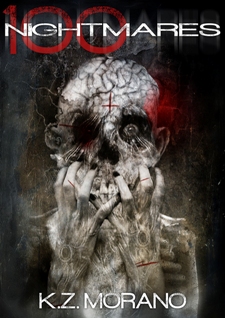
Welcome to this week’s Author Spotlight! Today, I am thrilled to present the talented K.Z. Morano. Ms. Morano is a speculative fiction writer whose fantasy, science fiction, and horror stories have been widely anthologized. Her book, 100 Nightmares, features–you guessed it–100 microfiction stories based on her own bad dreams. This is one writer who’s driven, prolific, and ready to take on the world. In between writing her super cool fiction, she was kind enough to answer some of my questions about how she became an author and where she plans to go from here.

A few icebreakers to start: when did you first decide to become a writer, and who are some of your favorite authors?

K. Z. MoranoI used to work as a ghost writer. I used to write articles about fashion, beauty, health, and other lifestyle topics. Seeing my work out there with other people’s names and bios attached to them kind of made me sad and then I told myself that someday, I’m going to get my work and my name out there. And then I started a blog, The Eclectic Eccentric. It was meant to be a fashion blog, really. But then it ended up being something else. I posted everything there—photography, poetry, haiku, anything that I felt like publishing. That was when I encountered writing prompts.

The photo prompts got me started. It’s easy for me to find inspiration in photographs. I started writing fiction and shared my stories on my blog. I started getting some positive comments from readers and blog followers. The support that I received urged me to keep writing. They told me to send my stories to a publisher or to a magazine and so I did.

I’m an eclectic reader and my list of favorite authors ranges from Clive Barker to Jane Austen. My favorite horror authors are H.P. Lovecraft, Edgar Allan Poe, and Neil Gaiman. I love authors like Ray Bradbury, Ursula K. Le Guin, and F. Scott Fitzgerald and their readgasm-inducing prose.

What drew you to speculative fiction, and do you often find inspiration in sources beyond literature (e.g. film, television, or art)?

I’ve always been a bibliophile—ever since I was a little girl. My nose was almost always buried in books. When I was younger, I used to read a lot of romance novels and when I say a lot I mean boxes and boxes of them! I also read a lot of whodunits by Agatha Christie. Apart from horror, fantasy is also one of my favorite genres. Speculative fiction not just provided me with an escape from the mundane aspects of life. It also provided me with a way to see the world through a different pair of eyes.

I find inspiration in everything. Most of my writing inspirations come from everyday life. I could be doing something utterly boring or something totally exciting and then the idea will just hit me. One of the stories in my book, 100 Nightmares came to me while I was doing the laundry. That story was aptly titled “Laundry”. LOL

Your book, 100 Nightmares, is a fascinating concept and quite an impressive work in terms of breadth. What was your inspiration behind the book, and what was the most surprising aspect of writing it?

First of all, thank you so much for reading the book. I’m glad you enjoyed it. As for the inspiration, I’ve always loved writing micro-fiction. It’s where and how I started. In fact, my very first published story is a 100-word tale in Popcorn Horror Presents. Popcorn Horror hosted a writing contest, I sent in my very first horror piece, and I ended up being one of the finalists. So my drabble got published in the book.

I used to post a new 100-word story on my blog every single week. I started getting supportive feedback from readers and fellow writers from a group called Friday Fictioneers. The support and even the friendly competition helped a lot. Someone told me to compile a few of my stories and get them out there. So I did. Also, even though my stories have appeared in various anthologies, I wanted to do a solo project.

100 NightmaresI had a blast writing 100 Nightmares but that didn’t really come as a surprise. The most surprising thing about it all was the reception. I really had no idea that it would be so well-received. I just wanted my stories to be read and they are! Another pleasurable surprise was the illustrations. I worked with the artists closely but I really had no way of knowing how they were going to interpret my written words and embody them with their art. In the end, all four artists involved did a fantastic job with the drawings.

Micro-fiction is a growing field in genre literature. Why do you think both writers and readers are drawn to these pithy tales?

Because it goes straight for the jugular. It’s not because the readers have short attention spans or because their lifestyles are too busy. It’s more because micro-fiction has this amazing capacity to capture and hold the readers’ attention from beginning to end. With micro-fiction every single word counts. There’s no space for anything unnecessary, no room to bore the reader out of his/her wits. Some people think that micro-fiction has no depth but that isn’t true. When done correctly, it can have everything that a story in a traditional length can possess, even the occasional surprise ending. You think there isn’t going to be a twist. It’s impossible. There are only 10 words left. But at the final sentence, the conclusion is revealed, the entire story changes right in front of your eyes, the blow is delivered, and then you are left utterly horrified.

If forced to choose, which part of the writing process is your favorite: developing characters, crafting dialogue, or establishing mood?

I’d say establishing the mood. The most challenging part in writing micro-fiction is setting the mood and then getting to the point in just a few words. But that’s also the most exciting thing about writing it.

Out of your published pieces so far, do you have a personal favorite?

My personal favorite would be my most recently published piece, “The Ghost in the Freak Machine” in the Undead Legacy anthology. It’s my very first zombie story and it delivers a fresh take on the living dead. It’s violent, it’s hardcore, it’s transgressive, and it’s real. I love it when editors don’t have too many crazy rules on what’s “appropriate” and what’s not.

Big thanks to K.Z. Morano for being part of this week’s author spotlight. Check out her Facebook site as well as her Amazon Author Page.

Happy reading!

Writer of the Weird: Interview with Nathan Hystad

Nathan Hystad is an author of horror, sci-fi, fantasy, and other weird fiction. He and I have been crossing paths, albeit virtually, since last fall when Whispers from the Past: Fright and Fear was released through North 2 South Press. His story, “The Attic,” appears in the horror anthology as does my tale, “Black Door.” But that’s not the only time we’ve shared fiction space. We corresponded after he read one of my stories on Saturday Night Reader, an online magazine where he’s been published multiple times. For anyone who’s had the privilege of reading his work, it’s clear Nathan Hystad is a serious up-and-coming writer, and I was quite excited to talk with him about his craft early last month.

A few icebreakers to start: when did you first decide to become a writer, and who are some of your favorite authors?

Nathan HystadI think I have always wanted to be a writer, ever since I was a little kid. I have a box full of stories I wrote when I was 6 or 7 years old. Maybe one day I will share with the world these hilariously awful adventures. My mom was a reader, so I picked up on it at a young age. When I was around 15 or 16 I was introduced to Raymond Feist, and my love for the genre never looked back. These days I would say Robin Hobb and Brandon Sanderson are the two authors I am the most excited to see new books by, if that is an indication of my favorite authors.

Many of your stories have dark elements. What made you want to delve into the world of horror, and how has your perception of the genre evolved as you’ve continued to write?

It’s actually kind of funny. When I was a teenager I had started a few projects and they are long buried, and for the next fifteen years, life got in the way of that dream. It wasn’t until about three years ago that I decided I wanted to give it a go again. I started a fantasy novel…it was horrible. Okay no problem, I thought I would try some short stories to improve and practice. Most of the calls I saw were for horror or science fiction. I tried a couple horror pieces and found myself really enjoying them. I have a tendency to go to that place first when working on a story. I want to be writing and giving myself the creeps as I do it.

My perception has changed a lot. Horror is hard to write because there are only so many themes out there, and you really want to tell a story that hasn’t been told before. So if you are writing a ghost story, you have to ask, what can I do differently? I have had three ‘ghost stories’ published, with two more due out this year and they are all so different than each other. Whether that is from setting, characters, motivation, you just have to have a new take on it each time.

Whispers from the PastAs a horror, paranormal, and science fiction writer, do you ever find yourself looking to films or television for inspiration? If so, what movies or series in particular have stayed with you over the years?

I am sure films and TV do influence most authors whether we want them to or not. I will create a character and have a vision of an actor/actress who would play the role. It helps visualize your story and characters as your write them (or they write themselves)

Sometimes I see a great character on a TV show and grab a couple traits that I like for one my stories.

For my short stories, I think, would this make a good Outer Limits episode?

Out of your published works so far, do you have a personal favorite piece?

That’s a tough one. I have a soft spot for most of my stories and I am so happy when any of them find a home out there. My first published piece was “Central Park in the Dark,” and I wrote this after a trip to New York. I loved Central Park and had an idea to write a series of stories set there. Kraxon Magazine picked it up and for a new writer, it was amazing to see something I wrote out there.

Then I got a yes for “A Haunting Past” for an anthology and it has some amazing stories from many great published authors. So to be part of that was so great.

But my favorite piece is coming out this year in The Ghost Papers. (See below)

What upcoming projects are you working on?

I’ve been busy working on year one of a three-year designation program for work. My writing time has been almost nothing, so when I have a chance to spend time on it, I’m working on my novel Sleepy Grove. It started as a short story and I loved the idea and character so much that I wanted to keep it going. Writing a book is so much different than doing shorts, but it’s a very fun challenge. I hope to make enough time to complete the first draft by the end of the year, and with the help of the awesome beta’s I know, I think this book can be something I’ll be proud of for a long time. The short story, which has basically become Chapter One is in the Upcoming Emby Press anthology, The Ghost Papers Vol 1.

Other than that, I’ve started a short story from an idea that my neighbor sparked last summer. She collects storage unit’s contents, kind of like Storage Wars, and she told us she had just found an urn with ashes in it. So that is a story that needs to be written!

Big thanks to Nathan Hystad for being part of this week’s author spotlight! Be sure to check out his blog where he spotlights his writing process as well as cool interviews with other writers. You can also follow him on Twitter at @NathanHystad.

Happy reading!

Genre Warrior: Interview with Ed Grabianowski

This week’s featured author is Ed Grabianowski. Like Lee Forman who I interviewed in March, Ed is a competitor in David Wellington’s Fear Project. And quite a formidable competitor at that. After weeks of writers duking it out, he’s one of the final four left in the competition. Between Fear Project challenges, Ed was kind enough to answer a few of my questions. His responses shine a light on the day-to-day rigmarole of being a writer as well as why it’s such a coveted profession.

A few icebreakers to start: when did you first decide to become a writer, and who are some of your favorite authors?

Ed GrabianowskiI remember always enjoying writing as a kid, but as far as a career, I was never sure how you made a living at it. But then I sort of blundered into some newspaper jobs and some freelancing gigs, and I’ve been a professional freelance writer for more than ten years now.

I actually read more fantasy than horror. I’ve been a massive Tolkien fan my entire life. In more contemporary terms, I am a huge fan of Scott Lynch’s Gentlemen Bastards series, and I could talk your ear off about how much I love China Miéville.

I grew up on Stephen King, like a lot of horror writers, and I’ve been on a King kick lately, working my way through some his earlier novels and anthologies. The StephenKingRevisited.com blog got me started down that path. I love Poppy Z. Brite’s early works, and all the pulp greats, Lovecraft, Robert E. Howard, and I love Leigh Brackett and CL Moore.

How did you get involved in The Fear Project, and what has been the most interesting part of the experience so far?

It turned up in my Twitter feed at some point, then I lost the link and had to track it down. I submitted my entry just before I left for a New Year’s Eve party, right under the deadline. Found out I made the cut a few weeks later.

There are two things I’ve found interesting — one is how incredibly valuable the process of creating and refining a story every weekend has been. Just doing it week in, week out, there’s no time for bullshit. You just write, and then you revise, and then revise some more. The tight word limits have helped there too. You’re just putting that story to the grindstone, making sure every single word is pulling its weight. Which is how all fiction should be, but man, flash fiction really drives the point home. For instance, if this interview was a Fear Project story, I’d definitely go back and fix that mixed metaphor I laid down a few seconds ago.

The other interesting thing is how many of the authors on the Fear Project are becoming friends through social media. We’re competing, but we’ve all been really supportive of each other the whole way. We’ve been concocting rough plans to maybe get together at a convention at some point this year, which would be really cool.

My personal favorite of your pieces for the competition was “Dolls.” It was among the best modern horror stories I’ve read in years. Tell me about the process behind that one.

DollsI’d been reading John J. Adams’ Apocalypse Tryptych, a set of three anthologies he edited featuring stories set before, during, and after the apocalypse. The first book is called The End is Nigh. Anyway, I knew I wanted a type of apocalypse I hadn’t read about before. I had this weird idea that, if you consider all the toy stores, all the warehouses, all the dolls in people’s homes, they probably outnumber humans. Creepy Doll stories are usually personal, claustrophobic stories, so I thought it would be fun to open it up, have them overrun the world.

Most weeks I write two stories for the Fear Project, then see which one is working better (and I’ve ended up using two of the “b-sides” for later changes). But “Dolls” was the only story I wrote that week, and it required the least revising. It just worked for me right out of the gate. I’m glad to hear you liked it so much!

Which Fear Project prompt has been your favorite? Which one was the most challenging?

I definitely enjoyed the apocalypse challenge. Just a big fan of apocalypse stories in general. The “taste of fear” challenge was also a lot of fun, although it was difficult since I was traveling that weekend and didn’t have a lot of time to work on it. But I had so much fun with the Victorian epistolary form and a pretty gross ghoul.

The horror/comedy one was really hard for me. It’s not that I don’t think they belong together, because the contrast can amplify both aspects. But it’s so hard to just sit down and go, “OK, time to be funny.” I’ve got to credit my brother for suggesting the stand-up serial killer idea. That was a week where I wrote two stories, and I stuck them in front of some people to see which they liked better. I still like the other story better, even though I won that week. Good thing I trusted my friends! And I can save the other story for another day.

In what direction would you like to see your writing career go? More short stories? Novels? Nonfiction? All of the above?

I’ll always write non-fiction, if only because it’s steady work that helps pay the bills. But I’d love to stop being a non-fiction writer who also does some fiction, and become a fiction writer who does non-fiction on the side. And that’s on me. I’ve got to carve out that place for myself in the world. I think there are some horror film scripts congealing in my brain too, but…that’s a whole other place to carve out.

What upcoming projects are you working on?

I think all of us competing in the Fear Project want it to be a gateway to bigger and better things, whether we win or not. With that in mind I figured I’d better have a bigger and better thing ready when someone comes along and says, “What else ya got?” So I’m working on a supernatural horror novel about a U.S. tank crew, set during the Cold War. I guess the elevator pitch would be, “Fury meets Pan’s Labyrinth.”

Any links you’d like to share?

Well, my own site is like that old car in the garage that doesn’t run — I’ll fix it one of these days. But I like to hang out and talk about horror on Twitter, so that’s the best place to find me: http://twitter.com/therobotviking

Big thanks to Ed for being part of this week’s author spotlight, and we wish him luck as he competes in the Fear Project!

Happy reading!

Fantasy Maven: An Interview with Jill Marcotte

For this week’s author spotlight, it is my pleasure to introduce the fabulous Jill Marcotte. I recently discovered Jill’s work through the Women in Horror Issue of The Sirens Call. I was impressed with her command of language as well as her ability to establish a haunting mood in very few words. Naturally, I was eager to feature her on my blog. Earlier this month, Jill was kind enough to answer my questions about her fiction writing process. Her responses are as revealing as they are enthusiastic.

A few icebreakers to start: when did you first decide to become a writer, and who are some of your favorite authors?

Jill MarcotteI was one of those creepy stair goblin kids who always wanted to be a writer.  Of course, I also wanted to be an astronaut, an exotic dancer, a firefighter, an assassin, an Animorph, and a nun, but the writing stuck.  Now I get to bypass all the training and working out and trespassing in construction sites looking for downed alien spacecraft, and just write about all those people instead.  It’s really the best of all possible worlds.

That said, I’ve still got a loooong way to go, and what is an aspirant without her idols?  I’ve always admired Terry Brooks for his prolificness, and Brandon Sanderson for his ability to blow my mind.  Shakespeare, for his sass and dirty jokes.  I love the crazy creepy worlds of Neil Gaiman and China Miéville.  And I will always hold a special place in my heart for the writers of the classics: Bram Stoker, Henry James, Mary Shelley, Jane Austen, and lots of others.  This is hard to narrow down!  There’s so much to love out there.

You write in a variety of genres, including horror, science fiction, fantasy, and even children’s books. Do you have a favorite genre, or do you enjoy the flexibility of writing so many different styles?

I love having a genre for every mood, and when I get my hot little hands on some delicious new concept, there’s no denying that siren song.  And I dearly love to twist and tweak tropes from one genre into another.  There are very few genres that I haven’t dabbled in at least once, although I definitely have a better feel for some than others.

Epic fantasy, however, is the ex-husband I keep remarrying.  I just can’t keep away from it for long.  I might get distracted by a shiny new idea, and I might work on other stuff for weeks, even months, but I always come back.  Love me some epic fantasy.

Since Alaska is your current home, does the often harsh climate there ever impact your story ideas, or have you become so accustomed to the weather that you don’t even think about it anymore?

Most definitely it impacts me.  In fact, I was just thinking this morning about how I usually write in season—that is, the things I write are very often set in the season I am currently living in.  For me, in real life and in my writing, nature is practically a living creature.  It moves and breathes and loves and kills.  It’s wild and shifting and everywhere.  I cannot fathom living in a place wherein it doesn’t matter if it’s summer or winter.  Where I live, that can be a temperature swing of a hundred degrees F or more.

I love Alaska.  It is indescribably glorious year round, from the stark, brutal beauty of an endless night to the bright, bursting exuberance of summer, where every growing thing is desperate to get twelve months of life and activity into three months beneath an unsetting sun.  The funny thing about Alaska is that it’s too extreme to ever get used to.  Summer Alaska and Winter Alaska are two different places, with spring and fall just a hiccup in between.

As a member of your local NaNoWriMo, what advice do you have for other writers interested in getting involved? Also, what’s the most important thing you’ve learned from the NaNoWriMo experience so far?

Sirens Call Issue 19My best advice for getting involved, in just about anything, is to dive in and do it!  The great thing about NaNo is that there’s something for everyone.  Are you a social butterfly delighted to meet other writers?  Go to write-ins, show up at planning meetings, check in with your accountability buddies.  You’d rather hide in your closet and spend that time writing?  That’s fine, too.  Just sign up, make your goal, and hit the road running.  And if you’re like me and fall somewhere in between, there’s plenty of online engagement available so you can egg on your writing buddies from the safety of your Batman print snuggie.

NaNoWriMo is, admittedly, kind of stupid.  I mean, who blocks off one month to write an entire novel?  FOR FUN?  Well, I do, and I love stupidity!  You know what else I love?  Accountability.  And creativity.  And neat little graphics that show my progress.  But I think the most important thing I’ve gleaned from NaNoWriMo so far is that drafting is just that- drafting.  It’s not a finished product and it doesn’t matter if it’s utter poop.  Keep.  Moving.  Before NaNo, I spent years editing the same one book.  Over and over and over.  NaNoWriMo jolted me out of the editing rut, and that has been of incredible value.  Now I know how to draft and how to edit, and how to hold the two apart.  And even more important, how to move on.

Out of the stories you’ve written, do you have a personal favorite piece?

I have an epic fantasy series that I am absurdly in love with.  I daydream about these places and make up grammar rules for their dead languages.  I make physical copies of the games they play and have been known to call my children by characters’ names.  If I were to suddenly be transported to this world, I would have about twenty minutes to be absolutely elated before something horrible killed me.

As far as published works go, I believe I am currently proudest of my most recent one, The League of Draven, about a girl who learns the hard way to believe in fairies.  Check it out in Issue 19 of The Sirens Call eZine.

What upcoming projects are you working on?

Last year, I drafted several new novels, so this year I’m focusing on cleaning them up.  I especially look forward to polishing The Sad, Sad Tale of Dead Timmy, a supernatural tragicomedy about a prince who dies, and then the real trouble begins.

Any links you’d like to share?
Don’t mind if I do!  I’m big into literary camaraderie and can attribute a lot of my successes to digital high fives (and butt kicks) from other writers.  If you’re just starting out, having writing buds can make a world of difference–as sounding boards, as beta readers, as cheerleaders/drill sergeants, etc.  Here are just a few of the fertile fields of friends:

NaNoWriMo–If you’re still on the fence, consider this a loving shove.
Camp NaNoWriMo— For those of you who can’t get enough of a good thing.

Twitter — This is hands down the best place I’ve found for surrounding myself with fantastic writers from all walks of life.

Local writing groups- I’m involved in a couple writing groups, as well as just people I like to informally write with.  (Okay, person. HI, MARY!)  Join a group in your neighborhood, or start your own!

And of course, everyone is always welcome to pop over to my blog to say hello and read the doofy things I say.  I’d love to meet you!

Major thanks to Jill Marcotte for this fun interview!

Happy reading!

Halloween in April: Interview with J. Tonzelli

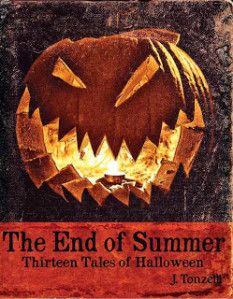
For this week’s author spotlight, I’ve got a special treat for all you fans of fall. My writer today is J. Tonzelli. He’s the scribe of End of Summer: Thirteen Tales of Halloween, a book that might have the coolest creepy cover ever. But this author has even more to offer than one (completely awesome) collection of short stories, and he was kind enough to share his experiences, inspirations, and advice for other horror and fantasy writers out there. Halloween in April indeed.

A few icebreakers to start: when did you first decide to become a writer, and who are some of your favorite authors?

J. Tonzelli AuthorI’ve been writing since I was fairly young, so I guess I’ve always had the itch to do it. When I was young, I read mostly horror-centric stuff: R.L. Stine, and the Scary Stories to Tell in the Dark books. I read In a Dark Dark Room over and over. I was really infatuated by this notion that you could be in a room by yourself reading only someone’s words, and that someone still had the power to scare you. This wasn’t someone sneaking up behind you and screaming, “boo!” or a scary movie on the television in front of you. It was just words, and they were terrifying, and I loved that.

I matriculated from Stine to Stephen King in the summer between fifth and sixth grade, when I read IT, but then eventually I began reading all genres both fiction and non-fiction. My go-to authors are Ray Bradbury, Dennis Lehane, Per Petterson, and Norman Partridge. I love David Sedaris. I’m also really digging Jonathan L. Howard’s Johannes Cabal series right now.

Halloween plays a major role in your fiction. What is your earliest Halloween memory, and do you think that formative experience shaped your love for the holiday?

I actually share this memory in the foreword for “The End of Summer,” but one of my earliest Halloween memories was being puked on during a Halloween party while I was in elementary school. Some kind of flu or nasty bug had been spreading slowly around the school that month and making all the kids sick. I guess it was her turn. Ironically, she was dressed as a witch, and I was dressed as the devil. Talk about mutiny!

The End of SummerTo offer up a more serious answer, I think it’s because I’d always been into horror even at a young age, which sometimes made me feel like an outcast. I didn’t share the same interests a lot of the other kids did – sports or video games, for instance; wrestling was big at that time, but I wasn’t interested. So I sometimes felt isolated because of it. I’d hide the covers of books I was reading so the other kids couldn’t see them. If I was watching a horror movie at home, and my parents or brother came into the room, I’d turn it off real quick. I hated being judged or ridiculed for my interests. But Halloween was that one time of year when everyone was into that kind of stuff, so it always felt like a safe day where I could sort of live vicariously through all of these people having a good time wearing the scary mask and watching the scary movie and not feeling weird for enjoying it. I sometimes felt like a horror cheerleader, trying to make my friends realize that this kind of stuff could be fun all year. It hardly ever worked – my schtick probably got old pretty fast. Some of that carries over into The House on Creep Street.

Your book, The End of Summer: Thirteen Tales of Halloween, was released in 2013. What was the most rewarding part of writing a short story collection of Halloween stories?

The most rewarding aspect was simply seeing that book though to the end, as my main goal was to see if I could even do it – not necessarily put together a collection of writing, which is its own reward, but to see if I could keep it contained to a common theme (that being Halloween) and explore its myths and folklore in different ways. Originally, “The End of Summer wasn’t necessarily Halloween-themed. I wasn’t even so much trying to stick with a horror theme. I was just writing whatever concept I thought would interest me as a reader. At that point, there wasn’t a “book” in my mind – I just wanted to write. But as I wrote, I noticed that I was subconsciously either setting the story on Halloween, or injecting into the story some kind of Halloween-like imagery or setting. Once I became cognizant of that, it seemed to me that I had to follow through with this impulse to see if I could concoct an entire collection of stories all relating to Halloween. For better or worse, I did!

Your most recent novel, The House on Creep Street, was a collaboration between you and author Chris Evangelista. How is the creative process different when writing with someone else?

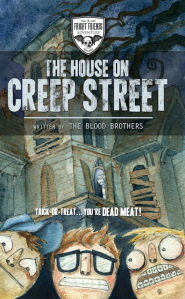
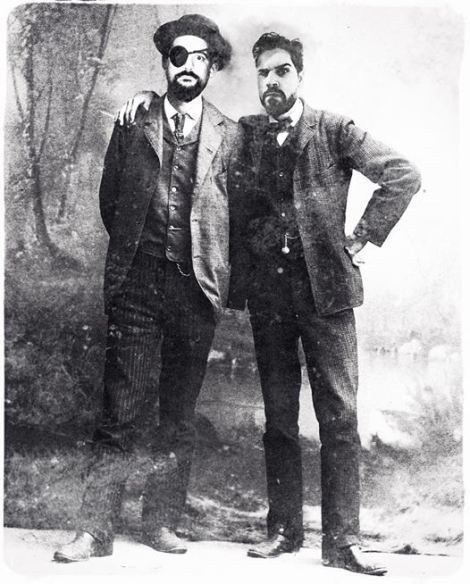
The House on Creep StreetI’ve known Chris for fifteen years now, and we’ve been sharing writing projects together for almost that entire time – just in different ways, and mostly for fun. I’m convinced we were fraternal twins somehow separated at birth. We both share a lot of the same interests and sensibilities, the same weird sense of humor, and we both approach writing in the same way. It’s scary how in-sync we can be when working on something together; sometimes it gets to the point where we can literally finish each other’s sentence, and I don’t mean on the page, but out loud when we’re outlining every new adventure. When we start a new novel together, we’re both in step right from the start about the story we want to tell and the themes we want to convey. We know how we want to tell that story, and more importantly, how we don’t want to tell it. We go by the pen name of The Blood Brothers for these books, and a large reason behind that, besides that wonderfully corny pun of a name, is that we just genuinely feel like brothers.

“The House on Creep Street” is the first in a series called “Fright Friends Adventures,” which are horror adventure stories for younger readers, highly influenced by stuff like the Goosebumps books, the show “Are You Afraid of the Dark?” and movies like The Monster Squad and The Goonies. We grew up devouring that kind of stuff, and we felt that those kinds of fun, adventurous morality tales were ripe for another exploration. Our goal was to keep them as timeless and classic as possible.

Out of your published works so far, do you have a personal favorite piece?

I love a lot of what I’ve published, and not because I would ever dream of flat-out stating they’re excellent – that’s for the reader to decide – but because I feel like everything out there so far with my name attached to it reflects me, and my personality and interests and passions, in some way. Even if there’s something of mine I look back on with a bittersweet feeling of hesitation or regret, that book or story still reflects who I was, and the place where I was in my life, at that time. Every story invokes recollections of, “Oh, I wrote this when I’d found out so-and-so had passed away” or “I wrote this while I was still going through that break-up,” etc. Everything I’ve written is the equivalent of a photo album. If I were to go back and read my stuff, I could tell you exactly what I was going through at the time I wrote it.

To offer a specific favorite, I love the opener of “The End of Summer,” a story called “Stingy Jack,” because that wry, weird kind of humor really defines my personality. I also love “The House on Creep Street” based strictly on its origin, which were childhood writings of mine that I’d forgotten about and subsequently rediscovered several years ago. As a kid, I’d been fascinated by the idea of nighttime adventures, with my real childhood friends by my side, so I had written all of these stories where we encountered something weird or supernatural in our neighborhood. They were terrible, obviously, since I was twelve or so when I’d written them, but they were also charming in a way. It seemed like a fun concept to strip down and rebuild, which we did, and which led to “Fright Friends Adventures.”

What upcoming projects are you working on?

Blood BrothersI keep going back and forth on a solo project I’ve been working on for the last year or so – my take on the historical mash-up. I originally abandoned the concept several months ago for fear I wouldn’t be able to pull it off, but now it won’t leave me alone. It’s getting to the point that it’s almost screaming in my ears for me to keep trying, so I’ll likely get back to it sometime soon.

Chris and I are currently doing a rewrite on the second book in our “Fright Friends Adventures” series that a publisher is excited to release. It’s called “Beware the Monstrous Manther!” and it’s about Joey, the main character in the series, and his creepy new neighbor across the street, who Joey suspects of kidnapping his neighborhood’s pet population for dastardly reasons.

I’m also pretty consistently contributing to the film site Cut Print Film, where I write reviews, interview filmmakers, and do write-ups on genre titles that have a certain cult appeal. I’ve been doing that for about six months now and it’s been pretty rewarding. I’ve gotten to talk with filmmakers I really admire and it’s nice to collaborate with a huge group of like-minded film enthusiasts. Plus I get to see movies for free, and who wouldn’t love that?

Big thanks to J. Tonzelli for being part of this week’s author spotlight. Be sure to check out his main website where he features several free short stories (and who can resist that?). You can also visit the official site for “Fright Friends Adventures,” which has resources for both parents and kids. And for film buffs, you won’t want to miss his contributions to Cut Print Film. Calling all cult classics.

Happy reading, and happy early Halloween! 

A Master Class with Gerri Leen

This week’s interview is with an author whose work I’ve admired from afar for months. Gerri Leen is an accomplished genre writer who’s been widely published in anthologies, magazines, and literary journals. I first came across her work last summer, and her talent and prolific output astounded me. Gerri has a lot to teach all of us up-and-coming fiction writers. At the very least, the advice she offers throughout this interview helped me feel a little less alone when it comes to the sometimes lonely world of writing, editing, acceptances, and the dreaded rejections.

A few icebreakers to start: when did you first decide to become a writer, and who are some of your favorite authors?

Gerri LeenI had opportunities to pursue writing when I was younger, and writing seemed to come easily (at least as far as school projects were concerned—I never tried to get published back then other than one poetry submission to Omni that I never heard back on), but it never seemed a viable way to make a living—and I was all about supporting myself back then.

So the ability was there but not much experience and definitely not a lot of drive. For years I wrote poetry to quench the thirst to write. But after my mother died in 1998, I quit writing poetry for a while, and I found that there were stories that needed to come out. I started writing fanfiction in 1999 to scratch that itch, and sent in my first professional submission to the Star Trek Strange New Worlds contest in 2004—and got in on my first try. And then didn’t make it into the next volume or make a sale for original fiction for quite a while after that, so I had to really examine why I was doing it. Once I decided I was writing for myself, I could keep going. And things have progressed since. I started writing poetry again, and now I have some poems published. When I was in my teens and twenties, I would say that I would write when I was old. Well, I’m sure the me of back then would think that I’m old now, so prophecy fulfilled.

Favorite authors really run the gamut. I tend to read mainstream fiction, young adult (both speculative and non) and speculative fic. I am sort of weird in that I don’t tend to like series—I much prefer a stand-alone book with an actual ending—so that sort of leaves out a lot of fantasy and YA.   In mainstream fiction, I adore Stewart O’Nan, Gillian Flynn (way before Gone Girl), Armistead Maupin, Doug Coupland, Max Barry, Ron Rash, the thrillers of Louisa May Alcott, and Matt Ruff (although some of his are borderline speculative). In speculative, I love Connie Willis, Joan Vinge, Jane Yolen, Daryl Gregory, Scott Westerfeld, Robert Heinlein, Anne McCaffrey, Richard Matheson, and Ray Bradbury.

You craft a variety of stories, including horror, fantasy, and science fiction. Do you prefer writing in one genre above and beyond the others, or do you love them all equally?

Sirens Call Issue 19I tend toward mythology-related things. That would probably be my favorite: any time I can rework a myth (or a fairy tale or a legend).   I often don’t get dark enough to nudge my stories out of dark fantasy and into horror, so it’s fun to see the ones I have managed to push over the cliff get accepted. Just when I think I’m not really a sci-fi writer, the muse will pull something new out of her bag of tricks and I realize that I still am. I’m sort of a commitment phobe, so I love being able to go back and forth among all these genres (and even mainstream) and try new things. I recently started writing romances under the pen name Kim Strattford. I also do fiction with romance under my own name, but the stories tend to be dark or bittersweet. For the real romance stories, it seemed wise to create a pseudonym that readers could count on for the happy endings they crave (and that the genre demands).

With hundreds of published stories over the last few years, you have an enviable output as a writer. How do you keep yourself focused and avoid burnout?

Thank you! I’ve been doing this for ten years now, so I guess I’m in it for the long haul. But if I feel burnt out or unfocused, I don’t write. Sometimes I just don’t feel like writing. Sometimes I’ve got things going on in life that sort of take over the brain so I don’t have the energy to write—and I often feel like the muse is diverted to handle the crisis, guess she’s an all-purpose inspirer. I have frequent severe migraines and sometimes they take me off the playing field (other times, writing through them is the only thing that makes them tolerable—although the stories don’t always make a whole lot of sense when I read them the next day). I’m pretty chill when it comes to any kind of schedule. If I’m meant to be writing, I’ll write. If not, I’ll do something else.Bottom line, this should be fun. If it’s not fun, take a break till it is. At least for me, when the story is there, it’s going to flow. But if it’s not there, no amount of me hitting keys is going to get it there. I’ve learned not to force it.

It’s also fun to have projects that are really close to your heart to keep your interest level up. I have a collection coming out from Inkstained Succubus Press that will feature genetically enhanced racehorses that manage their own careers. I have written in this world before and they offered me the chance to do a novel-sized collection of interconnected shorts, and since I’m an avid follower of horse racing, I jumped at the chance. I also am editing a collection of speculative companion/service animal stories for Hadley Rille Books that will benefit an animal rescue group I support in Northern Virginia. Health issues on several fronts have delayed this book, but we are ready to get going on it again. I think it’s a really fun group of stories and poems, and it was oh so enlightening getting to go through the slush pile. I have a much greater appreciation for why things get rejected and how it may not be any reflection on quality, just a case of a story not fitting the theme, or being too much like another story that fits better for whatever reason (although an astounding number of people don’t read the guidelines—I was a little shocked). I think having done a stint as editor on a slush pile, I am much more copacetic when I get rejected.

If forced to choose, which part of the writing process is your favorite: developing characters, establishing setting, or crafting dialogue?

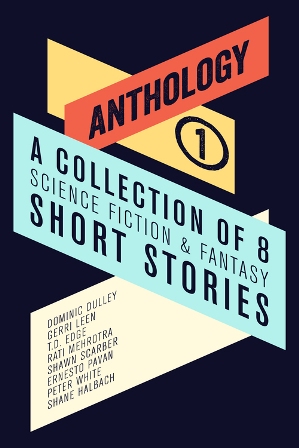
Anthology 1 Gerri LeenDialogue, for sure. There are times when I’m writing, if a scene is in my head and I just want to get it captured, I’ll just do the dialogue and work out the connective tissue later. I think I would be very happy as a screenwriter, because dialogue is the part that’s always come naturally to me (this kind of makes sense since a friend and I used to do plays of fairy tales in elementary school for the younger classes—sometimes making up the thing as we went along). I’ve had to work on the texture part, of setting the scene and bringing it alive as the character sees it. Writing poetry before I did much prose can at times be a problem. In poetry, every word counts, so I am often fighting my own tendency to be spare or choppy. But I’m learning.

For character development, I think a lot of that often comes through in the dialogue as much as the inner monologue and action moments, so I see that as part and parcel of the dialogue process. I always go back to shows like Joss Whedon’s. If you hear the dialogue, you can pretty much tell who would have said the line. So much of what made his characters who they were was how they said things. I’m not sure I’m there yet, but it’s what I’d strive for: to be able to achieve such distinct voices for characters. Probably easier to do, though, in a novel than in shorts, and so far I’ve mostly concentrated on shorts and novelettes.

All writers hear the word ‘no’ a lot during their careers. How do you cope with rejection and keep submitting?

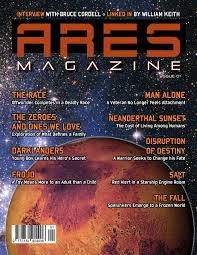
Ares Magazine Gerri LeenRejections never stop sucking. That’s the reality. But I think the trick is to have a lot of stories circulating (and be working on other things) and don’t obsess over things that are rejected—and get them right back out to a new market. And take crit with a grain of salt. If you hear the same thing more than once from different editors, then yes, it may be something that needs fixing. But to edit every time before you send out again: that way lies madness.

That said, it’s not always easy to just brush off the constant rejections. When it gets really bad—one month this year I got six rejections in one day—I often take a break from original stuff and write fanfiction (which is where I really learned to write). I just disappear into worlds I adore, get some immediate love back for the stories, and feel…energized. Sometimes I focus on poetry for a while. Not that it doesn’t get rejected, too, but the process for writing it is a lot easier for me and seems to use a slightly different part of my brain. Or sometimes I just take a break completely from writing. Binge-watch a show (you can always take something away whether it’s how they worked in a plot twist or a clever way of introducing something), watch movies, play games on my iPad, or just read. I’m not a “write every day no matter what” type of writer. I write when the muse either gives me scenes ahead or I get the feeling a story is imminent. I was once told I lack discipline since I won’t do the “butt in chair everyday” method, but I think I’ve done all right doing it my way.

Out of your published works so far, do you have a personal favorite piece?

Oh, man, that’s a hard one. My favorite is probably “Disruption of Destiny,” which appeared in the launch issue of Ares Magazine. It was actually prompted by a movie called The Safety of Objects. But I have a story that’s looking for a home called “One Way” that will give “Disruption of Destiny” a run for its money as my favorite once it gets published. It is a sci-fi story written in a bit of a reverse timeline. And the muse gave me the story backwards so I discovered the character the same way the reader will, with each new bit revealing that you really don’t understand what’s going on at all.

Huge thanks to Gerri for taking the time to answer my questions. Check out both of her author websites here and here as well as her Facebook and Twitter pages. 

Happy reading!

Lovely Dirges: An Interview with Jess Landry

For this week’s author spotlight, I am thrilled to introduce Jess Landry. Jess is a genre writer who pens both fiction and nonfiction. I came across her story in the Women in Horror Issue of The Sirens Call, and after reading the beautifully terrifying, “A Change of Season,” I knew I had to feature her on my site. Turns out she’s a Shirley Jackson fan and a major cat lover who currently wrangles two felines of her own. Serendipity or what?

A few icebreakers to start: when did you first decide to become a writer, and who are some of your favorite authors?

I wrote a lot as a kid and into my early teens, but then life happened and writing, unfortunately, took a backseat. It wasn’t until a few years ago that the time felt right to get back into the swing of things. Even when I wasn’t writing, I knew it was something I should be doing. I’ve always had that feeling; I’m sure a lot of writers can relate.

Clive Barker is my #1. I can’t get enough of everything he does, be it his writing or his paintings, I love it all! In the horror genre, I also really like Shirley Jackson, Stephen King, Ray Russell and Algernon Blackwood. In other genres, I like Chuck Palahniuk, Gillian Flynn, Kazuo Ishiguro and Colin McAdam.

Jess LandryI love your short story, “A Change of Season,” in the latest issue of The Sirens Call. Is the topic of childhood fears one that often inspires you, or was it unique to this story? Any crazy childhood fears of your own?

Thank you! Kids are so imaginative and innocent, I love using those characteristics in stories. And the more I write, the more it seems to be about kids and how they view the world around them. A lot of what I have on the go right now is about children in uncanny situations.

I wouldn’t necessarily call them “fears,” but I do have a lot of quirks from my childhood that are still around today. I can’t let my arms or legs hang over the bed when I sleep. I don’t like to keep mirrors in the bedroom. I actually suffer from hypnagogic hallucinations, which makes me sound like all sorts of crazy…but I’m not. I swear. Basically, I see things as I’m falling asleep. When I was little, I remember seeing a giant spider in the corner of my room. These days, it’s mostly my cat hanging off the ceiling fan! I don’t mind seeing things, probably because I’m used to it (and sometimes the hallucinations inspire story ideas), so really the only person who suffers is my poor husband. Minimum two times a week he has to wake up and tell me that the cat isn’t on the fan.

You write a regular column at Dirge Magazine. How did you get involved with the site, and what has been the most rewarding part of the experience?

I forget the specifics of how I found Dirge, but it was a great match right from the start. Jinx Strange, Dirge editor extraordinaire, really helped me find my voice when I first came on and told me to just give’r. He was completely open to my column idea, Cinema Obscura, where I write about horror movies from around the world. The best part about it all is that I have a lot of creative freedom to babble on about horror movies. It’s amazing.

In addition to your writing talents, you’re also a graphic designer. Does the horror genre ever collide with your day job, or do you fight to keep them separate?

Unfortunately, the two never collide. My day job consists of doing design work for trade magazines for the heavy construction and human resources industries. I would love to do more horror design work, but I also want to focus more time on writing and getting more pieces out there. If only there were more than 24 hours in a day, then I’d be set!

Sirens Call Issue 19Your bio says you have two cats. I myself also have two cats, and together, we quietly plot world domination. In your professional opinion as a cat owner, in which apocalyptic scenario do you feel cats would fare better: an invasion of giant mice or an attack from a million red laser dots?

Giant mice, for sure. Cats don’t give two shits about the size of the beast. If they see something moving, and if it looks like something they can eat, they’d be all over that in no time. I can picture the crimson skies, the crumbling buildings, the stench of smoke and rot in the air, and 50 house cats pouncing onto a giant mouse. Laser dots? No way. The cats would be in a frenzy, then they’d pass out from exhaustion.

On a side note, my fat, lazy house cats would not survive either apocalyptic scenario.

What projects are you currently working on?

Right now I’m working on my column at Dirge Magazine, coordinating posts and writing book reviews for Hellnotes.com, wrapping up a few short stories and writing my first novel. Sleep? Who needs sleep?

A huge thanks to Jess for being part of this week’s author spotlight. Check out her column at Dirge Magazine and follow her on Twitter.

Happy reading!