Category Archives: Interviews

The Best of the Best: Interview with Rose Blackthorn

For this week’s author interview, I’m thrilled to present Rose Blackthorn. Rose is an incredible writer. Her amazing fiction has appeared in many of the top horror and fantasy publications, and as if that’s not enough, she’s a huge supporter of her fellow authors and one of the most approachable writers out there.

Recently, Rose and I discussed her favorite authors, her approach to the craft of writing, and the best way to deal with rejection.

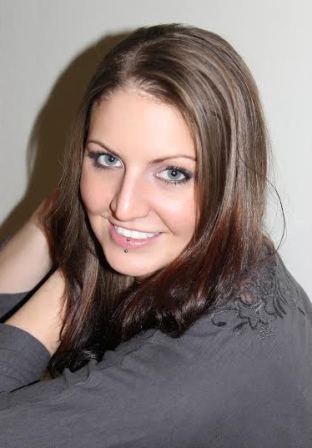
Rose BlackthornA couple icebreakers to start: when did you first decide to become a writer, and who are some of your favorite authors?

I have been writing since my early teens, and in my twenties I actually wrote several (really bad) novels that I submitted to resounding and universal rejection. So, I guess I can say that I’ve wanted to be a writer for most of my life. But I didn’t start writing short fiction, and getting published, until 2009.

There are so many writers whose work I love. To list just a few (in no particular order) – Stephen King, Dean Koontz, Charles DeLint, Patricia McKillip, Anne McCaffrey, Vonda McIntyre, Jo Clayton, Barbara Hambly, Marion Zimmer Bradley, Nancy Springer, David Eddings, P C Hodgell, Robert Jordan, Ursula LeGuin, and Anne Rice.

What is your typical approach to writing? Do you have a set number of hours you write each day, or do you only write when inspired?

I am a dedicated ‘pantser’. I rarely have more than a basic idea of where a story is going, and I think I’ve outlined maybe two things, ever. I usually start out with either a particular character, or a specific background/place, and build on them.

I do not have set hours to write. I made a goal to write every day during NaNoWriMo, which I was able to accomplish, but I don’t always do so. I guess that means I write when I’m inspired – but luckily, that seems to be fairly often. I write to entertain myself, and so most of the time I really enjoy the time I spend at it.

Since you’ve been in the industry for a number of years, you’ve probably faced some rejections along the line. How do you deal with hearing no, and do you have any advice on coping with rejection for those writers who are just starting out?

I am a very emotional person – I have been known to cry at commercials. So in the beginning, every rejection was personal and a deep wound. In fact, I gave up submitting entirely for several years because of rejections I had received. This was back when I was younger, before I had friends who were authors or editors, and before I realized that rejection is just a part of the business of writing and submitting. I have finally gotten to the point in my life where (most of the time) I am able to simply take rejections in stride. There are still those that really sting, if it’s a story I strongly believe in or a market that I’m dying to break into. But for the most part, I pout for a minute, and then start looking for the next place to submit.

The best advice I could give anyone as far as coping with rejection is this: As hard as it is, try not to take it personally. Taste is subjective, and what one editor or publisher doesn’t like, another might love. If you believe in your writing enough to send it out once, then you can do it again. Make sure you’re researching the market, and be sure you’re sending them something they are actually looking for. If someone says “No”, then find someone else to send it to. If you need to, make edits or revisions to improve the story before you send it back out. But don’t let any one “No” stop you from being a success.
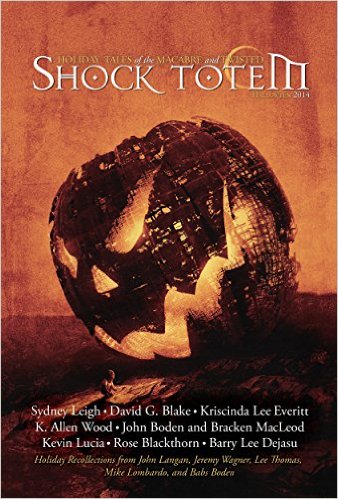
Shock TotemIn addition to your incredible fiction, you also write equally fantastic poetry. How is your process different (or similar) for each?

I write fiction with a place, or a character, that I’m drawn to or am curious about. What would this person do in this particular situation? What drives them? What is their goal, and how will they get from point A to point B?

Poetry, however, is always about emotion to me. Regardless of subject matter or style, my poetry always comes from the heart. If I’m feeling happy, or sad, or nostalgic, that’s what goes into a poem. Because of that, I only write poetry when I am really feeling inspired, because it isn’t anything I can force. It comes when it wants to.

Out of your published pieces, do you have a personal favorite?

Hmmm… That’s hard, because really I am quite fond of most of the things I’ve published! If I had to choose, I would narrow it down to these three: “The Olwen of the Wynne,” which was my first fantasy story published in 2010, and includes some of my favorite characters; “Bacon Rapt,” which is a zombie flash piece published in 2012 that I conceived, wrote, and submitted in less than an hour – and which was accepted that same day; and last “Through the Ghostlands” published in 2014 by Grey Matter Press, which I am actually working on expanding into a novella or novel.

You’re consistently releasing such remarkable work. Any upcoming publications we should be looking for?

I have two poems “Arbitration” and “Prescience” appearing in Chiral Mad 3 from Written Backwards which will be released in the spring. My story “Promises, Bliss and Lies” will be in the Fright Mare anthology edited by Billie Sue Mosiman, which will also be coming out in the spring.
“The Bani Protocols” is my first attempt at military/sci fi, and will be included in SNAFU: Hunters coming out from Cohesion Press at the beginning of next year. I am also absolutely thrilled that “Through the Ghostlands” was chosen by fans of Grey Matter Press to appear in DREAD: The Best of Grey Matter Press Vol. 1, which should be released in March 2016.

Big thanks to Rose Blackthorn for being part of this week’s interview. Find her on Twitter, Facebook, and Goodreads, and be sure to check out her main site as well as her Amazon Author Page!

Happy reading!
Wicked Writer: Interview with Dan Foytik

For this week’s interview, I am pleased to present Dan Foytik. Dan is a writer and editor who manages numerous horror and fantasy podcasts through his company, 9th Story Studios. He and I have worked together on several projects, including The Wicked Library and The Lift, and Dan is one of those fantastic editors that makes you grateful to be a writer.

Recently, he and I discussed his upcoming podcasts and where he sees his already booming career headed in the future.

Dan Foytik A couple icebreakers to start: when did you first decide to become a writer, and who are some of your favorite authors?

I think I’ve been a writer at the core since I was very young. I was lucky to have a mother who read to me constantly, and I also had books given to me quite often, and a grandmother who constantly told me stories about her experiences growing up on a farm. Looking back on it, I realize that my grandmother’s stories were really well structured, with villains, dramatic elements, inciting events and so on.

The Wicked Library is such a fantastic podcast. Everything about the project is incredible, from the specially commissioned artwork and your awesome narration to the major authors who have been involved, such as Neil Gaiman. Is it a challenge to keep so many moving parts working at any given time, and what has been the most surprising aspect of managing The Wicked Library so far?

First, thank you! It’s always nice to hear the work is well received and enjoyed. The main challenge is always the time involved. An hour of finished show takes around 6-8 hours to create. And, in addition to my work (reading, narrating, editing audio, adding music, writing show notes, promoting on social media, and so on), there is also the time it takes the artists and authors to create, edit, and hone their work. A huge amount of work goes into making the show seem effortless and something worthy of the trust the authors place in me to interpret their work. But, it’s also a lot of fun to do, and a really nice way to build the community and connect the different creators. I’m pretty picky about who I work with, so while the coordination of everything can be a lot to manage, the professionalism of the creators makes it a lot easier.

As to the most surprising element, I think it’s when I get an author who tells me some variation of “You really creeped me out/scared me with my own story” or “I finally understand why my character did [such and such] after hearing you do the story.” It’s more gratifying than I can explain to know I’ve brought something to life not only for the listeners, but also for the author.

One of your recently debuted podcasts is The Lift, a complex shared world project that features a devious little girl and the hapless individuals who stumble upon the building where she lives. What inspired you to create The Lift, and what is your hope for the long-term future of the project?

The LiftThe Lift is the culmination of an idea I had while at a writing workshop with a few friends, including the show’s Co-creator and Executive Producer, Cynthia Lowman. Victoria already existed at that point as the “mascot” of my original show, 9th Story Podcast, and she grew in complexity and personality as the show progressed. I think of her as more impish than devious, she’s been at her task for well over a century, but at the core, she’s still just a 9 year old girl with all that entails. Ultimately, I realized there was much more I could do with her.

I had this idea that the building she inhabits sits in a kind of broken reality where (like The Twilight Zone or Fantasy Island), unique scenarios or realities could be created to test, lift up, or punish individuals who either needed to change their ways, or needed help finding their ways. In that sense there are also elements of Dante’s Inferno, since each story of the building is reserved for certain vices.

Long term, I’d like to see it on the level of a Welcome to Night Vale and something that crosses various forms of media. We’ve talked about doing an anthology of the first season and adding in a couple of bonus stories; there’s a graphic novel in discussion, but my focus right now is making the best show I can and getting the work of the writers, artists, and composers as much attention as possible.

How has your work as an editor affected your fiction writing?

It’s made me more aware of my own habits, pet phrases and so on. It’s also made me more focused when I do write because producing four podcasts–and now starting to get some paid narration and voice work as well–leaves very little time to write fiction. A lot of writing goes into creating the podcasts ,of course, but aside from the show notes, most of the writing is “transparent” since it’s in the form of audio intros, skits, and the like. Acting as an editor has also made me more receptive to criticism of my own work, because I know how hard it is for an editor to tell a writer, “This part isn’t quite working,” or “You need to change this because…”

The Wicked LibraryOut of your published pieces, do you have a personal favorite?

My favorite piece isn’t actually traditionally published yet. It’s a short story called “Grey and Red” and it appeared on The Wicked Library in Season Five (when I was still simply a listener and fan of the show). It’s not yet appeared in print and was written as a gift for a friend. There are several things I did in the story as fun for me and the intended reader that worked much better than I could have hoped.

Where would you like your writing career to be in five years?

Ah, the most dreaded job interview question ever created. I think I’d like to have a collection of my own short stories out there. I have plans to re-work a novel that’s been fermenting for years into a series of digital comics, and, if I’m shooting for the moon, I’d like to be talking to someone about a series on TV featuring Victoria and her Lift.

While I’m no George Saunders, I’ve become very enamored with writing the short story, to the point I’m not sure I actually want to write a novel anymore. I do love the idea of a connected series of stories featuring the same character – which really isn’t the same thing as a novel. Never say never I suppose, but I have a number of ideas for stories that don’t feel novel length.

Any links you’d like to share?

I have far too many websites; I collect them it seems. The main “HUB” of what I’m doing is going to be 9th Story Studios at www.9thstory.com, it’s still being reworked and tweaked, but you’ll be able to find links to all my other projects from there including all the podcasts I produce like The Lift and Listen. It’s also where I’m going to be sharing samples of voice work and info on projects like narrating the audio books for Carrot Field and upcoming The Shadows at the Door Anthology.

Big thanks to Dan Foytik for being part of this week’s author interview series.

Happy reading!

Literature in Motion: Interview with Tay Wetherbee

Welcome back! This week’s interview goes in a slightly different direction from our usual programming. Tay Wetherbee is a visual artist currently based in Pittsburgh. However, this post still isn’t straying too far from my usual spotlight on fiction creators since many of Tay’s works take inspiration directly from literature, including the stories of Edgar Allan Poe.

Tay and I met when one of her installations went up at Crazy Mocha in Pittsburgh’s Bloomfield neighborhood, and because I’m the weird girl at coffee shops who talks to random people and hands out her business card at every opportunity, she and I soon connected on Facebook. Recently, we discussed her background as an artist and where she sees her career heading in the future.

A couple icebreakers to start: when did you first decide to become an artist, and who are some of your favorite artists?

Tay WetherbeeI think, for me, I never made a decision to become an artist. I just was. I was born singing, dancing, and drawing. My decision to become a professional artist happened in high school after taking my very first art class. I “lettered” three times over in art that year. In competition, I received the honor of one of my paintings touring the entire state of Texas (where I grew up) for a full year. Then I sold my very first piece for $18,000 at 17 years old. My decision made sense and felt like the right path.

The most influential artists in my life have been Robert Rauschenberg, Dave McKean (who many know as the illustrator for numerous Neil Gaiman books), and my college instructor in mixed media at Massachusetts College of Art and Design in Boston, Robert Maloney.

Your painting, “Tell Tale,” which is currently on display in Pittsburgh, takes inspiration from Edgar Allan Poe’s “The Tell-Tale Heart.” Do you often integrate literature or other elements of the horror genre into your artwork?

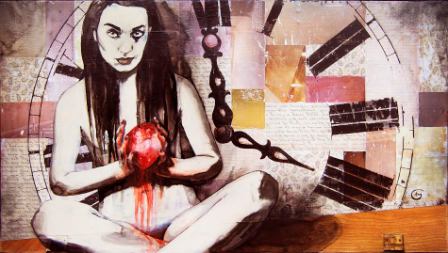
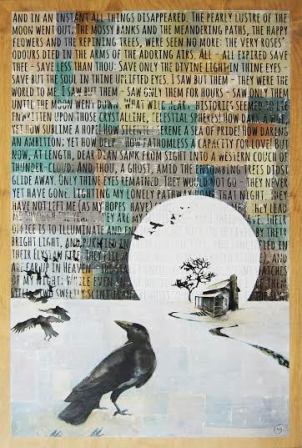
TelltaleI actually consistently use text and literature in my artwork. My art degree is in illustration, and while my work is largely considered “fine art,” my love for telling stories through art is still apparent in my work through use of quotes, lyrics, and sheet music, which propel and support what is happening in the images in the foreground. Additionally on a design level, I enjoy juxtaposing graphic elements of text with fluid ink painting.

As for horror-themed literature, I have always been a fan of Edgar Allan Poe and am very much moved by the darker moments of Shakespeare. I plan to create many more pieces that are charged with those kinds of moments.

Which medium is your favorite as a visual artist?

To HelenI work in mixed media. This means every medium is within my reach. The most common mediums I work with are India ink, concentrated watercolor, a process called ink transferring, and acrylic paint. My surface of choice is reclaimed wood. I love to show viewers age and distress, like old nail holes in wood surfaces, which can be transformed into something beautiful and thought-provoking. This process is derived from my interest in the Buddhist teaching of Wabi-sabi, the aesthetic of imperfection.

Where would you like to see your art career in five years?

I will be taking commissions, participating in art shows, loving life, and forever creating, back home in Boston.

Out of your works, do you have a personal favorite?

I am partial to this postcard-sized piece I created on a whim in college, of a Ferris wheel, with haunting text torn from an old book. In a body of work that is mostly large scale, it’s the smallest of my works, yet so powerful to me.

Do you have any upcoming exhibitions planned? Any other places where fans will be able to catch your work?

My work can be seen in the upcoming issue of The Hour After Happy Hour Review, and on display at Crazy Mocha Bloomfield in Pittsburgh, PA; Evolver Tattoo, Pittsburgh, PA; and RAW Artists Showcase 2016, Boston MA

Big thanks to Tay Wetherbee for being part of this week’s interview series. Find her at her website and on Facebook, Twitter, and Instagram.

Happy reading!

Wolf Among Sheep: Interview with Travis Coleman

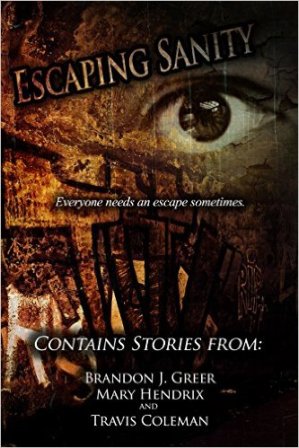
Another Wednesday, another awesome author interview! Today is all about writer Travis Coleman. Like previous interviewee Lee A. Forman, Travis is a past competitor in David Wellington’s Fear Project. He is also author of the serial A Wolf in Patchwork Clothing as well as the collection, Escaping Sanity. Recently, Travis and I discussed serialized fiction, favorite authors, and the good old writing process.

A few icebreakers to start: when did you first decide to become a writer, and who are some of your favorite authors?

Travis ColemanI first decided to try my hand at writing when I realized that I needed to do something with the ideas that often flooded my head. I talked an idea out with my wife and, after working through some details, I set a goal to write 10,000 words. The goals expanded and the project reached 50,000 words before I knew it.  As far as authors go, I have a list of authors I would like to learn from. R.A. Salvatore, Frank Herbert, Raymond E. Feist, Stephen King, and Brandon Sanderson are all on the list, and each for different reasons.

You are currently underway with your serial, A Wolf in Patchwork Clothing. What initially inspired you to write serialized fiction?

I first wanted to write a serial after reading the book “The Club Dumas” by Arturo Pérez-Reverte. In the book they talk about Alexandre Dumas publishing most of his stories as serials. Even his longest work, The Count of Monte Cristo, was published in weekly installments in a newspaper. I realized that serialized fiction was only really used in television and comics.  Yet I would love nothing more than to see it come alive again, to give people more than the news in newspapers.

What are you aspirations in regards to your serial? How long would you like the finished version to be, and do you envision publishing it in paperback at some point in the future?

My goal for this serial was to try it out and to get a feel for the process.  I planned the story to be between 20,000 and 30,000 words in length. The goal was a create an opportunity to showcase a villain from a novel that I’m editing currently.  The plan for that series of books is to self-publish them in the future. I would most likely put this piece into a paperback for those who prefer to read that way. Also, this story should wrap up right around the end of October, but I will be starting a new serial in January.

Escaping SanityYou were a competitor in David Wellington’s Fear Project. During that process, what was the most important thing you learned about writing?

The thing I took away from the Fear Project is the importance of editing and proofreading. With a three day period to conceive, write, and then rework the idea as many times as you could, it forced you to make cuts. I lost character description, setting, and some lines which I felt were awesome. But in the end you have to do what’s best for each story.

If forced to choose, which part of the writing process is your favorite: developing characters, crafting description, or establishing mood?

I feel that the most important element to what I write is finding ways to make the character relatable. If you have a character who the reader identifies with, then the book will be read. It’s what keeps you reading in the slow sections. It’s what puts the fear into you when your favorite character is on the verge of death.

Out of your published works, do you have a personal favorite?

The first story I published is still one of my favorites. The story is published in a collection entitled Poe-It which was available through Amazon. After they closed their doors, I had the rights and republished it as the first story in my collection, Escaping Sanity.  The story is titled “The Well” and was inspired by “The Cask of Amontillado” by Edgar Allan Poe.

Big thanks to Travis Coleman for being part of this week’s author interview series. Find him online at his blog, where you can read his serial and learn more about his work!

Happy reading!

Top-Notch, Tough, and Terrifying: Interview with Matt Andrew

Welcome back to our author interview series! This week, I’m super excited to spotlight Matt Andrew. Matt is a fantastic speculative fiction writer who has several great stories already out in the publishing world and more awesome tales on tap for release in the coming months. Recently, he and I discussed his inspiration as a writer, his current training in the prestigious Seton Hill University MFA program, as well as his future literary plans.

A couple icebreakers to start: when did you first decide to become a writer, and who are some of your favorite authors?

Matt AndrewI wrote a bit when I was a kid, like most writers. As a lifelong fan of horror, I authored my share of one-page werewolf stories with Crayola illustrations. But, I spent most of my adult years drawing and painting semi-professionally. About three or four years ago I went through this massive creative slump. None of my projects panned out—they all seemed like garbage. A friend suggested shifting my creative gears for a while to get out of the doldrums, so I went back to writing—just whatever popped into my head, at first. I’ve been hooked ever since. Although it had been over two decades since I’d written anything fictional, what made all the difference was the fact that I’ve been a heavy reader my whole life. My favorite authors are Cormac McCarthy, Stephen King, Chuck Palahniuk, Elmore Leonard, Tom Spanbauer, and more recently, Megan Abbott.

As a fiction writer, many of your stories have been in the horror genre, and you’re currently at work on a novel that’s a horror-western set during the Civil War. What is it about darker fiction that draws you in?

It’s kind of like being an adrenaline junkie—some of us that like dark fiction want to look death in the face. I think, if done right, dark fiction tends to force us to confront some harder truths about life, some of the ugliness that makes us sit back afterward and wonder, “would I do that?” The answer to that can be surprising.

Have you always been a fan of the genre, or did you develop a love for it later in life?

ALWAYS been a fan, both movies and books! I read King’s Skeleton Crew when I was probably way too young to be reading it and I was sold.

You act as first reader at Pantheon Magazine. How (if at all) has sifting through the slush pile changed your approach to your own writing?

One of the first bits of writing wisdom we all hear is that we need to compel the reader to turn the page. Nowhere is that more apparent than when you’re a slush reader. I go through hundreds of stories a year and always sitting forefront in my mind is “would I keep reading this story if I picked it up off the rack?” As a result, it’s become a more conscious tactic in my own toolbox as I write my own stuff—is there anything I can do here to make the reader more willing to turn the page or move to the next chapter?

You’re currently working on your MFA through Seton Hill University’s Popular Fiction department. What’s the most important thing you’ve learned so far in the program?

Blight DigestFrom a technical standpoint, I couldn’t even begin to answer that. The mentors and professors are top notch and the learning curve has been very steep. But on a more personal level, the most important thing I’ve learned has been time management. In the program, you have a certain number of pages of your thesis novel that you have to complete each month. But you have several other responsibilities, too. We also have critique groups in which we have to provide feedback for other people’s thesis pages. There are also readings from within our preferred genres, which come with their own bit of homework. Not to mention my own projects, unrelated to the MFA program—I always have at least one short story I’m working on, usually more. Procrastination can mean failure in these endeavors and you learn to pace yourself real quick.

Out of your published works, do you have a personal favorite?

My first attempt at horror was a story called ‘Take the Flay Train” which was published in Pantheon Magazine’s Ares volume. I wrote it as kind of a Clive Barker tribute, because I’d just finished Books of Blood and said to myself “That’s what I want to write!” I’ve written some stinkers since then, but I still hold that story close to my heart.

Where would you like to see your writing career in five years?

I’d like to say my first novel will be on a bookshelf somewhere by then, but I’d be happy if I just continued to improve steadily in the interim.

Big thanks to Matt Andrew for being part of this week’s author interview series. Find him online at Facebook and learn more about a few of his stories at his Amazon author page.

Happy reading!

Fantastical Fiction: Interview with Lori Titus

Welcome to this week’s author interview! Today, I’m thrilled to spotlight the amazing Lori Titus. I first met Lori when she published one of my flash fiction pieces earlier this year, and ever since, I’ve enjoyed keeping up with her work as both an author and editor.

Recently, Lori and I discussed how to make time for writing and where she sees her already booming career headed in the coming years.

An icebreaker to start: when did you first decide to become a writer, and who are some of your favorite authors?

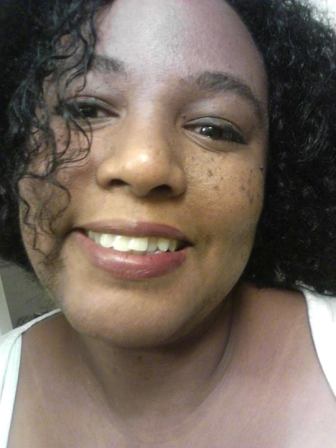
Lori TitusI wanted to be a writer pretty early on. I started writing stories when I was nine. In college, I majored in Journalism. My professor had a talk with me about the fact that I wasn’t really enjoying writing non-fiction work. She told me that she saw my work as being highly creative, and that really I should put my energies towards that. I changed my major to something I thought was more marketable. My idea was that I needed a skill to pay the bills, and I wasn’t expecting I could do that by writing fiction. In the meantime, I continued to write, but I didn’t pursue publication.

My favorites are King and Koontz, Tananarive Due, Octavia Butler, and of course, Poe! Right now I am looking for new favorites. I am reading a book by Alaya Dawn Johnson, and a paranormal thriller by T.P Miller. I just ordered the first novel in Sumiko Saulson’s horror series, and I’m looking forward to it. I love the creativity amongst the indie authors that are coming up right now.

Over the past few years, you’ve been consistently writing and releasing short stories and novels. How do you maintain such a consistent level of productivity, and what advice do you have for writers who sometimes find it difficult to produce new fiction regularly?

For me, writing has been a passion that I decided I couldn’t put on hold any longer. I’d say that I put aside writing for three years while I cared for two family members that were ill. Between being a caregiver, work and school, there was no energy left at the end of the day for me to write anything. I decided that if I wasn’t going to publish, it was silly for me to continue writing for pleasure when there were more serious things that required my attention.

After a death in the family, I found myself with some time on hand. I got back into writing as a way to deal with things that I was going through, a sort of positive way to channel my energy. It was therapeutic for me. I think I had forgotten just how much I loved to write and what it had always meant to me. I found that the more I wrote, the more I was able to produce. I started out with short stories, and then novellas. I worked my way up to full length novels.

My suggestion to anyone that is having trouble producing work is to make a commitment to start small. Don’t expect yourself to bang out the Great American novel on your first try. Set a goal for yourself. It might be as small as 500 words a week. Use some of your downtime to do this. It might mean getting up early or staying up late. In my case, a lot of work was written on my lunchbreak at work or late at night with the television on in the background. Once you smash one goal, slowly add more. Your ability to write is like singing or dancing. The more you practice, the more you can do. There’s a sort of muscle memory that comes with building people and worlds within your imagination. If you don’t exercise that muscle, your movements and your voice will both lack flow and strength.

On several of your novels, you’ve collaborated with other writers. How does the creative process differ when you’re working so closely with fellow authors?

My first collaboration with another author was with my sister, Linda, so I believe that this experience taught me to keep an open mind when it came to working with other writers.

The process really varies hugely depending upon the writers that are involved. When I wrote with Linda, our story was a fantasy, and there were a lot of characters. We divided up which people and storylines we would write about. Linda focused her energies on writing about the kings and queens in our stories, and some of the social struggles the characters faced. I wrote about the younger set, the rebellious royals of the story, as well as most of the romantic storylines. This worked well for us. Linda was very interested in sociology and the connections between people, including wars and family disputes. I was more into magic and love. Two of my upstarts from that story would eventually find new life in the personalities of Marradith Ryder and Justin Granthem.

Angel Brown’s novel Harmony’s Prophecy was a bit different. I was the editor on that book, and we would have long talks with each other on Skype about how to re-word things or about what we might add as far as world building. We would literally type and rewrite together while online, reading parts back to each other to see how it sounded. At the end of the project, Angel told me that she felt my efforts deserved a co-writing credit.

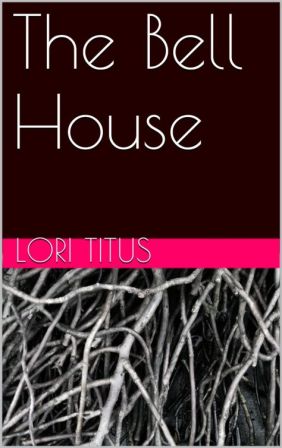
The Bell HouseThe books that I wrote with Crystal Connor were different than any collaboration that I have heard of so far. Crystal suggested that we see what kind of story we could come up with. I sent her some writing prompts, and about a week later she emailed me the first chapter. The story was about the inhabitants of a small town stranded in their homes. Without heat, light, and the worst of winter yet to come, worse problems were on the horizon.

We started with the intention of writing one book, but as the novel progressed, Crystal told me that she wanted to divide up, essentially creating different versions of the story so that we could each have our own endings. We ended up as the co-authors of each other’s novels, with divergent endings and different outcomes for many of the characters. We put the books out under the collective penname of Connor Titus.

In addition to your prolific work as a fiction writer, you’re also the editor of Flashes in the Dark. What initially drew you to editing, and what is the most important thing you’ve learned about writing from your work as an editor?

I have had the pleasure of working with some kick ass editors: Loretta Sylvestre, Felicia Tiller, Olivia Weston and Tony Smith. A good editor can bring out the very best in a writer, stripping away the noise and junk that gets caught on the page and bringing out the clear, true voice the author was trying to get to in the first place.

Tony Smith had worked with me on Marradith. He founded Flashes in the Dark, but after a while, decided that he wasn’t going to be able to balance work and other things with the amount of time that he wanted to devote to the website. I had worked as an editor for a couple of indie publishers before that but this was my first chance to have my own online publication. I took the proverbial baton and ran with it. I continue to edit novel length manuscripts for writers.

The main thing I have learned is to be mindful that the reader doesn’t come with pre-conceived notions about anything in our storytelling universes. We have to balance showing with telling. Characters need to have real backstories. Their fears, ambitions, and dreams are something that the reader needs to know and understand. Grammar and spelling are important, but those are easy fixes. Focus on what makes the setting and characters feel real. Other things can all be tweaked and turned later.

Out of your published works, do you have a personal favorite?

Out of my published works, probably The Bell House. I like that it touches upon different eras, complicated relationships, adults with emotional baggage. The harmful results of family folklore, and the injurious result of hidden truths all come to bear in very real (and sometimes paranormal) ways. It’s firmly rooted in the horrors of the Southern past while standing in the kind of dysfunction that most families are familiar with.

That said, I have two upcoming books that are poised to take the spot as my new favorite. One is the second installment of The Marradith Ryder Series. The other is a story which takes place in Chrysallis, South Carolina, which is the setting for The Bell House. The novel revolves around a group of religious zealots and their quest for control.

Where would you like to see your writing career in five years?

I hope to be able to write for a living, and just continue to build up what I have already started. Five years ago I would not have guessed how far I would have come by now.

Big thanks to Lori for being part of this week’s interview series! You can find her online at Facebook and Twitter, and be sure to keep up with her releases on her Amazon Author Page.

Happy reading!

Shooting Star: Interview with Geosi Gyasi

For this week’s author interview, I’m pleased to introduce Geosi Gyasi. Geosi is a fantastic author and a huge supporter of indie writers. On his site, Geosi Reads, he interviews up-and-coming authors, and I was honored to appear there over the summer. His questions are well-researched and in-depth, and his writing is the same. This is one writer whose star has only begun to rise.

A few icebreakers to start: when did you first decide to become a writer, and who are some of your favorite authors?

I became a writer when I started taking writing “seriously” – thus – in the latter part of my final year at the university. I wrote a number of short-fiction until after several rejections, I turned to poetry.

For my favorite writers, I would always go for Benjamin Kwakye and J.M Coetzee.

Your site, Geosi Reads, is a fantastic project that, in part, helps new writers get their names out there through your insightful interviews. What inspired you to start reaching out to up-and-coming writers?

This is an important question as I also identify as a budding writer. It is often too common that budding writers are not always given the needed exposure from the beginning of their writing careers. My role as an interviewer is to give them this exposure they need to blossom. My site is therefore a celebration of both budding and established writers.

What is your favorite medium as a writer: short stories, novels, or nonfiction articles?

Poetry is my favorite medium.

What writing projects are you currently working on?

I am working on a couple of poetry but at the same time, my book of interviews is forthcoming by Lamar University Press Books in 2016.

Where would you like your writing career to be in five years?

In five years from now, I hope to have a couple of chapbooks out and also to pursue further studies in writing and make a descent living as a writer.

Any links you’d like to share?

Sure!

  1. A Journey: http://visualverse.org/submissions/a-journey/
  2. A Writer’s Block: http://visualverse.org/submissions/a-writers-block/
  3. Three Poems: http://afrikana.ng/the-olduvain-review/poetry/three-poems-4/
  4. On Your Birthday: http://literaryyard.com/2015/09/15/poem-on-your-birthday/
  5. If You Truly Enjoyed My Voice, Why Did You Reject Me: http://www.artvilla.com/plt/if-you-truly-enjoyed-my-voice-why-did-you-reject-me-a-poem-by-geosi-gyasi/

Big thanks to Geosi for being part of this week’s author interview!

Happy reading!


Prolific Prose: Interview with Dina Leacock

For this week’s author interview, I would like to welcome writer Dina Leacock. Dina is the successful author of hundreds (yes, hundreds) of short stories. She and I recently discussed her incredible bibliography as well as why she enjoys writing dark fiction.

A few icebreakers to start: when did you first decide to become a writer, and who are some of your favorite authors?  

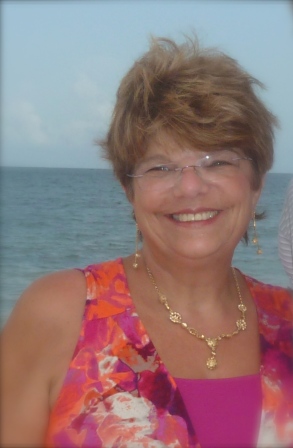
Dina LeacockI loved so many that I had to become a writer. My favorites were Harlan Ellison and William Tenn but there were just so many great writers and great books. I loved short story collections. I think I read just about every author from the Golden age through the 1970s. By the 1980s and 90s I was writing fiction in what little spare time I had, I was writing a lot of nonfiction working for newspapers, having a few columns and freelancing, and I had  two young children so time was precious.

What attracted you to the horror genre, and what in your opinion makes horror such a distinct medium?

I have always read horror, my main source of reading material was my brother’s library which had a lot of SF but tons of horror and horror comics. I grew up in the Pine Barrens of New Jersey so it was a heavily wooded area, very dark and very scary. And my brother and sister loved to scare me with stories. So I naturally turned to horror, because I had a never ending source since everything scares me. I never run out of scary thoughts.

You’ve had around 200 stories published as well as a couple full-length books. How do you keep yourself motivated to keep writing, especially when it comes to the rejections that authors so often must endure?

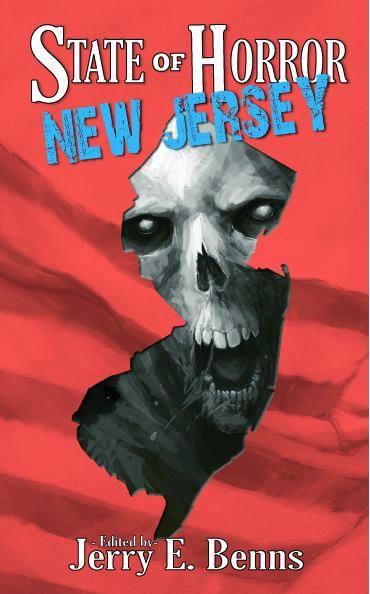
State of HorrorI’m really stupid.  Seriously, rejection just never bothers me; I just send the story back out.  I had one story that was rejected 27 times before it was published in a really tacky magazine.  The kicker to this tale is that the story, which is short, humorous and seasonal, has been published 7 more times as a reprint. I just knew the story had merit, so I didn’t care about the editors who didn’t like it. I had confidence in my story. My second book is a reference book on writing which is now out of print, but I’m thinking of resurrecting it. And I now have about 210 or so stories published.

If forced to choose, which part of the writing process is your favorite: developing characters, plotting the story arc, or establishing setting?

Writing the story. Each one is different, the process changes but I usually have the plot figured out before I start writing and then the story takes on that life of its own and changes by the time it’s completed.

Out of your published pieces so far, do you have a personal favorite?

I have a couple and oddly enough they are the ones having a hard time finding a home. I loved my story, “To The Farm,” which has been up for a Derringer and won the Spinetinglers Monthly Contest.  Usually my favorite pieces are both speculative, usually dark and very funny.

Big thanks to Dina Leacock for being part of this week’s author interview series. You can find her work at Sha’Daa and the State of Horror anthology series.

Happy reading!

Wacky, Weird, and Wolfish: Interview with Brandon Getz

For this week’s author interview, I am pleased to spotlight writer Brandon Getz. In fact, I’m pleased to say that today’s post marks a first for this site. Unlike the previous interviewees who I found through the vast expanse of the world wide web, I actually met Brandon in real-life. Yes, writers do indeed exist in places other than online! It was a shock to me too! Brandon writes cool, offbeat literature, and we recently discussed his space opera serial as well as his future writing plans.

A few icebreakers to start: when did you first decide to become a writer, and who are some of your favorite authors?

Brandon GetzI started writing stories independently (not for school assignments) when I was ten. My first story, “A Dangerous Dude,” filled 64 pages in a Taz notebook. It’s a ten-year-old’s mishmash of ‘90s action movies, super-soldier serums, inter-dimensional travel, cyberpunk futurism, and all the guns from Doom. Pretty ridiculous. I’ve been writing ever since. It’s more of a compulsion than a vocation; I can’t not write stories. I think my head would explode. Current favorites are China Miéville, Raymond Chandler, Jonathan Lethem, David Mitchell, Margaret Atwood. Neil Gaiman inspired me to write my first “literary” short story when I was sixteen. George Saunders was my idol later on, especially in grad school. I still love his work—a fantastic blend of satire, pathos, and genre elements borrowed from sci-fi and horror. I’ve read “Sea Oak” probably 20 times.

Until recently, your background as a fiction writer was mostly in the literary genre, but with your current serial, Lars Breaxface, Werewolf in Space, you are segueing into speculative fiction. How, if at all, has that transition changed your approach to writing?

My stories have always tended toward the weird. A man’s mid-life crisis unfolding in a taxidermy factory. A widower and his baby daughter visited by demons. A mysterious bottle of unicorn tears, or the strange white neighbors next door. With Lars Breaxface, Werewolf in Space, though, I think I’m just cranking the weird-o-meter up to 11. It’s a send-up to all the sci-fi and monster movies I’ve been watching since I was a kid, and I’m trying to keep it as ridiculous as possible. My ten-year-old self would love it.

Lars Breaxface releases a new installment every week or two. Prior to the launch of chapter one, did you plot the entire serial, or are you allowing some elements to develop organically as you go along?

Werewolf in SpaceTotally organic. When I wrote chapter one, I didn’t even know who the mysterious stranger he meets in chapter two was going to be. After I introduced Jay, I got a rough idea of what I was going to do, a couple of classic monster riffs I wanted to introduce as characters (witch, zombie, creature from the space lagoon…), and where I thought the story would end up eventually. Almost seven chapters in, all of that is holding together pretty well, but if the story decides to take me somewhere else, I’m gonna follow.
In addition to your fiction, you also write poetry and nonfiction. How is your process different (or similar) for each?

Story ideas are like earworms–they infest and evolve, they’ll gestate for days or weeks before I finally put them on the page. Poetry tends to be more spontaneous. An idea pops in and I just write it in one brief sitting, usually focused around a central image. Nonfiction, so far, has only been the paid kind, mostly in the form of short portraits of artists and performers involved in local events. I love it—I love talking to people who are creating art and are passionate about what they do. But it’s a whole different animal from the creative stuff.

Out of your published pieces so far, do you have a personal favorite?

Probably “White People,” which came out in The After Happy Hour Review this spring. It’s my newest published piece (minus Lars Breaxface, which I won’t count since it’s still ongoing), so maybe that’s why I’d call it the favorite. But… it is pretty hilarious. I laughed out loud writing it. I’m also still partial to my first published story, about God and the Devil playing chess. At first I’d written that story as a joke, a kind of challenge to see if I could turn the cliché on its head. It was such an affirmation to have that piece be my first in print. It was the complete opposite of the Raymond Carver knockoff bullshit I thought I was supposed to be writing. Also, I wrote a story about a robot on a park bench that was nominated for the Pushcart Prize. I feel obligated to list that among the favorites. It’s called “Robot on a Park Bench.”

Where would you like your writing career to be in five years?

Shopping a novel and a collection. With Werewolf in Space, I’m still feeling out the process of novel writing, something I’ve been trying to learn for the past three years (two aborted/on-hiatus projects still bear the scars of my novice attempts to push beyond 4,000 words). Whatever happens with Lars after his space-faring serial, I hope to apply this writing process to future projects. As for the collection, I’m about halfway there. Seven stories finished and published, a handful of others in the pipeline. I’ve got a graphic novel project in the works with Pittsburgh artist Ross Kennedy of Armature Tattoo, and I’m also mulling the idea of a kids’ series. More adventures with monsters and silliness, R.L. Stine-style.

Big thanks to Brandon for being part of this week’s author interview series. Find him at his website and on Twitter.

Happy reading!

Falling for Fiction: Interview with James Everington

Welcome back to this week’s author interview series. Today, our featured writer is James Everington. Based in Nottingham, England, he writes lots of cool and strange stories, which have been featured in numerous publications including his own short story collection, Falling Over.

Over the summer, James and I discussed the great icons of horror, the future of the genre, and what this dedicated author has in store for his readers.

A few icebreakers to start: when did you first decide to become a writer, and who are some of your favorite authors?

James EveringtonThere was no lightbulb moment when I decided to become a writer; I’ve always loved books and stories and at some point as a teenager I just started writing and never stopped, really. I guess the main decision was to focus on one particular style–horror–which I felt I had the most aptitude for. I wrote a lot of other stuff when I was younger: realistic fiction, poetry, a dreadful Martin Amis-y novel. If I die, I sure to god hope none of it comes to light! But it was all useful; it’s as important to know what you can’t do as what you can.

In terms of favourite authors who’ve also been an influence on me, I’d pick Ramsey Campbell, Shirley Jackson and Robert Aickman as my key guiding lights. But there’s so many great horror and weird fiction authors writing today as well; it’s hard to keep up with the amount of talent in our field.

I must take this moment and commend your choice of social media banners: the inimitable Christopher Lee commanding a brood of pagans in front of an eponymous wicker man. With all the classic Hollywood horror icons gone, do you ever find yourself concerned about the future of horror cinema, or are you less cynical than me and think a new brigade of talent will soon assume the mantle?

Thank you! It’s certainly true that a lot of my favourite horror films are of that era: The Wicker Man (obviously), Alien, Invasion Of The Bodysnatchers, Videodrome and my absolute Number 1, Dont Look Now. But there were a lot of shit films back then, let’s not kid ourselves. As for more recent films, I’m probably not the best person to ask; I don’t see enough modern films to be able to give anything like a comprehensive answer. There’s obviously still a lot of shit, but things like The Awakening, It Follows and plenty of foreign films seem to be at least trying to do something interesting.

Your short story collection, Falling Over, was released in 2013. Was it difficult choosing which stories to reprint from your past publications, and did the decision in any way impact the new stories you wrote exclusively for the collection?  

I was most concerned in getting the stories to flow right. I always think of sequencing a collection like making a mix-tape for someone: you want to start with a bang, then build on that, then maybe take it down a notch by having a slower, more contemplative piece. And at the same time, you want the stories to talk to each other. I think of that collection as my ‘falling stories’ – they nearly all have some literal or metaphorical descent in them.

Since youve done both, which do you prefer writing: short fiction or novels?

Well, the only novel-length work I’ve had published is The Quarantined City which is being published episodically throughout 2015. And each episode contains a complete, self-contained short story: the central character is searching the quarantined city for a reclusive writer called Boursier, one of whose stories features in every episode.

All of which is an oblique way of saying that, whilst I certainly intend to write further novel length work in the future, my first love is short stories (I loathe it when people call them ‘shorts’, especially other writers) and I’ll always be drawn to writing them.

Falling OverOut of your published pieces so far, do you have a personal favorite?

I’m not sure about favourite, but the title story of my collection Falling Over is one I think sums up my style and themes pretty well, which is why I picked it to name the collection as well. It’s my take on the doppelganger/pod-people idea, but it’s also about very human things: individuality, growing up and the spark we might lose doing so.

What projects are you currently working on?

There’s the finishing touches to The Quarantined City and then onto a novella called Paupers Graves which will hopefully be out in 2016. It’s set in a real cemetery here in Nottingham, so I’m doing some research, taking photos of interesting looked graves–cheery stuff like that! I’m aiming for austerity-horror with this one.

I’m also working on my first anthology project, called The Hyde Hotel which will be out from KnightWatch Press sometime this year. The other editor (Dan Howarth) and I created a strange and creepy hotel, and then invited some fantastic authors to each write a story about someone staying in one of the rooms. To my surprise, they all said yes!

Thanks to James for being part of this week’s author interview series. Find him online at Scattershot Writing.

Happy reading!