Category Archives: Interviews

One-of-a-Kind: Interview with Alex J. Murd

Welcome back! For this week’s interview, I’m thrilled to present artist Alex Murd. Alex’s work has appeared in venues such as The Wicked Library and The Lift, among others.

Recently, we talked about Alex’s inspiration, process, and all those amazing upcoming projects through Crazed Pixel Comics!

A couple icebreakers to start: when did you first decide to become an artist, and who are some of your favorites in your field?
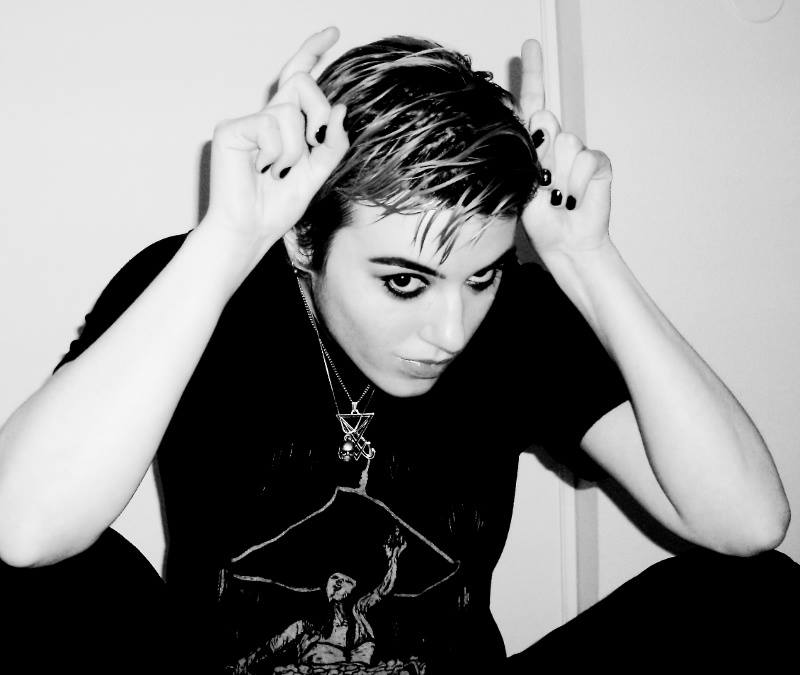
Alex MurdI love icebreakers, especially when they involve a rocks glass, good bourbon, and a dash of bitters.

My pursuit of art can’t be defined by a single moment, as I always knew I wanted to do something art-related. I didn’t always know what kind of art I would be creating, but held firm to the certainty. I was supported in my endeavors, and let my artistic niche find me. I’m only a lucky fool that it ended up being such a sexy one.

Artists that I admire, and can’t hold a candle to, consist of dead-and-gone to walking-around-town: Schiele, Klimt, Stuck, Tom of Finland, Mignola, Fyodor Pavlov, Los Bros Hernandez, Seatlleites Laura Graves and Eli Tripoli, Portlander Scott Roller.

Every creator feels like they are missing people in their ‘thank you’ speech, but these are off-the-cuff entries. Each of these artists have some facet I admire and respect.

What is your process as an artist? Do you work at a certain time of day or for a certain length of time? Do you work with music playing or without? Any other habits about your working style you’d like to share?

Process, oh goodness, how much time do we have here? Not very much, I’m guessing, so I will try and be concise. The take away from this is: what process?

I am a creature of whim. I can be very taken by some kind of inspiration or a moment, and run with it. My creative bouts are fickle. Inspiration and I play games with each other. Sometimes I win, sometimes it is the victor.

It’s all about the music. Music, as a medium, has inspired more characters, scenes, feelings, drawings, and carnal acts than any other medium, for me. I enjoy being a creative hedonist and seducing myself into creating: mood music befitting the project, twilight into the night, giving myself a mental massage before I begin. I’ll create a scene for myself, before I gorge myself on the artwork. And when I’m spent, that’s it. I’m done. Tapping out.

I enjoy being ‘taken’ by something and exploring its surfaces and inner workings before sinking in. If that sounds like an innuendo, it’s because it is. It’s totally like foreplay and sex.

There, that’s a way better analogy: my process is like taking someone to bed. You set the mood, you both have fun and explore, then you get down to the dirty work until you’re so worked up into a fervor you can’t possibly take anymore, then post-coital cigarette and ‘was it good for you’s’ all around.

And then there are always those projects that are fast and dirty, just to get the itch scratched. Sometimes, even in public. Lunchtime sketches, and have to jump out of the shower to jot down that idea, I’m lookin’ at you, you naughty, naughty ideas.

You have created a number of gorgeous pieces for The Wicked Library and The Lift (your cover art for Brooke Warra’s “The Dance” seriously stopped me in my tracks). Is your process different when you’re designing art based on a specific story, and how do you pick which image or scene to depict?

I’m flattered, and thank you for that. My Lift piece for Brooke’s “The Dance,” was one of my favorites to create. I enjoyed trying to conjure a good image from that story to best show Tommy’s feeling of isolation in his handicap.

The best aspect of creating individual illustrations from these amazing stories, is the selection of what to portray. I try and let the stories tell me what image or scene will best encompass their overall feeling, and engage a reader/listener. I read it once, off the cuff jot down the first images that impacted me, then process of elimination. What one has the best combination of honesty from the text, intrigue, and most important: mystery. I want to get people hooked on these tales. From there I think of an engaging style to draw the piece in, befitting the text. For example; I didn’t draw a garish cartoon for Aaron Vlek’s disturbing tale, “The Wet Man.” That style would be inappropriate for the weight of the story.
Alex MurdI work with Dan, since he is a gateway to the authors, and see how everyone is feeling about the idea I submit. Dan is an excellent backboard and I enjoy his collaborative efforts very much. He now knows how I work well enough to give me more free reign on a piece. But, it still never hurts to submit an idea. He’s told me I disturb him. I’m still proud of that one.

Creating illustrations from such a wide variety of voices is an absolutely different process, than creating of my own volition. I very much enjoy the challenge and exercise involved, trying to help bring someones’ words to visual life. The biggest impact is hearing how the author feels about it. If they enjoy it, duty finished.

Every artist sometimes faces that awful moment when it is either difficult or altogether impossible to create something new or keep working on a given project. When this happens to you, how do you work through these creative blocks?

I’ll let you know, when I know, dear. The best I can. Switching gears and trying to make myself walk away, which is no easy feat. When this happens I latch onto any fresh wave of inspiration: music, movies, books, a conversation. I take it and run, to try and break the spell. Even if it is simply a small sketch, or jotting down some words. The first strike is the hardest. Any time you create, no matter how small, it’s worth something.

Deadlines, as we all know, can be a lifesaver. Sometimes, even at a moment of losing inspiration on a project, if someone else is counting on it, you fortify and finish the damn thing. Then collapse and go brain dead with pointless and lovely guilty pleasures.

Out of your body of work, do you have a particular favorite piece?

I’m really not the kind of fella that ‘kisses and tells’, but there are pieces that tug deep on different heartstrings.

My first collection of ‘Cinder’ comics, along with my first ‘Little Black Book’, are two works that I hold dear.

‘Cinder’, my slice-of-life comic filled with alternative characters of every sexuality, and my collection of alternative and queer porn art, ‘Little Black Book’, helped me break artistic barriers, within myself. Being queer, these works give me a chance for catharsis and experimentation. I love exploring sexuality, and figure work, so these titles have become a perfect match. They remind me to keep playing around, and stay true to what I like.

If my putting my fetishes out there for others to read gives some other strange soul solace, my job was done well. Nothing like encouraging the freaks to stay freaky.

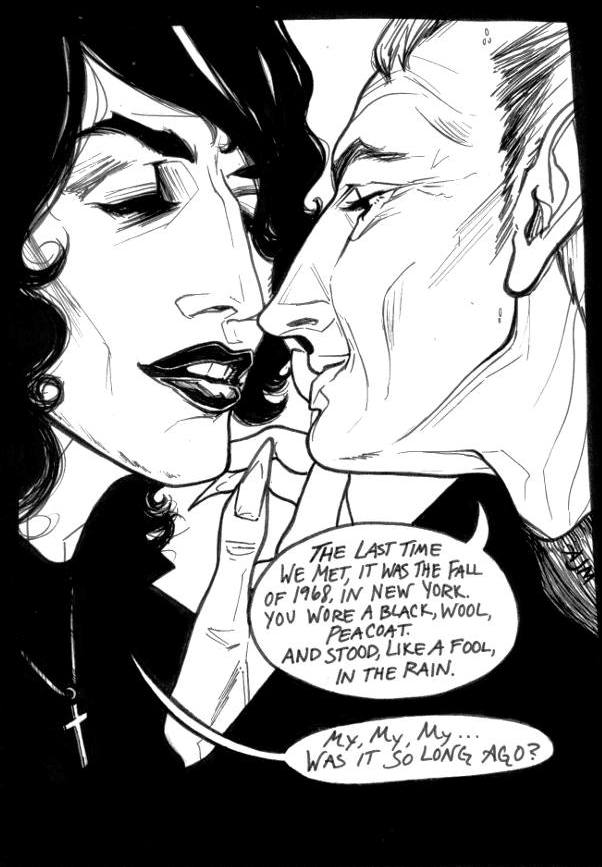
On a more saccharine note, an illustration of my ‘Satan’ character, Jasper, reuniting with a long lost lover, is warming. A creature spending eternity watching favored souls blink in and out of its existence, running into a now very old flame, and sparking as if it were yesterday. I find it very sweet.

I may revel in drawing dirty pictures, but it is no secret I am a hopeless romantic.

What projects are you currently working on?

My selection process is as follows: take yourself out of the frying pan, and place directly in fire. Too much is what. I have such a web of reserves, I pull out depending on my mood. Rotating artworks that can be added to, until they are submitted to print before CrazedPixel Comics takes to the road for con season.

Always room for more erotic and pornographic artworks for my ‘Little Black Book’ series. Some fresh pieces for ‘Cinder’. New prints. And I have a written horror comic that is dying to get drawn. Now if only a certain artist would get off of their ass, and give it some attention before it becomes a poltergeist…

An ongoing project is a series of original artworks for charity, specifically reputable women’s or any kind of minority rights funds. In lieu of payment, I ask for proof of donation to said charities, and I mail the original artwork. Something small I can do to help combat small mindedness.

And always The Lift or The Wicked Library artwork, time permitting.

Where can we find you online?

Our main comic hub, with most of our work, is available to read at crazedpixel.com. On it you can find our social media links.

My NSFW tumblr page, Smolder Sessions, where I house my art pieces, erotic, and risqué art, is alexjmurd.tumblr.com.

Physical copies of artwork and comics available through our store https://squareup.com/store/crazedpixel-comics.

And thank you, Gwendolyn, for the interview and for keeping your awesome lady-writing-self out there, for the world to read: you better keep that in here!

Big thanks to Alex Murd for being part of this week’s artist spotlight!

Happy reading!
The Bride Wore Black: Interview with Faith Marlow

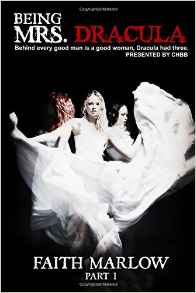
Welcome back! Today I’m pleased to spotlight author Faith Marlow. She is the prolific scribe of numerous short stories and novels, including the Being Mrs. Dracula series.

Recently, Faith and I discussed her inspiration as a writer as well as her plans for the future.

A couple icebreakers to start: when did you first decide to become a writer, and who are some of your favorite authors?

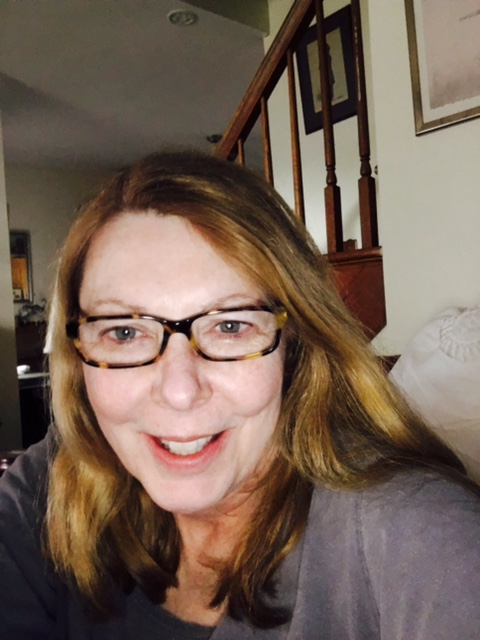
Faith MarlowI fell in love with writing very young, in the fifth grade, but I didn’t pursue it until many years later. I think I started entertaining the idea of writing a full novel in around 2002, something like that. Being Mrs. Dracula didn’t come along for quite some time after that. I love to read similar stories to what I write, things that are a little on the dark side, but I will read from just about any genre. Dean Koontz and Douglas Adams are my favorite large press authors. I mostly read indie and small press authors, and I try to read as much as I can from fellow CHBB/ Vamptasy authors. Felicia Fox, Skye Knizley, Rue Volley, Lily Luchesi, just to name a few.

Released in 2013, your first novel was Being Mrs. Dracula. When did you first read Dracula, and what in particular drew you into the story of his brides?

I think the first time I read Dracula was somewhere around 2009, when I first started searching for background information on the brides. I have watched countless movies and documentaries about vampires and Dracula (the fictional character and the historical figure) because I have been fascinated with vampires since I was a child. I began to notice that in just about every movie or story, Dracula has three beautiful women at his side. They usually don’t have much to say or do, aside from being loyal followers and eye candy. I had watched the 1931 film of Dracula starring Bela Lugosi years earlier and remembered the brides were not really explained or explored. I wanted to read the book because I was certain there would be more to learn about them there. I was stunned to discover little more is revealed about them. Bram Stoker did not even give them names. I was further shocked to learn that the name of Vlad Tepes III’s (Vlad the Impaler) first wife, whom most believe had at least some influence on the character of Count Dracula, had also been lost to history. Little more was known of her than the circumstances of her death and I found very little information on his second wife, Ilona Szilagyi. Although one is fictional and the other was historical, the women in both of these stories are overlooked. I wanted to know their story and since I could not find one, I decided to write one that would intertwine the information that I did have available with my own imagination. That was the moment of conception for Being Mrs. Dracula.

You’ve written both short fiction and novels. Do you find your approach is different depending on the length of the story?

It is a bit different because in short fiction, I have to find a balance of enough detail while not getting too wordy. In a full length novel or even a short novel/ novella, there is a little more room to stretch. I can give a little more detail, paint a more precise picture as opposed to giving a general impression. I think writing both is good for me, since I try to keep a brisk pace in all of my stories. I have a short attention span and get bored pretty quick, so the last thing I want to do is drag something out for thirty pages that could have been well told in ten. The last thing I want a reader to do is get bored because the pacing was too slow to hold their attention.

If forced to choose, which is your favorite part of the writing process: drafting new concepts, crafting a first draft, or polishing an almost finished piece?

Being Mrs. DraculaI would probably say polishing an almost finished piece. Coming up with new stories is fun, but it may or may not get off the ground. I have folders full of halfway developed ideas waiting to become stories. The first draft can be stressful because I am still trying to connect all the dots and get from point A to B. When polishing that first or second draft, I can add or remove details, make sure everything is consistent and flows well, add a little dialogue if necessary. It’s when I really start feeling some pride in my story.

You are such a widely published author with stories and novels out from various presses. With so many accomplishments, what writing goals are left on your to-do list?

There are so many things that I want to do! My to-do list never stops. First on my list is finishing the third installment of the Being Mrs. Dracula series. It is my top priority. After that, my next goal is to continue The Dream Journal series and see where Anne and Maddie end up. I have a pretty good start on that. I also have a few new projects in mind that I will have to see how they develop. I know others will pop up that I have no idea about right now. Couples Therapy took me completely off guard and happened very quickly. I started writing it around the end of January or beginning of February, completed the story, my editor (EAL Editing Service) shined it up, Rue Volley created another fabulous cover for me, and it was published in September. For me, that is lightning speed. Books in the Being Mrs. Dracula series always take longer because I try to add in as much historical references and nuances as I can because I want Valeria and company to feel like they are a part of that world. It’s a lot of work, but she is worth it.

What projects are you currently working on?

My current WIP is Being Dracula’s Heir, the third installment of the Being Mrs. Dracula series. For those who have read Being Mrs. Dracula and Being Dracula’s Widow, they will recognize a few familiar faces in Valeria, Lamond, and Emil but will also be introduced to a couple new characters; particularly a young vampire named Astrid and a human with a score to settle named Tackett. Both of these new characters will be instrumental when Valeria is challenged by her newest adversaries. All of this is set against the glamour and decadence of the late 1920’s New York City, as well as the country’s devastating crash into The Great Depression. If there is one thing we know about Valeria, it’s that her past is never too far behind her, even after crossing an ocean to escape it.

Where can we find you online?

All of my work is available at Amazon.com and is available for purchase or Kindle Unlimited users can read them for free.

I am pretty active on social media, particularly Facebook. I post information about my own books as well as other titles available from my publisher, other author friends, and things that I just find fun and interesting. If you like creepy, unusual, or think bats are amazingly cute, you will probably like following me on social media. I am trying to be more active and connect better with readers, so I am always open to suggestions on things that readers want to see more of.

Big thanks to Faith Marlow for being our featured author this week! You can also find her on Twitter and Tumblr!

Happy reading!

Evil Cats and Bewitched History: Interview with Jill Hand

Welcome back! For our final interview of 2016, I’m pleased to feature author Jill Hand. Jill’s fiction has appeared widely in publications including The Wild Hunt, The Literary Hatchet, and The Sirens Call, among other outlets.

Recently, Jill and I discussed her inspiration as a writer as well as her process behind crafting her longer works.

A couple icebreakers to start: when did you first decide to become a writer, and who are some of your favorite authors?

Jill HandI first became a writer when I was about five and decided I needed a pony. I wrote a lavishly illustrated little book, setting out the many reasons why I not only needed a pony, but deserved one, and presented it to my parents. The pony wasn’t forthcoming, but I got so much enjoyment out of the project that I kept on writing. (The book is long gone, unfortunately, but as I recall I pledged to be good forever if I were given a pony, and — rather cleverly, I think — proposed that I would probably be able to earn enough money to pay for the pony’s upkeep by renting it out to other children for their birthday parties.)

All writers first must learn how to read.  I taught myself to read when I was three, reading Little Golden Books with the aid of a flashlight under the covers at night when I was supposed to be asleep. That’s probably one of the reasons why my eyesight is so terrible.

Interestingly, my mother attempted to prevent me from reading when she found out from a neighbor that the teacher in our local kindergarten preferred to get her students as completely blank slates, untutored in anything except our first and last names and possibly, our addresses. She wanted to teach them the alphabet and eventually, the basics of reading, herself.

Like the oppressive fundamentalist Christian patriarchs in The Handmaid’s Tale, my mother set about preventing me from reading by removing all of my books and even taking away the cereal boxes when she found me reading what was written on the back of them. She eventually gave in and let me read again, worn out by my whining and pleading, thank goodness.

My favorite authors are, in no particular order: M.R. James, Shirley Jackson, Donna Tartt, Michael McDowell, William Thackeray, P.G. Wodehouse, H.P. Lovecraft (horrid old racist and misogynist that he was), Kage Baker, Hunter S. Thompson, Jack Kerouac, and Frank Baker, author of Miss Hargreaves, one of the best speculative fiction novels ever written, IMO.

There are lots of other authors whose work I like, too many to list them all. I read about one book a week. I LOVE to read.

Your story, “Home Improvements,” recently appeared at The Wild Hunt. What was your process for this piece, and what inspired you to create the protagonist’s cat Evil George?

It developed out of something I read online about a house being swallowed up by a sinkhole. It made me wonder what would happen to someone in that situation (assuming they weren’t home at the time and got swallowed up, too.)

The protagonist has a cat named Evil George who is, as she admits, a terrible cat, but she keeps him because no one else would want him. I have no idea where that came from. The cats I’ve owned were all very sweet. It just seemed funny to create an awful cat who is always biting and clawing people.

Evil George gets loose and attacks two men in the woods behind his owner’s new home, who happen to be dressed as eighteenth-century fops. After that, hijinks ensue. Again, I have no idea why fops were involved, unless I was thinking of the actor Hugh Laurie in his role as Prince George IV in Blackadder. Hugh Laurie made an absolutely hilarious fop, with his powdered wig and silk stockings and gormless expressions.

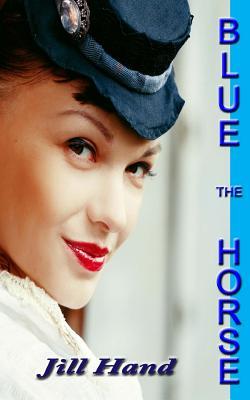
The Blue HorseMany of your stories featured speculative elements. Do you remember the first speculative fiction story you read as a child, and what in particular draws you to the fantasy genre?

Usually what I write has some element of speculative fiction, although some are horror stories, and some are fantasy and some are science fiction. The first speculative fiction I ever read was probably something by Ray Bradbury, although the argument can be made that The Cat in the Hat is speculative fiction.

Tell me about a couple of your favorite published works.

I like history, and if I can work some long-forgotten weird thing or person into a plot, so much the better. My first book, Rosina and the Travel Agency, is about time travel and mentions in passing an actual barometer that was powered by leeches. It also has an adventure in 1947 San Francisco, complete with forties slang and an attempt to run a private detective agency based on one of the characters’ admiration for Sam Spade in The Maltese Falcon.

The sequel, The Blue Horse, from Kellan Publishing, features a bachelor party in two very weird nineteenth-century Paris nightclubs, and a batty English lord who scandalized society by marrying a circus bareback rider. The nightclubs, the lord and his wife, as well as the one-of-a-kind blue horse were all real. Truth really is stranger than fiction.

Where can we find you online?

I can be found online on Facebook as Jill Hand, and on Twitter, @jillhand1_gef. There are bonus points for anyone who knows who (or what) the original Gef was.

Big thanks to Jill Hand for being part of this week’s author interview series!

Happy reading!

Music, Magic, and the Macabre: Interview with Maria Haskins

Welcome back! Today I’m thrilled to spotlight author Maria Haskins! Maria’s stories have appeared or are forthcoming in Flash Fiction Online, Gamut, and Capricious, among other outlets. At her blog, she maintains a monthly roundup of her favorite short speculative fiction (which has featured this very humble blogger right here), and she is also an accomplished music journalist.

Recently, between her many wonderful projects, Maria and I discussed her most recent publications as well as her inspiration as a writer.

A couple icebreakers to start: when did you first decide to become a writer, and who are some of your favorite authors?

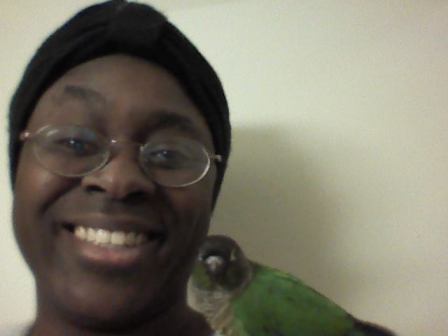
Maria HaskinsI’ve been writing stories as far back as I can remember, and becoming a writer was always something I wanted to do. In a way, I’ve decided to become a writer twice. I grew up in Sweden and debuted as a writer there when I was 20, and had several books published in Swedish. After doing many other things (including going to university, traveling, moving to Canada, and having kids), I ended up stuck in a long spell of terrible writer’s block. I wrote almost no fiction at all for over 10 years. Then, last year, I kind of decided again to become a writer, and to take the step to write in English, the language I’ve been living in and with for over 20 years. I’m hell bent on making it stick this time.

I have a lot of favourite authors. My “old standbys” – writers I’ve been reading since my tweens and teens and keep coming back to – include J.R.R. Tolkien, Ursula K. Le Guin, Ray Bradbury, Swedish writer Vibeke Olsson, Alan Garner, John Le Carré, and Umberto Eco. Newer favourites are Kai Ashante Wilson, Carolyn Ives Gilman, Angela Slatter, and N.K. Jemisin.

Your flash fiction piece, “Scent,” recently debuted in Flash Fiction Online. Quite a beautiful and haunting tale! What inspired you to weave together a story using a cache of perfumes and a highly complex mother-daughter relationship?

Thank you for the kind words about my story! The initial inspiration for “Scent” was the memory of my mom’s perfume collection. To be clear: my mother is nothing like the story-mother (thankfully!) but she has always had a lot of perfumes, and I can vividly remember being a child and looking at all those beautiful bottles with all these amazing scents. It was a very strong sensory memory of smell and touch and sight. From that, the story sort of spun itself, and it came to me with that image of a cabinet full of perfumes and a child reaching for a bottle. I did have the intention to write something fairy-tale-ish, because I believe that there is a lot of truth in the way that fairy tales describe childhood as perilous and often fraught with danger and fear. This was one of those stories that just seemed to arrive more or less fully formed: I wish that happened all the time!

In addition to your fiction, you are also a music journalist. How did you first become interested in writing about music, and do you often find music creeping its way into your fiction? Also, which songs are on your current playlist?

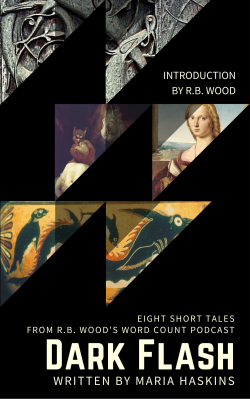
Dark FlashI started out writing about music a few years ago when Brian Basher of Hard Rock Nights (a great online radio show) asked me to write reviews for his website. Before that, I had been getting into a lot of new rock and roll, listening to new, often unsigned bands, and realizing how much great music was out there. I was still in the midst of my writer’s block and felt unable to write any fiction. Writing about music was a way for me to write (and have fun writing) even when I wasn’t writing, if that makes sense. A couple of years ago, I started up my own music blog, Rock And Roll, and I’ve just kept writing about bands and music I like as a way of sharing the love, I guess. Right now I have two wonderful writer friends (Maria Savva and Darcia Helle) who contribute to the site as well. I think it’s part of my personality to want to jump up and down and tell everyone about things I like (whether it’s music or stories), and blogging and sharing things on social media is a good place to do that.

It’s only more recently that music has crept into my fiction. One of my recent short stories called “Metal, Sex, Monsters” was accepted by the new magazine Gamut (I am deliriously excited about that), and it was inspired by rock and metal music in general, and Judas Priest’s music in particular.

My current playlist is extensive. I’m always listening to both old stuff and new stuff. Right now, it’s mostly a mix of tunes including Judas Priest, Black Star Riders, Thin Lizzy, Rival Sons, Ragdoll (a fantastic Australian band), the latest EP from Graham Greene called The Guitar Vinci Code. And some Crucified Barbara and Monster Truck and Trucker Diablo… Stop me now! It’s a long list and I will keep going on and on forever!

If forced to choose, which is your favorite part of the writing process: developing characters, writing dialogue, or establishing mood?

Ouch, that’s a very tough choice! If you twist my rubber arm I’d probably pick establishing mood. I love that part of writing: thinking about how to describe things and places and people in a way that conveys the mood I want to capture in the story. The mood of a story is probably one of the first things I have to make clear to myself before I can really write, because it influences everything: the characters, the POV, and the voice I use within the story.

Where would you like to see your writing career in five years?

Hopefully able to write and sell a lot of short fiction. Hopefully also hard at work on novellas or even a novel. Just… still writing, I guess. After not being able to write for so long it’s an amazing feeling to be writing again, and I don’t want to lose that.

What projects are you currently working on?

Lots of short stories! It’s really my passion right now and the ideas are flowing for me in a way that hasn’t happened in…probably forever. I love short stories: reading them, writing them… My main project right now as I’m doing this interview, is a short story that does involve music. It’s a story that’s been giving me some trouble, but I think I’ve finally cracked it.

Big thanks to Maria Haskins for being part of this week’s author interview series! Find her online at Twitter, Facebook, Amazon, and her official website!

Happy reading!

The Ace of Prose: Interview with Tonya Liburd

Welcome back! For this week’s author interview, I’m pleased to spotlight the talented Tonya Liburd. Tonya is the author of numerous short stories, essays, and poems. Her work has appeared in Postscripts to Darkness 6, Expanded Horizons, and Grievous Angel, among other publications, and she also serves as the Associate Editor at Abyss & Apex.

Recently, Tonya and I discussed her inspiration as a writer as well as her plans for the future.

A couple icebreakers to start: when did you first decide to become a writer, and who are some of your favorite authors?

Tonya LiburdI don’t recall a moment when I decided I was going to be a writer, because I’ve always been good at English. I had a saying I could do English class blindfolded upside down with my hands tied behind my back, and if I ever failed English, something was WRONG.  Music was my first love, and still is, but writing has come to the forefront. In Trinidad, where I grew up (I’m Canadian by birth though), there was a main focus on postcolonial literature, so I grew up on a diet of books like The Year in San Fernando, A House for Mr Biswas, Crick Crack Monkey and so on.

Around my 20th birthday, and I was in Canada by this time, someone handed me something to read. It was book two of the Twins’ trilogy from Margaret Weis and Tracy Hickman. I fell in love with it, and sought out the other two in the trilogy, and sought out Weis’ other work. From then on, I gorged myself on a diet of Dragonlance books. Raistlin is still my favourite character.

As I have settled into being a serious writer, I have made sure to try and do my homework. I haven’t gotten around to reading everything the black writers and the people of colour have written, but I have read quite a few short stories. I LOVE Malon Edwards’ work; I’ve read Tade Thompson’s stories on Expanded Horizons magazine; Eden Royce’s First book of short stories, Spook Lights, is well worth the read. I have recently finished Lucy Snyder’s While The Black Stars Burn and Mike Russell’s Strange Medicine, both excellent reads. I’m working my way through M. Lopes da Silva’s The Dog Next Door And Other Disturbances. The title story made me stop and percolate for quite a while after I finished it! [Also,] Chinua Achebe’s Things Fall Apart, and I love Kahlil Gibran’s The Prophet.

Your horror story, “The Ace of Knives,” which appeared in Postscripts to Darkness 6, has been met with widespread acclaim. What was the inspiration behind this work?

Inspiration can come from anywhere. I had a kernel of an idea of a story where someone would manipulate metal, etc. but writing prompts can come from anywhere. I have like 50 plus possibly short story ideas. The writing prompt for this came from two main things: a creative name someone was using playing Team Fortress 2 (I’m an avid video gamer; I told you, it comes from anywhere!) naming themselves The Ace of knaves and me at first seeing it as The Ace of Knives. That sounded like something worth writing. So that was bouncing around in my head. And then… I read Amal El-Mohtar’s wonderful “Wing” over at Strange Horizons. I went, I want to do that when I grow up! The thing that unpopped the cork though, was when someone at a crisis centre (I have cPTSD and a couple of other diagnoses, and I needed a break and some support) told me “Don’t apologize for what you have to write. Ever. Because if you don’t do that you won’t get to what you have to write.” I wrote “The Ace of Knives” in a weekend; it was the fastest thing I had ever written, and the shortest. I’m really happy Nisi Shawl uses it in her workshops as an example of code switching; there’s so much to this story.

Postscripts to Darkness“Shoe Man,” your wonderful fantasy story, recently appeared in Expanded Horizons. In addition to the superb language and fantastic character development, I in particular loved the ending, which was filled with profound hope. Do you usually know in advance how you will end a story, or do you allow a piece to develop organically? Or is it a bit of both—some planning as well as organic growth?

Sometimes; I’m a pantser, or in other words I let things grow organically. I have a general idea of what is going to happen, but not how I’ll get there, with the novels I’ve started.  The ending I tend to know in shorter fiction and how I’ll get there.

You serve as the associate editor at Abyss & Apex. How, if at all, has your work as an editor shaped your writing? Also, do you have any recommendations for authors submitting to the magazine?

Seeing the same subtle errors in the slush that I tend to do was instructive, and I learned a lot being coached on how to help an author rewrite a story to make it stronger.  Also, when Wendy and I check what we think of a story in 2nds with each other I learn from the comments of the other editors on staff.

In terms of recommendations? Read our editorials – many of them are ‘teaching’ editorials.

You’ve written short stories, flash fiction, poetry, and novels. Does your process differ from one form to another? Also, do you have a personal favorite of these writing forms?

I used to consider myself a person who writes long, as my stuff would be  in the 7-9k range. This year I’ve managed to not only get poetry published, but I’ve written flash… even microfiction! I would have thought that impossible for me a couple of years ago. I’ve been told the key was that since I came from writing novels first, I had way too many threads going for something to be short fiction, when I tried in vain to cut longer pieces back then. I’ve found this to be true.

What upcoming projects are you working on?

Right now I’m wrapping up a novel, and shopping around some short fiction.

Where would you like to see your writing career in five years?

Fame, fortune, millions in the bank account…  seriously though, the novel I’d have finished by then would have found a good home, and I’d have broken into some pro genre short fiction sales.

Big thanks to Tonya Liburd for being part of this week’s author interview series! Find her online at her blog and website as well as on Twitter!

Happy reading!

Coming Up Roses: Interview with Nat Sampson

Welcome back! For this week’s interview, I’m pleased to spotlight Nat Sampson. Nat is an accomplished comics artist and author of numerous zines and other illustrated projects. A multi-talented creator to be sure!

Recently, Nat and I discussed their inspiration as an artist and what upcoming projects are on the horizon.

When did you first decide to become an artist, and who are some of your favorites in your field?

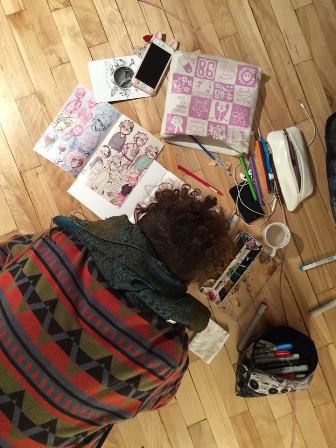
Nat SampsonI’ve been drawing consistently since sixth grade, but I only decided to become an artist “for real” in 2013. I was in grad school and realized… school was terrible! Oops, ha.

Most of my favorite comic artists are the folks I know via social media and the big ole web: Jane Mai, Mia Schwartz, Rory Fransis, Carta Monir; I’m in love with the artist collective, FANGRRLZ! As far as “formal” print comics: Okazaki Kyoko, Matsumoto Taiyo, and Ronald Wimberly.

What’s your “typical” day as an artist? Do you have certain rituals (e.g. listening to music or working at a specific time of day)?

I try to get to work as soon as I get out of bed, which can be tough. I wash my hands with a bar of lavender soap before I start drawing! I try to eat beforehand if I’m feeling up to it, and I always have a glass of water nearby to stay hydrated. If I start early enough in the day, I like to take a break two hours in, to walk around and maybe get coffee. Sometimes ya gotta get outside for a bit!

And music, always music while I work! Music helps me to concentrate and develop visual ideas.

The style of your art is bright and striking and at times even subversively cheerful and humorous. However, you never shy away from serious themes in your comics and zines. Your previous work has touched upon topics such as drugs and violence as well as sexuality, identity, and suicide. Is it ever challenging to find a balance between the contemplative, grim aspects of your work and the more humorous elements, or does this balance come naturally to you?

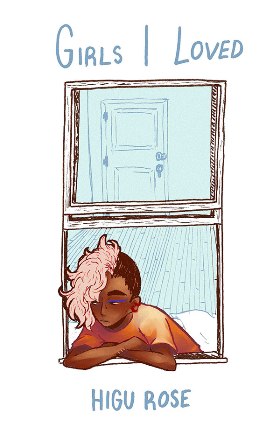
Girls I LovedI think the balance comes naturally. I use humor to cope with my mental illnesses, trauma, dysphoria, etc. It’s sort of like, “If I can’t make light of this, how can I possibly deal with it all?” But then again, a lot of my own laughter and humor comes from the absurdity of how ridiculous, irrational, and frankly terrifying being alive can be. Like, can you believe this shit?!
When it comes to my art, the balance in presentation is a byproduct of my own needs. Zines and comics are cathartic for me, so my work mostly speaks to what I need to do to process what’s going on in my life. In one of my earlier zines, BRAT, I accidentally let it veer from “overtly humorous anxiety-confidence talk” to some heavier mental health concerns. That wasn’t on purpose, but it was what I needed to do, and so I think that’s okay. Some of my really old stuff from grad school is a lot of self-contemplation followed by self-mockery… I don’t think that’s always 100% healthy, but it’s one way for me to relate to myself and my weird lizard brain, so I think it’s okay.

My work is kind of a conversation with myself that goes, “Hey, how about we think about this absolutely bizarre thing you’re doing/feeling/thinking? Why are you doing that? It’s ok for you to acknowledge this thing that’s happening, but really, what the heck are ya doing? Doesn’t something about this strike you as kind of goofy? If it’s not funny at all, what are some other ways we can address it?” And the readers get dragged along for the ride.

Out of your published works, do you have a personal favorite?

Definitely MOIST! If you want to talk about the balance between contemplative and humorous? It’s upside down and backwards in MOIST, oh boy. I love it. I also retroactively love “girls i loved”, if only because I didn’t realize how good it was until people started telling me what an impact it had on them as they read it.

What upcoming projects are you working on?

I’m writing a big “for real, for real” fiction book that will hopefully come out… sooner or later?! Plus I’ve got some autobio projects that will hopefully be out in the fall. I’ll also be featured in One Beat Zines’ anthology, ‘Performance’! Make sure you check that out!!

Big thanks to Nat Sampson for being part of this week’s interview series! Find their work online at Tumblr, Twitter, Instagram, and their official site!

Happy reading!

The Author’s Secret: Interview with Catherine Jordan

Welcome back! Today I’m thrilled to present author Catherine Jordan. This interview is quite a special treat for me, because I am incredibly fortunate to be Catherine’s mentor through the Horror Writers Association’s Mentorship program. Catherine and I have been working together since July, and as these things so often go, I find myself learning as much from her as she probably learns from me. Her passion and talent for writing as well as her enthusiasm to gain as much knowledge about the industry as she can inspire me to be a better writer—and I hope—an even better mentor for her.

Recently, Catherine and I discussed her novels through Sunbury Press as well as her work as an editor and writing workshop instructor.

A couple icebreakers to start: when did you first decide to become a writer, and who are some of your favorite authors?

Catherine JordanI started writing fanfiction when I was about six. In middle school, I wrote stories to read aloud in English class. I wrote short stories and dark poetry in High School. At Penn State, I wrote for the college newsletter, and continued business writing afterward. I decided to become a professional writer about 10 years ago. I had completed the original version of Seeking Samiel and decided to see if I had the stamina for publication, which I knew involved re-writes, edits, and query letters, and rejection. Five years later, my persistence paid off, and my first novel was published.

Ira Levin is one of my favorite authors because he managed to weave humor into dark topics with his pen’s fine needle. The Stepford Wives is a 145 page classic. The title itself makes me giggle. Yet, how horrifying (and gratifying on some sick level) to be known as a Stepford Wife. Deathtrap, Rosemary’s Baby, A Kiss Before Dying; his writing is concise, precise, and so much fun to read.

Anne Rice is another favorite author because she has integrated her religion, her beliefs and her life into her work without authorial intervention. She brings her characters to life as individuals.

I devoured Gillian Flynn’s books. For some reason, I really love to read about evil women. Gone Girl was a compulsive read. Sharp Objects was one of the darkest books I’ve ever poured through.

Congratulations on the release of your novels, Seeking Samiel and The Book Seller’s Secret, through Sunbury Press! What was your process like when you were writing these books, and did you face any particular challenges during the first draft or subsequent edits?

I’m a pantser—I write by the seat of my pants. Then, when I’m about 3 or 4 chapters in and after I have a firm handle on quest and my main character, I’ll write a premise. The premise helps me stay in check, and keeps me aware of when I’m writing tangents.

The biggest challenge I faced in subsequent drafts of my novels was avoiding clichés and melodrama. My novels are based on true events in South Africa, and those events inspired my horror story. A lot of research was involved, and I wanted to write something creepy and scary, all while weaving fact with fiction. Not easy.

Not only are you a novelist, but you are also a short story writer. How does your approach differ when writing short fiction compared to longer narratives?

My approach to short fiction and novels, to me, begins very similarly—I’m a pantser. However, the process differs with my focus on plot; no subplots and few sublayers, if any, are in my short stories. If I have a theme or a prompt, I can bang out a short story. Editing? Well that process is the same for shorts and novels, no matter what—it’s laborious, and involves judicious use of the “delete” button.

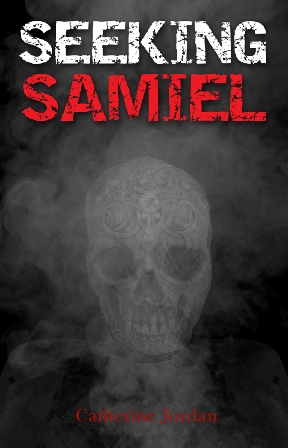
Seeking SamielYou facilitate numerous workshops in the central Pennsylvania area. What inspired you to teach writing, and what is your favorite class you’ve instructed so far?

I never intended to become a writing facilitator; I sort of fell into it. My writing mentor asked me to substitute a class for her. I said yes, though I thought, who am I to teach others? Well, I fell in love. Apparently, I made a good impression, was asked back, and have embraced every opportunity since. My favorite class to teach is critique, because its practicum; it allows students to put all their lessons into practice while receiving constructive feedback. I believe every writer should find a critique group filled with a mix of new and professional writers.

In addition to your work as an author and a teacher, you are also an accomplished editor. What inspired you to become an editor, and do you feel that your work as an editor has shaped your work as a writer?

I was inspired to become an editor through my critique classes. Editing is the next step to critiquing, and I plunged into it when a friend asked me to edit her memoir. I have since then edited anthology collections. The selection process—as well as the back and forth between the writer, has allowed me to see just how important structure (even something as basic as “quest”) is to a story, and how often it’s overlooked. Structure has shaped my writing in such a way that I can go back to my previous works and say, “Oh, well that’s what was wrong with this story.”

What current and upcoming projects are you working on?

Right now, I just completed editing an anthology titled Strange Magic. Launch and promotion are the next steps. I’m working on a personal collection of short stories for all the major holidays, not just Christmas. I’m also writing my third book in the Seeking Samiel series.

Where would you like to see your writing career in five years?

Currently, as a writer, I’m doing the things I had only dreamed about. Within the next five years, I’d like to turn my novels into scripts—I’d like to get my characters out of my head and off the pages, and onto the big screen! I’d also like to see my books on the “must read” lists. And I wouldn’t rule out being an editor on staff. At the same time, I see myself having assisted many others in their quest toward successful publication.

Big thanks to Catherine Jordan for being part of this week’s author interview series! Find her at Goodreads, Amazon, Twitter and Facebook, as well as her author site!

Also, please check out the HWA Mentorship Program! It’s a wonderful initiative and a highly recommended one!

Happy reading!

Pantheon of Fiction: Interview with Sarah Read

Welcome back for this week’s author interview! Today, I’m thrilled to spotlight writer and editor Sarah Read. Sarah serves as the editor of the acclaimed Pantheon Magazine. As a fiction writer, her work has appeared in Black Static, Stupefying Stories, and is forthcoming from the highly anticipated Gamut.

Recently, Sarah and I discussed her inspiration as a writer as well as what lies ahead for her career.

A couple icebreakers to start: when did you first decide to become a writer, and who are some of your favorite authors?

Sarah ReadI decided to become a writer when I was in 6th grade, thanks to my teacher Mr. Evans. I wrote my first poem in his class and he used to let me write during recess. He’d even help me submit my work to magazines. I’m pretty sure the postage for my submissions came out of his pocket. He’d commiserate with my rejections and encourage me to keep trying. I even wrote my first ghost story in his class! He didn’t like that one as much, but he never said it–I could just tell by his eyebrows. I wish I could thank him and tell him the whole ghost story thing worked out.

My favorite authors are Stephen Graham Jones, Helen Marshall, Neil Gaiman, China Mieville, Anne Rice, Frances Hodgson Burnett, Margaret Atwood, Ray Bradbury, Umberto Eco, Paul Tremblay, Peter S. Beagle, Caitlin R. Kiernan, and lots more. The list grows every year.

You serve as the editor at Pantheon Magazine. How did you become involved with editing, and how has your work as an editor shaped your writing? Also, what advice can you offer writers who are interested in submitting to the magazine?

I’ve been interested in editing ever since my high school lit mag and newspaper days. After college, I spent six years as a magazine editor for a large publisher. Matt Garcia, the publisher of Pantheon, asked me to read slush for him after he’d published a few of my stories–I enjoyed that way more than I think you’re supposed to. People say it’s torture, but I love it. (I actually still read a lot of the slush. Shhh, I can’t help it.) After a while, he promoted me to fiction editor, and then he decided to step more into the background and let me have control over all the red buttons. We still work together quite closely on the magazine, and he oversees the website and production side of things.

Editing helps me analyze a story without getting lost in it–but I still want to get lost in it. It’s much harder with my own work, of course, but I can switch off the writerly part of my brain and view things through an analytical lens. Getting the edit-y part of my brain to shut up is another matter. I have a lot of trunk stories because of it.

As for advice, definitely pay attention to the issue theme. I hate it when I read a lovely story that has nothing to do with that issue and I have to reject it even though I enjoyed it. We ask for an explanation of how the story relates to the theme–even if the tie is loose, if we love the story and there’s a logical argument, we’ll probably take it. Also, we’re on a budget. There’s a set word count limit for each issue, so if your story is over 7k words, it’s probably going to have to be AMAZING to get in. We’re happy to read longer stories (and we’ve taken quite a few), but nine out of ten stories I read that are over 7k words are 4-5k stories with too much fluff.

The theme of Pantheon is Greek myth-themed fiction. When did you first become interested in mythology, and do you have a favorite god or goddess?

I’ve always been obsessed with myth–not just Greek myths, but all kinds. I’d like to someday take the magazine’s themes to other cultures, too. The Greek myths are a blast, and there’s a deity for nearly everything, but it feels too narrow. There are a lot of fun themes out there to play with. I love the idea that humans can explore their curiosity through creative storytelling. Myths hold a special kind of truth that doesn’t necessarily have anything to do with reality. I like contemporary stories that have that same touch of truth about them–that feel like they’re tied in to something much bigger than what’s on the page.

I’ve never been religious at all, but I’ll refrain from picking a favorite. That NEVER ends well.

You have previously discussed your love of journals and fountain pens. How do you feel the act of handwriting your fiction affects your work as an author? Also, do you remember your very first writing journal and pen?

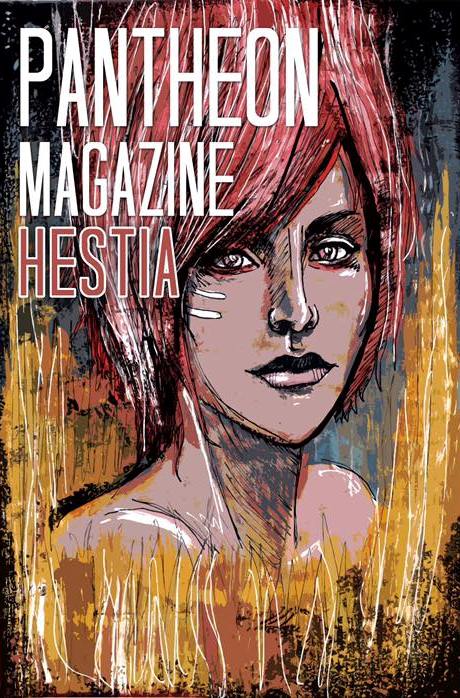
Pantheon Magazine Hestia IssueMmmm yes, I LOVE pens and ink and paper. I’m honestly not sure if I love them because I love writing, or if I love hand writing because I get to use my pens. I may never know, but it doesn’t matter. My relationship with technology has never been very good, so the reliability of analog tools is also a bit of a necessity. I have my laptop and Google Drive and flash drives and external hard drives…but it’s good to have that hard copy there on the shelf. My first drafts are slower, yes, but I edit as I type the draft in, so by the time I have a copy to send to beta readers, it’s often the third draft. Plus, I can have a pen and notebook in my pocket always and everywhere. I get a lot of my writing done in stolen moments between things.

I do actually remember my first journal. It was white with wee blue flowers on it. I think I was in first or second grade–it had a padlock that I had to break myself because I lost the key. I mostly wrote about how irritating my brother was. It still exists, somewhere.

Your incredibly creepy horror story, “Magnifying Glass,” appeared last year in the esteemed Black Static. What was the inspiration behind this piece?

That story was written from a prompt given to me in one of my writing group’s WAR battles. The prompt was a character finding (in a very unlikely place) an old envelope that’s addressed to them. The hand prints were inspired by an actual hand print on a window in my old house. I could never wipe it off. It was a deliciously frightening five seconds until I remembered it was a double-pane window–the print was between the layers. And it made me think of how my grandmother never wiped our hand prints off her storm door after we visited, because she liked to see that piece of us still there even when we were far away. Sometimes we’d come at Christmas and see our sticky fourth-of-July hand prints on the glass and hold our hands up to them to see how much we’d grown. And then of course I wondered when the hand print got between my windows–and how much has that person grown? It’s a very old house–what if the person is dead–what if they still come back to their hand print inside the glass? Wonder why they haven’t grown? Probably too many of my stories are born out of my mind wandering while I do housework.

What upcoming projects are you working on?

I’m reaching the end of a manuscript revision for a revise and resubmit request from an agent. I haven’t been writing much short fiction because I’ve been buried in that. I’m hoping to resubmit in the next month or so. Scary! I’ve got a few short stories in the works, though, for some fun projects I’ve been invited to. Matt Garcia and I are also collaborating on a novella. It’s just a skeletal armature so far, but we’ll break out the papier-mache soon.

Where would you like to see your writing career in five years?

Gosh, three years ago I’d be excited just to think I’d have anything published at all. I’d like for my novel to see the light of day before the next five years is up. And I’d like to crack one of my white whale markets (Shimmer or Nightmare especially).

I’ve really enjoyed working freelance since my youngest was born. I’d like to move more in the direction of editing people’s novels and less toward writing marketing copy for big tech companies.

Big thanks to Sarah Read for being part of this week’s author interview series! Find her online at Twitter, Instagram, and her author site.

Happy reading!

Like Clockwork: Interview with Nemma Wollenfang

Welcome back! This week’s author interview is with the talented Nemma Wollenfang! Nemma is a speculative fiction and romance writer with a host of short stories as well as a novella available through such outlets as Flame Tree Publishing, Titan Books, Roane Publishing, Romance Magazine, and more.

Recently, Nemma and I discussed her inspiration as an author as well as her favorite (and least favorite) parts of the writing process.

A couple icebreakers to start: when did you first decide to become a writer, and who are some of your favorite authors?

Since I was little I’ve been penning stories. Recently my mother found my first ‘book’ written when I was around six years old titled ‘the dirds’. Apparently I was a young Hitchcock who had trouble differentiating ‘d’s and ‘b’s. As many adult know though, finding time to write can be tough. While at university I had little time to spare – doing a dual science degree didn’t help with that. When I completed my masters I took a gap year, not with the express intention of writing, just to explore options and have a break from laboratories. I’d also lost someone close to me and wanted some quiet time. Writing wasn’t even on my radar. In the end, I sort of fell into it. After reading an old Greek myth about Actaeon, an idea for a zombie apocalypse novel sprang to mind. I know, odd connection, but I couldn’t let it go. That was when I ‘caught the bug’, so to speak. Writing turned out to be therapeutic and freeing and it was pretty much the only thing I wanted to do after that.

Of course, as with many writers, it took much longer to refine my technique, then to start submitting out. Now, I’ve had stories appear in various publications, including Murder Mayhem (Flame Tree Publishing), A Bleak New World (RIP), Come Into the House (Corazon Books), and Romance Magazine. My first ever novella, a fantasy romance called Dragon Law, has also recently been released in the anthology Masked Hearts by Roane Publishing. Longest story published to date!

As to favorite authors, that’s just tough! There are so many. But here are a few who have particularly stuck with me. People who have developed fabulous worlds I’ve revisited more than once. Anne Rice (Interview with a Vampire), Jules Watson (Dalriada Trilogy), Kresley Cole (Arcana Chronicles). If you haven’t heard of the last two I highly recommend having a look.

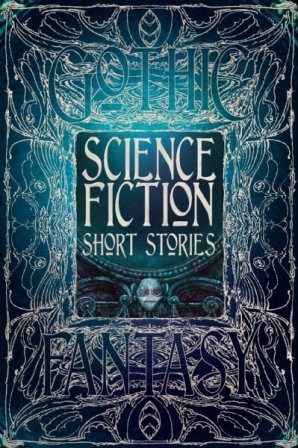
Your story, “Clockwork Evangeline,” appeared last year in Flame Tree Publishing’s Science Fiction Short Stories anthology. What was the inspiration behind this particular piece?

Science Fiction Short StoriesIt was a competition run by Steampunk Journal in 2014. When I saw the advert I was intrigued – I’d never heard of steampunk before. After doing a little research into what it was I was hooked. Victorian-era fashion combined with steam-powered devices? I wanted to write about that! While twiddling my thumbs over potential plots and listening to an OST score, the clockwork girl in her holographic clothes quite literally danced into my head. Thus, Clockwork Evangeline was born.

The story subsequently won first place in the over 18 category and was published by Titan Books on their website. “Clockwork Evangeline” was my first ever short story to be published, so I was thrilled.

Now, I’m developing it into a fully-fledged novel…

Your fiction sometimes delves into the historical. Do you have a specific approach to research when you need to find and verify historical details in your writing, or do you allow each project to dictate your process?

Usually I just go with the flow of an idea. If research needs doing, I can mostly sort it later – usually I just need to clarify details. You see, I’ve grown up with a lot of historical fiction, and around a lot of history – my mother often took me to visit historic British sites growing up: burial cairns, standing stone circles, old ships, cathedrals, castles, etc. – so a lot of it comes naturally, as I at least have a vague idea. If I do have trouble getting the feel of a particular era, sometimes I find that watching films or reading novels set in the time helps before embarking on a new historical project. It allows me to get the feel of accents, fashion, etiquette and language – the smaller details that sometimes get bypassed. And, as always, a brief internet search can usually answer a lot of questions. To not hinder the flow while writing, I tend to leave the more trying details until later.

In your university work, you’ve studied both biology and parasitology. Do elements of these fields ever creep into your fiction?

This is where I test out my mad-scientist cackle, and don my white overcoat and goggles. Hehe…

A while ago, someone asked me this question and my immediate answer was ‘no’. Then I thought about it… and actually, elements do creep into my work. A lot of my university career was spent around blood-sucking insects and the parasites they transmit, specifically ticks, but I learned plenty about the vast array of vectors and parasites that exist worldwide and how they can not only invade a host body but alter their behaviour to suit their own needs. Creeped out yet? One of my favorite science fiction short stories, “GOD is in the Rain” (published in A Bleak New World by RIP), is about a parasitic type of technology that runs rampant, invades human bodies and alters behaviour. I had a lot of fun writing that one. Likewise, Clockwork Evangeline (the novel) has a number of ‘science-gone-wrong’ moments, with several mad scientists thrown into the mix who think it’s a-okay to play God. Many of the tinier details in these stories came from things I learned during my degrees. So yes, my science background seems to have given me a lot of delicious fictional fodder to work with.

If forced to choose, which is your favorite part of the writing process: drafting new ideas, crafting a first draft, or polishing an almost finished piece?

When the idea for a new story strikes, and you can’t leave it alone, that is one of the best feelings in the world. When the characters really speak to you and new scenes keep popping into your head and you just can’t stop typing… Like many writers, I have little notebooks constantly nearby – to jot down all the things I’ll otherwise forget if I wait too long to reach a computer. They even went with me to my best friend’s wedding the other week – where the strawberries on the buffet table gave me an idea for a new romance novella. I find it a lot harder when it comes to actually piecing a story together, chapter by chapter. That’s when the tougher decisions come into play and things get cut. Editing, I’ve found, is the longest and most tedious part of the process. Knowing when a piece is finally finished and ready to send out can be hard.  However, that sense of achievement when you’ve been working on a piece for a long time and you finally type ‘The End’ can be fantastic.

What projects are you currently working on?

The biggest is Clockwork Evangeline (the novel). After it won a prize as a short story and was later published in Flame Tree’s deluxe gothic fantasy hardback, I decided to expand the story. It just kind of took flight and its first draft won Retreat West’s First Chapter Competition in February. It also later received an Honourable Mention for a grant from the Speculative Literature Foundation (SLF). Currently I’m working on some final editor’s notes, before taking a deep breath and handing it out to Betas.  Then… we’ll see.

I also have another novel in the works, a historical one called Rose Gold: A Piratical Tale. As you can tell, it’s about pirates. It has been shortlisted in three novel awards so far but still needs work. There’s also the infamous zombie apocalypse novel too! So at the moment I have plenty to keep me occupied.

Big thanks to Nemma Wollenfang for being part of this week’s author interview! Find her at Facebook, Twitter, and Goodreads as well as on Amazon.

Happy reading!

The Were-Writer: Interview with Maria Kelly

Welcome back! This week, I’m excited to spotlight author and editor Maria Kelly. I’ve worked with Maria both as an author as well as a behind-the-scenes slush reader earlier this year as she prepared the recent issue of The Were-Traveler. In every capacity, Maria is a fabulous writer, editor, and individual, and it’s terrific to have her spotlighted on this site.

Recently, Maria and I discussed the genesis of The Were-Traveler as well as her plans for the future.

A couple icebreakers to start: when did you first decide to become a writer, and who are some of your favorite authors?

Maria KellyWhen I was a little girl, my grandma would tell me scary Rawhide stories. Soon, I began telling her stories. She bought me notebooks to write them down in and eventually a used typewriter. She and my mom were always encouraging me to write my stories down. I’ve written stories and poems since that time. I remember that I made the decision to finally submit my stuff after my mom and husband passed away. Because I am introverted, and fear rejection, they would tell me “You can’t get published if you don’t take a chance.” I’ve been taking chances since 2009. I’ve won some, and lost a whole lot more. But I’m hooked now. A “no” from a publisher or editor just makes me want to try harder.

[As for authors,] Ursula K. LeGuin, Neil Gaiman, Stephen King, Alan Dean Foster, Gabriel Garcia Marquez, Joyce Carol Oates, Shirley Jackson, J.K. Rowling, Robin Hobb, J.R.R. Tolkien, Christopher Marlowe, Suzanne Collins, and many others, including Japanese manga authors like Tite Kubo (Bleach) and Eiichiro Oda (One Piece). I love great world building in a story. And interesting, complex characters.

What inspired you to start your online publication, The Were-Traveler?

I had been tossing around the idea for a while, but worried about where I would find the balance between writing, school work (I was attending college at the time) and publishing. I decided that I would just have to do it and become better at time management. I’m glad I did. I love publishing the magazine and interacting with the contributors.

How do you balance your workload as an editor with your writing?

The Were-TravelerVery delicately. I also have two part-time jobs. Also, up until December 2015, I was a university student at USFSP. It has not been easy. I had to put the magazine and most of my writing projects on hold for over a year while I finished up my bachelor’s degree. The last year of school was brutal. But it’s done, for now, and I can get back to the magazine and writing. I write or read magazine submissions whenever I can. I’ve also had some help (points to you) with slush reading for the last issue, which was very much appreciated, and I thank you very much for it. I’ll buy you a dinner sometime.

Do you feel that your work as an editor has changed the way you write, and vice versa?

I think working as an editor has changed my opinions of editors more than anything. As a writer, I used to think, why is this magazine rejecting this story of mine, it’s brilliant! You know, we all go through that. But now, I’m on the other side of it and have to say “No” to a writer for one reason or another. It’s a tough call. It has made me more aware of my stories that are rejected in that, hey, they might not be bad stories or poems, but for some reason it didn’t grab the editor or slush reader’s attention.

Where would you like to see your writing career in five years?

I would like to see it growing in creativity and making a bit more money. I anticipate I’ll be enrolled in a Creative Writing MFA program somewhere by that time, so I hope to also be learning how to hone my writing skills even more.

What upcoming projects can we expect from you?

Well, The Were-Traveler is seeking submissions for the speculative poetry issue. Deadline on submissions is November 30th. I hope to get a few more submissions for it, thus the shameless plug. As for writing, I have several short stories and poems I’m working on. I’m always working on something. I’m also writing my creative piece for grad school, which I hope to have published one day, a weird as hell novel/la about a seemingly ordinary man who meets a strange goddess who rules the realm of illusion and hallucination. A sort of reverse Alice in Wonderland kind of thing. I’m also getting back to work on my fantasy novel. I recently had a poem published in the Science Fiction Poetry Association’s magazine “Star*Line” and I submitted a few poems to their speculative fiction poem contest, so I’m hoping one of those seeds bears fruit.

Big thanks to Maria Kelly for being part of this week’s author interview series. Find her online at her author site and on Facebook!

Happy reading!